



POWF Newsletter – An Overview of Churches Sold in Shetland and Aberdeen
In this edition of the POWF Newsletter, Louise Paterson – Churches Programme Officer with Community Ownership Support Service (COSS) – shares a review of the journeys of churches sold in Shetland and Aberdeen, and what we might expect in other areas of Scotland where church sales are only just beginning.
As churches continue to be sold across Scotland, we are beginning to gain a picture of what happens to these buildings once they change hands and take on new uses. We’re also beginning to see some noticeable differences emerging between church sales in rural and urban areas. This is reflected in Shetland and Aberdeen City where the process of church sales is largely completed and where COSS has researched the change in ownership of recently sold church buildings. Shetland and Aberdeen City are covered by the same Presbytery (The Presbytery of the North East and the Northern Isles) however, the outcomes of recent church sales in these areas display very different characteristics. What stands out is the prevalence of community ownership, crowdfunding and residential conversion in Shetland and the high number of churches sold to faith groups as well as an absence of involvement from public institutions and the private sector in Aberdeen.
Shetland
In Shetland, nineteen church buildings were listed at risk of disposal in the ‘Presbytery of Aberdeen and Shetland Plan for the Presbytery 2020-2030’. Since then, the vast majority of these churches have been sold, six of which have found new lives as community owned assets. Today these buildings offer arts, events and exhibition venues for communities to enjoy.
Church buildings in Shetland, advertised for sale between 2020 and 2025 have been listed at asking prices between £10,000 and £68,000 and local crowdfunding has played an important role towards communities taking ownership of these buildings. Five out of the six community organisations that acquired a church building in Shetland used crowdfunding to raise funds to purchase the building or contribute to the funding package. Given the prevalence of crowdfunding among community organisations raising funds to purchase a former place of worship, the Community Ownership Support Service and Democratic Finance Scotland have recently published a Churches Crowdfunder Guide which gives practical guidance on how to run a successful crowdfunding campaign.
There has also been a high number of residential conversions of former church buildings in Shetland. A total of eleven recently sold church buildings in Shetland, some of which were not listed in the Presbytery Plan, have been sold to private buyers and eight of these have associated plans for conversion into residential properties, one also including a commercial space.
Aberdeen
Similarly, as in Shetland, the vast majority of churches at risk of disposal in Aberdeen City have now been sold with eight out of fifteen of these buildings sold to faith groups, one sold to a social enterprise and one into community ownership. Clearly there has not been the same prevalence of community ownership or residential conversion as there was in Shetland as the church typologies differ significantly between the urban and rural contexts. Most notably there has been an absence of private sector investment or involvement from public institutions stepping in to acquire church buildings for sale in Aberdeen.
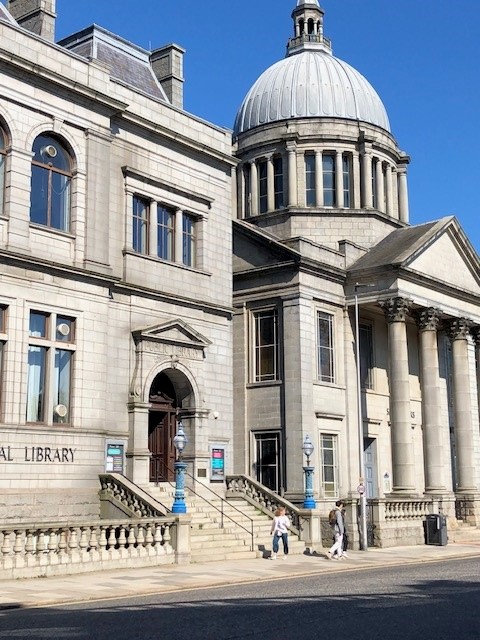
At the time of writing St Marks Church, a prominent B-listed church in Aberdeen city centre which lies adjacent to Union Terrace Gardens and several civic buildings such as Aberdeen Central Library, is on the market for offers over £390,000. Buildings such as this which are significant architecturally and have a location of civic importance play a distinct role in the city and their potential owners must be able to ensure a sustainable future. What remains unclear in an urban context is what will happen to the at-risk church buildings that are perhaps too large or pose too much risk due to their condition or heritage value for a community group to take on.
Across Scotland
While the process of church sales in Shetland and Aberdeen City has for the most part concluded, it must be noted that other areas of Scotland are only just seeing church sales commence. A large proportion of the church buildings earmarked for sale are yet to be sold and so, the question of what might happen to this significant number of heritage buildings, remains one which will be unfolding for potentially several years.
The New Futures: Former Places of Worship programme offers advice and support to community organisations seeking to take ownership of a former place of worship. The programme is part of the Community Ownership Support Service (COSS) and was launched in January 2025 in direct response to the significant and unprecedented number of former places of worship that are due for disposal over the next several years. The team includes three Advisors and a Programme Officer. It has been enabled with funding from the National Lottery Heritage Fund (NLHF), Historic Environment Scotland (HES) and Development Trust Association Scotland (DTAS). If you’re interested in finding out more about the programme, you can click here to go to their website.
Louise Paterson, Churches Programme Officer.
Image: St Marks Church, Aberdeen – DTAS.
This blog is part of the fifth edition of the Places of Worship Forum (POWF) Newsletter which was published on 6th May 2026. The newsletter aims to share the ongoing work of the group. Would you like to receive the next edition of the newsletter? Sign up here.
BACK