



Museums Galleries Scotland, BEFS, and greenspace scotland welcome the 40 organisations who will participate in the 18-month NLHF funded Business Support Programme, ‘Surviving to Thriving’ (StT).

At a time when heritage organisations are facing a multitude of challenges caused by the pandemic StT plays a key role through collaboration across the museums, greenspace, and built environment sector, in supporting organisations to develop their resilience through sustainable business models. With a focus on upskilling the heritage workforce across Scotland the programme invests in individuals and organisations, through building confidence and knowledge in business practice.
The programme will commence in April with BlueSky Experiences delivering the core training across the four strands of the programme: leadership, governance, business planning and local community engagement. City of Glasgow College will be providing additional skills-based training which will complement the core training. Axiom Consultancy have been appointed as programme evaluators.
Fiona Skiffington, Business Support Project Manager said:
“We are absolutely delighted to welcome the 40 organisations who join us for StT. Now more than ever it is vital to support the heritage workforce and organisations to develop business models and skills. Through the programme we are seeking to directly address the skills gap identified by the sector, and through investment in widespread workforce training we hope to support the sector to navigate the challenges of the pandemic and increase their resilience.”
Caroline Clark, Director Scotland of The National Lottery Heritage Fund, said:
“Collaboration is critical in building a successful and resilient heritage sector as we come out of this crisis. Thanks to players of The National Lottery, this initiative will facilitate cultural, built and natural heritage organisations to come together to develop their business models and support capacity building. We are delighted to be able to help the sector improve sustainability in this way as it has a crucial role to play in supporting Scotland’s economic recovery.”
The programme will be delivered digitally for the time being and will move to face-to-face when possible (as per government guidelines). To enable full participation in StT eligible organisations will be awarded a community grant. Participants on the programme reach right across the heritage sector and the country, yet all are facing similar challenges caused by the pandemic, with many citing the programme as vital for increasing their resilience.
Victoria Collison, Executive Director, Historic Churches Scotland said:
“Historic Churches Scotland is delighted to be selected to participate in the Business Support Programme. Securing the future of these historic buildings is not just about fixing the roof: more than ever, in these challenging times, it requires people with a broad range of skills from business planning to community development.
The programme is unique in providing the training we need for the people who need it, whether they are staff, board members, or volunteers. As an organisation we want to grow and to help more communities use and look after their church building in a sustainable way. The skills we gain from the programme will support not only our own work, but hopefully the work of many other community groups throughout Scotland in the future.”
Alexander Goodger, Museum Manager, Dundee Museum of Transport said:
” The Business Support Programme has appealed to us in particular because our income streams come from our events and ticket sales, income of which was down by 48% last year due to the pandemic. The training on business planning, and community engagement, alongside a community grant will help us to diversify our income streams, trial new ventures and re-connect with audiences locally and nationally for a brighter future.”
Helen Brown, Trust Manager, Water of Leith Conservation Trust said:
“We have many areas of our operation which will benefit from the support offered on the Business Support Programme, as grant support has reduced over the past decade building a sustainable approach to our income streams means we can continue to work with volunteers to conserve and enhance the Water of Leith, operate our Centre and community cafe and deliver our learning programmes. Charities have had to learn to adapt and become resilient to change especially this year, so we are excited to get started on planning a brighter future for our organisation.”
NOTES TO EDITORS
- Museums Galleries Scotland is the National Development Body for museums and galleries in Scotland and offers strategic development support to the sector. For further information about Museums Galleries Scotland visit www.museumsgalleriesscotland.org.uk/about-us/
- Built Environment Forum Scotland (BEFS) is an umbrella body for organisations working in the built environment in Scotland. Drawing on extensive expertise in a membership-led forum, BEFS informs, debates and advocates on the strategic issues, opportunities and challenges facing Scotland’s historic and contemporary built environment. befs.org.uk
- greenspace scotland is Scotland’s parks and greenspace charity and has provided a national lead on greenspace since 2002, working towards our goal that everyone living and working in urban Scotland has easy access to quality greenspace. https://www.greenspacescotland.org.uk/
- The 40 organisations participating in the Business Support Programme can be found at: https://www.museumsgalleriesscotland.org.uk/projects/business-support-programme/#participating-organisations
- More information on the Busines Support Programme can be found at https://www.museumsgalleriesscotland.org.uk/projects/business-support-programme/
Get The Latest Built Environment News, Policy Developments, Publications, Consultations And More.
BEFS News
2020 was a year unlike any other and as the financial year draws to a close, BEFS is hosting a webinar, The State of Heritage 2021-22, to hear about the current financial position from across the heritage sector and tentatively look at what the implications are for 2021. We will provide a brief overview of relevant details from the Scottish Government’s Budget, which will be announced later today. Organisational perspectives will be provided by National Lottery Heritage Fund, Historic Environment Scotland, National Trust for Scotland, Historic Houses Scotland, Museums Galleries Scotland and Napier University. Sign up here.
The National Partnership for Culture (NPC) has published its work programme for 2021. The NPC provides advice and guidance to Scottish Ministers on key strategic issues affecting culture in Scotland. The work programme for 2021 is based on initial priority areas of focus, cross-cutting principles and with the recovery and renewal of the culture sector in Scotland at its heart. BEFS has been invited to participate in the workshops and to share outputs with members to enable sector review of draft agreed priorities and proposed actions from each workshop session.
BEFS submitted a short response to the Scottish Government’s land use consultation. The submission suggests alignment between natural and heritage protections, making considerations for people and place, and considering the values of landscape scale decisions.
Recordings of Under One Roof’s Autumn and Winter 2020 Webinar Programme are now available online. Funded by the SafeDeposits Scotland Charitable Trust, this series explored a range of tenement related topics from factors to debt recovery and how to have difficult conversations. The physical side of tenement repairs was also covered with webinars on how to inspect a property, how to look after the roof and structural issues. The recordings – and the associated CPD certificates – are completely free .
BEFS Policy & Strategy Manager, Ailsa Macfarlane, reflects on the potential damage of the common narrative in heritage protection, in our blog this week: Is the language of salvation helping heritage?
Consultations
Inquiry – 21st century places: values and benefits
Closes 29 Jan 2021.
Strengthening Scottish Charity Law Survey
Closes 19 Feb 2021.
Draft Guidance on minimum standards for depositing archaeological assemblages in Scotland
Deadline for responses 8th Feb 2021. Consultation document.
National Planning Framework: Position Statement
Closes 19 Feb 2021.
New Build Heat Standard – Scoping Consultation
Closes 3 Mar 2021.
Mediation in Planning
Closes 12 Mar 2021.
Draft Public Engagement Strategy for Climate Change
Closes 17 Mar 2021.
Consultation Responses
Just Transition Commission call for evidence: analysis report (SG 18/01/21)
Publications
Plan the Scotland We Need – A Manifesto for the 2021 Scottish Parliament Election (RTPI 26/01/21)
National Partnership for Culture: work programme – 2021 (SG 21/01/21)
Brexit Guidance & Useful Resources (RIAS 21/01/21)
Prospect – Updated guidance on safe working during COVID (CIfA 21/01/21)
Property Factors (Scotland) Act 2011: Code of conduct for Property Factors (SG 18/01/21)
Health on the High Street (SMF 19/01/21)
Scottish Government News Releases
Community projects get £25 million funding (SG 27/01/21)
More than £25 million is going to disadvantaged and remote communities around Scotland to support regeneration and employment projects.
News Releases
Culture and Heritage Capital portal (DCMS 21/01/21)
This page brings together research, guidance and estimates to help government and private organisations consider the value of culture and heritage capital.
The effect of Brexit on UK construction (RICS 11/01/21)
The UK and EU’s announcement of a trade deal from 1st January 2021 imposes no direct charges on construction or construction products but there are administrative burdens that will add to cost and inhibit the functioning of the UK construction industry.
My Place Awards (SCT 01/21)
The My Place Awards celebrate community-led built environment projects that have transformed their locality. The Awards honour projects that have excelled in terms of community involvement/impact and design. Winners of the My Place Awards benefit from the opportunity to develop a national profile and evidence impact to potential and existing funders, as well as be featured in a public exhibition. The My Place Awards 2021 are now open for entries. The deadline for entries is 11:59pm, 31st January 2021. Enter here!
Hidden meanings in Scotland’s historic places (HES 18/01/21)
Many of Scotland’s historic places contain features which may have hidden meanings. Join us as we take a look at some of our favourites.
Opinion & Comment
Thinking Local First Isn’t Just A Resolution – It’s a Lifeline (STP 21/01/21)
Events
For the latest information about BEFS Members’ events see our events calendar.
Artistry and Architecture – Sir Ninian Comper by Andrew Wright OBE
Date & time: Thu, 28 Jan 2021, 19:30.
Online
As a leading exponent of Gothic Revival in Britain in the twentieth century, Comper is one of Aberdeen’s most illustrious architectural sons. In this illustrated lecture, seminal works located in Northeast Scotland and undertaken at various stages of Comper’s career, will be examined, building upon the lecturer’s involvement with the care of one of Comper’s finest churches; St Margaret of Scotland at Braemar.
Campaign for a National Plan that Puts People and Planet First
Date & time: 28 January, 6-8pm.
Online
Decisions on important developments (housing etc) are guided through the Scotland’s National Planning Framework (NPF). It will decide on national developments like Dundee Waterfront, Grangemouth Investment zone, flood protection areas and new national parks. It will contain important policies on housing, renewable energy and the environment. The latest NPF4 will last until 2050 and is being drawn up NOW. Developments included in NPF4 will be untouchable once it’s been signed off by Parliament in 2022. But there is lots we can do before then.
Collective Architecture
Date & time: Mon, 1 Feb 2021, 18:15.
Online: Zoom.
Chris Stewart is an Architect-Director of the award-winning, employee-owned practice Collective Architecture, as well as a director of the Scottish Ecological Design Association (SEDA). In this talk he will tell us about the practice’s projects and its approach to sustainable design and client and user involvement.
National Planning Framework 4 – Community Discussion Workshops
Dates & times: Tue, 2 Feb 2021 11:00-12.30; Wed, 3 Feb 2021 11:00-12.30; Tue, 9 Feb 2021 16:00-17:30.
Online via Zoom
National Planning Framework 4 is being prepared by the Scottish Government as the new “national plan” for Scotland – it will be the key document setting Scottish planning policy direction until 2031. The Position Statement sets out Scottish Government thinking based on consultation undertaken so far. PAS (Planning Aid Scotland) has been asked to run three workshops to hear the views of community group representatives about the Position Statement. We will also cover how to respond effectively and next steps in the NPF4 process. Places are limited to 20 per event.
The Landscape of Outdoor Learning – Online Webinar: A response to the 1140h EY Expansions
Date & time: Wed, 17 February 2021 12:00 – 13:30 GMT
Online
This webinar explores and celebrates the benefits of well-designed, nature based playgrounds in Early Years outdoor learning & child development. This talk is aimed at educators, design professionals and organisations responsible for delivering successful Early Years outdoor learning. Our guest speakers discuss their work and experience of designing and implementing Early Years playscapes since the 1140h Expansion guidelines made way in Scotland: Felicity Steers : Director – erz; Natalie Murray: Technical Director – Wardell Armstrong; Education and Property Team : West Lothian Council. Followed by a Q&A session.
Planning Law for Heritage and the Arts – A Survival Guide
Date & time: 18 February 2021, 13:00 – 15:30
Online: via Zoom
Planning is also undergoing significant reform, with emergency Covid-19 measures in place while wider reform continues apace. This session aims to identify potential planning pitfalls and how to deal with them. It will give you an understanding of the key concepts underpinning the Scottish planning system and will illustrate how an Arts and Heritage development is regulated in practice and review the consequences of breaching planning controls. Topical issues and upcoming reforms will also be covered, alongside questions and comments from delegates throughout the session.
Telling It Like It Is – Effective Copywriting
Date & time: 23 February 2021, 10:00 – 12:30
Online: via Zoom
This training session is aimed at anyone looking to improve their copywriting skills to support their fund-raising activities. Offering a combination of project-based, hands-on writing exercises with tips, techniques and critical theory, the session explores the five stages of the copywriting process. While the training provides a specific focus on writing a case for support, the resulting learning can be applied to all kinds of fundraising communications.
66 The House That Viewed the World
Date & time: Monday, 1st March; Lecture starts at 6.30pm prompt.
Online via Zoom.
Author John D.O. Fulton discusses his recent book about 66 Queen Street in Edinburgh’s New Town, which tells the story of the people and events associated with the house over the course of 210 years. The diverse characters, whose lives were empowered by the Scottish Enlightenment, range from heroes to villains and from people of conscience to subjects of tabloid scandal and moral prurience.
Culture & Business Fund Scotland Roadshows: A source of support for COVID-19 recovery & renewal
Date & time: Tuesday 9 March 11:00am — 13:00pm & Tuesday 30 March 11:00am — 13:00pm
Online: via Zoom
Due to COVID-19 lockdown restrictions, we are taking our Culture & Business Scotland (CBFS) Roadshows online. These free webinars will give attendees from across the arts, heritage, third, public and business sectors the opportunity to learn about the fund, and how we have adapted the criteria to provide more flexible support for the sectors through a period of recovery and renewal throughout 2021 and beyond.
Keeping in touch with your supporters: keeping yourself right with data protection law (GDPR)
Date & time: 23 March 2021, 13:00 – 16:00
Online: via Zoom
During this difficult time when so many venues are closed, we are keeping in touch with our audiences, supporters and followers virtually. Of course some events can take place online and as a result you may obtain more information and personal data than you usually do, but what can you do with that lawfully? The proper use of personal data is important, not only to ensure compliance with the law but also to maintain the trust of supporters. This session will provide you with an understanding of the law, using practical examples from the sector to bring the topic to life.
Legacy giving. Now is the time – if you do it right. Learn how to!
Date & time: 25 March 2021, 11:00 – 15:00
Online: via Zoom
This course is focused on how to integrate legacies into your current fundraising at little or no cost at a time when more people are making Wills than we have witnessed in decades.
Vacancies
Icon seeks Trustee with financial expertise
Icon is currently recruiting for a Trustee, who will also be Chair Designate for the Finance Committee.
Closing date is Wednesday 10 February 2021.
BACK
BEFS Policy & Strategy Manager reflects on the potential damage of the common narrative in heritage protection.

Read any report, research output, press-release, or corporate statement involving heritage and ‘save’ will be prominent. Whether ‘saved’ for the nation, the community, or future generations – you can be certain that the heritage in question is to be made ‘safe’ from the evil it was perceived to be beset by (options for evil forces can include, but are not limited to: neglect, weather, and misuse).
We don’t have the language to explain what is being done to heritage. This is a lie; we don’t have the time to explain what heritage needs. ‘Saved’ is seen as useful shorthand, but it doesn’t enable the more nuanced and detailed descriptions necessary to give heritage it’s full place at the table.
We’ve been so eager (understandably) to get any of the resources available that we’ve convinced those with access to the purse-strings that something needs to be SAVED. It’s a quick ask, it’s an urgent ask, it manifests the concept of loss, and no-one wants that…
So, our quick, effective, asks – to save – have been seemingly successful. The funding has (sometimes) been found; the heritage has been ‘secured’ for the audiences. But such asks have unintended consequences – we’ve reinforced all sorts of notions about heritage. About it being ‘special’ and ‘expensive’ and ‘unique’ and ‘difficult’ and ‘old’.
Suddenly heritage doesn’t sound like it has a role in a green recovery, a just recovery, a socially integrated recovery. Heritage doesn’t sound like it’s your house, your local street, the building your kids go to school in, the town-hall where the library is, the park you walked through on the way to work.
Heritage can sound like it doesn’t offer what communities and politicians seek:
- skilled jobs, jobs which will support a green transition – adapting and using our existing environment;
- a growing workforce for multiple traditional skills, unable to be automated – as we repair and maintain what we have;
- an important link in the materials supply chain – supporting countless other industries;
- a factor for providing more homes in existing places and communities, as buildings are brought back into use, or appropriately adapted;
- a resource, energising local communities and supporting local services – through the extensive tourism offer;
- a substantial focal point for regenerative strategies (high streets and town centres being only some of the story) – continuing the story of our places.
Saving is also a one-time ask, surely? It’s only a bad horror film where the protagonist needs rescuing again, and again.
Just as we’re trying to rewrite the narratives of fairy stories so little-girls don’t grow-up being shown how to manifest a learned sense of helplessness; we now need to rewrite the narratives for heritage.
Is heritage in need of ‘saving’? Or is it in need of resourcing – to prime the pump for the greater benefits that it can provide. It’s not ‘saving’, it’s an investment so our people and places can have the futures we haven’t even dreamt of yet.
Personal thoughts formed through researching policy responses, made more concrete due to the input of many well-informed individuals through the CHERF process (particularly the asks in relation to reframing the heritage narrative); and finally formed into something more concrete after reading a report from a home Nations organisation, where ‘saving’ was part of the current narrative.
Ailsa Macfarlane, Policy & Strategy Manager, Built Environment Forum Scotland
BACK
Get The Latest Built Environment News, Policy Developments, Publications, Consultations And More.

BEFS News
In mid-December BEFS encouraged its membership to lobby Members of the Scottish Parliament on what we perceived to be an anomaly in the definition of “the environment” within Part 2 of the UK Withdrawal from the European Union (Continuity) Scotland) Bill. Our proposed amendment was not put forward by any MSPs but Scottish Ministers have responded with their reasoning as to why it was unnecessary. Read more here.
BEFS has responded to two consultations already in 2021. BEFS responded to the Local Government and Communities Committee’s call for views on the Scottish Government’s updated Climate Change Plan (CCPu) in relation to planning, housing, buildings, fuel poverty and green recovery. BEFS also submitted a short statement in response to the Scottish Government’s consultation on the Strategic Environmental Assessment of the update to the Climate Change Plan 2018-2032. Both submissions can be found on our consultations page.
The Scottish Government has published a Policy statement on how nationally important land use planning matters should be addressed across the country.
BEFS team wishes you the best start to 2021 that is currently possible.
Consultations
Consultation: Scotland’s Third Land Use Strategy
Opened 2 Dec 2020 and closes 17 Jan 2021.
Short-term Letting Enquiry
If you would like to contribute to this work, please email your views by Friday 22 January.
Inquiry – 21st century places: values and benefits
Opened 30 Nov 2020 and closes 29 Jan 2021.
Strengthening Scottish Charity Law Survey
Opened 21 Dec 2020 and closes 5 Feb 2021.
National Planning Framework: Position Statement
Closes 19 Feb 2021.
New Build Heat Standard – Scoping Consultation
Opened 9 Dec 2020 and closes 3 Mar 2021.
Mediation in Planning
Opened 15 Dec 2020 and closes 12 Mar 2021.
Draft Public Engagement Strategy for Climate Change
Opened 16 Dec 2020 and closes 17 Mar 2021.
Community landownership and the climate emergency
Consultation Responses
Permitted Development Rights (PDR) – review and extension: consultation analysis (SG 18/12/20)
Publications
Update to the Climate Change Plan – Background Information and Key Issues (SPICe 12/01/21)
Update to the Climate Change Plan – Key Sectors (SPICe 12/01/21)
Land of Opportunity – Towards a New Land Use Strategy for Scotland (RS 11/01/21)
Reviewing and Extending Permitted Development Rights Explanation of Phase 1 Measures (SG 12/20)
Scottish Household Survey 2019: methodology and fieldwork outcomes (SG 22/12/20)
Low carbon heating in domestic buildings – technical feasibility: report (SG 22/12/20)
Scottish Planning Policy – Policy statement on land use (SG 18/12/20)
Scottish Planning Policy – amendments: housing land research paper – evidence (SG 18/12/20)
Scottish Planning Policy – finalised amendments: December 2020 (SG 18/12/20)
Chief Planner letter: stakeholder update – December 2020 (SG 18/12/20)
Scotland’s Garden’s and Landscape Heritage Winter 2020 Newsletter (SGLH 12/20)
Scottish Government News Releases
Delivering Scotland’s green recovery (SG 08/01/21)
Communities across the country are to benefit from fast-tracked funding to help tackle climate change and deliver Scotland’s green recovery from the coronavirus (COVID-19) pandemic.
The Stone of Destiny (SG 23/12/20)
First Minister Nicola Sturgeon has announced that the Stone of Destiny is to be relocated to Perth.
Revitalising the River Clyde (SG 21/12/20)
A scheme to expand and transform one of Scotland’s busiest arts venues into a greener, year-round cultural destination is among the projects being supported by the Clyde Mission Fund.
£104 million tourism and hospitality lifeline (SG 21/12/20)
Tourism and hospitality businesses across Scotland are to benefit from a £104.3 million package of support in the New Year.
Supporting culture throughout the pandemic (SG 20/12/20)
An additional £7.1 million to secure the future of as many grassroots music venues and independent museums as possible has been announced by Culture Secretary Fiona Hyslop.
Transforming vacant and derelict land (SG 19/12/20)
£50 million to help bring disused land back into use. Thousands of hectares of vacant and derelict land across Scotland will be transformed through a new £50 million programme over the next five years.
Steering Scotland’s pathway to net zero (SG 16/12/20)
More than 100 new policies and proposals to support Scotland’s green recovery and help deliver a just transition to net zero have been launched.
News Releases
Land of Opportunity – Towards a New Land Use Strategy for Scotland (RS 11/01/21)
UK’s departure from the Common Agricultural Policy should spark a debate about the future of rural Scotland, says Reform Scotland.
£104,888 boost for Scottish heritage projects (HES 22/12/20)
Brisbane Observatory, Govanhill Baths and The Ridge Foundations CIC are among the latest round of Historic Environment Support Fund recipients.
HES sign new partnership on Cultural Heritage and Climate Action with Irish Government (HES 21/12/20)
Historic Environment Scotland (HES) have signed a Memorandum of Understanding on Cultural Heritage and Climate Action with the Heritage Division of the Irish Department of Housing, Local Government and Heritage.
Derelict sites to be transformed with £50m Scottish Government fund (SLC 19/12/20)
Thousands of hectares of vacant and derelict land across Scotland will be transformed through a new £50 million programme over the next five years.
Opinion & Comment
A look ahead at land reform (SLC 21/12/20)
Parliamentary Questions & Answers
Questions marked with a triangle (?) are initiated by the Government in order to facilitate the provision of information to the Parliament.
Question S5W-34233: Stuart McMillan, Greenock and Inverclyde, Scottish National Party, Date Lodged: 22/12/2020
To ask the Scottish Government when it will publish its Heat in Buildings Strategy.
Answered by Paul Wheelhouse (23/12/2020)
Events
For the latest information about BEFS Members’ events see our events calendar.
Comfort and Convenience in the Country House
Date & time: January 18th 2021, 6:00pm – 7:00pm
Online: via Zoom (free registration through Eventbrite)
This illustrated online lecture will look at ways in which elements of comfort and convenience were introduced into Victorian and Edwardian country houses. Historian and Britain’s first Professor of Industrial Archaeology, Marilyn Palmer, will consider the reasons why some landowners were keen innovators and others not, as well as the effects that new methods of water supply, sanitation, lighting and heating had on the way in which space was used in these houses and on their households.
Burns in the Burgh
Date & time: 6pm, Thursday 28 January 2021
Online: Zoom
Join us for a celebration of the ‘heav’n-taught ploughman’ through poetry readings and a virtual guided tour of the places particularly associated with the bard from his time in the capital from 1786 to 1788, with special guests.
Whose Festival is it Anyway? A Cockburn Conference
Date & time: Saturday 30th January from 11am to 3pm
Online: Book on Eventbrite (free but donations welcome).
The COVID crisis has presented significant challenges to Edinburgh’s attempts to be a year-round “Festival City”, dealing a serious blow to the city’s tourism and hospitality sectors. Important civic issues, such as economic resilience, public well-being and the wisdom of perpetual growth-centric policies, are being debated once again as Edinburgh reflects upon how its many Festivals should operate in a post-COVID world. The Cockburn Association has arranged a conference to explore these issues in greater detail. Among other topics, panellists will explore the impacts of festivalisation and how the city will meet its climate and sustainability obligations in the future.
The Power of Archives
Date & time: February 8th 2021, 6:00pm – 8:00pm
Online: via Zoom (free registration through Eventbrite)
Archives are our gateway to the past, they help us connect with and understand our histories and shape our knowledge of who we are. They are, in many ways, instruments of power, determining what we remember and how we see ourselves. They also hold organisations to account, protect rights and promote social justice. In this online talk, Archivist and Head of Culture and Information at the University of Dundee, Caroline Brown, will explore these themes and reflect on how the creation of archives impacts not just history, but our world today and the direction we take into the future.
2020 Virtual SURF Awards Dinner
Date & time: 18th February 2021, 7pm.
Online: Streaming live via Vimeo.
SURF and the Scottish Government have teamed up again to deliver the prestigious SURF Awards for Best Practice in Community Regeneration. These are presented to projects that are judged by a panel of independent regeneration experts to be performing outstanding regeneration work in Scotland’s communities. The awards process concludes with a celebratory dinner event, at which the Scottish Cabinet Secretary for Communities and Local Government will reveal the 2020 SURF Award winners. As public gatherings look uncertain for the foreseeable future, the dinner will be streamed live from Glasgow via Vimeo, with projects and partners joining the hosts virtually.
Planning Law for Heritage and the Arts – A Survival Guide
Date & time: 18 February 2021, 13:00 – 15:30
Online: via Zoom
Planning is also undergoing significant reform, with emergency Covid-19 measures in place while wider reform continues apace. This session aims to identify potential planning pitfalls and how to deal with them. It will give you an understanding of the key concepts underpinning the Scottish planning system and will illustrate how an Arts and Heritage development is regulated in practice and review the consequences of breaching planning controls. Topical issues and upcoming reforms will also be covered, alongside questions and comments from delegates throughout the session.
Telling It Like It Is – Effective Copywriting
Date & time: 23 February 2021, 10:00 – 12:30
Online: via Zoom
This training session is aimed at anyone looking to improve their copywriting skills to support their fund-raising activities. Offering a combination of project-based, hands-on writing exercises with tips, techniques and critical theory, the session explores the five stages of the copywriting process. While the training provides a specific focus on writing a case for support, the resulting learning can be applied to all kinds of fundraising communications.
Training
IHBC CPD Circular
Continuing Professional Development opportunities and much more.
As part of the IHBC’s commitment to providing our members and their networks with up-to-date information on continuing professional development (CPD) opportunities and information, this monthly Circular includes upcoming Branch and National CPD opportunities, Awards, Placements, Bursaries & Scholarships, Calls for Papers and more from across the UK and beyond.
Place Skills for Housing CPD Series
The focus of the Place Skills for Housing series is on supporting better place quality through considering location and place priorities for new housing led developments, as one important element of whole place planning.
Vacancies
Director of Heritage
This is an exciting opportunity for the right person to come and be part of our Historic Environment Scotland team. We are looking for an ambitious heritage professional with excellent leadership skills to join us. Reporting to the Chief Executive, the successful candidate will be a key member of the HES Senior Management Team, leading the heritage function.
Please return your C.V. and covering letter by the Monday 18 January 2021.
Project Officer (CARS)
Part of a wider Development Management Service Area collaborating closely with others to develop and embed the principles and practices which protect and enhance Aberdeen’s built and natural environment. The Union Street Conservation Area Regeneration Scheme (CARS) Project Officer will project manage the CARS project, deliver, process, monitor grant applications and promote and monitor projects and deliver the reporting requirements including risk management.
Closes: 18 January 2021.
Finance and Admin Officer
A critical post for an experienced charity finance professional to co-ordinate the financial activities of Fife Historic Buildings Trust and be part of a small team delivering historic regeneration projects for people and places in Fife.
Deadline for applications – 9am on Tues 19 January 2021.
Ministers respond to BEFS call to protect cultural heritage post-Brexit.
In mid-December BEFS encouraged its membership to lobby Members of the Scottish Parliament on what we perceived to be an anomaly in the definition of “the environment” within Part 2 of the UK Withdrawal from the European Union (Continuity) Scotland) Bill. Our proposed amendment was not put forward by any MSPs but Scottish Ministers have responded with their reasoning as to why it was unnecessary.
Thank you to all those that contacted MSPs, it was not in vain as it resulted in better engagement between the Bill team and our colleagues at HES. Scottish Ministers also give a commitment below to ensure that cultural heritage protections are adequately considered by the new body Environmental Standards Scotland – although it is noteworthy that cultural heritage does not appear to be an area of expertise of the chair or members.
Scottish Ministers’ response:
“We do not agree that the definitions of “the environment” in the Continuity Bill should change in the way outlined in your correspondence. The reference given in Schedule 3 of the Environmental Assessment (Scotland) Act 2005 is a representative list of issues to be included in the consideration of the potential significant effects of a project or programme. It is not a definition of the environment, and we do not believe that it can be used in the way that is proposed in your suggested amendments to the Continuity Bill.
With respect to the definition of the environment at section 12, we have designed the duties at sections 10(1), 10(2) and 11 of the Continuity Bill for the guiding principles on the environment to apply with respect to the natural environment. This will cover some aspects of cultural environment, but it is not our intention that the guiding principles should apply to the built element of the cultural environment, to architectural and archaeological heritage or to other parts of the built environment. These other considerations will remain valid in the conduct of Strategic Environmental Assessments, as they are at present.
In relation to the definition of the environment at section 40, we do not see the role of Environmental Standards Scotland (“ESS”) extending to ensuring compliance with the law on the historic and cultural environment or with the law on architectural and archaeological heritage. This would be the effect of the expanding the definition of the environment at section 40.
Officials have discussed this issue with colleagues in Historic Environment Scotland (“HES”). ESS functions in the Bill relate to monitoring and compliance with “environmental law” as currently defined in section 39 of the Bill: that is, so far as relevant in the current context, law mainly concerned with “environmental protection”. In terms of section 40(1)(b) “environmental protection” includes preventing, mitigating, minimising or remedying “environmental harm” caused by human activities. “[E]nvironmental harm” includes damage to property and impairment of, or interference with, amenities or other legitimate uses of the environment. We therefore consider that is clear that consideration of the cultural environment will fall under the definition of “environmental harm” at section 40(2).
We consider that when ESS sets out more detail about is functions in its Strategy, as required under section 18 of the Bill, the Strategy should include information about how it will take account of impacts on cultural heritage as a part of its judgments of environmental harm. We will encourage ESS to speak to HES and relevant stakeholders such as the Built Environment Forum as it develops its strategy.”
BACK
BEFS needs your help to protect Scotland’s cultural heritage.

Scotland’s architectural and archaeological heritage are a fundamental part of our identity and economy, and it is important that they remain protected in post-Brexit legislation.
The definition of “environment” within the amended draft UK Withdrawal from the European Union (Continuity)(Scotland) Bill is currently inconsistent with both Scottish and European legislation and it may weaken environmental protections for cultural heritage. The wording proposed following Stage 2 of the Bill’s progress introduces a new definition which could result in future legal challenge.
To fully align with the Environmental Assessment (Scotland) Act 2005, referred to in sections 11 and 13 of the draft Bill , we would recommend that the definition of “environment” should be amended to match that found in Schedule 3, Section 6 of the 2005 Act which fully aligns with Annexe II of Directive 2001/42/EC of the European Parliament.
We would propose the following amendments to ensure continued protection for cultural heritage and for consistency across Scottish legislation:
In section 12, page 10 line 14 leave out subsections 2, (a) and (b) and insert –
(a) means biodiversity, population, human health, fauna, flora, soil, water, air, climatic factors, material assets, cultural heritage, including architectural and archaeological heritage, landscape, and
(b) the inter-relationship between the issues in (a)
In section 40, page 23, line 19, leave out subsections (3) (a) and (b) and insert—
(a) means biodiversity, population, human health, fauna, flora, soil, water, air, climatic factors, material assets, cultural heritage, including architectural and archaeological heritage, landscape, and
(b) the inter-relationship between the issues in (a)
If you would like to protect Scotland’s cultural heritage, please do share the above with your MSPs. You can find out how to contact your MSP via this link.
BACK
BEFS Policy & Strategy Manager offers her thoughts on the Scottish Government’s NPF4 Position Statement released November 2020.
Rarely is a Statement released that so frequently states, reiterates, and supports, BEFS own policy positions made in previous responses to consultations.
A clear understanding of both the existing built environment as multi-faceted assets – capable of continuing to support our economic, environmental and social needs – but also as an essential part of the character and identity of places. This Statement takes into account the totality of our places, not just those considered special enough for Listing, Scheduling, or being part of a Conservation Area.
There is a strong thread of appropriate re-use, adaptation and appreciation of embodied carbon, an appreciation of our existing environment as part of our infrastructure. All the while being mindful of both the national strategy for the Historic Environment (OPiT) and giving the Historic Environment Policy for Scotland its appropriate policy role.
Aspects such as the UN-Sustainable Development Goals sit front and centre along-side the National Performance Framework and the aspiration for planning to support a Wellbeing Economy.
If there is an appropriate strategy or national plan – it is name checked, connected to this position statement, and the desire to ‘align’ strategic thinking across a raft of proposals is consistently reiterated. The Statement covers how it needs to link/interact/align to the following (this list is merely those that come to mind instantly… not all, by any means):
Infrastructure, Travel, Heat in Buildings, Place Principle, Place Standard, Housing, Developer Contributions, Health, sustainable Tourism, Climate, Nature and the Natural Environment, our Coasts, the Culture Strategy, Circular Economy, Rural Scotland, Town-Centre approaches, 20min Neighbourhoods Localism, and Design principles.
This Position piece is a veritable nirvana of built environment policy. Improved, well-designed, places enabling 20min neighbourhoods, building back our local and national economies for a carbon-neutral future, with infrastructure fit for the time-ahead we can only imagine.
Of the detailed, 45 page document, a scant two and a half pages are spent on Delivery of this appealing vision. This is understandable, it is a position statement -it is not the NPF4 – that, we are told, will come with a Delivery Programme.
For the future to look as bright as this document enables our dreaming to be, the ‘ground work’ needs to be started imminently. The evidence bases, appraisals, and skilled agents of all kinds across the planning, assessment, community and design sectors need to be in place, and resourced so any of these excellently intended plans can move past the ‘drawing board’ stage.
The final paragraph of the Delivery section, and the final part of the document not addressing the consultation it starts, leaves us with Masterplan Consent Areas – they remain presented as a useful, proactive tool; and perhaps this hints at the where the onus may lie in terms of delivery. Are Planning Authorities resourced to deliver the scale of vision set out here?
The numerous strategies and national plans mentioned demonstrates a real leap of connected – and connecting – thinking. This is what numerous organisations have been calling for, over many years. If it comes to fruition, it could enable our place (be that local or regional, rural, or city centre, coastal or mountain top) to fulfil its potential delivering both preventative-spend benefits, but tangible improvements to the lives of every citizen.
This statement suggests so much, perhaps too much. Whilst, the importance of planning cannot be understated, how the hierarchies of strategies/plans and investment shake-down in reality could leave planning with too much of the economic heavy-lifting, without it itself being resourced and skilled appropriately across the social, economic and cultural facets it seeks to deliver.
BEFS looks forward to working with Members in relation to the consultation on this in the new year.
BACK
Get The Latest Built Environment News, Policy Developments, Publications, Consultations And More.
BEFS News
BEFS is looking for your help. The Draft UK Withdrawal from the European Union (Continuity)(Scotland) Bill has completed Stage 2 of its progress through the Scottish Parliament and the definition of “environment” currently excludes cultural heritage. This could not only weaken environmental protections for the historic environment but also means the Bill is inconsistent with both Scottish and EU legislation. We need you to tell your MSP about this as soon as possible so that it can be amended at Stage 3. Find out what you can do to help here.
BEFS is supportive of the Scottish Government’s Draft Infrastructure Investment Plan for Scotland, particularly the inclusion of existing homes within the definition of infrastructure; the support for resilient and sustainable places, and the acceptance of the recommendations previously made by the Infrastructure Commission for Scotland. Read the full consultation response here.
Work is well underway on the National Planning Framework 4 (NPF4) which will review and update the current NPF3 and Scottish Planning Policy. The Scottish Government have now published a Position Statement to update the public on progress. The Position Statement sets out the governments current thinking now that they have digested the evidence received from stakeholders through the Call for Ideas. BEFS Policy & Strategy Manager reflects on the statement here.
Kevin Stewart MSP, Minister for Local Government, Housing and Planning has launched Transforming Places Together: digital strategy for planning. Transforming Places Together sets out a vision for Scotland to have a world leading digital planning system that helps connect people with their places to deliver a prosperous, green and fair country and a framework to achieve whole-system digital transformation of planning over the next 5 years.
Nick Wright outlines how community-led planning is an opportunity not only to progress community projects, but also to influence public services and future development of land and buildings, in our blog this week.
Consultations
Consultation: Scotland’s Third Land Use Strategy
Opened 2 Dec 2020 and closes 17 Jan 2021.
Scotland’s Economic Performance – The contribution of place-based economic development zones
Opened 21 Nov 2020 and closes 20 Dec 2020.
National Planning Framework: Position Statement
Opened 26 Nov 2020 and closes 19 Feb 2021.
Fair Rents (Scotland) Bill
Closes 7 Dec 2020.
HES – Talking About Heritage
Closes 15 Dec 2020.
Community Heritage Volunteer Recruitment Campaign
Closes 15 Dec 2020.
Consultation Responses
Scottish Planning Policy and Housing – technical consultation: analysis (SG 25/11/20)
Publications
Building standards technical handbooks 2020: summary of changes (SG 02/12/20)
Scottish house condition survey: 2019 key findings (SG 01/12/20)
Scottish House Condition Survey Key Findings Infographic Summary 2019 (SG 01/12/20)
COVID-19 and Communities Listening Project: A Shared Response (CUKT 26/11/20)
Fourth National Planning Framework: position statement (SG 26/11/20)
Transforming Places Together: digital strategy for planning (SG 26/11/20)
National Planning Framework 4 – improving air quality outcomes: research (SG 25/11/20)
Housing Land Allocation, Assembly and Delivery: Lessons from Europe (SLC 24/11/20)
Transforming Planning, Places and Scotland (Case studies) (RTPI 23/11/20)
Traditional Buildings Health Check – Pilot Project Review (HES 23/11/20)
Proposed amendments to Scottish Planning Policy: Key Agencies Group joint statement (SG 23/11/20)
Scottish Replacement For EU Structural Funds (SG 19/11/20)
Coronavirus (COVID-19): tourism and hospitality sector guidance (SG 19/11/20)
Has ‘affordable housing’ remained affordable across Scotland? (Shelter Scotland 11/20)
Accelerating Digital: Learning from a digital inclusion accelerator programme (CUKT 11/20)
Making a Difference: Libraries, Lockdown and Looking Ahead (CUKT 11/20)
The Planning (Scotland) Act 2019 Development Planning – Transitional Guidance (SG 11/20)
Scottish Government News Releases
Scottish House Condition Survey: 2019 Key Findings (SG 01/12/20)
The Chief Statistician has released figures on fuel poverty, energy efficiency, the condition of housing and other key descriptors of the occupied housing stock in Scotland.
Increased funding commitment for affordable homes (SG 29/11/20)
Housing providers and the construction sector can plan more affordable homes thanks to an additional £200 million funding commitment announced today by Communities Secretary Aileen Campbell.
Transforming planning for the digital age (SG 22/11/20)
A £35 million five-year programme will make it easier for planners to work together and for members of the public to get involved in creating and shaping their places.
Replacement for European Structural Funds (SG 19/11/20)
Meeting Scotland’s distinctive needs and priorities. Plans for a Scottish replacement for European Structural Funds after EU exit have been published.
News Releases
Scottish Land Fund boosts 29 community groups with £3.6m funding (SCN 01/12/20)
Plans to purchase a 55-acre site in Lochinver for the provision of affordable housing is among a number of projects across Scotland have received £3.6 million of funding in the latest round of grants from the Scottish Land Fund.
Architect calls for embodied carbon targets to be enshrined in planning policy (BD 01/12/20)
Developers must be incentivised to reduce embodied carbon right from the start of projects if the UK is to make significant progress towards its net zero-carbon commitments, a leading architect has said.
RTPI Scotland welcomes NPF4 position statement (RTPI 27/11/20)
The Royal Town Planning Institute (RTPI) has welcomed the publication by the Scottish Government of the National Planning Framework 4 (NPF4) Position Statement.
RIBA announces new chair elect (SCN 27/11/20)
The Royal Institute of British Architects (RIBA) has today announced that architect and past RIBA president Jack Pringle has been selected as chair elect of the RIBA board of trustees.
Community Land Scotland calls for new powers to control sales of large estates (SHN 26/11/20)
Community Land Scotland (CLS) has called for new powers to control sales of large estates and to break up landowning monopolies in its new manifesto for a sustainable Scotland.
New project funding and loans to support sector resilience (NLHF 25/11/20)
The National Lottery Heritage Fund has resumed accepting small and medium project funding applications and launched an interest free loans pilot.
Digital planning could benefit Scottish economy by £200m, says RTPI report (RTPI 23/11/20)
The Scottish economy could benefit to the tune of more than £200m over the next ten years by introducing digital planning services, according to a study by the Royal Town Planning Institute (RTPI) in Scotland.
My Place Awards: 2021 (SCT 11/20)
The My Place Awards celebrate community-led built environment projects that have transformed their locality. The Awards honour projects that have excelled in terms of design and community involvement/impact.
Opinion & Comment
Kevin Stewart: Building a planning system for the future (SHN 02/12/20)
Communities Realising the Potential of Vacant and Derelict Land (SLC 26/11/20)
Land for Housing – What Europe can teach us (SLC 24/11/20)
Five things we’ve learned about improving Stirling’s historic built environment (HES 23/11/20)
Finding the way to build back better (Building Design 19/11/20)
What would you ask a conservator? (HES 18/11/20)
Parliamentary Questions
Questions marked with a triangle (?) are initiated by the Scottish Government in order to facilitate the provision of information to the Parliament.Questions in which a member has indicated a declarable interest are marked with an “R”.
Question S5W-33486: Liam McArthur, Orkney Islands, Scottish Liberal Democrats, Date Lodged: 23/11/2020
To ask the Scottish Government, in light of research by Scottish Renewables recording a 20% reduction since 2011 in the number of local authority planning department staff, how the forthcoming NPF4 planning reforms will ensure that the planning system will be focused on tackling the climate emergency.
Question S5W-33487: Liam McArthur, Orkney Islands, Scottish Liberal Democrats, Date Lodged: 23/11/2020
To ask the Scottish Government, in light of research by Scottish Renewables recording a 20% reduction since 2011 in the number of local authority planning department staff, how it will ensure that councils are appropriately resourced to deliver the planning consents needed to deliver the renewable energy generation required to meet the net-zero target.
Parliamentary Questions & Answers
Questions marked with a triangle (?) are initiated by the Government in order to facilitate the provision of information to the Parliament.
Question S5W-33094: Liam McArthur, Orkney Islands, Scottish Liberal Democrats, Date Lodged: 06/11/2020
To ask the Scottish Government how much funding it has allocated to improve the energy efficiency of (a) business buildings, (b) local authority buildings, excluding housing, (c) social housing and (d) domestic housing in each of the last five years.
Answered by Paul Wheelhouse (18/11/2020)
Question S5W-33091: Liam McArthur, Orkney Islands, Scottish Liberal Democrats, Date Lodged: 06/11/2020
To ask the Scottish Government how much it is has invested in (a) decarbonising heat and (b) improving energy efficiency in each of the last five years, broken down by sector.
Answered by Paul Wheelhouse (30/11/2020)
Question S5W-33042: Claire Baker, Mid Scotland and Fife, Scottish Labour, Date Lodged: 05/11/2020
To ask the Scottish Government how the £97 million in UK Government consequentials announced on 5 July 2020 has been allocated as packages of support for the arts, culture and heritage sectors, and how much is still to be distributed.
Answered by Fiona Hyslop (16/11/2020)
Events
For the latest information about BEFS Members’ events see our events calendar.
Make your Mark in Volunteering – Campaign Launch
Date & time: Fri, 4 December 2020; 11:00 – 12:30.
Online.
Fiona Hyslop Cabinet Secretary and OPiT CEO Group chair Alex Paterson, Historic Environment Scotland invites you to the MYM Launch.
Dunglass Harbour: Its History, Repair and Management
Date & time: Mon, 7 Dec 2020, 18:15.
Online Event.
Architect Ben Tindall reveals how a typical small harbour can be brimming with interest, from geology and mining to smuggling and science, as well as fishing and disaster. Characters encountered in the talk include the explorer Captain Basil Hall, the engineer Joseph Mitchell, Somerville the Soldier, and the artist E A Walton. We will also discover how repairs in the marine environment can be complex, particularly when funding is hard to get.
Ding Dong! Merrily, at home! with Edinburgh World Heritage
Date & time: 6pm, Thursday 10 December 2020
Online: Zoom (ticketholders will receive joining info in their email confirmation
Don’t suffer a blue Christmas, join Edinburgh World Heritage at home for the holidays with our special guests on Thursday 10th December. We’ll wish you a merry Christmas with mistletoe and wine through your screen (BYOB). Baby, it’s cold outside, so park yourself in front of the (virtual) fire and toast to a wonderful Christmastime with an evening of music, song, poetry and performance. Special guests include Alexander McCall Smith in the role of Mr. Charles Dickens, as well as soloists from St Mary’s Music School, and members of the choir of Old St Paul’s.
Training
Retrofitting Traditional Buildings: Principles & Practice
Date & time: A two part Online Masterclass. Day 1 – 4th December / Day 2 – 11th December 2020; 9.30am-1.00pm both days.
Price: £100 per person.
Guest speaker, Nick Heath of NDM Heath Ltd , will examine current issues, solutions and emerging best practice in how to achieve ‘responsible retrofit’ – sustainable, low-energy traditional buildings with retained character, minimal risk to buildings and occupants and real benefits for all.
Vacancies
Administration Co-ordinator
Arts & Business Scotland are looking for an experienced Administration Co-ordinator, currently based in our Edinburgh office. We are looking for an all rounder, with exceptional organising and multi-tasking skills, a sound knowledge and experience of databases, websites and social media.
Closing date: Wednesday, 9 December 2020.
NCCSS seeks a new Chairperson
The National Committee on the Carved Stones in Scotland (NCCSS) is seeking a pro-active chairperson to lead this unique national organisation and work with representative members to ensure that carved stones of all ages in Scotland play an active part in our appreciation and understanding of Scotland’s past. The role is voluntary and will require a commitment to actively contribute to Committee meetings, to give firm strategic direction to the organisation, set overall policy and define goals. Applications are sought from persons with specialist knowledge of curatorial and/or research opportunities and challenges relating to carved stones from all periods in Scotland.
Closing date is Monday, 14th December 2020.
Corporate Services Manager
The Green Action Trust, one of Scotland’s leading environmental charities, is seeking a Corporate Services Manager. This is a great opportunity for a highly driven, competent and innovative individual with a successful background in corporate administration and/or change management to put their own mark on shaping our future.
Closing Date: 14.00 on Wednesday 16 December 2020.
Nick Wright outlines how community-led planning is an opportunity to influence public services and future development of land and buildings.
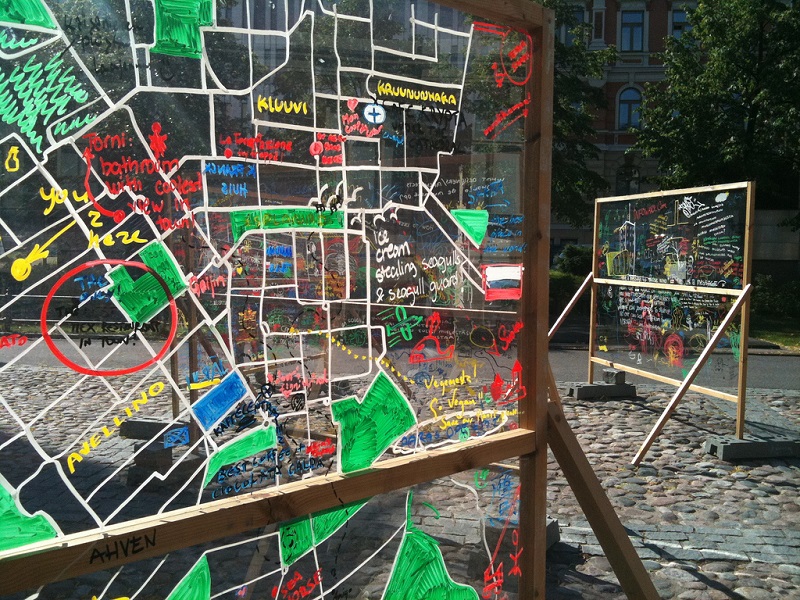
This blog was originally published by Nick Wright on 24 November 2020 on his website here.

Communities sometimes ask: what’s the point of a community-led plan? Why sit around talking about a plan? Why not just get on with what needs to be done?
There are two answers to this. The first answer is: how do you know what needs to be done if you haven’t done a Community Action Plan? That’s because a really important part of Community Action Planning is asking the local community what’s important for them. Without asking people, the community won’t know what’s dearest to people and what could have most impact on their community.
For example, some folk might say that improving the local play area should be the number one priority, others might say build a swimming pool. Or different folk might say what’s needed are better health care, homes and jobs. The truth is that there’s no way of knowing without some kind of survey or research – like a Facebook survey or simple interactive map, for example.
The second point of doing a Community Action Plan is because it helps to unlock money and support. Whether for improvements to a park or something else, any project is likely to need a combination of:
- Money – from external funders or local organisations
- Time – from local volunteers, whether to put funding bids together or to do work on the ground
- Permission – from the owners of the park.
If a project is a priority in your Community Action Plan, it’s more likely to get the support it needs to happen.
And with Local Place Plans on the horizon, there’s the opportunity for Community Action Plans (which have a lot in common with Local Place Plans) to influence land use planning policy and public sector service delivery too. That means that community-led planning is an opportunity not just to progress the community projects, but also to influence public services and future development of land and buildings.
Let’s give some real examples – real success stories that other communities have achieved through Community Action Plans that I’ve been involved with over the last few years:
Crianlarich
The local community did a while back now, in 2011. Some of the projects in the Plan were things that the community could do themselves, like painting fences to smarten up the village. Others relied on the goodwill of others like the Council and the National Park Authority. The community took the attitude that they would simply get on with what they could do without waiting for others, whilst challenging others to step up to the mark.
It worked. Within days of the Community Action Plan being published, the National Park committed £15,000 to refurbish the public toilets. That might sound mundane, but they are an important reason for people to stop in the village whilst travelling between the Central Belt and the West Highlands. A few months later the local authority agreed to give the community control of a prominent disused railway yard in the very heart of the village, offering a 10 year lease to the local Community Development Trust. With local volunteers, the Trust quickly converted the yard into a visitor car park with picnic tables and attractive landscaping, encouraging visitors to stop and use the shop, cafe, bar and hotel.
 One of the bigger projects in the Community Action Plan was to create a signposted path network around the village – another part of the Plan’s strategy of encouraging visitors to stop in the village (and spend money!). Since much of the path network was on land owned by the Forestry Commission and it needed investment of over £100,000 to build new paths, the project took five years of hard work. But the end result was a network of new signposted paths which give local residents an opportunity to have safe walks away from traffic, and give visitors another reason to stop or stay. The success of the project also encouraged more local folk to get involved in the Community Council and the Development Trust.
Moffat
Moffat might be a little bigger than Crianlarich, but the lessons are just as relevant. had lots of priorities: eleven ‘game-changers’ emerged through the community engagement process, as you can see in the plan.
One of the immediate successes of the Community Action Plan was to get the local authority, Dumfries and Galloway Council, to the table. The local community had long been concerned that Moffat didn’t get much attention from the Council. Whether this was perceived or genuine doesn’t matter: the point was that within days of publication of the Action Plan, senior Council managers had agreed to come to a “Town Summit” in Moffat to discuss how to work together to deliver what was in the Plan. That was a big step forward for the community.
At the same time, specific projects highlighted in the Action Plan also began to move forward more quickly. Within weeks, the Action Plan helped to secure funding to replace a worn-out play area in Burnside Park near the centre of town.
A couple of bigger projects also began to move forward: the Community Council secured major funding from Sustrans to redesign the High Street less traffic-dominated and more accessible and attractive for pedestrians (especially for older and disabled people). And the idea of a Business Improvement District to support local businesses is being developed.
Both of these bigger projects are being taken forward jointly with the local authority, which is why the Town Summit was so important.
Johnstonebridge
The final example is Johnstonebridge, between Moffat and Lockerbie – a tiny place that proves you don’t need to be a big community to make use of a Community Action Plan.
During the community engagement for the Action Plan, the community’s big concerns were the need to keep local services (school, healthcare and village hall), have things for young people to do, and for community organisations to work together. When a local resident who was qualified as a youth leader saw the ’s recognition of how little there was for young people to do in the village, he offered to set up a youth club with local kids.
They jumped at the chance! Inclusion of the idea in the Community Action Plan meant that the club could quickly get money to pay for a weekly rental in the village hall and buy equipment. In a village of less than 400 people, having a weekly youth club attended by 30+kids with its own equipment and funds is a big deal.
You can see the Johnstonebridge Community Action Plan . It’s short and succinct, and worth a look to get you thinking about what a Community Action Plan for Kirkfieldbank might look like. What I think is good about it is that it sets seemingly small actions, like restarting the youth club, as part of a bigger picture – retaining population, public services and quality of life.

The common lesson…
Each of those three communities relied on local folk involved in a group to take things forward. In Johnstonebridge, all it needed was one local volunteer who used the Community Action Plan to get the necessary support. In Moffat and Crianlarich, the Community Councils (with the Development Trust in Crianlarich) took the lead in delivering the Community Action Plan – taking forward projects themselves and chivvying others along.
What’s important to remember is that, in all three places, projects only happened because they emerged as community priorities through the Community Action Planning process, and because the Community Action Plan showed how important they were.
That’s the point of Community Action Planning: it makes things happen.
Nick Wright of Nick Wright Planning.
BACK
Get The Latest Built Environment News, Policy Developments, Publications, Consultations And More.

BEFS News
BEFS has responded to a number of consultations in recent weeks. BEFS responded to the Scottish Government’s consultation on draft proposals for changes to Permitted Development Rights for the four development types selected for Phase 1 of their programme. Read the submission here. BEFS also responded to the Scottish Government’s technical consultation on proposed amendments to Scottish Planning Policy and Housing, here. Finally, look out for BEFS response to the Scottish Government’s consultation on the Draft Infrastructure Investment Plan that closes today and sets out a vision for Scotland’s future infrastructure, on our consultations page.
Historic Environment Scotland (HES) would like your feedback on the Make Your Mark Community Heritage Volunteer Recruitment Campaign. Find out more here.
Next week is National Maintenance Week (20-27 November 2020) – the SPAB’s annual reminder to give your home, whether it’s a 1930s semi-detached or a medieval manor, a maintenance check before the winter months. Alongside resources and top tips for keeping buildings in good condition, SPAB’s National Maintenance Week 2020 includes a number of free online events to help owners and users get to know their old buildings better and take practical action to look after them. Find out more about the events including one tailored specifically for Scotland, one for Faith buildings and then some more general maintenance talks, here.
Edinburgh World Heritage and writer Vivian French have published a new education resource for children in primaries 3 and 4 and their families for Book Week Scotland. Designed for outdoor learning, it is aimed at making children more aware of the state of traditional buildings in the World Heritage Site, getting them involved in identifying signs of neglect, and encouraging a conversation around maintenance as a solution. The resource takes the form of a ‘story trail’. Find out more here and download the trail.
Icon Scotland is welcoming BEFS Director Euan Leitch as the speaker for its 23rd annual Plenderleith Memorial Lecture next Thursday, 26th November. Book now!
In addition to those mentioned, there are number of exciting events and training opportunities coming up at the end of the month from across the sector, so do check them out in the events section below.
Consultations
Draft Infrastructure Investment Plan – 2021-22 to 2025-26
Closes 19 Nov 2020.
Equality at the Heart of HES: Our Equality Outcomes Consultation
Closes 30 Nov 2020.
Fair Rents (Scotland) Bill
Closes 7 Dec 2020.
HES – Talking About Heritage
Closes 15 Dec 2020.
Community Heritage Volunteer Recruitment Campaign
Closes 15 Dec 2020.
Publications
Northern Powerhomes: A green recovery plan to decarbonise homes in the North (IPPR 17/11/20)
Coronavirus (COVID-19): tourism and hospitality sector guidance (SG 09/11/20)
Affordable housing for rural and island communities (SG 11/11/20)
Coronavirus (COVID-19): guidance for the performing arts and venues sector (SG 10/11/20)
Coronavirus (COVID-19): tourism and hospitality sector guidance (SG 09/11/20)
Green Recovery Inquiry – Report (ECCLR Committee SP 08/11/20)
RIAS Quarterly – Activism in Architecture (11/20)
Measuring What Matters – Planning Outcomes Research (RTPI 11/20)
Productive Placemaking (APPG Building Communities 11/20)
News Releases
£194,349 awarded to coasts and waters heritage projects (HES 16/11/20)
Historic Environment Scotland has awarded funding to eighteen projects across the country.
World heritage status for Scottish peat bogs could help UK hit net zero goals (Guardian 13/11/20)
Hopes rise that the Flow Country, the world’s largest carbon store, could become first peatland to win the status.
European Commission and Europa Nostra announce Europe’s top heritage award winners 2020 (EN 10/11/20)
The winners of the 2020 European Heritage Awards / Europa Nostra Awards, Europe’s top honour in the field, were celebrated this afternoon with a virtual gathering that connected heritage lovers, professionals, volunteers and supporters from across Europe and beyond.
Government loses potential for £15bn economic boost and job creation (FMB 05/11/20)
The Government must cut VAT on home improvement works to 5% to boost jobs and stimulate the economy. This is in response to the PMI data, published today, which shows that staffing numbers across the construction sector were in decline.
Archaeological Scientists – ScARF Needs You! (ScARF 11/20)
Please get in touch with us directly if you haven’t heard from us yet and would like to be involved in our ScARF Science update project.
We’re backing the heritage sector to adapt and thrive again (NLHF 04/11/20)
As everyone around the UK faces the challenges of responding to COVID-19 amid varying guidance and restrictions, our Chief Executive shares The Fund’s latest plans to support our heritage community.
Green New Deal: Glasgow (CW 11/20)
Explore our interactive remodelling of the city, where we visualise a transformative space that puts people and the climate first.
Opinion & Comment
Parliamentary Questions
Questions marked with a triangle (?) are initiated by the Scottish Government in order to facilitate the provision of information to the Parliament.Questions in which a member has indicated a declarable interest are marked with an “R”.
Question S5W-33042: Claire Baker, Mid Scotland and Fife, Scottish Labour, Date Lodged: 05/11/2020
To ask the Scottish Government how the £97 million in UK Government consequentials announced on 5 July 2020 has been allocated as packages of support for the arts, culture and heritage sectors, and how much is still to be distributed.
Question S5W-33091: Liam McArthur, Orkney Islands, Scottish Liberal Democrats, Date Lodged: 06/11/2020
To ask the Scottish Government how much it is has invested in (a) decarbonising heat and (b) improving energy efficiency in each of the last five years, broken down by sector.
Question S5W-33094: Liam McArthur, Orkney Islands, Scottish Liberal Democrats, Date Lodged: 06/11/2020
To ask the Scottish Government how much funding it has allocated to improve the energy efficiency of (a) business buildings, (b) local authority buildings, excluding housing, (c) social housing and (d) domestic housing in each of the last five years.
Question S5W-33095: Liam McArthur, Orkney Islands, Scottish Liberal Democrats, Date Lodged: 06/11/2020
To ask the Scottish Government what consideration it has given to prioritising the installation of low-carbon heating in the existing housing stock ahead of improving energy efficiency in that sector.
Parliamentary Questions & Answers
Questions marked with a triangle (?) are initiated by the Government in order to facilitate the provision of information to the Parliament.
Question S5W-32965: Jackie Baillie, Dumbarton, Scottish Labour, Date Lodged: 02/11/2020
To ask the Scottish Government whether it will temporarily re-categorise museums to allow them to be classified as public buildings and remain open in areas under tier 3 restrictions.
Answered by Fiona Hyslop (06/11/2020)
Question S5W-33092: Liam McArthur, Orkney Islands, Scottish Liberal Democrats, Date Lodged: 06/11/2020
To ask the Scottish Government what plans it has to reintroduce the Energy Efficiency (Domestic Private Rented Property) (Scotland) Regulations, and when it expects these will come into force.
Answered by Kevin Stewart (10/11/2020)
Question S5W-32616: Angus MacDonald, Falkirk East, Scottish National Party, Date Lodged: 16/10/2020
To ask the Scottish Government what plans it has for an awareness campaign on the implementation of changes to the Housing (Scotland) Act 1987 to ensure that homeowners, landlords, and those responsible for complying with the new regulations are aware of their responsibilities before 1 February 2021.
Answered by Kevin Stewart (30/10/2020)
Question S5W-32766: Andy Wightman, Lothian, Scottish Green Party, Date Lodged: 26/10/2020
To ask the Scottish Government what specific steps it has taken to inform homeowners of the changes introduced by the Housing (Scotland) Act 1987 (Tolerable Standard) (Extension of Criteria) Order 2019 since January 2019, and when it took these steps.
Answered by Kevin Stewart (02/11/2020)
Question S5W-32595: Liz Smith, Mid Scotland and Fife, Scottish Conservative and Unionist Party, Date Lodged: 15/10/2020
To ask the Scottish Government when it will publish the Scottish Land Commission Report on regional land use partnerships.
Answered by Roseanna Cunningham (16/11/2020)
Question S5W-33114: Jackie Baillie, Dumbarton, Scottish Labour, Date Lodged: 09/11/2020
To ask the Scottish Government what funding is available for tenement properties that require urgent repair.
Answered by Kevin Stewart (13/11/2020)
Question S5W-33113: Jackie Baillie, Dumbarton, Scottish Labour, Date Lodged: 09/11/2020
To ask the Scottish Government how much has been allocated to each local authority for improvement and repair grants in each year since 2007.
Answered by Kevin Stewart (13/11/2020)
Question S5W-33093: Liam McArthur, Orkney Islands, Scottish Liberal Democrats, Date Lodged: 06/11/2020
To ask the Scottish Government how many applications for support through the Warmer Homes Scotland scheme have been received in each of the last five years, broken down by eligibility criteria, and how many (a) have been approved, (b) have been rejected and (c) are awaiting a decision.
Answered by Kevin Stewart (12/11/2020)
Debates
Covid-19 Support (Tourism and Hospitality) (11/11/20)
Events
For the latest information about BEFS Members’ events see our events calendar.
Heritage Trust Network Conference 2020 – Grassroots Heritage: Empowering recovery
Date: Friday 20th November, with lead up events on the 19th.
Join HTN members and friends from across the UK, to find out how to drive your heritage project through recovery. Our expert speakers will offer guidance, knowledge and inspiration on a range of topics aimed to help you adapt and succeed in the most difficult of times. We will have sessions on fundraising, environmental sustainability, strategy and innovation, along with workshops from our key partners.
Edinburgh, Lothians and Borders Archaeology Conference
Date & time: Saturday 21 November 2020; 10:00am – 3:00pm.
This annual archaeology conference is organised by City of Edinburgh Council, East Lothian Council and Scottish Borders Council. It provides an important opportunity to hear and discuss first hand accounts of the archaeological fieldwork and research being undertaken in Edinburgh, East Lothian, Midlothian and the Scottish Borders. This year the conference will be held online. It is free to attend, but please book a place.
Maintenance Matters in Scotland
Dates: 20 – 27 November 2020
Prerecorded Online Lecture
Free – registration required
This illustrated lecture will focus on identifying and tackling commonly-encountered maintenance issues for old buildings in Scotland, with reference to typical building forms, materials and environmental conditions. Presented by Jamie McNamara, current Chairperson of SPAB Scotland. Jamie has worked with the conservation of canals, churches, city regeneration schemes and within the traditional skills area.
Maintenance for Faith Buildings
Dates: 20 – 27 November 2020
Prerecorded Online Lecture
Free – registration required
In this session, we will consider the importance of regular care at places of worship of all dates and types, as well as the vital role played by volunteers in looking after these complex buildings at the heart of our communities. Presented by Kate Andrew, heritage consultant. Kate was a regional project officer for the SPAB’s recent Maintenance Cooperatives Project (MCP).
Maintenance Question Time
Date & time: 21 November 2020, 11:00 – 12:00
Live Online Forum
Free – registration required
All buildings, old and new, benefit from regular care, and many maintenance tips are widely applicable. Join the SPAB’s advisers for this interactive introduction to maintenance, which includes an online Q&A and discussion of how to tackle some of the common problems found with old buildings, and how regular care and attention can prevent or reduce them.
Maintenance Matters! An Introduction to Caring for Your Old Building
Date & time: 24 November 2020, 14:30 – 15:30
Live Online Lecture
Free – registration required
This illustrated talk explores how old buildings are different to new, how and why they can decay, what maintenance is and why it’s important. It includes practical advice on getting started and working safely. Presented by James Innerdale, an architect and historic buildings consultant. James was the Technical Officer for the SPAB’s recent Maintenance Cooperatives Project (MCP).
If you seek a monument, gaze around
Date & time: 26 November 2020; 18:00 – 19:00.
Great sculptors have lived and worked in Edinburgh for centuries, and the city has one of the finest collection of public monuments of any city. In this live event, our panel will talk about their favourite Edinburgh sculpture, and discuss whether the city’s monuments present an incomplete and outdated version of the past. Special guests include sculptor Alexander Stoddart, the Queen’s Sculptor in Ordinary in Scotland, Director of Edinburgh Art Festival Sorcha Carey and more.
Archaeology Scotland Online AGM and Members’ Day 2020
Date & Time: Saturday 28th November 2020 10am – 12noon.
Online via Zoom.
Short description of event: Archaeology Scotland is excited to welcome you to our online AGM and Members’ Day. Not a member? That’s ok. We have a number of talks open to non-members on topics such as The Peebles Bronze Age Hoard, Stobs’ Camp, and Archaeologists of the Future for those budding young archaeologists out there. We hope to see you there!
“Whose Festival is it Anyway?” The 2020 Cockburn Association Annual Lecture
Date & time: Monday 30th November at 7.00pm.
Online (Zoom).
Join Professor Cliff Hague as he delivers 2020’s Annual Cockburn Lecture, this year discussing what Edinburgh’s Festivals should look like in the future. He will discuss how the sheer scale of the city’s Festivals has come to be a source of controversy to many residents and offer some suggestions how these events might become more citizen-friendly from 2021 onwards. His talk will build on the “Our Unique City” manifesto produced by the Cockburn Association that outlines our vision for life in Edinburgh in a post-COVID era. Tickets to the event are free to Cockburn members and by donation to non-members.
Scottish Housing Policies after Covid: Challenges and Constraints to 2025
Dates: 1-3 Dec. 2020.
As 2020 comes to a close, and the news of potential vaccines for Covid-19 brings new hope of recovery in 2021, the CaCHE Scottish Housing Policy Conference (SHPC) provides a space for all to: 1) look back at the housing impacts of the pandemic to date; and, 2) look ahead to the long-term impacts for housing choices and policy in Scotland over the next five years. The SHPC is an annual conference organised by the UK Collaborative Centre for Housing Evidence (CaCHE). This year, the conference will be held virtually for the first time and will take place across three days, featuring a combination of pre-recorded materials and panel discussions with leading academics and professionals from across Scotland and beyond.
At the Heart of the Community – A Future for Your Church
Date & time: Wednesday 2nd December, 10 – 11am
Heritage Trust Network and Historic Churches Scotland are joining forces to host this introductory discussion forum for any group contemplating the future of their church building. Whether you have managed your church for decades or currently contemplating taking the building on, this event is for you.
The Rhind Lectures
Dates & times: Six free lectures open to all, premiered one every evening at 6pm from Sunday 13 December 2020 to Friday 18 December 2020.
Online via the Society YouTube channel, with a live Q&A on Zoom for the final lecture.
The Rhind Lectures are our most highly anticipated event of the year. Since 1876 the Society has invited experts to give an annual series of six lectures on a historical or archaeological topic. This year, Dr Alison Sheridan FSAScot will discuss the Neolithic period in Scotland, from the first appearance of farming to the end of the era with the arrival of new people, ideas, technology and practices from the Continent around 2,500 BC.
Training
Damp, Masonry Decay, & Sustainability
Dates & times: 2.00-3.45pm online on three consecutive Thursdays: 19 & 26 Nov, 3 Dec 2020
– Day 1
– Day 2
– Day 3
Moisture is a key factor in almost all forms of decay, and damp fabric increases heat loss. However, identifying its source can be complicated as moisture is so mobile. It can condense from humid air onto cold surfaces and it can spread through a structure by capillary action and gravity. Understanding these mechanisms and their consequences is vital, particularly now that we are increasing insulation levels in historic buildings and restricting ventilation. Getting it wrong can be disastrous.
Keeping in touch with your supporters: keeping yourself right with data protection law (GDPR)
Date & time: Wednesday, 25 November 2020; 13:00 – 16:00.
Online via Zoom.
During this difficult time when so many venues are closed, we are keeping in touch with our audiences, supporters and followers virtually. Of course some events can take place online and as a result you may obtain more contact information and personal data than you usually do, but what can you do with that lawfully? The proper use of personal data is important, not only to ensure compliance with the law but also to maintain the trust of supporters. This session will provide you with an understanding of the law, using practical examples from the sector to bring the topic to life.
CPD: Retrofitting the Canongate Housing Development
Date & time: Wednesday 2nd December 2020 – 12:30-1:30pm.
Online via Zoom.
Addressing energy efficiency is one of the most pressing issues for older, traditionally-constructed buildings. Retrofitting can bring new life to old buildings whatever their age, use or type. Low energy refurbishments designed to minimise fuel bills will enhance traditional buildings for improved function and less running costs whilst retaining original features and charm. Join us for this CPD, delivered by Scott Abercrombie and Barbara Lantschner from John Gilbert Architects, to look in detail at their retrofitting methodology in the context of their ongoing project to improve the energy efficiency of the Canongate Housing Development, alongside undertaking vital conservation work.