



Hew Edgar, Policy Manager for RICS Scotland, discusses a Tenement Health Check policy proposal published by the Royal Institute of Chartered Surveyors in Scotland.

Is your roof a catalogue of problems? Copyright John Gilbert @Under One Roof Scotland
Following significant stakeholder engagement, we have published our Tenement Health Check policy proposal. This establishes mandatory five-year building condition surveys, with an objective to tackle poor maintenance in residential properties with common parts.
We believe that a significant part of Scotland’s existing housing stock is at risk from lack of maintenance – this must be addressed urgently. Building maintenance is key to sustaining and future-proofing the fabric of buildings of every kind and nowhere is this more problematical than in the case of buildings in Common Ownership.
Our Tenement Health Check policy proposal outlines how Government intervention, owner responsibility and greater stairwell communication can ensure well-maintained buildings can provide adequate living conditions now and for generations to come. Neglected buildings cause social problems and end up being condemned, which will only exacerbate a housing supply problem that is already critical.
Poor maintenance of buildings in common ownership is prevalent throughout Scotland, irrespective of location and whether or not third party management arrangements are in place; this points to systemic problems that require government action. We propose, as part of the solution to this, measures to encourage, and if necessary compel, common owners to have condition surveys undertaken every five years.
The harrowing state of Scotland’s tenements
The Scottish Housing Condition Survey for 2015 was published in December 2016 and painted a harrowing picture of the current condition of Scotland’s housing stock – particularly the “old stock”, which were built pre-1919.
The figures indicated that the number of tenement properties in Scotland reached 579,000; equating to 24% of all domestic property, the most common type of dwelling in Scotland.
Tenements that were built pre-1919 amounted to 218,000 (38% of tenement stock, 9% of total stock), making them the second most common occupied property type in Scotland, behind post-1982 detached properties.
We have deep concerns that this survey’s figures indicated that 68% of pre-1919 dwellings are with “critical disrepair” (down from 72% in 2014) and 8% of pre-1919 dwellings are with “Critical, Urgent & Extensive disrepair” (up from 5% in 2014).
It is clear that property maintenance is not high on the agenda of either Government or owners; this could have huge ramifications for future generations.
This is a national problem that requires a national solution; we hope that property maintenance will be a considered a key Government policy in 2017.
Tenement Health Check Policy Proposal
BACK
BEFS Chair, Graeme Purves, reviews Lou Rosenburg’s Scotland’s Homes Fit for Heroes: Garden City Influences on the Development of Scottish Working Class Housing 1900 to 1939; The Word Bank (2016).

Lou Rosenburg’s book makes a very valuable contribution to our understanding of the evolution of working class housing provision in Scotland in the early part of the 20th Century. It is meticulously researched, well written, attractively laid out and generously illustrated with photographs, plans and period artwork.
The book explores the form and design influences on the 240,000 houses built by Scottish local authorities between 1919 and 1939, with a particular focus on those built under the Town Planning (Scotland) Act 1919, the Coalition Government’s response to the wartime demand for ‘Homes fit for Heroes’. The new housing schemes were strongly influenced by the English arts and crafts forms of the garden cities movement. Cottages became the preferred form of provision as traditional tenements fell out of favour because of their association with overcrowding and insanitary conditions. However, habit and budgetary constraints often led to compromise and a native form of garden suburb development emerged, incorporating distinctively Scottish elements such as pavilion-style tenements and four-in-a-block cottage flats.
Before the First World War, a number of cottage developments influenced by garden suburb principles had been pioneered by local authorities and public utility societies. During the War, the need to accommodate civilian defence workers led to significant new developments at a number of strategically important locations, including Rosyth, Gretna, Greenock, Glengarnock and Invergordon.
By 1925, 25,000 houses had been completed under the 1919 Act, only a fraction of the 120,000 units which the Ballantyne Commission had estimated to be required in 1917. Shortages of labour and materials meant that local authorities and public utility companies were unable to achieve the construction levels required. Despite the generous subsidies made available by central government, high construction costs meant that rents were generally set at levels which were beyond the means of poorer households. In the mind of officialdom, the ability to pay rent quickly became a more important consideration than war service.
Rosenburg’s painstaking scrutiny of valuation rolls has identified some 300 schemes developed under the 1919 Act. These are very widely distributed throughout Scotland, with a remarkable 30% outside burghs. Many are of outstanding quality. Some of the most charming examples were built in small settlements in rural areas, often by county councils. While the contribution of public utility societies was modest, a significant garden cottage scheme was developed by the Kinlochleven Village Improvement Society to provide accommodation for employees of the British Aluminium Company, and the Scottish Veterans’ Garden City Association built nearly 200 houses in small developments across Scotland.
A welcome aspect of Rosenburg’s book is the information he provides on the work of officials such as William E. Whyte, politicians such as John Wheatley and Jean Mann and architects such as Joseph Weekes and John A.W. Grant. The personal contributions to the improvement of housing conditions of figures such as these deserves to be more widely recognised.
With the Scottish Government consulting on the reform of the planning system, Scotland’s Homes Fit for Heroes provides a timely reminder of a period when Government felt confident enough to drive forward improvements in the form and quality of new housing.
Graeme Purves
BACK
Scottish Ministers have finally published their decision to refuse planning permission to extend mineral extraction into the buffer zone of the New Lanark World Heritage Site. Are the questions raised in July 2015 by BEFS Director, Euan Leitch, answered?

Details of the planning scenario are outlined below in a previous blog but it has taken 18 months for the decision to be issued. Briefly, permission for the the gravel quarry to extend into the buffer zone of the New Lanark World Heritage Site for a period of 8 years followed by restoration was deemed acceptable by South Lanarkshire Council and Historic Scotland (now Historic Environment Scotland) in the face of local and international opposition. The Directorate of Planning and Environmental Appeals also found the planning application to be consistent with national and local planning policies and recommended approval. The Notice of Intention to refuse permission was taken while Alex Neil MSP held the position of Cabinet Secretary for Social Justice, Communities and Pensioners’ Rights, but the deision was published with Angela Constance MSP now taking up that role, albeit with Kevin Stewart MSP leading on planning issues as Minister for Local Government & Housing.
The reason for refusal by Ministers given is:
For clarity, paragraph 235 of Scottish Planning Policy under the heading of Promoting Responsible Extraction of Resources reads:
235. The planning system should:
- recognise the national benefit of indigenous coal, oil and gas production in maintaining a diverse energy mix and improving energy security;
- safeguard workable resources and ensure that an adequate and steady supply is available to meet the needs of the construction, energy and other sectors;
- minimise the impacts of extraction on local communities, the environment and the built and natural heritage; and
- secure the sustainable restoration of sites to beneficial afteruse after working has ceased.
Scottish Ministers therefore found 8 years to be too long a temporary period of adverse disruption to the World Heritage Site’s buffer zone, part of the Falls of Clyde Designed Landscape, that was not outweighed by a slight shortfall in the supply of aggregates. It should also be noted that the western extension of the quarry would not have resulted in a significant increase in employment.
The question previously asked was why the local and national government agencies were at odds with Scottish Ministers in their interpretation of national planning policies? Perhaps they are best left to answer but 8 years of disruption is a long time to a local community and in politics, particularly when there is little wider economic gain.
______________________________________
Scottish Ministers have published a Notice of Intention for the planning application to extend mineral extraction into the buffer zone of the New Lanark World Heritage Site. BEFS Director, Euan leitch, looks at how the decision was arrived at. First published 6th July 2015
Sand and gravel extraction has been taking place from a site east of New Lanark on the banks of the Clyde since the 1960s and in 2012 CEMEX UK submitted a planning application to extend operations 20 hectares southwards and 22 hectares westwards. The western extension would eat into the Bonnington Estate, part of the Falls of Clyde Designed Landscape, which is the buffer zone for the New Lanark World Heritage Site.
South Lanarkshire Council deemed the proposals compatible with the strategic and local development plan policies and Historic Scotland accepted that while it would have an adverse impact upon an inventory landscape it would not impact upon the outstanding univesal value of the world heritage site. Local people, Save Our Landscapes, the New Lanark Trust, the Garden History Society in Scotland (now Scotland’s Garden and Landscape Heritage) and the UK Committee of the International Council on Monuments and Sites disagreed with these findings and asked Scottish Ministers to call-in the planning application for independant scrutiny. Scottish Ministers agreed to a call-in and two Scottish Government reporters were assigned to the case and a hearing held over 3 days in August 2014.
The reporters submitted their report to Scottish Ministers in February of this year but it has just been made public along with Ministerial direction on June 26th. The report agreed with South Lanarkshire Council and Historic Scotland:
Having regard to the provisions of the development plan, and other statutory duties, the reporters’ conclude that there is a shortfall in the 10 year land bank of minerals in South Lanarkshire, and that the proposed development would:
- contribute to an identified shortfall in the supply of minerals;
- preserve, protect and enhance the character, integrity and quality of the NewLanark World Heritage Site and its setting (and its Outstanding Universal Value);
- protect, preserve and enhance the Falls of Clyde Designed Landscape;
- safeguard listed buildings, their settings, and any features of special interest they possess;
- preserve or enhance the character or appearance of the New Lanark and Falls of Clyde Conservation Area;
- protect scheduled ancient monuments and their settings;
- not adversely affect the overall quality of special landscape areas;
- not harm flora and fauna;
- stimulate the rural economy; and
- provide an acceptable restoration scheme.
Overall, the reporters’ find that the proposed development complies with the provisions of the development plan. They considered all the material and arguments submitted (as outlined in the summaries of case) but find that none lead them to a different recommendation.
The reporters therefore recommended that Scottish Ministers grant planning permsion subject to conditions.
The Notice of Intention finds otherwise. Scottish Ministers agree that the southward extension of the mineral workings would not impact upon the setting of the world heritage site (as did the other objectors) and is in line with planning policies but:
Turning to the western extension, Scottish Ministers note the reporters’ assertion in paragraph 9.38 that even if there was to be an impact on the WHS’s setting that it would be for a temporary period (up to eight years) while operations were carried out in the western extension, during which progressive restoration would be undertaken. Scottish Ministers are, however, of the view that disturbance of at least 8 years before positive restoration in the western extension (largely within the World Heritage Site buffer zone) is unacceptable and is not outweighted by the need for a supply of minerals, which is only marginally short. On that basis, Scottish Ministers consider that development in that part of the scheme should not be approved.
The report has therefore been returned to the Directorate for Planning and Environmental Appeals “so that the reporters can advise them on what conditions or legal agreements would be appropriate in respect of a permission granted on that basis.” The option of only granting the southward extension had been considered by the reporters but they recommended that refusal would be preferable allowing CEMEX UK to apply for that seperately.
The planning application garnered substantial public interest with several thousand objections both online and through a petition, recieving extensive media coverage over the past couple of years. The outcome does raise some interesting questions: if the local authority, the Scotttish Government’s heritage agency (Historic Scotland) and the Scottish Government’s reporters (DPEA) all agreed that the planning application met with Scottish Planning Policy, the Glasgow and Clyde Valley Strategic Development Plan and the South Lanarkshire Local Plan, are the policies flawed? If not, why is their interpretation so at odds with local and international opinion? As the Scottish Government has signed off on the policies in these documents why is their interpretation also at odds with their own agencies?
Or is it just evidence that planning is political?
You can find full details of the appeal here.
BACK
Details pertaining to Historic Environment Scotland in the Scottish Government’s Draft Budget.
 The Scottish Government announced the draft budget on 15 December and it includes details for Historic Environment Scotland.
Capital expenditure is raised by £2.2m and resource reduced by £1.5m. HES is anticipated to raise an additional £4.9m thorugh its own activities. Grants dispensed by HES on behalf of the Scottish Governmnet are to be maintained at the existing level of £14.5m, a figure which has remained static since 2006.
This is the section relevant to Historic Environment Scotland:
Historic Environment Scotland (HES)
Table 12.05: More Detailed Spending Plans (Level 3)
| Level 3 | 2016-17 Draft Budget £m |
2016-17 Budget £m |
2017-18 Draft Budget £m |
| Operational Costs | 81.6 | 81.4 | 84.8 |
| Capital Expenditure | 3.4 | 3.4 | 5.6 |
| Less Income | (40.0) | (40.0) | (44.9) |
| Total | 45.0 | 44.8 | 45.5 |
| of which: | |||
| DEL Resource | 41.6 | 41.4 | 39.9 |
| DEL Capital | 3.4 | 3.4 | 5.6 |
| AME | – | – | – |
What the budget does
HES is the lead public body for the historic environment in Scotland, and takes the lead in delivering Scotland’s historic environment strategy Our Place in Time, in addition to having delegated responsibility for the care and management of Scottish Ministers’ Properties in Care. A significant portion of the grant-in-aid funding which HES receives is passed on to Scottish communities by way of grant schemes which fund the regeneration of Scotland’s town centres and the repair of historic buildings. Between 2006 and 2016, grants amounting to £140.6 million assisted repairs to the historic environment of over £591.3 million, evidencing the significant leverage that historic environment investment can deliver.
In 2017-18 HES will:
- promote and deliver a range of events in support of Scotland’s year of history, heritage and archaeology;
- continue to offer grant support to deliver benefits for communities by helping regenerate and promote the active use, care and maintenance of the historic environment, broadening access to it, promoting sustainable economic development and reinforcing local identity and sense of place;
- provide expert advice and guidance to encourage informed decision-making and achieve the right balance between conservation and sustainable change;
- promote learning and education to enhance knowledge, understanding and enjoyment of the historic environment, delivering learning programmes linked to the Curriculum for Excellence, to National and Vocational Qualifications and to opportunities in further and higher education; and
- maintain our funding for the Historic Environment Scotland external grants scheme at existing levels.
Full budget details are found here.
BACK
Get the latest historic environment events, jobs, news and publications in BEFS Bulletin.

BEFS NEWS
Scottish House Condition Survey 2015 has now been published. Key findings include that 52% of all of Scotland’s homes have disrepair to critical elements, 68% of all of Scotland’s traditionally built homes (pre-1919) have disrepair to critical elements, and just under 44% (43.8%) of all dwellings failed to meet the SHQS. These findings suggest a small improvement in house conditions on the previous year.
A Member’s debate on Edinburgh’s World Heritage Site is taking place in the Chamber today at 12.45 pm: S5M-02445 Gordon Lindhurst: The Future of Edinburgh’s World Heritage Site. You can watch the debate live over lunch on Parliament TV.
Do you want to make the next Scottish planning system more community-friendly? Tell the Scottish Government how by completing this short survey for research into barriers to engagement. The research results will feed into the Scottish Government’s Planning Review:
The Scottish Government is also seeking views on a proposed new maximum fee for major planning applications in a consultation on raising planning fees.
The Year of History, Heritage and Archaeology 2017 was launched last week by Cabinet Secretary, Fiona Hyslop MSP, at Mary King’s Close in Edinburgh. Nine events supported by a £300,000 Signature Events Fund have been announced with more to be revealed in the coming weeks. A Great Roman Bake-Off, large scale projections of Viking imagery, a live archaeological dig of St Kilda in Minecraft and an international weaving festival are among the events lined up for 2017.
CONSULTATIONS
Consultation on proposed ‘banning order offences’ under the Housing and Planning Act 2016 (DCLG 13/12/16)
Invites views and comments on which offences should constitute ‘banning order offences’ as defined in the Housing and Planning Act 2016.
Consultation on Raising Planning Fees (SG 05/12/16)
The Scottish Government recognises the importance of planning in supporting economic growth, in the delivery of quality homes and in community empowerment. We have committed to consulting on enhanced fees, following the independent review of planning recommendation that fees for major applications should be increased substantially so that the service moves towards full cost recovery.
Opened 5 Dec 2016 and Closes 27 Feb 2017.
PUBLICATIONS
SB 16-96 Housing Subject Profile (SP 05/12/16)
This briefing provides an overview of housing policy in Scotland. It describes recent trends in housing tenure and the housing market and provides information on the legislative and administrative background.
SB 16-97 Implications of Leaving the EU – Environment (SP 05/12/16)
This briefing highlights the EU framework that relates to environment policy and explores the implications that leaving the EU may have on Scotland’s approaches to the environment. The briefing also sets out some views on how alternatives to EU membership may impact on Scotland’s approaches to environmental protection and some of the challenges associated with untangling EU, UK and Scottish environmental law.
Architectural Heritage Fund Celebrates Successful Year (AHF 01/12/16)
Successful historic building restoration projects across the UK are celebrated in the Architectural Heritage Fund’s annual report published on 1 December 2016. As well as showcasing award winning buildings and completed regeneration projects, the AHF’s first impact measurement survey reveals the indirect outcomes for local communities and highlights a number of issues relating to the health of the sector.
Climate Change Adaptation for Traditional Buildings (HES 10/16)
This Short Guide describes the key aspects of the external envelope of a traditional building that provide protection against the elements, and considers how these can be improved or adapted to increase a building’s resilience to extreme weather events.
SCOTTISH GOVERNMENT NEWS RELEASES
Planning decision times published (SG 14/12/16)
An Official Statistics Publication for Scotland. Latest quarterly statistics on planning applications decided in July to September 2016 show that the average decision time for local developments was faster than the equivalent quarter in the previous year, but that the average decision time for major developments was slower.
New build housing completions up by 4% on last year (SG 13/12/16)
A National Statistics Publication for Scotland. There were 15,991 new build homes completed in the 12 months to June 2016, an increase of 591 homes, or 4%, on the 15,400 homes completed in the previous year.
Changes to Modern Apprenticeships (SG 08/12/16)
New measures to boost access. New changes to Modern Apprenticeships will provide more flexibility for employers, including those in the public sector, while also widening access for rural communities, people with disabilities and experience of care.
80 affordable homes for Dumfries (SG 08/12/16)
£6.8m investment in charitable bonds. 80 affordable homes will be built in Dumfries as a result of the Scottish Government investing £6.8 million in charitable bonds.
Designing with the experts (SG 06/12/16)
£300k for local projects. Communities across Scotland have the opportunity to map out the future of their areas alongside design experts following the awarding of Charrette grants from the Scottish Government. Charrettes bring together the public, stakeholders and designers over a number of days to draw up proposals to make their towns and villages better places to live.
NEWS RELEASES
Napier’s timber technology research hub (FCS 08/12/16)
Edinburgh Napier University announced that it will be investing £3 million into a new research hub that will support the construction of sustainable housing in the UK. The University says that the facility will be open in the Spring 2017 and that it will work with the industry to “accelerate the development of a range of timber technologies.”
New national plan and funding brings bigger boost to estate regeneration (DCLG 08/12/16)
A new government strategy and additional funding will breathe new life into rundown estates Communities Secretary Sajid Javid announced today (8 December 2016).
A different way of addressing fuel poverty (STBF 07/12/16)
For properties to be energy efficient, the Scottish Traditional Building Forum believes the condition of Scotland’s properties needs to be urgently addressed by undertaking repairs to failed critical elements then ongoing maintenance to ensure they do no reoccur. Particular attention should be paid to traditional homes (pre 1919) due to highest level of disrepair and fuel poverty.
Europa Nostra supports nomination of Rosia Montana for UNESCO World Heritage status (EN 06/12/16)
Europa Nostra and its President Plácido Domingo welcome the landmark decision by the Romanian Government to nominate the ancient mining landscape of Ro?ia Montan? for UNESCO World Heritage status.
First year of Land and Buildings Transaction Tax “operationally successful” but too early for conclusions says Committee (SP 05/12/16)
Scotland’s transition to the new Land & Buildings Transaction Tax (LBTT) was ‘operationally successful’, says the Scottish Parliament’s Finance and Constitution Committee.
Data protection – how secure are you? (SCVO 05/02/16)
Exploring the seventh data protection principle: organisational and technological measures.
Edinburgh set to take increased action on climate change (HES 01/12/16)
City wide climate change vision set out in new action plan. A shared action plan and vision to improve Edinburgh’s resilience to climate change has been unveiled today – Thursday 1st December – at Holyrood Park. Edinburgh Adapts 2016-2020 is a city wide climate change action plan, the first of its kind, aiming to help the Scottish capital prepare for and adapt to the effects and challenges of a changing climate.
New Data Uncovers Surge in Heritage Interest in England (Historic England xx/12/16)
Visits to historic sites are growing, membership of heritage organisations is increasing and participation in heritage is becoming more inclusive, according to this year’s Heritage Counts reports. The reports have been published today by Historic England on behalf of England’s leading heritage organisations which make up the Historic Environment Forum.
Heritage Counts (Historic England xx/12/16)
Heritage Counts is the annual audit of England’s heritage, first produced in 2002. It is produced by Historic England on behalf of the Historic Environment Forum. The Historic Environment Forum is the high level cross-sectoral committee for England, bringing together chief executives and policy officers from public and non-government heritage bodies to co-ordinate initiatives and strengthen advocacy work and communications.
PARLIAMENTARY QUESTIONS
Questions marked with a triangle (?) are initiated by the Scottish Government in order to facilitate the provision of information to the Parliament.Questions in which a member has indicated a declarable interest are marked with an “R”.
S5W-05424 Graham Simpson: To ask the Scottish Government (a) how many and (b) where vacant and derelict town centre buildings have been brought back into use as affordable housing through the Town Centre Housing Fund.(08/12/16)
S5W-05288 Mark Ruskell: To ask the Scottish Government what steps it is taking to ensure that new fish farms do not undermine the conservation objectives of the marine protected area network. (SP 05/12/16)
S5W-05289 Mark Ruskell: To ask the Scottish Government how the Community Empowerment (Scotland) Act 2015 supports participatory planning for coastal communities in relation to the development of fish farms, and what impact the proposals in the Islands Bill would have. (SP 05/12/16)
S5W-05277 Graham Simpson: To ask the Scottish Government what its assessment is of the move toward e-building standards by local authorities and how this has impacted the delivery of building standards warrants (SP 05/12/16)
S5W-05282 Graham Simpson: To ask the Scottish Government how much local authorities have invested in technology specifically in advance of the e-building standards portal roll out. (SP 05/12/16)
S5W-05283 Graham Simpson: To ask the Scottish Government what assessment it has made of the uptake by local authorities of e-building standards. (SP 05/12/16)
(S5O-00438) Alison Harris: To ask the Scottish Government whether it will provide an update on what action it is taking in response to the findings of the Independent Review of the Scottish Planning System. (SP 01/12/16)
(S5O-00432) Mary Fee: To ask the Scottish Government when it last received an update from COSLA or the Association of Local Authority Chief Housing Officers regarding the enforcement of minimum standards for Gypsy/Traveller sites. (SP 01/12/16)
PARLIAMENTARY QUESTIONS & ANSWERS
Questions marked with a triangle (?) are initiated by the Government in order to facilitate the provision of information to the Parliament.
Question S5W-05010: Pauline McNeill, Glasgow, Scottish Labour, Date Lodged: 24/11/2016
To ask the Scottish Government how many units were proposed in the Strategic Housing Investment Plans that were submitted to its More Homes Division (a) in total and (b) from each local authority.
Answered by Angela Constance (06/12/2016)
Question S5W-05008: Pauline McNeill, Glasgow, Scottish Labour, Date Lodged: 24/11/2016
To ask the Scottish Government when it will publish the Strategic Housing Investment Plans that were submitted to its More Homes Division.
Answered by Angela Constance (06/12/2016)
Question S5W-05007: Pauline McNeill, Glasgow, Scottish Labour, Date Lodged: 24/11/2016
To ask the Scottish Government whether it will allow Housing Infrastructure Fund loans to be used from 2017-18 to support the provision of community infrastructure, such as schools, that is required as a result of new housing development.
Answered by Kevin Stewart (05/12/2016)
Question S5W-05150: Murdo Fraser, Mid Scotland and Fife, Scottish Conservative and Unionist Party, Date Lodged: 29/11/2016
To ask the Scottish Government what assessment it has made of the impact of delays in obtaining building control consent on (a) the industry and (b) its housing targets.
Answered by Kevin Stewart (12/12/2016)
Question S5W-05149: Murdo Fraser, Mid Scotland and Fife, Scottish Conservative and Unionist Party, Date Lodged: 29/11/2016
To ask the Scottish Government what its position is on whether local authorities have improved the quality of the building standards verification service since 2011.
Answered by Kevin Stewart (12/12/2016)
Question S5W-05147: Murdo Fraser, Mid Scotland and Fife, Scottish Conservative and Unionist Party, Date Lodged: 29/11/2016
To ask the Scottish Government what its position is on whether local authorities are sufficiently resourced to provide the building standards verification service.
Answered by Kevin Stewart (12/12/2016)
Question S5W-05145: Murdo Fraser, Mid Scotland and Fife, Scottish Conservative and Unionist Party, Date Lodged: 29/11/2016
To ask the Scottish Government (a) when and (b) how it will consult on the appointment of building standards verifiers.
Answered by Kevin Stewart (12/12/2016)
OTHER PARLIAMENTARY ACTIVITY
The Parliament has agreed the following parliamentary recess dates:
• 24 December 2016 to 8 January 2017 (inclusive)
• 11 to 19 February 2017 (inclusive)
EVENTS
For the latest information about BEFS Members’ events see our events calendar.
Hard hat tours of Riddle’s Court
When: Saturday 17th December, 2016, 10.00-16.00.
Where: Riddle’s Court – enter at 6 Victoria Terrace.
SHBT are opening Riddle’s Court as part of Edinburgh’s Christmas Advent Doors Open programme. This will be the final opportunity for the public to tour the site works. Our project team, including architects from LDN, will be guiding groups around the building. The tours are free but must be booked in advance.
Heritage and Conservation Seminar
When: Wednesday 25 January 2017 from 1.50pm to 6pm followed by a wine reception.
Where: University of Stirling.
Leading practitioners will explore current issues in heritage and conservation, supported by concrete examples. The aim is to encapsulate: different types of heritage (cultural and natural landscapes, buildings, monuments, intangible, collections); different aspects of heritage work (knowledge and understanding, understanding value, managing change, protection and conservation, engagement and enjoyment); different types of organisations (central and local government; heritage bodies; umbrella organisations, etc.); strategic and coal-face activities. Places are free for CIfA members only.
CIfA2017 Archaeology: A Global Profession
When: Wednesday 19 – Friday 21 April 2017
Where: Newcastle University.
The Chartered Institute for Archaeologists annual conference will provide an opportunity for heritage professionals to discuss, consider and learn about archaeological practice on a world stage through three broad themes of professionalism, protection and discovery. There will be half-day sessions within traditional paper format, discussion/panel seminars and CPD workshops, these themes will accommodate an exciting programme.
Training
GIS workshop
When: Thursday 9 February 2017 from 10am to 4pm.
Where: High Life Highland, Highland Archive Centre, Inverness.
The course will provide basic instruction on using QGIS, an Open Source GIS programme. Students will learn how to add GPS data, background maps and images and to create point, polyline and polygon GIS files.
Resourcing Scotland’s Heritage is delivering a series of training courses and events across Scotland.
Our training is best suited to registered charities and constituted community groups. Take a walk through our simple question and answer page to determine which course is right for you. We have two main training courses and a series of ‘In Focus’ events. If you are interested in any particular event or fundraising topic, please do get in touch – we may be able to bring an event to your area info@scotheritage.org.
Traditional Building Skills Training
Scottish Lime Centre Trust offer a wide range of vocational and professional courses combining theory and practical working sessions designed to ensure that there are courses to suit everyone.
VACANCIES
The Scottish Historic Buildings Trust has a number of Job Vacancies:
Project Manager
SHBT is seeking an experienced Project Manager to take responsibility for initiating and executing high quality conservation and restoration projects on behalf of the Trust, demonstrating best practice in adaptive re-use of old buildings. This post is full-time.A Job Description is available by emailing recruitment@shbt.org.uk or visiting www.shbt.org.uk.
Closing Date 20th January 2017.
Building/Events Managers
SHBT is seeking two experienced Building/Events Manager to take on the overall management of two of its Edinburgh properties – Custom House in Leith and Riddle’s Court in the Lawnmarket. The Manager will be responsible for the day to day running of each property including management of all tenants as well as development and management of all events held within the public spaces. A proven track record of running a mixed use venue is essential. Evening and weekend working is an essential requirement of this job. A Job Description is available by emailing recruitment@shbt.org.uk or visiting www.shbt.org.uk.
Closing Date 27th January 2017.
Audience Development Officer – Patrick Geddes Centre
SHBT is undertaking a major capital project to restore Riddle’s Court and give it new life as the Patrick Geddes Centre for Learning. The construction phase is nearing completion and the Trust is seeking an experienced Audience Development Officer to develop new audiences in line with the Audience Development Plan to support the range of activities which will be delivered in the Centre when it opens in autumn 2017 and promote the Centre as a venue for hire. This post is part-time (currently 21 hours per week) and is part funded by the Heritage Lottery Fund. Evening and weekend working is an essential requirement of this job. A Job Description is available by emailing recruitment@shbt.org.uk or visiting www.shbt.org.uk.
Closing Date 3rd February 2017.
Director – Patrick Geddes Centre
SHBT is undertaking a major capital project to restore Riddle’s Court and give it new life as the Patrick Geddes Centre for Learning. The construction phase is nearing completion and the Trust is seeking to appoint a Centre Director who will be responsible for the strategic vision and direction of the Centre for Learning, overseeing the development and delivery of Learning Activities, delivering an interdisciplinary learning community and building an international reputation for the Patrick Geddes Centre in line with Patrick Geddes’ holistic approach to learning highlighted in the gateway to Riddle’s Court – ‘Vivendo Discimus’ – by living we learn. High level knowledge and understanding of the work of Patrick Geddes including a proven track record in delivering a range of learning activities and community programmes direct experience of managing Advisory Groups, teams of staff and volunteers and management of an educational or multi-purpose venue. This post is full-time and is part funded by the Heritage Lottery Fund. A Job Description is available by emailing recruitment@shbt.org.uk or visiting www.shbt.org.uk.
Closing Date 3rd February 2017.
MEMBERS’ NEWS
Shaping Place – An Introduction to Landscape Assessment (PAS 12/12/16)
PAS volunteer, Alastair Smith, shares his thoughts on a recent volunteer training event on landscape assessment hosted by Doug Harman.
Trust announces senior appointments (NTS 08/12/16)
Heritage and conservation charity the National Trust for Scotland, which has lately been undergoing a major change programme, has announced appointments to important new leadership roles.
IHBC consultation response: Managing Heritage Assets – A Guide for Local Government (07/12/16)
Historic England consulted on this document with a selected group of stakeholders, including the IHBC, with the IHBC Consultation Panel findings including that the document should refer to BS 7913: 2013 and better reflect the English Heritage advice on Disposal of Heritage Assets: Guidance note for government departments and non-departmental public bodies.
IHBC Jobs etc – the service that helps careers, employers and heritage (IHBC 02/12/16)
The IHBC has just released some internal employment data from our sector-wide IHBC Jobs etc service, which to date this year has advertised posts with a combined maximum of more than £6million of stated salaries, for posts from property heads to facilities managers, and with 69% postings recommending IHBC membership or more.
Repositioning Planning – A vision for a reformed planning system (RTPI Scotland xx/12/16)
Kate Houghton outlines RTPI Scotland’s ambitions for coming planning reform.
Poor building maintenance – a threat to Edinburgh’s World Heritage Site (EWH 01/12/16)
Edinburgh World Heritage, together with the Society for the Protection of Ancient Buildings, has announced that complacency and lack of attention to basic building maintenance now represents a significant threat to the city’s World Heritage Site.
Information in the Bulletin is extracted from a number of websites including the Scottish Government (SG); the Scottish Parliament (SP); Architecture and Design Scotland (A+DS); Historic Environment Scotland (HES); Scottish Natural Heritage (SNH); Scottish Council for Voluntary Organisations (SCVO); English Heritage (EH); Design Council (DC); Department of Communities and Local Government (DCLG); Department of Culture, Media and Sport (DCMS); Department of Environment and Rural Affairs (DEFRA); National Assembly for Wales (NAW); Forestry Commission Scotland (FCS); Scottish Government Building Standards (SGBS); Europa Nostra (EN); Historic England (HE).
If you have any questions or comments on the above, or would like to submit information to be included, please get in touch with Saskia Smellie or tel: BEFS Office on 0131 220 6241
BACK
Euan Leitch, Director of BEFS, reflects on how social value is understood and how it can be incorporated within built environment policy.

Last week Historic Environment Scotland launched their survey What’s Your Heritage? asking the public about places that make them feel proud or have special meaning for them. This is the initial step of a two stage review of Scottish historic environment policy which will look at the criteria for designation and management of the historic environment.
Elizabeth McCrone, Head of Designations at Historic Environment Scotland, recently attended BEFS Historic Environment Working Group to share the thinking behind the review and what the next steps will be. She made clear that this first stage is targeted at the public, particularly seldom heard groups, rather than the professional or specialist communities already engaged in the historic environment. These will be consulted in the Spring of 2017 before a formal 12-week consultation on any proposals arising from the research. The ‘people first’ approach aligns with the 5 principles of Networked Heritage as recently published by the RSA:
- Start with People: Embed your work where people live daily life
- Heritage is what you choose to make it: Use assets in new ways and identify new assets
- Go beyond yesterday’s battles: Make the offer, rather than the ask
- Open up and lead the change: Think critically about power and leadership
- Help make heritage your local USP: And don’t rely on a strategy…
Sites such as the Tinkers’ Heart have challenged the current designation criteria and the Networked Heritage principles, like What’s Your Heritage?, may open up the criteria to include social value. It’s not by chance that last week BEFS had meetings with academics from the Universities of Glasgow and Stirling who are also exploring how social value is understood and how it can be incorporated within policy.
Some heritage professionals are disconcerted by this shift in approach. Is it a challenge to the role of the professional and dumbing down heritage? It certainly shouldn’t be the latter but it may be the former if it requires changing the language we use and incorporating values that may not have been part of our training. While the public tend automatically to place intrinsic value on pre-20th century places more recent heritage can be more contentious. A current listing proposal for post-war social housing has attracted some rather negative, and troubling, online comment. Is this where professionals could help people think about the transformational impact of social housing in twentieth century history as well as its contribution to the architectural record? Then again, when asked by the RIAS to choose their favourite building of the past century as part of Scotstyle, the popular vote went to Princes Square in Glasgow, vexing some architects. Public tastes and professional tastes do not always marry and, for professionals, understanding the reason why should be important.
But if “heritage is what you choose it to be” does that automatically mean it should be scheduled or listed? How can decision makers accommodate values the public attribute to assets and places that are undesignated by a national heritage organisation? Is designation the only way to protect a place? The HES research combined with the planning system reforms have the potential to result in policy proposals that better acknowledge values at a local level and will require all of us to engage constructively in the discussion.
BACK
Get the latest historic environment events, jobs, news and publications in BEFS Bulletin.

BEFS NEWS
Historic Environment Scotland (HES) has announced an ambitious national campaign to find out what heritage really means to the people of Scotland as part of the 2017 Year of History, Heritage and Archaeology. ‘What’s Your Heritage?’ is a multi-channel project that asks members of the public to reveal which of Scotland’s places, buildings and monuments they want to see recognised and celebrated.
In light of the HES campaign, Euan Leitch, Director of BEFS, reflects on how it complements other research on the understanding of social value, how it can be incorporated within built environment policy and what it means for the role of experts, in the first of two blogs this week.
The Heritage Index 2016 has now been launched. The index covers 120 indicators, with local data available for all 390 local authority areas in the UK’s four nations. It aims to give people a richer understanding of their place, so that they are inspired to get involved in shaping their place into the future.
We would also like to draw your attention to BEFS member RTPI Scotland’s publication Repositioning Planning: Building a Successful and Sustainable Scotland, which outlines 14 “gamechangers” they have suggested to the Scottish Government for inclusion in the Planning White Paper.
Bill Pagan, Board member of BEFS and founding Board member of Cupar Development Trust, reports on progress following Cupar’s CharrettePlus, in the second of our blogs.
CONSULTATIONS
Digital Transformation: Next Steps (SG 30/11/16)
Registers of Scotland (RoS) is developing a variety of new digital services. Part One of the consultation sets out detailed proposals for the introduction of these new services and the necessary changes to the Land Register Rules that would be required to facilitate them.
Runs from 30 Nov 2016 to 22 Feb 2017
Building Warrant Fees (SG 15/11/16)
The purpose of this consultation is to seek views on increasing building warrant and other associated fees to make the building standards system achieve full cost recovery and place it on a sustainable footing for the future.
Runs from 15 Nov 2016 to 9 Jan 2017
Improving transparency in land ownership in Scotland: a consultation on controlling interests in land (SG 11/09/16)
A consultation on proposals for regulations to require the disclosure of persons with controlling interest in landowners and tenants in a register to be held by the Registers of Scotland.
Consultation closes on 5 Dec 2016!
PUBLICATIONS
Repositioning Planning: Building a Successful and Sustainable Scotland (RTPI 24/11/16)
Fourteen “gamechangers” the RTPI Scotland has suggested to the Scottish Government for inclusion in the White Paper.
Small Housing Developers in Scotland: Views on outputs & future prospects; obstacles and solutions to building and Help to Buy Schemes (SG 21/11/16)
This is a report on a survey of small and medium sized enterprises in the building trade. It sets out their expectations for business in the future which are optimistic and the barriers they expect to face and how these could be addressed.
SCOTTISH GOVERNMENT NEWS RELEASES
Call for reassurance over European City of Culture (SG 29/11/16)
Brexit must not harm Dundee’s opportunity to host 2023 title. The UK Government must give urgent reassurance that its Brexit plans will not harm Dundee’s opportunity to bid to become the 2023 European Capital of Culture, Culture Secretary Fiona Hyslop said today.
Discretionary Housing Payments – over 86,000 awards support housing costs during April to September 2016 (SG 29/11/16)
An Official Statistics Publication for Scotland. Statistics released today by Scotland’s Chief Statistician show that during the period 1 April to 30 September 2016, Local Authorities in Scotland made over 86,000 Discretionary Housing Payment (DHP) awards. The average award value was £512, typically to cover shortfalls in housing costs through to 31 March 2017.
Brexit impact on research discussed (SG 24/11/16)
Roseanna Cunningham meets research institutes to discuss concerns. Discussions were held today over the possible consequences of Brexit on the Scottish Government’s main rural, agricultural and environmental research institutes. Roseanna Cunningham, Cabinet Secretary for Environment, Climate Change and Land Reform, met with directors and chairs from Scotland’s Main Research Providers to address how Brexit may impact non-UK EU employees and future access to EU funding.
Backing for city deal (SG 21/11/16)
UK Government should commit to City Region Deals. Economy Secretary Keith Brown has called on the UK Government to commit to a Tay Cities and Stirling and Clackmannanshire City Region Deal in the Autumn Statement. The Scottish Government has been working with local authorities to develop proposals for the city region deals which would stimulate economic growth in the area.
£250m Aberdeen City Region Deal (SG 21/11/16)
Signing completes agreement. The Aberdeen City Region Deal was launched today with the official signing of the £250million agreement. The terms of the deal commit both the UK Government and Scottish Government to jointly investing up to £250m while Aberdeen City Council, Aberdeenshire Council and local partners are committed to investing up to £44m over the next decade.
NEWS RELEASES
Stirling Castle crowned winner at new awards initiative (HES 30/11/16)
Stirling Castle has claimed the title of Scotland’s Best Visitor Attraction at the inaugural 2016 Scottish and Outdoor Leisure Awards. The centuries-old stronghold, which welcomes around 460,000 visitors through its iconic gates each year, was voted for by members of the public and visitors alike before being fully researched and reviewed by an independent judging panel.
The pros and cons of crowdfunding architectural projects (IHBC 25/11/16)
A CLAD magazine feature discusses how crowdfunding can help get projects started and allow architects to be proactive. The article gives advice on choosing the right crowdsourcing platform, raising the full amount needed and reaching out to the right audience.
Make planners statutory consultees in strategic local decisions, Scottish Government told (RTPI 24/11/16)
Strategic decisions by local authorities in areas such as economic development or education are often taken in isolation from planning departments and this needs to change, RTPI Scotland has told the Scottish Government.
Protecting the Stones of Worship (FCS 24/11/16)
Damage caused by a Pagan bonfire to the stone circle of Na Clachan Aoraidh – set high on the limestone ridge of Cnoc na Craoibhe above Loch Tummel in Tay Forest District – was turned into an opportunity to investigate and record the site in detail.
Every city in Scotland to share in multi-billion pound rebuild programme after Stirling award (Herald Scotland 24/11/16)
EVERY city in Scotland has now been awarded a City Deal with the announcement in the Autumn Statement that Stirling and Clackmannanshire are to receive the multi-million pound building boost.
Homeless village to be built in Edinburgh (BBC 24/11/16)
Scotland’s first village for homeless people is to be built in Edinburgh next year. Social Bite said 10 homes would be built in Granton to provide a low cost, safe environment for up to 20 people. The social enterprise said it wanted to create a model to end the “vicious cycle” of homelessness. Work on the village is expected to begin in early 2017, with the first residents expected to move into their homes by the summer.
Historic Environment Scotland Apprentices Scoop UK Awards (HES 24/11/16)
Two Scottish stonemasonry apprentices have taken Gold and Bronze respectively, in a UK-wide competition to find the country’s most talented construction apprentices. The SkillBuild Final – organised by the Construction Industry Training Board (CITB) – saw 78 competitors from across the UK, compete across 10 different trades, including bricklaying, wall and floor tiling, and painting and decorating.
Scottish councils spent £750m on temporary housing in last five years (Scottish Housing News 21/11/16)
Local authorities is Scotland have spent more than £750 million on temporary accommodation for homeless families in the last five years, according to new statistics. The data was obtained by the BBC as part of a wider investigation which found that the amount spent on temporary accommodation by councils across Britain was over £3.5 billion over the same period.
Local authorities praised for response to Syrian refugee crisis (Scottish Housing News 18/11/16)
Scotland has welcomed more than 1,200 Syrian refugees since the first flight arrived in Glasgow one year ago, according to the Scottish Government. With 29 local authorities receiving Syrian refugees to date, equalities secretary Angela Constance praised the country’s quick response to the humanitarian crisis as “phenomenal”.
Who is using Place Standard and for what? (A&DS 11/16)
Throughout November we have published a series of articles where we explore ways in which Architecture and Design Scotland has helped organisations to test, develop and apply the Place Standard. This has been part of our partnership work in jointly leading development of the tool with Scottish Government and NHS Health Scotland.
PARLIAMENTARY QUESTIONS
Questions marked with a triangle (?) are initiated by the Scottish Government in order to facilitate the provision of information to the Parliament.Questions in which a member has indicated a declarable interest are marked with an “R”.
S5W-05145 Murdo Fraser: To ask the Scottish Government (a) when and (b) how it will consult on the appointment of building standards verifiers. (SP 30/11/16)
S5W-05147 Murdo Fraser: To ask the Scottish Government what its position is on whether local authorities are sufficiently resourced to provide the building standards verification service. (SP 30/11/16)
S5W-05149 Murdo Fraser: To ask the Scottish Government what its position is on whether local authorities have improved the quality of the building standards verification service since 2011. (SP 30/11/16)
S5W-05150 Murdo Fraser: To ask the Scottish Government what assessment it has made of the impact of delays in obtaining building control consent on (a) the industry and (b) its housing targets. (SP 30/11/16)
S5W-05007 Pauline McNeill: To ask the Scottish Government whether it will allow Housing Infrastructure Fund loans to be used from 2017-18 to support the provision of community infrastructure, such as schools, that is required as a result of new housing development. (SP 25/11/16)
S5W-05008 Pauline McNeill: To ask the Scottish Government when it will publish the Strategic Housing Investment Plans that were submitted to its More Homes Division. (SP 25/11/16)
S5W-05010 Pauline McNeill: To ask the Scottish Government how many units were proposed in the Strategic Housing Investment Plans that were submitted to its More Homes Division (a) in total and (b) from each local authority. (SP 25/11/16)
PARLIAMENTARY QUESTIONS & ANSWERS
Questions marked with a triangle (?) are initiated by the Government in order to facilitate the provision of information to the Parliament.
Question S5O-00344: Gordon Lindhurst, Lothian, Scottish Conservative and Unionist Party, Date Lodged: 09/11/2016
To ask the Scottish Government what impact Edinburgh’s World Heritage Site status, and the built heritage within it, has on visitor numbers to the city.
Answered by Fiona Hyslop (16/11/2016)
Question S5W-04642: Bruce Crawford, Stirling, Scottish National Party, Date Lodged: 10/11/2016
To ask the Scottish Government what recent assessment it has made of the (a) housing needs of older people and (b) demand for retirement housing.
Answered by Kevin Stewart (18/11/2016)
Question S5W-04641: Bruce Crawford, Stirling, Scottish National Party, Date Lodged: 10/11/2016
To ask the Scottish Government how its forthcoming white paper on planning will take account of the housing needs of older people.
Answered by Kevin Stewart (22/11/2016)
OTHER PARLIAMENTARY ACTIVITY
The Parliament has agreed the following parliamentary recess dates:
- 24 December 2016 to 8 January 2017 (inclusive)
- 11 to 19 February 2017 (inclusive)
EVENTS
For the latest information about BEFS Members’ events see our events calendar.
Workshop: Stained Glass
When: 3rd December 2016 from 10am – 4pm.
Where: 54 Bell Street, Glasgow.
Discover the art and craft of stained glass through a practical exploration of the techniques and materials used. Learn about the history and development of the craft along with the challenges facing conservation and restoration for the future. Then put what you’ve learnt into practice by developing and making a stained-glass panel which you can take home at the end of the day.
Furnishing the Tower House
When: Monday 5th December, 6.30pm.
Where: St Andrew’s & St George’s West Church, Edinburgh, £5.
Michael Pearce talks to us about the nobles, lairds, merchants and craftsmen who designed the interiors of Scotland’s Tower Houses.
AHSS Forth & Borders Group Winter Lecture Series.
Mapping the City: a new approach for the Digital Age – Edinburgh
When: Monday December 12 from 6:00 pm – 7:00 pm.
Where: Auditorium National Museum Scotland, Chambers Street, Edinburgh, EH1 1JF.
Richard Roger, Professor of Economic and Social History, and Project Director MESH – Mapping Edinburgh’s Social History, University of Edinburgh, presents “Mapping the City: a new approach for the Digital Age”. The lecture considers how space is often overlooked when considering the nature of cities. (The lecture is repeated the evening afterwards in Aberdeen).
Christmas Party in the Advocates’ Reading Room
When: Tuesday 13th December, 7pm.
Where: Parliament House, Edinburgh, £15.
Members and Non-members are invited to join the AHSS Forth & Borders Group Christmas Party. Booking required.
Selling Scotland: The Kelvingrove Exhibitions 1888, 1901 & 1911
When: Thursday 19th January 2017.
Where: Adelaides, Glasgow, £4.
Fergus Sutherland discusses the impact of the Great Exhibition.
AHSS Strathclyde Group Winter Lecture Series.
TRAINING
Making and Using Traditional Mortars C1-Contractor Level 1
When: 24 – 25 January 2017 from 09.30 – 16.30.
Where: Merryhill Training Centre, Fife
Our most popular two-day introductory course – this practical workshop will provide attendees with a strong understanding of lime technology. The reasons for using traditional mortars on solid walls will also be explained, to allow you to better advise clients. The course will guide participants to be able to complete pointing work to traditional buildings to a high standard.
The content of this workshop provides the underpinning knowledge required for assessment and accreditation of SQA National Unit 1 – ‘Preparing and Using Basic Lime Mixes’.
Mortar Analysis Explained
When: 9 March 2017 from 09.30 – 12.30.
Where: Charlestown Workshops, Fife
The Mortar Analysis Explained seminar will help you gain an understanding the component parts of historic mortars, plasters, renders and harling through a variety of analysis techniques – key information to developing a repair specification that will perform as a compatible replacement. Choosing the wrong mortar could endanger the very fabric of the building that you are trying to conserve. For just £ 15 plus VAT (£ 18 in total) gain 2.5 hours of CPD and get to talk to our expert Building Materials Analysts.
Stone Analysis Explained
When: 9 March 2017 from 13.30 – 16.30.
Where: Charlestown Workshops, Fife
Top up your CPD hours and come and learn something crucial for prolonging the life of our built heritage environment. The vast majority of our heritage buildings are built with natural stone, some more durable than others. So understanding the importance of the variety of analysis techniques at our disposal for revealing the nature of our building stones and how they might be replicated with currently operating quarries is a vital step in the building conservation process. Choosing the wrong stone could accelerate the decay of surrounding historic masonry, the very opposite of what we want to achieve. For just £ 15 plus VAT (£ 18 in total) gain 2.5 hours of CPD and be better informed for your building conservation projects.
VACANCIES
PAS Volunteer opportunity 2017
PAS is planning a school project in Galashiels from February to October 2017, which will involve our IMBY, YEP and Young Placemakers programmes. If you are interested in volunteering for this please contact Robert Pickles.
PAS project “In the Footsteps of Geddes”
PAS project “In the Footsteps of Geddes” is gearing up for workshops in Glasgow as the next part of its project. These are likely to take place on Wednesdays and Fridays, in school time. Volunteers interested and able to get involved, please contact Robert Pickles.
MEMBERS’ NEWS
Call for nominations (SCT 11/16)
Scottish Civic Trust is calling for community groups to nominate favourite new buildings, conservation projects and people in annual Scottish Civic Trust My Place Awards.
IHBC supports members in crisis: 1 year IHBC fee-free and fuss-free, if you’ve lost your job or face serious sudden troubles! (IHBC 25/11/16)
Lost your job and problems finding new work? Or are you facing a crisis that seriously affects your conservation career or income? IHBC is here to help, with our ‘fee-free year’ supporting you in your time of need. Just let us know and we’ll sort out your fee for a year, free of fuss and bother. You can then focus on getting back on your feet, knowing that your professional body is still there for you.
IHBC’s Conservation Area anniversary celebrations fund update: Check out some of the ideas already coming in from civic trusts! (IHBC 23/11/16)
Take a look at some of the great ideas already received from local Civic Trusts on they can use the IHBC’s £2500 allocation to help local communities celebrate the 50th anniversary of Conservation Areas in 2017.
“Scotland’s Royal Collection” at Brodick Castle Awarded National Significance (NTS 23/11/16)
The unique collection at the National Trust for Scotland’s Brodick Castle on Arran has been Recognised as Nationally Significant to Scotland. Tucked away on the island of Arran in Brodick Castle is a collection that gives a unique insight into the social and private lives of one of Scotland’s leading noble families. The award is made by Museums Galleries Scotland on behalf of the Scottish Government. This announcement brings the total of Recognised Collections in Scotland to 47.
Summary of recent PAS projects (PAS 11/16)
PAS has produced a number of short summaries from recent projects. These range from community-led charrettes and community land use plans to development plan engagement and youth engagement.
Information in the Bulletin is extracted from a number of websites including the Scottish Government (SG); the Scottish Parliament (SP); Architecture and Design Scotland (A+DS); Historic Environment Scotland (HES); Scottish Natural Heritage(SNH); Scottish Council for Voluntary Organisations (SCVO); English Heritage (EH); Design Council (DC); Department of Communities and Local Government (DCLG);Department of Culture, Media and Sport (DCMS); Department of Environment and Rural Affairs (DEFRA); National Assembly for Wales (NAW); Forestry Commission Scotland (FCS); Scottish Government Building Standards (SGBS); Europa Nostra (EN); Historic England (HE).
If you have any questions or comments on the above, or would like to submit information to be included, please get in touch with Saskia Smellie or tel: BEFS Office on 0131 220 6241.
BACK
Bill Pagan, Board member of BEFS and founding Board member of Cupar Development Trust, reports on progress following Cupar’s CharrettePlus.
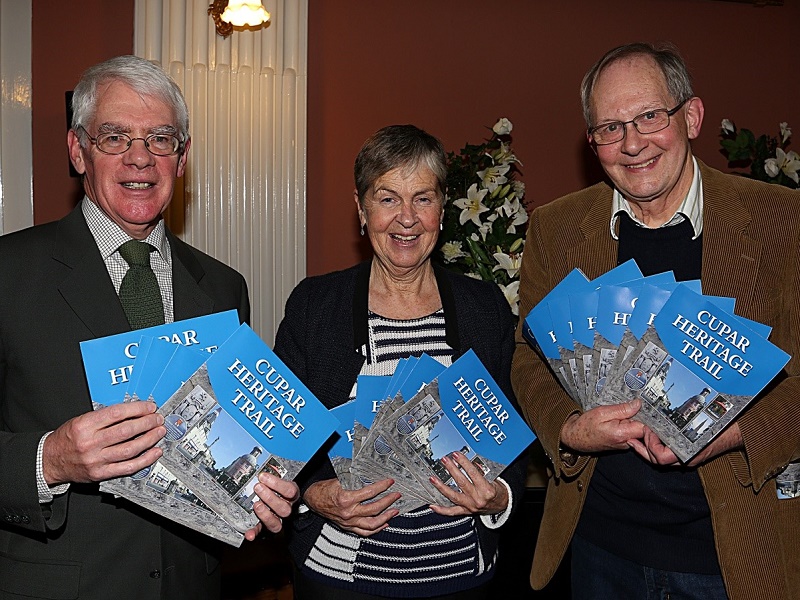
It is now well over two years since Cliff Hague led the BEFS visit to Cupar, one of the two additional towns covered by their Small Towns Scotland initiative, 18 months since the proposed Cupar Development Trust (CDT) began to take shape, and over six months since PAS ran the successful CharrettePlus in the town. Even when there are enthusiasts in the local community, wheels turn slowly – partly because of the essential task of bringing the wider community along-side, but of course mainly because cash has to be found for every stage of proposals selected – including the costs of preparing applications for larger-scale funding.

The final report from PAS was welcomed, and has been considered by the town’s coordinating group. It is accepted that there are no easy, cheap or instant fixes. The ambitions, though not spelled out in these terms, follow Geddes’ principles of looking at “Folk, Work, Place”.
One tangible – literally – development has been the re-issue of Cupar’s Heritage Trail guide. This leaflet was originally published as a joint venture between the Millennium Committee of the Community Council and Fife Council, with text researched and written by Dr. Paula Martin. It was a success, and was reprinted in 2005.
There is no shortage of supportive organisations active in Cupar! One of the display boards at the Charrette listed many of them – as this photograph shows.
The republication this month was a joint venture between Cupar Development Trust and Cupar Heritage (CH), with support from the Community Council, Cupar and North Fife Preservation Society, ABCD Cupar Business Association, and Fife Family History Society. Assistance came also from Fife Council, Fife Historic Buildings Trust, Historic Environment Scotland and the Heritage Lottery Fund, through the CARS and THI schemes already in progress.
And of course other important organisations, not necessarily dedicated to the town of Cupar only, include the local Tourism Association, which welcomes the republication of the leaflet.
The Heritage Trail leaflet was launched at a reception on 22nd November, to which 20 organisations had been invited to send representatives, and which was in fact attended by over 40 people. The reception was held in Cupar’s impressive County Hall, where the initial BEFS meeting had been held, and was formally hosted by the Community Council.
CDT have applied to the Activating Ideas fund of Scottish Government for funds to cover the cost of consultants to prepare a marketing plan for the Heritage Trail, including sign-posting and full interpretation.
The Board of CDT are heavily engaged in the assessment of the “Inner Court” proposal, which was developed before the Charrette, but exhibited there and well received. It is a bold proposal for the regeneration of a vacant and derelict area in the heart of Cupar town centre, lying between the narrows of the Bonnygate (where the infamous “Gap Site” is prominent) and the width of the Crossgate.

The details are commercially confidential, but it is no secret that the major player is expected to be Kingdom Housing, working in partnership with some of the present proprietors. The original Inner Court report, prepared by Cupar-based architects Arc Architects, can be found on the CDT website.
It is of course not only CDT and CH who have been active. For example, further from the town centre, Sustainable Cupar have completed the reinstatement of the Old Moor Road to Ceres – a right of way shown on Roy’s military map of 1746.
The CARS and THI schemes, managed by Fife Historic Buildings Trust, have greatly improved Cupar’s street-scape with their work in St Catherine Street, as the before and after photographs show.
Cupar’s Christmas Fayre, leading up to the switching-on of the annual lights, was another occasion for local organisations to take stands and explain their work. CDT’s was a well-visited stand, and an encouraging number of applications for membership were handed in, while the Chairman entered into the festive mood!

The next major event for CDT is its first AGM, to be held on 1st December, in one of Cupar’s major new assets – the Howe of Fife Rugby Club’s new sports complex. On that occasion, CDT hope to be able to announce that the Activating Ideas application has been successful, and that accordingly the selection process for the consultants will be starting early in the new year. The present eight Board members look forward to welcoming to the AGM both founding and new members of CDT, and hope that additional Board members will be elected.
The formalities of the AGM should be relatively brief. The guest speaker is Diarmaid Lawlor, whose title is Partnerships for Places. It will be fascinating to hear Diarmaid’s view on how, in a small town like Cupar, the existing, dedicated and energetic organisations can make the total of their valued contributions add up to more than the sum of the parts.
The lessons for Cupar from BEFS’ Small Towns Scotland report have been taken on board, and the Charrette process has proved valuable. The then Minister, Marco Biagi, commented on the evident citizen involvement in the Charrette process, and commended CDT and PAS on the high level of community engagement. If BEFS is able to get the information, it will be interesting to see how the other seven towns visited in the Scotland’s Small Towns process have fared since their respective visits, and to what extent they have been able to run with BEFS’ comments and suggestions for their towns. The CDT Board plans to visit some towns in Angus in the spring to see what can be learned from them – some having been through the Charrette process, but none having been included in the BEFS visits.
Meantime, Cupar will be delighted if you visit the CDT website or follow progress via www.cuparcould.com, Twitter, Instagram and Facebook.
Bill Pagan
BACK
Annie Flint, author of www.underoneroof.scot, tells us about the motivation behind the initiative and how to use the website.

Sooner or later, every organisation working in an urban environment of any size will need to work with flat owners and help them resolve legal and maintenance issues. Over 40% of our housing stock is formed of privately owned and rented flats (so that is not counting council and housing association rented flats). And the proportion of communally owned properties is particularly high in Scottish town centres from north to south, ranging from older tenements to mixed use developments and homes over shops
Under One Roof Scotland is a major new online resource about tenements and flats of all kinds in Scotland. Tackling management, repairs and maintenance, Under One Roof Scotland can help organisations raise awareness about the need for maintenance and advise owners on how to deal with their co-owners, organise repairs and manage builders.
As a BEFS member, you can use Under One Roof Scotland to:
- Keep yourself up to date on “flat” issues by signing up to our occasional newsletters.
- Raise awareness of the need to maintain our tenement heritage by displaying the poster, linking your website to Under One Roof Scotland and writing about tenement repair issues in your own communications.
- Use the ready-made presentations to train your staff and colleagues in the particular issues affecting stone buildings and the law of the tenement.
- Provide a second opinion, backing up your own communications.
Under One Roof Scotland was launched by The RIAS as part of the Festival of Architecture 2016. The need for such a resource was first pointed out by Glasgow’s Factoring Commission which both recognised the changing nature of flat ownership and the need to develop a maintenance culture whilst understanding how difficult it was for owners to identify their rights and responsibilities. Glasgow City Council picked up on the recommendations of the report and helped promote Under One Roof Scotland through local authorities, over 90% of whom have provided funding. Private factors such as Hacking and Paterson and Your Place also contributed funding individually while organisations such as Scottish Government, Historic Environment Scotland, Scottish Federation of Housing Associations, Glasgow and West of Scotland Forum of Housing Associations and the Property Managers Association Scotland also contributed and offered practical support.
Written by Annie Flint and John Gilbert, the originally published by the RIAS over 20 years ago, the site contains over 100 articles on flat owners’ legal responsibilities towards their co-owners and over 70 technical information articles with 100 specially commissioned drawings, 200 photographs and 9 power point style presentations to use at owners meetings
There is also a Repair Symptoms Checkerto help owners pin down what is affecting their building’s health. Downloadable model letters will make the whole process easier for owners. Advice on dealing with owners who refuse to participate in critical repairs is also provided. Have a quick explore!
- Try the Repair Checker to pin down that problem with the building over the road
- Check out Owners and Obligations to find out about the legal “duty to maintain”
- Run through the Meeting Presentations such as “Financing Repairs”
- Download the A4 Poster and pin it up in reception (and in the entrance to your own tenement!)
- Find out more about our Funders and Steering Group Membership
Graphic Resources
Please feel free to use any of the graphics on this Dropbox page. Other resources on the website can be copied freely for non-commercial purposes.
Contact
Please email annie@underoneroof.scot for further access to resources and assistance with organising, or speaking at training and awareness sessions.
Annie Flint
BACK