



A summary of the Local Government & Communities Committee recommendations in relation to the BEFS written and oral evidence.

BEFS welcomes the report from the Local Government & Communities Committee and below looks at the recommendations in relation to BEFS written and oral evidence.
Planning Purpose: The Committee recommends a purpose for planning be included in the Bill to “reflect the ambition to create high quality places, to protect and enhance the environment, to meet human rights to housing, health and livelihoods, to create economic prosperity and to meet Scotland’s climate change goals and international obligations.” BEFS strongly supports such a definition having recommended alignment with UN Sustainable Development Goals.
National Planning Framework/Scottish Planning Policy: It supports the merging of NPF and SPP but wishes SPP to be made explicit in the Bill. It recommends Parliamentary approval be required for the NPF and any amendments. The committee does not support the withdrawal of statutory regional planning “unless a more robust mechanism is provided to that currently proposed in the Bill.” BEFS submission stated for the need for regional planning to have a statutory basis or local authority funds would easily be diverted.
Supplementary Guidance: It seeks further clarification from the Scottish Government on how matters which were previously the subject to statutory supplementary guidance should now be articulated and given sufficient weight to ensure development is in accordance with an authority’s plan. BEFS Members had strong concern on the loss of supplementary guidance.
Local Place Plans: The Committee is concerned that Local Place Plans will privilege already empowered communities resulting in widened inequality and is unconvinced that enough resource is available to support their creation – “as things stand the proposals for LPPs run the risk of being disregarded or ineffective.”
Appeals: It does not think the Bill addresses the imbalance in between applicants and communities within the planning system and while not wholly recommending equal rights of appeal does seem to be suggesting a higher threshold is introduced for applicant appeals. The committee “urge the Scottish Government to look at these issues before Stage 2” – BEFS flagged the need for robust research on this topic early on the review of the planning system.
Simplified Development Zones: It recommends that Simplified Development Zones are part of the NPF and LDP and should only be proposed by planning authorities and Scottish Government with full public consultation. They acknowledge the Minister’s commitment to amend the Bill at Stage 2 to identify the types of land that may not be included in an SDZ scheme – BEFS has a preference for designated areas (eg conservation areas) to be excluded.
Infrastructure Levy/Land Value Capture: The Committee notes the ongoing research on infrastructure levy and land value capture and seeks timetables and clarification on details to be laid before Parliament. Don’t miss the opportunity to explore Land Value Capture options at BEFS forthcoming event on Thursday 31st May 2018.
Enforcement: While welcoming increased fines in relation to enforcement the committee asks that Scottish Government ensure planning authorities are properly resourced to take action – planning departments being properly resourced is an issue for many proposals within the Planning Bill.
Training: It does not support mandatory training for Councillors on planning committees but recommends that training should be available as CPD and include: community engagement, equalities and human rights duties; challenges in urban and rural settings, environmental and sustainability duties – arguably “environmental” includes the historic environment but it would be good to see that referenced. Alternatively, it recommends that all decision- takers in planning should be subject to the same training requirements – potentially applying to all Councillors and Scottish Ministers.
BACK
Can you spare 10 minutes to contribute to new research for the heritage sector?

Why is this research taking place?
Currently there is no major research into the funding landscape for the heritage sector in Scotland. Evaluation during the four years of Resourcing Scotland’s Heritage (RSH) has made it clear how crucial a report of this kind is for sector understanding and development.
The State of Heritage Funding Now research has been commissioned by the RSH partners (Archaeology Scotland, Arts & Business Scotland, BEFS, greenspace scotland, & Museums Galleries Scotland).
What organisations should complete this survey?
Heritage includes professional and voluntary organisations:
Archaeology | Archives & collections | Community heritage | Historic buildings & monuments | Industrial, maritime & transport | Intangible heritage | Land & biodiversity (including urban green spaces and parks) | Libraries | Museums.
To ensure your heritage organisation’s information is included in this important research, please complete the short survey in the link below:
https://www.surveymonkey.co.uk/r/stateofheritagesurvey
Deadline: 14 June 2018
What are the expected outcomes?
The entire sector will benefit from this report which will be widely disseminated and made publically available.
The completed report will:
- Raise awareness of the current funding landscape for the heritage sector from public, private and charitable sources.
- Act as a discussion paper to reflect on developments within the sector over the last 3-5 years.
- Identify possible next steps, moving forward from the RSH programme delivery which comes to an end in June 2018.
All individual responses will be treated in the strictest confidence with analysis and reporting anonymised unless agreed with respondents.
The RSH partners encourage a strong response from the heritage sector to ensure that the survey can deliver robust and representative data on the funding mix and funding experiences of different types and locations of heritage groups and organisations. Please support the project by completing the survey.
Any questions in the first instance should be directed to the research project manager Andy Parkinson from Consilium Research & Consultancy on 07713 357389 or email andy@consiliumresearch.co.uk.
The RSH programme is funded by the Heritage Lottery Fund.
BACK
Historic Environment Scotland, Archaeology Scotland and Northlight Heritage announce a call for contributions to Scotland’s Community Heritage Conference 2018.

The Engine Shed, Stirling – Saturday 10th November 2018
Call for Papers, Speakers, Displays and Contributions.
Archaeology Scotland, Historic Environment Scotland and Northlight Heritage are delighted to announce the call for contributions to Scotland’s Community Heritage Conference 2018. This will be the seventh year of this event, an annual celebration of the richness and diversity of community heritage across the country. The Conference provides a stage for volunteers, community groups and professionals to network, share experiences and create future working partnerships.
This year it will be at The Engine Shed, Historic Environment Scotland’s dramatic new building conservation hub situated right next to Stirling’s railway station. The venue offers a vast flexible space, all on one level and fully accessible to those with disabilities. With your help, they will be creating an exciting and memorable day of talks, workshops and exhibitions, hearing from you about your involvement with community heritage. As usual, for the main presentations, volunteers and members of community groups have priority over heritage professionals, though professionals are of course welcome to contribute to other parts of the event.
To get an idea of the buzz generated at previous conferences, please have a look at some of our videos on YouTube.
They would like to hear from you if:
- a) You would like to offer a 20-minute talk/PowerPoint presentation to the conference on a community-based heritage project (priority given here to non-professional speakers);
- b) You have an idea for a workshop or discussion and would be willing to help lead or contribute towards a session (typically 45 minutes);
- c) You would like space for a display, showcasing your local community heritage project. Several formats are available – we can offer space for table displays, posters, and also for videos or slide shows. Please contact us to discuss possibilities;
- d) You would like to take part in ‘One Minute Mayhem’ – a 60-second ‘soap-box’ opportunity to share your news and views on any aspect of Scotland’s community heritage.
If any of the above is something you would like to be involved with, please send them your ideas (or any questions) by Thursday 31st May 2018, to chcscot@gmail.com. Please pass on this invitation to others who might be interested in sharing their experiences.
Scotland’s Community Heritage Conference is a partnership of Archaeology Scotland, Historic Environment Scotland and Northlight Heritage, with contributions and support from heritage organisations across Scotland and beyond.
BACK
BEFS Director provides an update regarding recent developments in the ongoing campaign to improve property maintenance in Scotland.

In 2011 Built Environment Forum Scotland (BEFS) along with other professional bodies launched a campaign calling for a form of ‘building MOT’ by subscription: an annual survey of buildings in Scotland to ascertain the state of disrepair. The proposal was aimed at a full cross section of the built environment from traditional buildings right up to those built ten years ago and was responding to the Scottish House Condition Survey (SHCS) collated results on the state of disrepair of Scottish homes.
The campaign resulted in a project in Stirling, the Traditional Buildings Health Check (TBHC), now in its final year of the original 5-year pilot and delivered by Stirling City Heritage Trust. The final results of the TBHC have yet to be reported but BEFS understands interim reports to be positive and that there is a desire for the project to continue, with 50% of the membership scheme undertaking maintenance/repair to their properties with minimal need for public subsidy for repairs. Other City Heritage Trusts are also now looking at the pilot.
The State of Repair
The most recent Scottish House Condition Survey reported that 68% of all dwellings exhibited some degree of disrepair:

If these figures are then broken down by the age of the dwelling we see a clear link with disrepair. Older properties are in the poorest condition.

The tenure with the poorest rate of disrepair is the, increasing, private rented sector.

Establishing a Working Group
BEFS convened a roundtable discussion in July 2017 on the continued challenges facing the repair and maintenance of residential buildings under shared ownership. Organisations with a national interest in the issue were invited in attempt to map out what different groups were proposing as solutions and discuss a route to progress them. All recognised that there remained significant challenges for owners finding agreement to undertake repair and maintenance and that the provisions of the Tenement Scotland Act 2004 had not had the impact anticipated. There is also anecdotal evidence of housing associations and local authorities selling properties in tenements where they are not the majority stakeholder due to the difficulties of agreeing common repairs.
The issue is not restricted to traditional buildings – tenemental council housing in the post-war new towns that was subject to right-to-buy and some is now held by non-domiciled absentee landlords. Some do not share the same level of interest in building condition as resident owners and local authorities who are faced with same challenges in arranging maintenance and repair as owners of the most historic tenements. Further research revealed this was an issue for local authorities across urban Scotland.
In November 2017 Graham Simpson hosted a parliamentary reception regarding RICS tenement health check. Subsequently in January 2018 the Scottish Parliament debated Ben MacPherson MSP’s motion on the Maintenance of Tenement Communal Property which included the proposal for a cross party working group on the subject.
The working group was convened by Ben Macpherson MSP in March 2018 with the agreed purpose to:
- Consider and establish solutions to urge, assist and compel owners of Tenement properties to maintain their Scheme Property.
The first meeting saw cross party attendance with representatives from property management, property law, chartered survey and architecture with BEFS and the RICS providing the secretariat function. The aims are long term, provisionally making recommendations at the end of this parliament. The initial topics to be explored for the next meeting in May were agreed to be:
- Resourcing for local authorities to utilise powers
- Standard entity for owners to organise works
- Building inspection
Strategic Historic Environment Forum
BEFS Director was invited to present a paper on the working group to the Strategic Historic Environment Forum (SHEF), chaired by the Cabinet Secretary for Culture, Tourism and External Affairs. The condition of traditional buildings is a matter of importance to SHEF as the percentage of pre-1919 dwellings classified as having disrepair to critical elements are a proxy indicator for the state of Scotland’s historic environment on the National Performance Framework.

Progress on improving this is in the right direction but is slow and, given the impact poor maintenance and repair can have on residents represents, a very human problem.
The Forum responded positively to the establishment of the working group and acknowledged that the issue was complex with multiple layers that need addressed to shift attitudes towards responsible ownership. Areas that were discussed included:
The condition of pre-1919 buildings is niche, politically speaking, and widening the advocacy to all buildings has resulted in greater traction: how can the heritage sector respond positively to this without losing sight of the specific needs of traditional buildings?
- Is there a shared aim to move owners from grant dependency to responsible, self -funded maintenance and repair?
- If compulsion is deemed necessary though, what would be the best route to support owners in precarious financial situations?
- Local authorities are commonly seen as the key yet evidence suggest a serious lack of capacity, how can this be overcome?
With partner funding from the RICS and Scottish Government, BEFS has commissioned Professor Douglas Robertson to provide a comprehensive review of the literature and legislation affecting common property maintenance in Scotland, updating work previously undertaken in 2002.
BEFS will continue to provide updates on the outputs of the cross party working group.
BACK
The event provided practical advice on maintaining local church buildings, from a range of stakeholders and experts.
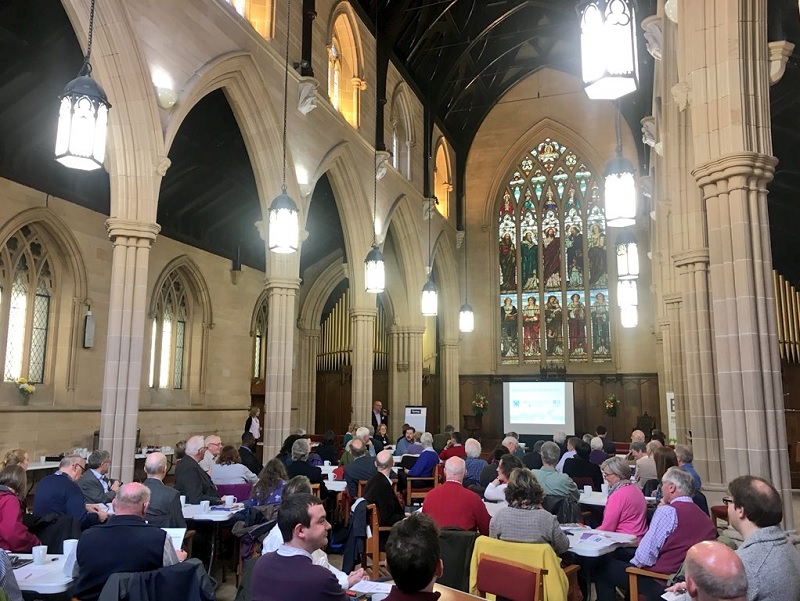
BEFS recent workshop, Keeping Church Buildings Alive, organised in partnership with Scottish Redundant Churches Trust, Scotland’s Churches Trust and The Prince’s Foundation, was a great success and very well attended by both professionals from the sector and private individuals.
The workshop provided practical learning opportunities, allowed groups to access expert advice and meet people from similar projects, all with a focus on maintaining the local church buildings at the heart of our communities.
Here you can download the presentations from the range of stakeholders and experts who presented on the day:
- Workshop Aims – Who is here & why?, Euan Leitch, BEFS.
- Historic Churches—New 21st Century Partnerships, Raymond Young, Church of Scotland.
- Community Engagement, Digital Learning & Interpretation, Dorothy Hoskins, Historic Environment Scotland.
- Achieving Closure, Judith Roebuck, Church of Scotland.
- Consider Your Audiences, Paul Jardine, Jura Consultants.
- Introduction to St Stephen’s, Niall Murphy, Glasgow City Heritage Trust.
- Top Tips from a Funder on Getting Funded, Gordon Barr, Architectural Heritage Fund.
- Scotland’s Churches Trust—Happy to Help, Stuart Beattie, Scotland’s Churches Trust.
- Funding for church building projects, Catherine Townsend, National Churches Trust.
- Unexpected Benefits: Using Activities to Engage & Sustain, Victoria Collison Owen, Scottish Redundant Churches Trust.
- How to Make your Project Sustainable, Rosie Fraser, Rosie Fraser Associates.
- Community Engagement: Why and How?, Tiva Montalbano, The Prince’s Foundation. Community Engagement Exercise (presentation no longer available)
BACK
This intensive workshop looked at creative and pragmatic approaches to caring for Scotland’s historic environment.

In March, BEFS held a lively workshop day with stakeholders from across the sector to review Historic Environment Scotland Policy Statement (HESPS), ahead of the HES consultations to be held in 2018.
The short narrative Report produced from the day is to highlight and summarise key changes, and challenges suggested for future HES Policy, by attendees throughout the process. The information gathered on the day has been precisely (where possible) transcribed and is presented via a table.
At the end of the Workshop there were questions around what the next steps will be, particularly in relation to issues/actions which may be out-with the scope of HESPS. BEFS is keen to keep the existing momentum of these discussions. An event is now being planned for late May – details will be made available in the coming weeks.
BACK
Skills Development Scotland and Historic Environment Scotland are keen to hear from employers on the skills challenges facing the sector, and the main skills gaps.
Skills has been identified as a key priority for the Historic Environment sector in Scotland. The sector covers a number of broad market areas spanning historic and listed buildings and sites, the built environment, conservation areas, gardens/designed landscapes, historic landscapes, etc.
It also encompasses a large range of professions, occupations, casual and volunteering roles that cross over a number of sectors, including Construction, Creative Industries, Professional Services, and Tourism. In addition, it is recognised that some employers’ involvement in the Historic Environment sector will represent a small proportion of their business activity.
Skills Development Scotland and Historic Environment Scotland has appointed EKOS to develop a Historic Environment Skills Strategy and Action Plan which sets out the main skills issues for the sector and solutions for how these can be best addressed.
As part of the research, we are keen to hear from employers on the skills challenges facing the sector, and the main skills gaps – traditional/specialist skills, professional skills (e.g. archivists and curators, archaeology, surveying, architects), and supporting skills (e.g. leadership and management, digital). We are also interested in finding out more about the kinds of actions and responses which will be required to address challenges around workforce development and up-skilling.
We are interested to receive feedback from companies and organisations spanning the whole spectrum of involvement in the Historic Environment sector, from those involved only some of the time to those whose business activity is entirely based within the sector.
You can access the survey by clicking here: Historic Environment SIP – Employers Survey
The survey should take less than 10 minutes to complete. The deadline for responses is Friday 30th March 2018.
Please note all information is held in confidence and no comments will be attributable to any individual, with EKOS reporting back to SDS/HES in aggregate format. Should you have any questions please contact Nicola Graham, EKOS on 0141 353 1994 or by email: nicola.graham@ekos.co.uk.
BACK
An overview of responses and reactions to the Planning (Scotland) Bill from BEFS.

The Planning (Scotland) Bill appeared in December 2017, a little over 2 years since the independent panel carried out a “game-changing review of Scotland’s planning system”.
The Scottish Government’s aims to, “increase delivery of high quality housing developments, by delivering a quicker, more accessible and efficient process, [which will also] reinforce our commitment to a fair and open planning system that works for everyone, especially local communities”, are bold. BEFS members’ have questioned the ability to produce a planning system that works faster for the development industry whilst increasing public engagement and trust.
There are proposals to strengthen the National Planning Framework by merging it with Scottish Planning Policy, and abolish statutory Strategic Development Plans to allow local authorities greater flexibility as to how, and who, they collaborate with. BEFS response raises concerns about the resulting loss of regional agency. The collaborations would follow the pattern established by City Region Deals which have a tendency to be project based, opaque and undemocratic. RTPI Scotland recommends that there should be a duty to require regional partnerships to agree strategic outcomes, which would then in turn inform the National Planning Framework, thereby preventing the loss of regional agency and resulting in subsidiarity rather than a top down national planning system.
Local Development Plan timescales are extended from 5 to 10 years resulting in a cost saving, but the process for their creation remains unclear. Local Development Plans would now require approval by full council, rather than delegated planning committees. Would this help councillors have better regard for the planning system when making decisions within Economy, Finance, Housing, Environment and Transport committees?
Local Place Plans are introduced by the Bill, these can be prepared by a community body, but the LPP must have regard to the Local Development Plan and National Planning Framework with further detail to be prescribed in secondary legislation. The Local Development Plan must in turn “have regard” for any Local Place Plan. The Policy Memorandum is explicit that the funding for a Local Place Plan must be found by the community body. These costs are not insignificant (BEFS suggests significantly higher than the estimate of 12K set out in the Financial Memorandum) and we question how achievable the creation of a Local Place Plan will be for the least heard communities that may benefit most. Many respondents, including Architecture & Design Scotland, raise concerns about the appropriate resourcing of community involvement, and PAS point out that their experience of running charrettes sees the most effective outcomes involve the local authority as a stakeholder.
The Bill’s focus, or more accurately the focus of the secondary legislation, is on increasing community engagement in the preparation of Local Development Plans. Whilst the matter of equal rights of appeal for individuals or communities is explicitly excluded from the Bill, many respondents – including multiple community groups, have made sure this is an issue requiring further examination. BEFS Members’ vary in opinion: Archaeology Scotland, National Trust for Scotland and the Cockburn Association all comment on the need to rebalance the system in various ways. RTPI Scotland does not support changes to the appeal system. BEFS meetings with various political parties suggests that an amendment is likely to be introduced in support of equal rights of appeal but the detail is unclear and Government opposition guaranteed.
Simplified Development Zones replace Simplified Planning Zones. The prime difference is that SDZs could incorporate conservation areas and listed buildings which raises significant concern, the AHSS being particularly strong in opposition to this proposal. The National Trust for Scotland have argued that the detail required for pre-consent on said designations is unlikely to be available. It is of note that the Law Commission are recommending the withdrawal of such zones in Wales.
There is some call for Simplified Development Zones to be linked to alternative means of land value capture – the Scottish Green Party would like them linked to compulsory purchase orders with compensation at existing use value thereby allowing local authorities to follow continental models of development. The Bill as introduced does not acknowledge this, but research being undertaken by the Scottish Land Commission may have an influence.
Members have presented varying views on many of the Bill’s aspects, but in a number of areas we find broad consensus: The Bill should set out the statutory purpose of planning, and ensure resulting sustainable development; development that maintains and enhances places of special value, aligning with the UN Sustainable Development Goals. There is also repeated agreement on the need for appropriate resource to be made available for planning, with RICS Scotland proposing that the use of funds in this area should be seen as an investment, not a cost.
The planning ‘game’ is not significantly changed; we are left looking to secondary legislation for clarity, and the vision for Scotland’s planning system in the 21st Century is found wanting – for both the private sector, and communities of place and interest.
For those wishing to read any particular submission in response to the Bill; BEFS own, and Members responses can be found on our Parliamentary Papers page. And all submissions currently uploaded for the Committee can be found on the following Parliamentary page.
BACK
Further to a Scottish Government consultation on energy efficiency and the private rented sector this joint letter flags issues around the use of energy performance certificates and traditional buildings

Wednesday 10 January 2018
The undersigned have written to Kevin Stewart MSP, Minister for Local Governmnet and Housing to raise our concerns over current government proposals intended to improve the energy performance of Scotland’s private rented housing stock – specifically the potential impact the use of the Energy Performance Certificate will have on Scotland’s stock of traditionally built homes. We are a group of heritage professionals, responsible for assessing, planning and executing the maintenance and improvement of Scotland’s built heritage.
As a group, we strongly support the drive to improve the energy performance of Scotland’s homes, including traditionally-built properties. The continued use of historic properties is the best guarantee of their survival. These properties form a fifth of Scotland’s overall housing stock and they are a prominent part of Scotland’s heritage, shaping the character of our towns and villages. These properties are also a disproportionately important part of rural housing stock.
However, adverse or incorrect adaptations of traditionally-built properties can fail to improve their energy performance, and by limiting air circulation may degrade both occupants’ health and the building fabric. We are also concerned that, if the phasing or cost estimates are not aligned with what is actually feasible, then housing stock will be taken out of rental use and may instead go to holiday home use, or fall out of use altogether. This would have the greatest impact on rural areas in Scotland, where there are already pressures on housing availability.
In relation to the government’s current proposals for minimum energy requirements in private-rented properties (and their potential extension to privately-owned properties) we have identified the following issues:
Real-world baselines – the current EPC baselines for traditionally-built, stone-walled buildings do not reflect their real-world performance. There is therefore a risk of making unneeded interventions based on inaccurate data.
Availability of assessor skills – to implement the proposals will require an adequate supply of assessors trained in how traditional buildings perform and how they can best be improved.
Availability of installation skills and suitable materials – similarly, we will need to have suitably trained professionals and trades able to carry out the adaptations, and a supply chain to meet the demand. This can be developed, particularly if there is a strong market signal from government, from assessors and from owners, but may need time to grow.
The government’s regulator, Historic Environment Scotland, has previously raised concerns over the lack of professional and trades skills available to support the traditional building sector, including the capacity to meet the Government’s commitments under the Climate Change (Scotland) Act 2009.[1]
Realistic timeframe – if the timeframe is too short for the assessor and installer skills to be developed and applied, we risk damaging interventions or stock being taken out of use.
This is all entirely avoidable. With the correct policy prescription in place, traditional buildings are amongst the most sustainable of all building types, with embodied energy, durable materials, and capable of being adapted to a variety of uses.
We believe that these problems can be avoided through:
- Updating the EPC baselines with more accurate data on the actual environmental performance of Scottish traditional buildings.
- Assessing the availability of assessor and installer skills against the likely demand for resources, and estimate how these can best be developed, and how quickly this can be done.
- Developing and applying a timeframe for upgrade that respects these limits.
We note that other jurisdictions, including England and Germany, have recognised these issues and provided specific remedies for these types of homes.
The inadequacies of the Energy Performance Certificate in relation to traditional buildings have recently been raised by heritage professionals in England with the Secretary of State for Business, Energy and Industrial Strategy.
We would be happy to meet with you and your colleagues to discuss how we can find the best resolution that maintains the integrity of Scotland’s traditional buildings, that keeps them as wind, water tight and warm homes, and that meets Scotland’s ambitious climate change goals.
Yours sincerely,
Martin Robertson, Chair, Architectural Heritage Society of Scotland
Euan Leitch, Director, Built Environment Forum Scotland
Rebecca Thompson, President, Chartered Institute of Building
Earl of Hopetoun, Chair, Historic Houses Association Scotland
Sean O’Reilly, Director, Institute of Historic Building Conservation
Simon Skinner, Chief Executive, National Trust for Scotland
Karen Stevenson, Acting Secretary, Royal Incorporation of Architects in Scotland
Gail Hunter, Regional Director – Scotland, Royal Institution of Chartered Surveyors
Colin Maclean, Chair, Scottish Civic Trust
John McKinney, Convener, Scottish Traditional Building Forum
[1] Historic Scotland (2011) Traditional Building Skills: A strategy for sustaining and developing traditional building skills in Scotland
BACK
Details of funding for Historic Environment Scotland in the Scottish Government’s draft budget.
The Scottish Government published its Draft Budget 2018-19 on 14 December with details on the funding of Historic Environment Scotland within the Culture, Tourism and External Affairs portfolio.
The total budget for HES in 2018-19 is £92.2 million, an increase of just under 9%.
Capital Expenditure is increased to £6 million but the rest of the grant is reduced to £32.6 million, a drop of almost 11% following a 4% reduction the previous year. This is against HES generating a forecast income of £57 million, a 27% increase over the previous period which should be in line with their record breaking summer season.
While the Draft Budget states that HES will continue to dispense grants it does not specify the amount: the Cabinet Secretary for Culture, Tourism and External Affairs has directed them to offer grants totalling £14.5 million each year for the last 11 years and we understand this will be maintained.
The overall increase is to be welcomed but is built upon a very successful couple of years due to increased tourist activity with Outlander and the Year of History, Heritage & Archaeology and a weak Sterling no doubt playing a part. Raising 62% of its annual costs is a first.
Historic Environment Scotland Priorities
In 2018-19 HES will:
- continue to lead the delivery of ‘Our Place in Time’: The Historic Environment Strategy for Scotland;
- promote and deliver a range of events in support of Scotland’s Year of Young People;
- offer grant support to help regenerate and promote the active use, care and maintenance of the historic environment, promoting sustainable economic development and reinforcing local identity;
- provide expert advice and guidance to deliver the right balance between conservation and sustainable change; and
- promote learning and education to enhance knowledge, understanding and enjoyment of the historic environment, delivering learning programmes linked to the Curriculum for Excellence, to National and Vocational Qualifications and to opportunities in further and higher education.
Historic Environment Scotland (HES) Spending Plans (Level 3)
| Level 3 | 2016-17 Budget £m |
2017-18 Budget £m |
2018-19 Draft Budget £m |
| Operational Costs | 81.6 | 84.8 | 92.2 |
| Capital Expenditure | 3.4 | 5.6 | 6.0 |
| Less Income | (40.0) | (44.9) | (57.1) |
| Total | 45.0 | 45.5 | 41.1 |
| of which: | |||
| Fiscal Resource | 38.3 | 36.6 | 32.6 |
| Non-cash | 3.3 | 3.3 | 2.5 |
| Capital | 3.4 | 5.6 | 6.0 |
What the Historic Environment Scotland budget does
Historic Environment Scotland is the lead public body for the historic environment in Scotland, and takes the lead in delivering Scotland’s historic environment strategy ‘Our Place in Time’, in addition to having delegated responsibility for the care and management of Scottish Ministers’ Properties in Care. A significant portion of the grant-in-aid funding which HES receives is passed on to Scottish communities by way of grant schemes which fund the regeneration of Scotland’s town centres and the repair of historic buildings.
BACK