



BEFS call for examples of where multiple owners within a tenement have been unable to agree on maintenance and this has resulted in the need for extensive repair or local authority intervention.

BEFS has had a long interest in building maintenance, previously campaigning for a Building MOT, which resulted in the Traditional Building Health Check Scheme currently being piloted in Stirling. In recent months we have become aware of renewed parliamentary interest in the topic, particularly around the maintenance challenges faced in buildings under multiple ownership, primarily tenements. This is demonstrated by yesterday’s (26th Oct.) parliamentary debate on Housing Maintenance (Tenements). The RICS have also been pushing for the introduction of statutorily required 5-yearly inspections as a means to address this and research has found interesting models in New York and Quebec.
With the context of various building issues – from Grenfell to the Edinburgh Schools scandal – and legislation likely arising from the Scottish Planning Review, Scottish Energy Efficiency Programme, and Climate Change Bill, BEFS convened a meeting of stakeholders* in July, all of whom had a strategic interest in building maintenance. It was a round table discussion with the aim of sharing what everyone was aiming for and an agreement to keep each other in the loop and support initiatives when opportunities arose.
There is cross-party interest in addressing this subject within the Scottish Parliament and in light of the forthcoming Tenement Maintenance Parliamentary Reception BEFS is looking to gather some specific case studies for use in advocacy on the topic. Specifically, BEFS is looking for a geographic spread of (bad) examples where multiple owners within a tenement have been unable to agree on maintenance and this has resulted in the need for extensive repair or local authority intervention, which would have been avoided if 5-yearly inspections and maintenance had been carried out. To illustrate what we are looking for this is one example from Edinburgh.
While BEFS and the RICS and others have met with a handful of MSPs to discuss the topic, we need to broaden the interest within parliament. The examples are to illustrate the stitch-in-time principle and parliamentarians respond best to examples from their own constituency.
We’d be very grateful if you could send any examples to Ssmellie@befs.org.uk and please feel free to share the request with your networks.
*A&DS/Retrofit Scotland, Association of Local Authority Chief Housing Officers, Changeworks in Edinburgh, Existing Homes Alliance, Historic Environment Scotland, Property Managers Association Scotland, Royal Incorporation of Architects in Scotland, Royal Institution of Chartered Surveyors, Scottish Federation of Housing Associations, Scottish Housing Network, Scottish Traditional Building Forum, British Geological Survey, Tenement Action Group, Under One Roof.
BACK
The Scottish Government needs to give a high priority to meeting housing needs, creating places of quality and ensuring homes are wind and water tight.

Commenting on the Programme for Government set out by the First Minister, Nicola Sturgeon, the Chair of Built Environment Forum Scotland, Dr. Graeme Purves, said:
“The commitments on empowering communities and good quality, warm and affordable homes are welcome, but further measures are needed to ensure that homes are kept wind and water tight. It is good that the Scottish Government is open to looking at ways of capturing the uplift in land values for public purposes. This can play an important role in delivering the new houses Scotland needs. BEFS welcomes an expert advisory panel looking at cultural and environmental rights although it may not have time to contribute to the forthcoming Planning Bill.
The Scottish Government needs to give a high priority to building more houses and ensuring that new development creates places of quality. The analysis of responses to the Scottish Government’s review of the planning system shows strong support for more effective delivery mechanisms from all sectors but general scepticism as to whether the Government’s proposals will be effective in delivering more homes. Meeting housing needs and creating places of quality are public objectives. The Scottish Government needs to be bolder it its approach, promoting mechanisms for housing delivery which effectively capture the uplift in the value of land arising from development for the provision of public infrastructure and place-making.”
Read the Scottish Government’s Programme for Government here.
BACK
BEFS Director, Euan Leitch, reflects of the development of a Culture Strategy for Scotland.

The Scottish Government’s programme for 2016-2017 gave a commitment to developing a culture strategy for Scotland and the ball began rolling at an event at the Glasgow Women’s Library in June. BEFS was in attendance along with 90 other invited guests representing Scottish cultural organisations small and large as well as sole practitioners. Heritage Lottery Fund Scotland, Historic Environment Scotland, Museums Galleries Scotland could be described as the main heritage representatives amidst the arts and you will find a full list of attendees here.
Following an introductory speech from the Cabinet Secretary for Culture, Tourism and External Affairs there followed table discussions around definitions, scope and aim of such a strategy with discussion recorded and fed back in a plenary session. The response was varied, possibly with more questions arising than suggestions and BEFS offered support building upon what was learned in the drafting of Our Place in Time, the Historic Environment Strategy for Scotland. Subsequently the Scottish Government have set up a discussion page for further ‘bright ideas’ to be submitted by Friday 27 October 2017.
BEFS has had further conversation with HLF Scotland and the strategy was discussed at the August meeting of BEFS Historic Environment Working Group. Clarity was sought as to where a Scottish culture strategy would sit in relation to other strategies with a recognition that if it is to be a broad definition it would need to be a high level strategy sitting above that previously mentioned and the likes of Going Further, the National Strategy for Scotland’s Museums and Galleries or Creative Scotland 10-Year Plan 2014-2024: Unlocking Potential Embracing Ambition to name but two. The relationship between strategies would need to be clear but as the latter is tied to funding priorities it may lack the broad scope intended.
However, if it is not at that high level a culture strategy would need to incorporate heritage – Our Place in Time’s definition of the historic environment as “the physical evidence for human activity that connects people with place, linked with the associations we can see, feel and understand” fits within any definition of culture. And this of course immediately flags the need for intangible cultural heritage to be part of a culture strategy as Scotland’s tangible and intangible heritage is at the core of what is often seen as Scottish culture, and key to place making.
Of course, we have been here before. The Scottish Executive published Creating our future–minding our past: Scotland’s national cultural strategy with a foreword from Donald Dewar and Rhona Brankin in 2000. It opted for a broad definition of culture following UNESCO’s lead and had four strategic objectives:
- Promoting creativity, the arts and other cultural activity
- Celebrating Scotland’s cultural heritage in its full diversity
- Realising culture’s potential contribution to education, promoting inclusion and enhancing people’s quality of life
- Assuring and effective national support framework for culture.
It gave commitments to a national theatre and national policy on architecture both of which have been delivered, the latter being updated in 2013. The remit of then Historic Scotland is referred to with an aspiration to broaden its activities in relation to education. Digitisation of national collections was an aspiration, one subsequently met with gusto by the National Library of Scotland.
What has the Scottish Government learned from the earlier strategy? If these strategic objectives were not achieved, why not? A brief look at submissions to the discussion page finds a number referring to funding but what appears to be implicit in discussions on the strategy is that additional investment is not available. Rather, there is the usual idea of encouraging innovative collaborations to achieve better results. Can culture in Scotland become more accessible, equitable and excellent without additional finding?
Methods of evaluation are already being considered by civil servants which is heartening to know as it has to be incorporated as early as possible to gather evidence that any strategy will deliver change and not just sit on our shelves.
BEFS will be submitting comments in line with the discussion of its Historic Environment Working Group mentioned previously but it is also down to individuals and organisations within the heritage sector to submit their own dazzling ideas to the discussion page. I look forward to reading them.
BACK
BEFS has now submitted a response to the Scottish Government’s position paper on the planning review, published in advance of an anticipated Planning Bill this autumn.

BEFS has engaged with the review of the Scottish Planning system since it was launched in September 2015. The Forum has held workshops with Members, established a taskforce drawn from its membership to examine the proposals and recently held an open discussion on the research paper Barriers to Community Engagement in Planning. Working with the planning taskforce BEFS has now submitted a response to the Scottish Government’s position paper on the planning review, published in advance of an anticipated Planning Bill this autumn.
BEFS has expressed disappointment that the scope of the review has shifted from major reform to a series of procedural changes and has flagged up the inherent tension in seeking to balance greater community participation with the planning system while speeding up and simplifying decision-making processes. Strengthening regional agency is seen as desirable and the loss of Strategic Development Plans is of concern and the removal of Supplementary Planning Guidance is not supported as it can at times mitigate the unfortunate absence of local authority expertise. Extending Permitted Development Rights would likely have unintended consequences in the quality of small scale development and extending Simplified Planning Zones to include conservation areas may not be simple at all.
Reviewing BEFS Members submissions there is a shared consensus that the ambition at the outset is absent and that the opportunity for positive change is not being grasped. There is a shared refrain that warns against centralisation of decision making. There is also observation that there is a lack of integration with other policy agendas and as the National Trust for Scotland points out “there are seventeen references to housing in the position statement – but no references to landscape, or biodiversity, or amenity”. Is it a Planning Bill or Housing Bill that is being prepared?
The responses raise questions about capacity and resource to implement the proposals, for example, without additional resource the uptake of Local Place Plans will be iniquitous. Questions are also raised as to the absence of robust rationale being provided for equal rights of appeal not being explored, and criticism lack of detail on many of the proposals is also frequent.
A brief look at other published responses reveals similar concerns. The Scottish Federation of Housing Associations does not think that the proposals will deliver more quality affordable homes, Homes for Scotland says that there is a “distinct overall lack of detail” and Scottish Environment LINK is disappointed to see none of its concerns addressed in the position statement.
At the discussion on Barriers to Community Engagement in Planning there was a shared sense from community representatives and planning practitioners that as long as the success of planning was measured by speed of decision making neither meaningful community participation and quality place making can be achieved. The survey undertaken by the researchers revealed that 92% of community respondents and 59% of professionals agreed with the statement that “planning is not effective at engaging communities”. This is a stark statistic and explains why equal rights of appeal remains a background conversation that is getting ever louder and will no doubt make its presence felt in the passage of the Planning Bill in parliament.
In 2015 Alex Neil MSP, then Social Justice Secretary, wanted the “game changing review” to result in planning playing “a more positive and effective role in creating high quality places for current and future generations”. As it stands, respondents to the Scottish Government’s position statement do not appear to see this being the result.
You can read BEFS response in full, along with those of our Members, here.
BACK
Check out the built environment related events taking place at the Edinburgh International Book Festival in August.

Sat 12 Aug 4:30pm – 5:30pm
When a major city undergoes regeneration, there are always some cons among the obvious pros. In Disappearing Glasgow, artist and photographer Chris Leslie and Professor of Architecture Johnny Rodger present a joint project exploring how Glasgow’s communities were affected by a post-war modernist experiment which destroyed slums in favour of vast tower block estates. The pair discuss why this high-rise revolution was doomed to failure.
Sun 13 Aug 11:00am – 12:00pm
When Voltaire said, ‘We look to Scotland for all our ideas of civilisation’ he was mainly thinking of Edinburgh. It may no longer be the intellectual hub of the western world, but as Sheila Szatkowski shows in Enlightenment Edinburgh, a guide to the 18th century city, it is still recognisably the same place it was in David Hume’s day.
Sun 13 Aug 12:30pm – 1:30pm
An hour of pure Edinburgh indulgence in the form of a personal journey exploring the city. For A Sketchbook of Edinburgh, Iain Fraser and Anne Fraser Sim, owners of the Elephant House café, have commissioned 150 works from four local artists to illustrate their favourite journeys through the city, and they provide an accompanying cultural, historical and architectural commentary.
Sun 13 Aug 7:15pm – 8:15pm
In St Peter’s, Cardross, architectural historian Diane M Watters and Angus Farquhar, Creative Director of the Glasgow-based arts organisation NVA, tell the fascinating story of the short-lived (1966-79) Catholic seminary that has been called both the best and the worst Scottish building of the 20th century. Derelict for years, it will soon be brought into renewed use as a cultural space. Chaired by Susan Mansfield.
Mon 14 Aug 1:30pm – 2:30pm
Our Writing the City events continue with a fascinating conversation between novelist, commentator and psychogeographer Will Self and Richard Sennett, Professor of Sociology at the London School of Economics. Taking inspiration from Italo Calvino’s Invisible Cities, Self and Sennett explore how the writer inhabits a city and how their creativity shapes the buildings around them. Presented in partnership with Theatrum Mundi.
Mon 14 Aug 3:45pm – 4:45pm
Though written in 1933, the Charter of Athens still defines how and why cities are built. The Quito Papers is an ambitious global project, led by Richard Sennett and Saskia Sassen, which is rethinking the vision of how towns and cities are built in the 21st century. Having been to Beijing, London, New York, and Cumbernauld on our ReimagiNation tour, they present their vision to Edinburgh.
Mon 14 Aug 6:00pm – 7:30pm
Scottish theatre maker Ishbel McFarlane’s Plan is an interactive performance involving a game in which you and your fellow ‘jurors’ build your own imaginary New Town. A show about utopias and refugees, Plan offers a thought-provoking spin on how countries are reshaped following conflict, and has formed a central part of the Book Festival’s ReimagiNation tour of Scotland’s New Towns.
Sun 20 Aug 12:30pm – 1:30pm
EDINBURGH’S STORY, SET IN STONE
Alan McKirdy takes the long view in Edinburgh: Landscapes in Stone, going back 350 million years to when its future site was under a very active volcano. John Peacock, by contrast, begins The Story of Edinburgh a mere 10,000 years ago, with the arrival of the first Mesolithic explorers, ending with the battles between conservationists and planners in the present.
Sun 20 Aug 6:45pm – 7:45pm
BUILDINGS THAT SHAPED SCOTLAND
How best to tell the story of Scotland’s history? A good way would be to do what Historic Environment Scotland have done – assemble a bunch of fine authors to write about the 25 buildings that have shaped this country, starting 5,000 years ago at the Knap of Howar on Papa Westray. Join James Crawford, Alexander McCall Smith, Alistair Moffat and James Robertson for a scintillating hour. Chaired by Ruth Wishart.
Mon 21 Aug 3:45pm – 4:45pm
PROS AND CONS OF A CONCRETE WORLD
Depending on your view, our modern cities are either a triumph of design or the result of architectural tyranny. Critic Tom Dyckhoff examines the radical facelifts our urban spaces have been given over the last half century and concludes that certain experiments backfired. Novelist and architecture writer Christopher Beanland explores the brutalist strand of buildings, and wonders why concrete is so controversial. Chaired by Claire Armitstead.
Wed 23 Aug 4:30pm – 5:30pm
70 YEARS OF SCOTLAND’S NEW TOWNS
Seventy years ago the New Towns Act was established, aiming to build new urban spaces with emerging industry, sanitary housing and plenty of green space. Cumbernauld is one such New Town, and for this event author and STV’s People’s Historian Daniel Gray, who played a key role in our ReimagiNation: Cumbernauld Festival in May, talks to some of the original residents about their experiences of living in this ‘utopia’.
Thu 24 Aug 7:30pm – 9:00pm
HOW CAN SCOTLAND BE A BEACON OF CIVIL SOCIETY?
The 18th century philosopher Voltaire is often quoted as saying ‘we look to Scotland for all our ideas of civilisation’. By that, he meant ‘rules of taste in all the arts, from epic poetry to gardening.’ Does Scotland retain that reputation today? How can its citizens live up to the high standards of their Enlightenment forebears? Join three speakers with different perspectives: celebrated folk singer Karine Polwart; Member of the Scottish Youth Parliament, Thomas McEachan; and technology entrepreneur Chris van der Kuyl, whose Dundee-based company led the development of Minecraft.
Sat 26 Aug 12:30pm – 1:30pm
BUILDING THE BRITISH LANDSCAPE
Cartographer, explorer and co-presenter of BBC’s Coast, Nicholas Crane has turned his hand to painting a true picture of how the British landscape came about – from the evolution of modern cities and countrysides beginning 12,000 years ago with melting glaciers and Mesolithic adventurers, to our contemporary dramas of climate change and global economics. Today Crane asks, what comes next?
Mon 28 Aug 3:45pm – 4:45pm
Green Belts serve many purposes but it’s unlikely that many of us could point to exactly where they lie. Bookseller and publisher, John Grindrod, has a personal connection to the issues revolving around these mystery zones. He delves into the creation and development of the Green Belt, uncovering a fascinating and sometimes bamboozling history.
Mon 28 Aug 7:30pm – 9:00pm
HOW CAN WE MAKE GATHERING PLACES FIT FOR THE 21ST CENTURY?
In ancient Greece, an agora was a place for public assembly; the centre for political life and for spiritual and artistic activity. Today, in a digital era when equality and freedom of speech remain fragile, how much do we need public gathering places like the agora? Join the debate with our panel including NVA’s Angus Farquhar, who is creating the New Agora as a key programme at St Peter’s Seminary in Cardross.
BACK
This report identifies projects about or connected to heritage in Scotland that have received funding from the European Union (EU).

A research report has just been published which shows that over 280 projects received a minimum of £36.8m in EU funding in the period from 2007-2016. These figures are likely to be an under-estimate due to the methodology used. Researchers Euclid are confident that the projects are relevant to the broad definition of heritage used.
This report has been produced in tandem with similar reports for Creative Scotland and Museums and Galleries Scotland. Taking into account that some projects appear in two or more reports as they cover a range of cultural areas, the total level of funding for the culture and heritage sector from EU sources is estimated to be over £59m covering around 650 projects funded since 2007.
By way of comparison, Euclid reported earlier this year that in England and Wales, heritage focused or related projects received a minimum of £450m in EU funding in the period from 2007-2016.
The breakdown in EU funding of Scotland’s heritage projects –
£27m from the European Structural & Investment Funds:
- £23.85m from the ERDF (European Regional Development Fund), and activity
- £350,000 from the ESF (European Social Fund)
- £2.78m from the EAFRD (European Agricultural Fund for Rural Development, including LEADER) for rural based projects
£9.8m (using the exchange rate at 1 January 2014 of €0.8298/£1) from Interreg and the trans-national funds (including programmes: Horizon 2020, Interreg, Erasmus+)
Most of the relevant data has been gathered via online databases and for some more extensive databases, the initial filtering was through keyword searches. For these, a number of key words used which were agreed with the commissioning body. For HES, the agreed keywords were: ancient, archaeology/ical, battlefield, castle, conserve/ation, heritage, history/ical, monument, museum, palace, tourism/t. The researcher acknowledges that it is possible that a small number of projects may have been missed as a result of using these particular key words.
BACK
BEFS welcomes new research on financing local infrastructure using land value capture and the potential levels of investment for the Edinburgh City region.

This report prepared by the Centre for Progressive Capitalism for BEFS, following an event looking at cracking the housing nut in Scotland earlier this year, estimates the returns from land value capture for the Edinburgh City Region over a 20-year period. It is especially timely given the Scottish Governments consultation on the future of the Scottish planning system and the challenge of housing across the country today.
The research states that the Scottish Government is right to argue in its planning consultation that actively enabling infrastructure has a critical role to play in supporting housing delivery. However, it suggests that there is a risk that the current proposals of utilising an infrastructure levy ignore both its failure in England and best practice across Europe and Asia in financing infrastructure.
The report suggests that if the Scottish Government is to be successful in actively enabling infrastructure it must start learning from European and Asian countries and implement a land value capture system instead. This would require the Scottish Parliament to amend the Land Compensation Act (Scotland) 1963, permitting public authorities to capture the uplift in land values to finance the infrastructure.
Analysis by the Centre for Progressive Capitalism suggests this would unlock around £8.6bn of additional funds for the Edinburgh City Region alone to finance infrastructure over the next 20 years. Furthermore, these additional funds would have no negative impact on the public finances.
This issue lies at the core of the housing challenge. Scotland needs to invest in infrastructure to open up new areas of land for housing to increase supply. This investment generally needs to be financed by government, but it is expensive. In most other European and Asian countries, the uplift in land values is captured by the local municipality to finance the infrastructure. But things are different in England and Scotland where it is the landowner who benefits instead.
“This begs the question of whether it is right to continue to reward landowners for doing nothing, while foregoing the precious funds the country needs to finance infrastructure to enable families to live somewhere called home”, said Thomas Aubrey, Director of the Centre for Progressive Capitalism.
“These figures can support city region infrastructure planning and provide indicative estimates of the scale of infrastructure that could be financed from land value capture”, said BEFS Director, Euan Leitch.
Based on the findings of the report, Built Environment Forum Scotland and the Centre for Progressive Capitalism recommend the Scottish Government re-examine their proposals for funding infrastructure as part of the review of the Scottish planning system.
BACK
Historic Environment Scotland and Archaeology Scotland announce a call for contributions to Scotland’s Community Heritage Conference 2017.

Now in its sixth year, Scotland’s Community Heritage Conference is a unique annual event within the UK that offers the opportunity for heritage volunteers and professionals to network, share experiences and create future working partnerships.
To celebrate Scotland’s Year of History, Heritage and Archaeology, this year’s conference will be a two-day event, with two key aims:
- To showcase the exemplar work of community-led heritage in Scotland, the UK and beyond – both of individual projects and of wider initiatives
- To learn from community-based best practice outside Scotland
We are keen to hear from you about your involvement with community heritage, and this year are inviting contributions from both community volunteers and professionals. The emphasis, as always, will be on providing a forum for networking and the exchange of news and ideas. To get an idea of previous conferences, why not take a look at some of our previous presentations on YouTube.
For more information, please contact the team at chcscot@gmail.com or submit an abstract by Tuesday 30th May 2017.
BACK
Insightful and colourful presentations from a range of speakers who contributed to BEFS two-day conference in Glasgow.
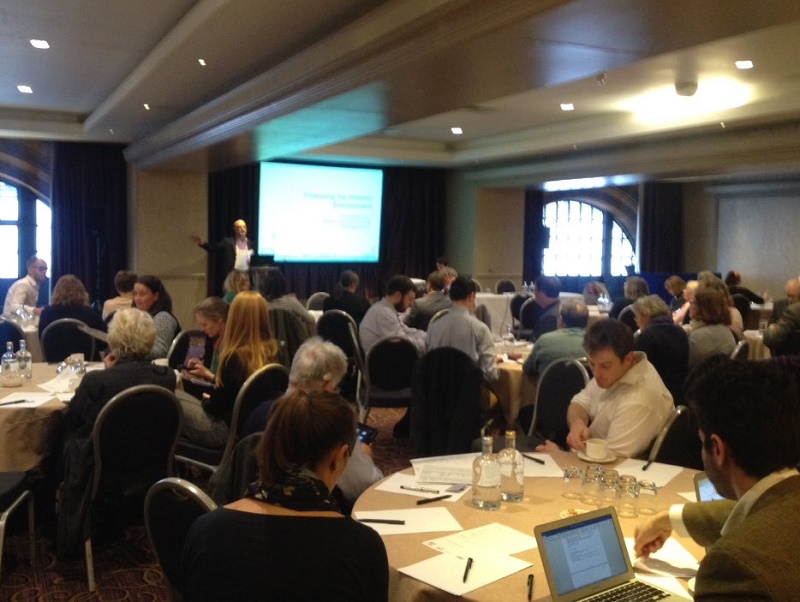
2017 is the Year of History Heritage and Archaeology, a celebration of what gives Scotland its unique character and draws people to live, work and visit. Caring for these assets is a collaborative effort across the United Kingdom undertaken by a wide range of organisations, from voluntary community groups to large-scale commercial development, public bodies and local and national government.
These are challenging times for public sector budgets and while the Community Empowerment (Scotland) Act creates the potential for transfer of historic assets to communities there remains a need for the commercial sector to invest in historic places. In a changing economic landscape, an era of rapid technological advancement and the need to mitigate the challenges of climate change there is no escape from the historic environment’s need for increased investment.
What are the challenges faced by the investment community in developing historic buildings? How does grant aided investment lever in additional funding and stimulate economic activity? How can local authority and public body asset management make the most of the historic environment? What makes small scale tourist sites financially viable? How are national heritage organisations approaching investment in their portfolios? How can the heritage sector help overcome any barriers?
BEFS two-day conference, organised in collaboration with Heritage Lottery Fund Scotland and the BRICK programme run by The Prince’s Regeneration Trust, explored these questions and how local communities can be at the heart of solutions. To find out more, view the presentations of our wide range of speakers across the two days:
DAY ONE
Commercial Investment in the Historic Environment
- Paul Curran, Scottish Property Federation
- Robert Moore, Trevor Osborne Property Group
- Stuart Heslop, Royal Bank of Scotland
Local Investment
- Sarah Kettles, Conservation Area Regeneration Scheme
- Alan Lodge, Townscape Heritage Initiative
- Robin Webster, Glasgow City Heritage Trust
Keynote
Heritage Asset Management
- Richard Cairns, West Dunbartonshire Council
- Stewart Adams, NHS
- Gary Brown, Brymbo Heritage Group
Keynote
- Ian Marcus, The Prince’s Regeneration Trust
DAY TWO
Heritage Tourism Investment
- Jana Hutt, Knockando Woolmill
- Martin Hulse, Dunston Staiths
- Paul Higson, Portsoy Sail Loft
Keynote
Access to Funding
- Oluwaseun Soyemi, Heritage Enterprise
- Gordon Barr, Architectural Heritage Fund
- Ailsa Raeburn, Scottish Land Fund
Funding the National Collections
- Bryan Dickson, National Trust for Scotland
- David Mitchell, Historic Environment Scotland
Keynote
- Scott McCauley, New Lanark Trust
List of delegates who attended the conference.
BACK
Organised in collaboration with Heritage Lottery Fund Scotland and the BRICK programme run by The Prince’s Regeneration Trust, this conference will take place on 29th-30th March at the Grand Central Hotel, Glasgow.

Date: 29th and 30th March 2017.
Venue: Grand Central Hotel, Glasgow.
Organisers: Built Environment Forum Scotland, Heritage Lottery Fund Scotland and the BRICK programme run by The Prince’s Regeneration Trust.
2017 is the Year of History Heritage and Archaeology, a celebration of what gives Scotland its unique character and draws people to live, work and visit. Caring for these assets is a collaborative effort across the United Kingdom undertaken by a wide range of organisations, from voluntary community groups to large-scale commercial development, public bodies and local and national government.
These are challenging times for public sector budgets and while the Community Empowerment (Scotland) Act creates the potential for transfer of historic assets to communities there remains a need for the commercial sector to invest in historic places. In a changing economic landscape, an era of rapid technological advancement and the need to mitigate the challenges of climate change there is no escape from the historic environment’s need for increased investment.
What are the challenges faced by the investment community in developing historic buildings? How does grant aided investment lever in additional funding and stimulate economic activity? How can local authority and public body asset management make the most of the historic environment? What makes small scale tourist sites financially viable? How are national heritage organisations approaching investment in their portfolios? How can the heritage sector help overcome any barriers?
This two-day conference, organised by Built Environment Forum Scotland, Heritage Lottery Fund Scotland and the BRICK programme run by The Prince’s Regeneration Trust, will explore these questions and how local communities can be at the heart of solutions.
View the full programme here.
BACK