



BEFS newest team member and Policy Officer, Ailsa Macfarlane, reflects on the Scottish Government’s recent conference on housing.

Housing – the Future, run by Scottish Government Planning & Architecture Division (PAD) as part of the RIAS Festival of Architecture 2017, in conjunction with Architecture & Design Scotland (ADS), was a high-density programme.
Kevin Stewart’s Ministerial address focused on supporting the delivery of well-built homes to develop ‘great places’ – the current planning review to ‘strengthen and simplify’ the process was seen as a key element within this. The Minister also took the opportunity to launch the new £90K Challenge Fund, designed to enable those wishing to build their own home to make bold decisions based on their needs – due to open for applications, late October 2017.
The day was split into three distinct areas of housing focus: Strategic Scale, City and Town centre delivery models, and Rural design opportunities.
During Strategic Scale we heard about the importance of consultation, of affordability and solutions from the past informing the future; we heard what is possible when a city (Copenhagen) can take a long-term view, investing in infrastructure to support development of a new municipal district.
There were diverse examples from those with responsibility for Mancunian re-population developments, made possible through joint ventures and international investment – developments intended to enable a city to broaden/deepen its tax base, as well as house its population; and of those advocating for diversity of supply through self-build, small brown-field site development, co-housing and more adaptable homes for our aging population.
The City and Town Centre delivery models showed different ends of the scale spectrum, from smaller bespoke developments where ‘custom builders’ choose from a design-guide of pre-agreed solutions; to the tallest modular-built structure in Europe.
Within Rural Design, attendees saw the greatest range of new opportunities presented – here the focus on place, legacy and environment were at their most overt. Mat Johnson was passionate about allowing the ‘story of a building to continue’ – exploring how existing housing stock can be adapted, mindful to the issues of practicality around developing some rural sites.
Different models for building were examined: we heard of a collective custom-build tenement, and also R.House units designed for a rural environment and rural economy. Each demonstrating the evolution of a building type, evolved for modern living and modern environmental standards – but rooted in their sense of place.
Within each section of the day there was time set aside for Q&A – and whilst the topics ranged more widely the questions grouped themselves into queries around: funding challenges with lenders – regarding both planning and building type; how land value can be realised for greater civic benefit; and the planning possibilities/realities around custom/self-build schemes. All topics which presented more challenges than solutions.
Despite reiteration from many speakers that place making and quality, as well as customisation were key – what came across during the conference was that land-value, and speed of construction (urban and rural), as well as personalisation, were currently at the core of our housing future.
Rooted in place, considering individual needs, embedded within unique landscapes – should these not be integral to the future of housing? Or are we looking to/for strategically planned, mass developments and modular building opportunities which can be quickly created and personalised according to need?
The lack of examination throughout the day of the role existing housing stock, and the historic built environment more generally, can play in this multi-layered housing future seemed to tightly crop the housing picture, limiting a fuller view.
Enabling developments of many kinds and utilising the existing housing stock to play a part in delivering quality place making should be both possible and preferable – but do the connected questions of infrastructure and land value currently dictate the direction of travel?
Ailsa Macfarlane, Policy & Advocacy Officer
BACK
Get The Latest Built Environment News, Consultations, Publications And Vacancies.

BEFS News
We would like to introduce you all to Ailsa Macfarlane who started with us last Tuesday as our Policy & Advocacy Officer. Ailsa joins us from Resourcing Scotland’s Heritage and you can find a bit more about her background on our website.
The Scottish Government has published the Scottish Household Survey 2016. Key findings show that the number of adults who visited historical or archaeological places increased by 6 percentage points between 2012 and 2016 (28 to 34 per cent).
The fourth round of Brexit negotiations got underway this week and senior figures within the UK and Scottish Governments met regarding the EU (Withdrawal) Bill.
Scottish Parliament’s Information Centre (SPICe) has created an information hub on the UK’s decision to leave the EU. The Finance & Constitution Committee is calling for evidence on the impact of Brexit and the closing date for responses is Friday.
SCVO has also been working hard to gather the views of Scotland’s third sector. Do you have contact with European networks and institutions? What issues do you collaborate with European organisations on? Help SCVO build a more accurate picture of the networks and projects the Scottish third sector is involved in by completing the European Connections mapping survey.
Finally, we have a large number of fantastic events coming up next month so do check them out below or in our events calendar.
Consultations
The Scottish Parliament’s Finance & Constitution Committee is calling for evidence on the impact of Brexit.
The closing date for responses is Friday 29 September 2017.
Community Empowerment and Common Good Property: Consultation on Draft Guidance
Closes 29 Sep 2017.
Updating of the School Premises (General Requirements and Standards)(Scotland) Regulations 1967
Closes 9 Oct 2017.
The Scottish Parliament’s Economy, Jobs & Fair Work Committee has issued a call for evidence on Scotland’s economic performance.
The inquiry’s focus is to understand economic trends and divergences since 2007 between Scotland, the UK and Europe. It seeks to identify economic challenges and opportunities facing Scotland during the next decade. The deadline for written submissions is 13 November 2017
Consultation Responses
Land Rights and Responsibilities Statement Consultation Analysis (SG 14/09/17)
Publications
Scottish Household Survey Key Findings 2016 (SG 26/09/17)
Scotland’s People Annual Report: Results from the 2016 Scottish Household Survey (SG 26/07/17)
The proposed amendments to the EU (Withdrawal) Bill (SG 19/09/17)
Joint letter to Prime Minister re EU (Withdrawal) Bill (SG 19/09/17)
Letter from Michael Russell to Finance and Constitution Committee (SG 19/09/17)
Scottish Government News Releases
Building and fire safety (SG 27/09/17)
Two leading experts have been announced as the chairs of the two groups that will take forward the review of building standards. Professor John Cole will chair the review of enforcement and compliance and Dr Paul Stollard will chair the review of fire safety in building standards.
Scottish Household Survey 2016 (SG 26/09/17)
Increasing numbers of people in Scotland feel they are managing well financially and nine out of ten people rate their neighbourhood as a good place to live. These are some of the key findings from the Scottish Household Survey 2016 published today.
Devolution must be protected (SG 25/09/17)
Speaking after today’s meeting with UK First Secretary of State Damian Green on the issues surrounding the current draft of the EU Withdrawal Bill – which was also attended by Minister for UK Negotiations on Scotland’s Place in Europe Michael Russell and Scottish Secretary David Mundell – Deputy First Minister John Swinney said:
Clarity on Brexit Bill vital (SG 24/09/17)
Ministers to meet UK counterparts. The UK Government must ‘urgently stop any power grab’ over policy areas exercised at EU level through the draft Withdrawal Bill, Minister for UK Negotiations on Scotland’s Place in Europe, Michael Russell has warned.
Defending devolution (SG 19/09/17)
Justice, farming, fishing, environment and rail among “power grab” list. The Scottish and Welsh governments have today jointly published amendments to the European Union (Withdrawal Bill), to prevent the UK Government taking control of devolved policy areas.
Scottish Government backs Paisley 2021 bid (SG 19/09/17)
The Scottish Government has given its financial backing to Scotland’s bid if Paisley is named UK City of Culture 2021. The Cabinet Secretary for Culture, Tourism and External Affairs, Fiona Hyslop, made the announcement while attending the first of a series of culture conversation events which took place at the University of the West of Scotland campus in the heart of Paisley.
Homelessness and rough sleeping action group (SG 19/09/17)
£50 million ‘Ending Homelessness Together’ fund. Further details of a new short term action group which will identify the actions and changes needed to end rough sleeping and transform the use of temporary accommodation in Scotland, has been announced by Housing Minister Kevin Stewart in a Ministerial statement today.
News Releases
Search for Scotland’s ‘heritage angels’ enters final stage (HES 27/09/17)
The search to find Scotland’s ‘heritage angels’ is gearing up, with the final shortlist for the Scottish Heritage Angel Awards 2017 revealed today (Wed 27 Sep).
Fine homeowners who sell draughty homes, suggests report (BBC 27/09/17)
Frontier Economics has published a new report on energy efficiency. The firm recommends fining homeowners who sell properties that do not meet energy efficiency standards. It also called for new financing schemes and stamp duty rebates for those who do choose to insulate their homes.
Five tips to help you prepare for GDPR (SCVO 26/09/17)
Never mind the countdown to Christmas, there’s only 241 days left to get ready for Data Protection D-Day! So what can you do to minimise the risks to your organisation and make sure you’re ready for GDPR? Here are five tips to start off with.
McLeish launches Scottish Alliance for People and Places (SAPP 21/09/17)
The Scottish Alliance for People and Places, chaired by former First Minister Henry McLeish, has launched its campaign. The Alliance, comprising ten organisations working across the planning and placemaking sectors, has come together to urge the Scottish Government and Scottish Parliament to deliver a more inclusive, collaborative and innovative planning system when the Planning Bill is introduced to Holyrood later this year.
Call for Applications – Howdens Scottish Empty Homes Champion of the Year Awards (Shelter)
The Howdens’ Scottish Empty Homes Champion of the Year Awards are intended to provide a method for showcasing exemplary contributions to the field of private sector empty homes work in Scotland. The awards are open to practitioners, campaigners, community groups and elected members who raise the profile of private sector empty homes issues in Scotland. Self-nomination is encouraged! Closing date for entries is midnight on 6th October 2017.
Future sea-level rise will increase potential flood risks in Firth of Clyde area (SNH 21/09/17)
Sea levels will rise by up to 0.47m by 2080, a new report published by Scottish Natural Heritage (SNH) has highlighted.
Heritage Boost to England’s Economy Revealed in New Report (HE 21/09/17)
A new report published today by Historic England has revealed the vital contribution of heritage to England’s economic prosperity. Heritage is an important source of employment and draws millions of visitors each year. England’s unique collection of historic buildings provides premises for businesses, homes for residents and can help reverse decline in town centres.
SCVO series of papers on topics relating to Brexit (SCVO)
SCVO has been asked by the Scottish Government, UK Government and European Commission to support Scotland’s third sector to provide its perspectives and recommendations on making the best of Brexit for Scotland’s people and communities. These are presented in a series of five discussion papers, which we hope will help the sector deliberate and review the impact of Brexit on its own future and that of the people it works with.
£22.8 million boost to give power back to communities (DCLG 20/09/17)
Communities across England are set to benefit from a package of support worth £22.8 million to help them develop plans to give them a real say in the development of their area.
Apply now for the Community Capacity and Resilience Fund! (SCVO)
Community organisations and groups which aim to help people mitigate the effects of welfare reform by providing them with the support and skills they need can now apply for the third phase of the Community Capacity and Resilience Fund (CCRF).
Members News
A collaborative approach to creating homes (A&DS 20/09/17)
Whether it’s a house or a flat, a castle or a cottage, where we call home matters. Our health and well-being, our educational attainment, and many of our life choices depend on where we live. As a result, housing is one of our biggest challenges and the overwhelming reliance on the market as the go-to provider is looking increasingly in need of a reboot. For these reasons, A&DS has made support for the delivery of more and better homes one of its top priorities.
PAS responds to Scottish Government consultation on The Socio-Economic Duty (PAS 20/09/17)
PAS responded strongly in favour of this duty, noting the origins of the British planning system in addressing health and inequality, and making decisions in the public good. In particular, PAS welcomes the application of the socio-economic duty to Local Development Plans.
ScARF Bursaries available: Association for Environmental Archaeology conference 2017 (SoAoS 20/09/17)
The ‘Association for Environmental Archaeology conference 2017’ will take place from December the 1st to December the 3rd 2017 in Edinburgh, Scotland. The Scottish Archaeological Research Framework (ScARF) is offering student bursaries to support attendance at the conference. These bursaries are designed to allow students to hear about current research in archaeology and participate in discussions within the discipline.
Parliamentary Questions
Questions marked with a triangle (?) are initiated by the Scottish Government in order to facilitate the provision of information to the Parliament.Questions in which a member has indicated a declarable interest are marked with an “R”.
Andy Wightman S5W-11526
To ask the Scottish Government how much each local authority spent on rural housing projects in 2016-17, also broken down by the (a) (i) name and (ii) postcode of each project, (b) grant-receiving organisation, and (c) number of (A) units and (B) bed spaces. (SP 25/09/17)
Rhoda Grant S5W-11425
To ask the Scottish Government when its report into community land purchases will be published. (SP 21/09/17)
Rhoda Grant S5W-11426
To ask the Scottish Government how many community land purchases have been made in each local authority area; when each purchase took place and what the acreage was of each. (SP 21/09/17)
Graham Simpson S5W-11428
To ask the Scottish Government how many (a) housing association, (b) local authority and (c) private sector-run (i) sheltered and (ii) very sheltered homes there are. (SP 21/09/17)
Graham Simpson S5W-11429
To ask the Scottish Government what information it has regarding how many private high-rise blocks in each local authority area have combustible cladding. (SP 21/09/17)
Dean Lockhart S5W-11380
To ask the Scottish Government what resources it will contribute towards the Stirling and Clackmannanshire City Deal, and when it expects the negotiations regarding the deal to conclude. (SP 19/09/17)
Debates
Motion S5M-07862: Fiona Hyslop, Linlithgow, Scottish National Party, Date Lodged: 25/09/2017
Recognise and Support Paisley’s 2021 UK City of Culture and Dundee’s 2023 European Capital of Culture Bids
That the Parliament recognises the significant contributions that the communities of Paisley and Dundee make to Scotland’s rich tapestry of cultural life and the local, national and international boosts that Paisley’s 2021 UK City of Culture and Dundee’s 2023 European Capital of Culture bids will bring; fully supports both bids, which will promote Scotland’s cultural and creative talent and showcase its inspiring building design and places to UK and European partners; notes that the Paisley bid will deliver a spectacular year-long cultural and events programme inspired by the rich textile heritage of the city and will be inclusive, accessible and appeal to a range of local, national and international audiences; recognises that the bid is part of broader heritage and culture-led regeneration plans seeking to transform Paisley into a vibrant cultural destination, growing the cultural, creative and visitor economy, and re-positioning Paisley as a place recognised for cultural excellence; further recognises that Dundee is on a pioneering journey with culture and creativity driving the continuing regeneration of the city and its waterfront, which includes a world-class design museum in the V&A; supports Dundee’s plans to build on its UNESCO City of Design status, learning from other European cities’ approaches, and supports the valuable role that the bid will have in promoting Dundee’s rich cultural heritage and exciting future.
Debated in the Chamber on 27/09/17. Read full transcript of debate here.
Events
For the latest information about BEFS Members’ events see our events calendar.
Scottish Architectural Ironwork
When: Friday 29th September.
Where: Engine Shed, Stirling.
The day will cover early ironwork in Scotland, the Carron Iron Co, the Lion Foundry of Kirkintilloch and other important firms. The team currently restoring The Val d’Osne Ross Fountain in Edinburgh will talk about the project and their previous project of the award winning Paisley Fountain of George Smith and Co. Hear about the iron bandstand tradition and overseas influence of Scottish ironwork and ironworkers and peruse important archives and materials related to Scottish ironwork. You might also be interested in joining us for a freewalking tour of Stirling on the 28th of September or come to the Engine Shed on the 30 September to take part in our free Heavy Metal Weekend activities. Tickets for the seminar are priced at £40, to book a place, please visit our website.
Lecture: Edinburgh’s Unbuilt ‘Opera House’, 1960 – 1975
When: Monday 2nd October. Time: 18:30.
Where: St Andrew’s and St George’s West Church, 13 George Street, Edinburgh EH2 2PA
Cost: £5 (£2.50 students).
This talk by Dr Alistair Fair examines the infamous proposals of 1960–1975 for a major new theatre in central Edinburgh. Popularly known as the ‘opera house’, the proposed Castle Terrace Theatre (which was never built) was a regular fixture in the local press, with frequent reports of delays, funding crises, architectural debate, and concerns about the designs themselves. This talk will ask: what went wrong?
Last BRICK Workshop in Scotland
When: 3rd October 2017, from 9:30 am – 4:15 pm.
Where: New Cumnock Town Hall.
We would like to invite you to our last BRICK workshop in Scotland. We will be coming to New Cumnock on 03 October 2017. This exciting day will focus on topics relating to governance, procurement and project management, all essential to the proper planning for reusing heritage sites. The day will also feature presentations on a range of heritage regeneration projects, all at different stages of their project journey. The workshop will include a range of presentations by national experts, including: Diane Gray, Development Manager from HLF in Scotland, Simon Green, Historic Environment Scotland, Gordon Neill, Development and Facilities Manager for Dumfries House.
Heritage and Innovation
When: 3rd October, 13:30-1800.
Where: Bowhill, Selkirk.
The Royal Society of Arts has a half day inter-disciplinary event looking at a variety of subjects with ten speakers delivering “provocations” to spark debate as Scotland moves towards the end of Scotland’s Year of History, Heritage and Archaeology. For detailed registration/ticket price information and the list of ten diverse speakers and subjects, including two SEFARI speakers, please email SL&E member Ann Packard apmcich@btinternet.com who chairs the RSA Fellows’ (a) Borders and (b) Media, Creative Industries, Culture and Heritage Networks. She is also available via 0131 556 2052.
Riddle’s Court: A Conservation Story
When: Friday 6th October 10.00 – 16.00.
Where: Riddle’s Court, 322 Lawnmarket, Edinburgh, EH1 2PG.
Fee: £30 / £25 concession (lunch included).
Celebrating SHBT’s achievement in securing Riddle’s Court for future generations, this study day charts the conservation story of the building’s restoration. Join us as we hear from our project architect, Sarah Gear, on how she and the site team reconfigured a 16th century merchant’s house for 21st century activity using Patrick Geddes’ own example of conservative surgery as precedent. We will also be joined by Scottish Wall Painting’s lead conservator Karen Dundas, who worked on the historic painted ceilings and Nevin of Edinburgh, decorative arts restorers, will demonstrate paint graining techniques used throughout the internal decoration.
‘His little hour of royalty’: Charles Edward Stuart at the Palace of Holyroodhouse
When & where: 9th October in Edinburgh. 10th October in Aberdeen.
Lecture given by Dr Jacqueline Riding, Historian, Author and Honorary Research Fellow, Birkbeck College, University of London. In the autumn of 1745 Charles Edward Stuart established a court at the Palace of Holyroodhouse, an episode that was later described by Andrew Lang as ‘his little hour of royalty.’ Yet, at this time, no one could have predicted for certain the outcome of the prince’s campaign. This lecture will challenge Lang’s glib assessment of the Stuart court at Holyrood, re-presenting it as a crucial part of, rather than an adjunct to, Charles’ restoration attempt.
Dumfries and Galloway’s Autumn Trip
When: Wednesday 11th October. Time: 11:30.
Where: Dumfries House Gardens & Auchinleck House
Cost: entrance fee (attendees must provide their own transportation)
Over the past two years Dumfries House’s Walled Gardens have been transformed with newly restored terraces and greenhouses. There are 5 acres to explore so something for every taste. Auchinleck House has had a long and varied history. The site has been dwelt on since the 13th century but the current house was built c.1760 by the 8th Laird of Auchinleck. It later passed on to his colourful son the diarist and biographer James Boswell.
Scotland’s Churches Trust Marion Fraser Memorial Lecture
When: Thursday, 12th October from 6:30 pm for a 7:00pm start.
Where: Canongate Kirk, Royal Mile, Edinburgh.
“The Chapel Royal in Scotland” given by The Very Rev Professor Iain Torrance FRSE. The lecture will be followed by light refreshments. For further information contact info@scotlandchurchestrust.org.uk or telephone on 0131 225 8644.
Riddle’s Court and St Cecilia’s Hall: Patronage and Processionals
Courtly ritual in the reign of James VI
When: Friday 17th November 10.00 – 16.00
Where: Riddle’s Court, 322 Lawnmarket, Edinburgh, EH1 2PG.
Fee: £30 / £25 concession (lunch included)
In 1598, Riddle’s Court was the scene of a diplomatic banquet attended by James VI and Anne of Denmark. Through a lens of ritual, ceremony and patronage this study day explores the relationship music and performance would have played during this royal visit. Hear from top academics who shed light on the backdrop to such an event. Medieval Music ensemble ‘Gaita’ will give us a flavour of music performed in the late medieval era and in partnership with the historic instrument collection at St Cecilia’s Hall, Sarah Deters will guide us through the University of Edinburgh’s formidable collection of renaissance instruments housed in the fully restored eighteenth century concert venue.
Scotland’s Towns Conference 2017 – Creating the Future History of Scotland’s Towns: The Key to Social, Cultural and Economic Wellbeing
When: 21st November, from 9am – 4pm.
Where: Paisley Town Hall.
This year Scotland celebrates the richness of its history and heritage, and the role of the past in shaping our present-day places, cultures and identities. This is particularly true for towns, whose heritage tells our story as a nation, from medieval burghs and seats of kings, to hubs of the industrial revolution, and ‘new town’ symbols of post-war modernity.
Vacancies
IHBC Consultant Policy Advisor
The Institute of Historic Building Conservation is commissioning consultancy services to carry out its Policy function. The work will commence immediately and the current contract will last for 12 months from the date of appointment when the IHBC the contract will be reviewed. As the IHBC’s Consultant Policy Advisor you will:
• help to shape the IHBC’s approach to policy and advocacy activities;
• enhance our ability to develop and respond to policy support and strengthen IHBC’s ability and capacity to influence the policies of governments, voluntary and professional bodies and non-governmental organizations throughout the UK;
• respond to consultations and take part in policy debates;
• build policy relationships on behalf of IHBC;
• promote the value of conservation and of the conservation profession to policy makers.
Closing date: 17.00 on Monday 23 October.
BACK
Get The Latest Built Environment News, Consultations, Publications And Vacancies.

BEFS NEWS
The Scottish Government has now published its Programme for Scotland in 2017-18. Read BEFS Chair’s comment on the programme from a built environment perspective.
Do you seek to influence or lobby MSPs, Scottish Ministers, Scottish Special Advisers or the Permanent Secretary? If so, from the new year, you will need to register any ‘regulated lobbying’ with the Scottish Parliament’s lobbing register. The Scottish Parliament have now published their draft Parliamentary Guidance document to assist with stakeholder preparations for the implementation of the Lobbying (Scotland) Act 2016. Comments on the guidance, specifically relating to any errors or omissions, should be submitted by 28 September 2017.
As you will be aware, the General Data Protection Regulation (GDPR) comes into force on 25 May 2018. GDPR will be the biggest change in data protection law for 20 years. This morning the Government published the new Data Protection Bill. The Bill transposes the GDPR into UK law and also fills in some of the gaps in the GDPR on exemptions etc. You may find the following resources, among others, useful when preparing for the GDPR in your organisation:
• Information Commissioner’s Office – Overview of the GDPR
• Information Commissioner’s Office – Preparing for the GDPR in 12 Steps
• Act Now Training – GDPR resources
• 9 ways your business can prepare for the GDPR
• Shepherd and Wedderburn – Countdown to GDPR
If you missed our screening of Dispossession: The Great Social Housing Swindle earlier in the year, come along to the Cameo Edinburgh screening at 8.30pm this evening. The film will be followed by a Q&A with director, Paul Sng, Sarah Boyack, Scottish Federation of Housing Associations, and Andy Wightman MSP, chaired by BEFS very own Euan Leitch.
CONSULTATIONS
Climate Change Bill
Closes 22 Sep 2017.
Fire and smoke alarms in Scottish homes: consultation
Consultation seeking views on possible changes to standards required for fire and smoke alarms in Scottish homes.
Opened 8 Sep 2017 and closes 1 Dec 2017.
Building Scotland’s Low Emission Zones
This consultation paper sets out the proposed arrangements and options to deliver a consistent approach to designing, building and managing Low Emission Zones (LEZs) in Scotland.
Opened 6 Sep 2017 and closes 28 Nov 2017.
PUBLICATIONS
Housing Statistics for Scotland 2017: Key Trends Summary (SG 12/09/17)
Making Places initiative 2017-2018: prospectus and application form (SG 11/09/17)
Prospectus and application form for the Making Places initiative – the evolution of the Charrettes fund. Applications are open until Friday 13 October 2017.
A Nation With Ambition: The Government’s Programme for Scotland 2017-18 (SG 05/09/17)
Home Energy Efficiency programmes for Scotland: Summary Delivery Report 2015/16 (SG 31/09/17)
SCOTTISH GOVERNMENT NEWS RELEASES
Making Scotland the best place to invest (SG 12/09/17)
Mackay goes beyond Barclay to boost business. In a UK first, new properties will not pay Business Rates until they are occupied and their tenant will not pay for the first 12 months thereafter, Cabinet Secretary for Finance Derek Mackay has today announced.
EU Withdrawal Bill (SG 12/09/17)
The Scottish Government cannot recommend the Scottish Parliament give its consent to the EU (Withdrawal) Bill in its current form, the Minister for UK Negotiations on Scotland’s Place in Europe Michael Russell has told MSPs.
More affordable housing approved (SG 12/09/17)
The number of affordable homes approved over the year to the end June 2017 has increased by 30% on the previous year, bringing the total number of approvals over the year to 10,612.
3% increase in housing supply (SG 12/09/17)
Total new housing supply in Scotland increased by 3% in 2016-17, to 18,539 new housing units, or 571 more homes than the previous year.
Designing communities (SG 09/09/17)
People to have say in the design of their area. Communities across Scotland can bid to take part in a new £325,000 scheme to regenerate their neighbourhood, Local Government Minister Kevin Stewart announced today. The Making Places Initiative will help bring communities together to agree improvements for their area based on local need and priorities.
Building and fire safety (SG 08/09/17)
The fifth meeting of a Ministerial Working Group, set up to review building and fire safety following the Grenfell Tower tragedy, has taken place today.
Flexible Workforce Development Fund (SG 07/09/17)
From today, Scotland’s employers can apply for part of a new £10 million fund to partner with colleges to deliver in-work skills training. The Flexible Workforce Development Fund (FWDF) will be available to organisations across the private, public and third sectors who are subject to the UK Government’s Apprenticeship Levy.
Culture conversations (SG 07/09/17)
People across the country are being encouraged to get involved in shaping Scotland’s new culture strategy, with three more public events to take place. Following sessions held in July in Dundee and Inverness, public events are now planned during September and October in Paisley, Dumfries and Galashiels, Culture Secretary Fiona Hyslop announced today.
Brexit planning process ‘unacceptable’ (SG 06/09/17)
Minister raises concerns over lack of engagement by UK Government. The process for post-Brexit planning needs to change so that the position of the Scottish Government – particularly in areas that directly affect devolution – is properly represented according to the Minister for UK Negotiations on Scotland’s Place in Europe.
Landlord registration enforcement (SG 06/09/17)
Guidance on regulating landlords in the private rented sector has issued to all local authorities. The guidance will support local authorities to effectively regulate the landlord registration system, which requires councils to maintain a register of private landlords and ensure that only landlords it judges to be fit and proper are allowed on the register.
Programme for Government (SG 05/09/17)
Seizing the opportunities of the low carbon revolution, investing in future economic growth and improving the lives of all our young people will be central to the Scottish Government’s Programme for the coming year.
NEWS RELEASES
St Cyrus public consultation begins (SNH 14/09/17)
Scottish Natural Heritage (SNH) want to hear from people with an interest in St Cyrus National Nature Reserve (NNR) to help prepare a new ten-year plan for the reserve.
Get ready for Scottish Lobbying! (SCVO 13/09/17)
A look at who’ll be affected when new Lobbying (Scotland) Act starts. In this blog, I look at exclusions (i.e. where you don’t need to register), outline some possible lobbying scenarios and highlight what’s not covered by the Act.
Data laws to be made fit for digital age (DDCMS 12/09/17)
The Government has today outlined vital protections and flexibilities for the nation’s world-leading research, financial services, journalism and legal services as part of its plans to update data protection legislation for the modern era.
Flexible Workforce Development Fund means a race for funding (SCVO 12/09/17)
One of the prominent themes of the Scottish Government’s recent decisions on employability has been the side-lining of the third sector. The Apprenticeship Levy is no different.
Making Places initiative 2017-2018 (A&DS 11/09/17)
The Scottish Government have launched the 2017 to 2018 Making Places initiative to encourage communities to positively and actively contribute to the development of their local places. Making Places represents a broadening of the Charrette Mainstreaming Programme to support communities at all stages of their thinking.
Programme for Government: A brave new world? (SCVO 07/09/17)
Do the First Minister’s announcements mark a truly radical change in approach and will actions match the warm rhetoric?
Housing system that works for everyone key to tackling housing crisis, say home builders (HFS 05/09/17)
With the First Minister renewing her mission to tackle homelessness and rough sleeping in today’s Programme for Government announcement, the country’s home building industry emphasised the fundamental importance of ensuring that Scotland has a housing system that works for everyone.
Tesco Bags of Help funds 225 projects in Scotland every 2 months. You can apply now for up to £4000 for projects that bring benefits to the community. This includes outdoor or indoor improvements, activities and equipment purchases. Get your application going – more here.
MEMBERS NEWS
World’s largest heritage photography competition and Scottish Archaeology Month (AS 11/09/17)
Wiki Loves Monuments, a photography competition to capture our heritage, launched at the beginning of September, 2017, and runs throughout the month. Archaeology Scotland is sponsoring the first place prize for the best photo from Scotland- 1 year’s membership – as part of Scottish Archaeology Month.
Paisley Traditional Building Skills event features in Parliamentary Motion (STBF 07/09/17)
The Traditional Building Skills Demonstration in Paisley on 4 & 5 September was featured in a parliamentary motion by Maurice Golden MSP who visited the event.
RTPI Scotland welcomes confirmation of Planning Bill (RTPI Scotland 06/09/17)
RTPI Scotland has welcomed the First Minister’s confirmation in her Programme for Government that the Planing Bill remains a priority.
EU Withdrawal Bill (RTPI 06/09/17)
Commons Briefing #1 from the Royal Town Planning Institute.
PARLIAMENTARY QUESTIONS & ANSWERS
Questions marked with a triangle (?) are initiated by the Government in order to facilitate the provision of information to the Parliament.
Question S5W-09723: Jackie Baillie, Dumbarton, Scottish Labour, Date Lodged: 19/06/2017
To ask the Scottish Government what guidance (a) has been and (b) will be delivered to (i) housing developers and (ii) local authorities to ensure that social housing developments announced as part of its £1.75 billion investment in affordable housing take account of the needs of ethnic minority families, including the provision of housing that is appropriate for (A) larger families and (B) families that often have to rent housing in the private sector but which are on lower incomes.
Answered by Angela Constance (06/07/2017)
MOTIONS
S5M-07613 Adam Tomkins: Housing—That the Parliament recognises that the lack of housing supply is one of the biggest challenges that Scotland faces and believes that the planning system needs urgent and radical reform; considers that a new deal on housing is required; believes that a national housing and infrastructure agency should be established and that the First Minister should appoint a cabinet secretary for housing and infrastructure; urges ministers to examine the case for a new generation of new towns and garden villages; recognises that improving existing properties and bringing empty ones back into use should form a core component of housing policy, and highlights the importance of housing for improving health and wellbeing and for meeting climate targets through energy efficiency and sustainable development. Supported by: Graham Simpson, Liam Kerr*, Annie Wells*, Tom Mason* (SP 13/09/17)
*S5M-07613.4 Pauline McNeill: Housing—As an amendment to motion S5M-07613 in the name of Adam Tomkins (Housing), leave out from first “recognises” to end and insert “believes that a safe, warm home should be available to everybody; considers that support for social housing should be a central part of housing policy and that it should be available as a choice of housing tenure; believes in the importance of community involvement in housing; recognises that affordable homes for those on low incomes can be a potential stepping stone out of poverty and that the current lack of such homes in Scotland is pushing people into poverty; believes that delays to universal credit payments are leading to increasing housing arrears and potential homelessness, while flatlining incomes are making it increasingly difficult for people to afford a home; agrees that a long-term national infrastructure project with a focus on social housing is
required to deliver the homes needed across Scotland, in particular in rural areas; recognises that this would also provide the certainty that the construction industry workforce needs; believes that a well-resourced planning system that strikes the right balance between communities and developers will be key to this, and recognises that there should be a continued focus on upgrading Scotland’s current housing stock and that, to truly tackle fuel poverty in the private rented sector, a minimum standard of Energy Performance Certificate of Band C should be introduced by 2025.” (SP 13/09/17)
*S5M-07613.3 Andy Wightman: Housing—As an amendment to motion S5M-07613 in the name of Adam Tomkins (Housing), leave out from first “recognises” to end and insert “believes that the current model of housing delivery has failed, and that a generation of young people face greater uncertainty and inequality as a result; further believes that a bold package of land reform measures is needed to provide sufficient affordable quality and warm homes, and that housing policy should aim to make housing more affordable across all tenures; supports taxing vacant and derelict land to reduce speculative land banking, rent controls that reflect the quality of the property and limit future rent rises, professionalising the private rented sector for the benefit of tenants and divesting public pension funds from fossil fuels and investing them in housing; opposes social security reform that puts people at risk of homelessness, and calls on the Scottish Government to set an interim target for all homes, where technically feasible and appropriate, to achieve an Energy Performance Certificate of Band C by 2025 to tackle fuel poverty and improve
energy efficiency.” (SP 13/09/17)
*S5M-07613.2 Angela Constance: Housing—As an amendment to motion S5M-07613 in the name of Adam Tomkins (Housing), leave out from “the lack” to end and insert “good quality, warm and affordable housing is vital to ensuring a Scotland that is fair for this and future generations; welcomes the 69,000 affordable homes delivered since 2007 and the commitment to deliver 35,000 social rented homes, as part of the Scottish Government’s wider aim to deliver 50,000 affordable homes over the current parliamentary term; acknowledges the longer-term funding of £1.75 billion made available to all councils to support them with their plans for accelerating affordable housing delivery; recognises the steps taken to safeguard social housing for the future by abolishing the right to buy; welcomes the Scottish Government’s commitment to action on planning, land and infrastructure to secure the housing developments that the country needs, including measures to strengthen community engagement; recognises that the Scottish Government’s housing infrastructure fund will help unlock key development sites; welcomes the continued commitment to delivering housing as a key way of promoting inclusive growth, and condemns the welfare changes that have been introduced by the UK Government that have led people to be insecure in their homes, including the introduction of the so-called bedroom tax, removal of financial support for housing for under 21s, and the six-week delay in receiving the first payment of universal credit, which is leading to housing arrears.”Supported by: Kevin Stewart* (SP 13/09/17)
*S5M-07613.1 Alex Cole-Hamilton: Housing—As an amendment to motion S5M-07613 in the name of Adam Tomkins (Housing), leave out from “a national housing” to “infrastructure” and insert “this should have a particular emphasis on building new homes for social rent, with increased targets to re-establish it as a valid long-term option for people; considers that, alongside an increase in housing supply, changes to social security are required to improve options and security, such as returning housing benefit to young people; recognises that the aspiration to build new properties and transform hundreds of thousands of existing properties into sustainable warm homes is dependent on the availability of skilled labour; believes that college cuts and the UK Government’s policies in relation to Brexit and immigration jeopardise the ability find this”. (SP 13/09/17)
DEBATES
Debate on motion S5M-07613, in the name of Adam Tomkins, on housing (SP 13/09/17)
EVENTS
For the latest information about BEFS Members’ events see our events calendar.
Property Repair & Maintenance Event
When: Monday 25th September 2017 from 5.30-7.30pm.
Where: ESPC, 107 George Street, Edinburgh.
Vital information will be provided to help you:
– Find out the condition of your property
– Find out the process required to repair and maintain your property
– Learn what funding options are available to you
– Talks from professionals who can start you on the right track
– Q&A opportunity at help desks
Why not come along to this free event. If you would like to attend please BOOK YOUR PLACE rsvp to: conservation@hypostyle.co.uk OR CALL 0131 555 0688.
Arts & Business Scotland Culture & Business Fund Scotland Workshop & Reception
When: Thursday 28 September 2017 from 15:30 to 19:30.
Where: The Rockfield Centre, Stevenson Street, Oban, PA34 5NA.
A free workshop that will give arts and heritage organisations the opportunity to learn about the Culture & Business Fund Scotland. The fund provides £ for £ match funding for arts and heritage organisations who gain sponsorship from first time business sponsors or business sponsors who have not sponsored culture in the last two years. An informal drinks and canapés reception for businesses and cultural organisations. Opportunities for networking and presentations featuring case studies of successful cultural and business partnerships from across Scotland. Guidance and advice on effective and collaborative engagement.
Patrick Geddes Learning Festival
When: Thu, 28 Sep 2017, 09:30 – Fri, 29 Sep 2017, 17:00.
Where: Patrick Geddes Centre, Riddle’s Court, 322 Lawnmarket, Edinburgh EH1 2PG.
Following on from the success of the 2016 PAS conference; “Outlook: Exploring Geddes in the 21st Century” and in light of growing international interest in the work of Sir Patrick Geddes, PAS will host a follow-on conference this September. PAS is excited to say that we are working in partnership with the Patrick Geddes Learning Centre for the two-day conference.
The Heritage Trust Network Conference 2017 – Inspiring Heritage for All
When: Monday, 2nd October to Wednesday, 4th October.
Where: Guildhall, Kingston upon Hull.
This year the Heritage Trust Network’s conference will take place in Hull, City of Culture.
Have a look at the full three day programme and the wealth of inspiring speakers and workshops here.
Edinburgh’s Unbuilt ‘Opera House’, 1960 – 1975
When: Monday 2nd October 2017 at 6.30pm.
Where: St Andrew’s and St George’s West Church, 13 George Street, Edinburgh EH2 2PA.
Dr Alistair Fair is Chancellor’s Fellow and Lecturer in Architectural History, at the University of Edinburgh. He is a specialist in post-war architecture in Britain and has recently completed a book on post-war theatre building. This talk examines the infamous proposals of 1960 – 1975 for a major new theatre in central Edinburgh that were a regular fixture in the local press. Alistair looks at what went wrong.
A lecture to celebrate 250 years of the New Town
When: 5th October, from 18:00 – 20:30.
Where: The Glasite Meeting House, 33 Barony Street, Edinburgh EH3 6NX.
This year marks the 250th anniversary of the approval of James Craig’s winning design for the Edinburgh New Town. In this lecture, Adam Wilkinson, Director of Edinburgh World Heritage, will delve into the conditions that led to the creation of the New Town, and the subsequent development of our remarkable city centre. He will also touch on the work of the last 45 years to ensure this legacy remains one of the most spectacular survivals from the Georgian and early Victorian period.
Stirling Skills Demonstration Day
When: 5th and 6th October 2017.
Where: Port Street (between the entrance to the Thistles centre and New Look), Stirling.
The Stirling Traditional Skills Demonstration is being hosted by the Stirling City Heritage Trust in partnership with the Forth Valley Traditional Building Forum. The purpose of the event is to encourage young people to think about a career in traditional building skills, as well as raising general awareness of the skills that are so important in maintaining our historic environment. Come along and try your hand at stone masonry, roof slating, joinery and painting and decorating and discover the skills that are so important to maintaining our built heritage. The event is a free drop in and we look forward to seeing many of you there!
Housekeeping Scotland Convention: A vision for homes, communities & places
When: Sat 7 October 2017, 11:00 – 17:00.
Where: Sir Charles Wilson Building, 1 University Avenue, Glasgow G12 8NN.
Houses are not just walls with price tags. Houses are homes, which are the centre of communities, and it is communities which form places. The Housekeeping Scotland Convention is the start of a long term Common Weal project aiming to build a genuinely transformative agenda for housing in Scotland that re-establishes homes as the beating heart of communities and places, not as financial assets for speculative gains.
British architects, landscape designers and gardeners in Russia
When: Monday 6th November 2017 at 6.30pm.
Where: St Andrew’s and St George’s West Church, 13 George Street, Edinburgh EH2 2PA.
Dr Patricia Andrew is an art and garden historian with a career in galleries and museums, and has also served on the Committee of the Garden History Society in Scotland. She specialises in Scottish artists at home and abroad from the 18th Century to the present day. This is a joint lecture with Scotland’s Garden and Landscape Heritage, focusing on the legacy of British (particularly Scottish) architects, garden designers and engineers in Russia.
VACANCIES
Publications Officer (SoAoS)
The Society of Antiquaries of Scotland is a charity (Charity No SC 010440) and independent publisher of high-quality peer reviewed books and journals covering the entirety of Scotland’s past with a particular focus on archaeology and history. The Society is seeking an enthusiastic Publications Officer to support our publishing activity. This position will offer excellent and highly varied experience in all aspects of academic publishing, including editorial, design and marketing responsibilities.
Deadline for applications: 5pm on Sunday 17 September 2017. Interviews will be held on 25 September 2017.
World Heritage Site Project Assistant (EWH)
Edinburgh World Heritage are looking to appoint a World Heritage Site Project Assistant to assist with the delivery of a series of projects focusing on the conservation and enhancement of the historic environment within the World Heritage Site, including the “Twelve Closes” project. The main purpose of the position will be to assist the World Heritage Site Project Manager with the administration, fundraising and delivery of World Heritage projects. To apply for this role, please send us your CV, together with a completed application from and covering letter in support of your application by 5PM, Wednesday 20th September 2017.
Project Architect (HES)
The post will be responsible for the co-ordination and delivery of conservation and maintenance projects within the HES Investment Plan at the Properties in the Care of Scottish Ministers. This will include development, project management and delivery of the HES investment plan projects in our conservation, visitor facing facilities, site infrastructure, M&E installations, Climate Change and carbon reduction programmes.
Closes 27 Sep 2017.
National Investment Plan Co-ordinator for Conservation (HES)
The post will be responsible for the co-ordination and delivery of conservation and maintenance projects within the HES Investment Plan at the Properties in the Care of Scottish Ministers. This will include development, project management and delivery of the HES investment plan projects in our conservation, visitor facing facilities, site infrastructure, M&E installations, Climate Change and carbon reduction programmes.
Closes 27 Sep 2017.
PhD: Wrestling With Social Value: An Examination of Methods and Approaches For Heritage Management and Conservation
The University of Stirling is offering a funded PhD Studentship in collaboration with Historic Environment Scotland (HES). The studentship provides costs of Home/EU fees and student maintenance (at AHRC rates) for 3 years of PhD study. International students are welcome to apply, but will be liable for the difference between Home and International fees. The successful candidate will be expected to commence study on 1st January 2018.
Closes: 6th October 2017
The Scottish Government needs to give a high priority to meeting housing needs, creating places of quality and ensuring homes are wind and water tight.

Commenting on the Programme for Government set out by the First Minister, Nicola Sturgeon, the Chair of Built Environment Forum Scotland, Dr. Graeme Purves, said:
“The commitments on empowering communities and good quality, warm and affordable homes are welcome, but further measures are needed to ensure that homes are kept wind and water tight. It is good that the Scottish Government is open to looking at ways of capturing the uplift in land values for public purposes. This can play an important role in delivering the new houses Scotland needs. BEFS welcomes an expert advisory panel looking at cultural and environmental rights although it may not have time to contribute to the forthcoming Planning Bill.
The Scottish Government needs to give a high priority to building more houses and ensuring that new development creates places of quality. The analysis of responses to the Scottish Government’s review of the planning system shows strong support for more effective delivery mechanisms from all sectors but general scepticism as to whether the Government’s proposals will be effective in delivering more homes. Meeting housing needs and creating places of quality are public objectives. The Scottish Government needs to be bolder it its approach, promoting mechanisms for housing delivery which effectively capture the uplift in the value of land arising from development for the provision of public infrastructure and place-making.”
Read the Scottish Government’s Programme for Government here.
BACK
Get The Latest Built Environment News, Consultations, Publications And Vacancies.
BEFS NEWS
The Scottish Government’s programme for 2016-2017 gave a commitment to developing a culture strategy for Scotland. The ball started rolling at an event in June and the Scottish Government is now collecting ideas and views for the proposed strategy. Read BEFS initial response to the discussion and the development of the strategy.
The Barclay Review on Non-Domestic Rates has two proposals with direct implications for owners of listed buildings: the existing 100% vacant listed building rate relief limited to 2 years but expanding the categories of properties that can qualify for Fresh Start relief (50%) so that all listed property can benefit. SCVO and RICS both discuss the report in more detail below.
At a time when we are witnessing the catastrophic impact of storm Harvey across the pond, Community Resilience Manager Paul Laidlaw from the Scottish Flood Forum tells us about the challenges we face in managing flood risk in Scotland, in our first blog this week.
Shaz Morton, Common Weal Skye Coordinator, and Andrew Prendergast, a rural development practitioner, describe the key aspects of community-led housing and look at two initiatives in the Highlands & Islands, in our second blog this week.
Scottish Archaeology Month is back this September, promoting hundreds of events taking place all over Scotland. There are free talks, tours, exhibitions, workshops and hands-on events to help you discover some of the amazing history, heritage and archaeology on your doorstep.
There are a range of interesting conferences, training and events coming up this autumn, so do check out the events section below.
CONSULTATIONS
The Socio Economic Duty
Closes 12 Sep 2017.
Climate Change Bill
Closes 22 Sep 2017.
A Culture Strategy for Scotland – What does culture mean to you?
SG are having conversations with individuals, artists, cultural organisations, communities and other sectors across Scotland. These conversations are helping to create a strategy that will set out future priorities for culture in Scotland.
Submit your views and ideas by 5pm on Friday 27 October 2017.
Guidance for Local Authorities when carrying out their new duties and functions under Part 9 of the Community Empowerment (Scotland) Act 2015
This consultation, developed in partnership by a Tripartite Group consisting of local authorities, the Scottish Allotments & Gardens Society and Scottish Government, represents the next phase of our journey to updating the legislation on allotments.
Opened 25 Aug 2017 and closes 17 Nov 2017.
Crofting Consultation 2017
This consultation seeks views of crofters, and those with an interest, on the pathway of any potential new legislation to reform crofting law.
Opened 28 Aug 2017 and closes 20 Nov 2017.
PUBLICATIONS
Government Expenditure & Revenue Scotland 2016-17 (SG 23/08/17)
Report of the Barclay Review of Non-Domestic Rates (SG 22/08/17)
Practical Fire Safety Guidance for Existing Non-Residential Premises (SG 18/08/17)
SCOTTISH GOVERNMENT NEWS RELEASE
Park of Keir planning decision (SG 30/08/17)
Ministers to grant permission in principle. The Scottish Government intends to grant planning permission in principle for a proposed tennis and golf centre at Park of Keir in Dunblane.
Increased support for Govanhill tenants (SG 29/08/17)
Powers granted to tackle housing conditions in private sector. Additional powers have been given to Glasgow City Council to tackle problems in the private rented sector in Govanhill.
Future of Crofting 9SG 28/08/17)
A consultation on the priorities for future crofting law has been launched by Rural Affairs Secretary Fergus Ewing. The public consultation seeks opinions on the form of new legislation and priorities for legislative change to ensure crofting law is fit for the 21st century.
No EU deal is ‘unthinkable’ (SG 28/08/17)
Call for UK Government to commit to remain in Single Market.
Extra £10m for Edinburgh Festivals (SG 27/08/17)
Five-year programme to maximise cultural and economic impact. The Edinburgh Festivals will receive a £10 million boost over the next five years, the First Minister has confirmed.
Queensferry Crossing – a bridge to economic resilience (SG 27/08/17)
£245 million under budget bridge set to open. The Queensferry Crossing will welcome its first traffic on Wednesday morning (30 August), marking the culmination of a momentous journey.
Amendments to UK Brexit Bill will be proposed (SG 22/08/17)
First Ministers of Wales and Scotland agree actions to counter serious risks to devolution. First Minister of Wales Carwyn Jones and First Minister of Scotland Nicola Sturgeon today agreed to work together on amendments to the UK Government’s EU Withdrawal Bill.
One stop shop for iconic bridges (SG 18/08/17)
Driver info for Queensferry Crossing available. With the countdown underway for the Queensferry Crossing opening, a new website for the Forth Bridges was launched today by the Minister for Transport Humza Yousaf.
NEWS RELEASES
Fire safety of your building: advice for tenants and residents (DCLG 30/08/17)
Advice if you have concerns about the fire safety of your building.
Charity Sector Set to Adopt Brexit Positions (SCVO 28/08/17)
With Brexit negotiations between the UK Government and Europe leaders now underway, Scotland’s charities and voluntary organisations now face the daunting task of ensuring Brexit has the least negative impact possible on Scotland’s communities.
Building Safety Programme (DCLG updated 25/08/17)
A co-ordinated national response to the fire at Grenfell Tower.
Rare Scottish seal matrix at risk of leaving the UK (DDCMS 25/08/17)
Arts Minister John Glen has placed a temporary export bar on a Scottish two-part seal matrix to provide an opportunity to keep it in the country.
Heritage Impact Statements in Wales (IHBC 25/08/17)
From 1 September 2017 a Heritage Impact Statement will be required to support any application for listed building or conservation area consent in Wales. The Heritage Impact Statement will replace the Design and Access Statement in the application process for listed building consent.
Housebuilding soars to highest levels in almost a decade (DCLG 24/08/17)
The number of new build homes that have started to be built has surged to the highest level since 2008, as shown by figures released today (24 August 2017).
UK outlines proposals for shared approach on data protection (DDCMS 24/08/17)
The Government has set out its plans for arrangements that could ensure personal data would continue to move back and forth between the UK and the EU in the future in a safe, properly regulated way.
What does the Barclay Review of Business Rates mean for charities in Scotland? (SCVO 22/08/17)
Report out today calls for changes to non-domestic rates. Earlier today, the Barclay Review of Business Rates released the report of their findings and recommendations.
Cyber Security in Charities (DDCMS 21/08/17)
The Government has carried out research with UK registered charities to explore their awareness, attitudes and experiences around cyber security.
The role of culture, sport and heritage in place shaping (DDCMS 18/08/17)
This research explores the role of culture, sport and heritage assets, and investment in driving positive economic and social outcomes at the local level.
Apply for EU Prize for Cultural Heritage / Europa Nostra Awards 2018 (EN 18/08/17)
The European Union Prize for Cultural Heritage / Europa Nostra Awards is Europe’s top honour in the heritage field. It recognises the best achievements in conservation, research, dedicated service as well as education, training and awareness-raising.
Open Call for Proposals: Scotland + Venice 2018 (A&DS 16/08/17)
Creative teams are invited to submit proposals for a project to celebrate architecture and Scotland’s Year of Young People 2018, with the potential to show the project at one of the most prestigious architecture events in the world – the Biennale Architettura, Venice in 2018. To find out more, please follow this link.
MEMBERS NEWS
Developing Trailblazer Apprenticeships (ICON 30/08/17)
Our CEO Alison Richmond wrote earlier this year of the opportunities presented by apprenticeships for the conservation sector. Since then much work has been happening in the background – read on for more on what we’ve been up to!
Open Letter to the Lord Provost (AHSS, EWHT, SCT & Cockburn Association 29/08/17)
The Architectural Heritage Society of Scotland in collaboration with the Cockburn Association, Edinburgh World Heritage Trust and the Scottish Civic Trust, have today submitted an open letter to the Lord Provost of Edinburgh, urging that the application be refused.
Countdown to Doors Open Days 2017 with 50 Favourite Scottish Doors! (SCT 29/08/17)
To celebrate the launch of Doors Open Days 2017 and its own 50th anniversary, the Scottish Civic Trust has invited writers, artists, architects, academics and members of the public to nominate theirfavourite Scottish door.
IHBC on ‘Fire’ and ‘Thatch’: New ‘Guidance Note’ out on IHBC’s ToolBox (IHBC 29/08/17)
The IHBC has launched a new Guidance Note (GN2017/5) on ‘Thatching, chimney stacks and fire’, exploring a single issue that brings together the most fundamental considerations in conservation practice: material, construction, design and risk.
Barclay Review: A welcome addition to the debate (RICS 23/08/17)
We welcome the publication of the Barclay Review of business rates as “a welcome addition to the debate” surrounding Scotland’s competitiveness in the global marketplace.
In The Footsteps of Geddes (PAS 22/08/17)
In The Footsteps of Geddes is a Heritage Lottery funded project, focused on connecting young people from backgrounds facing various challenges with their places and heritage through Geddesian visual education, using modern technology and the Place Standard tool.
OTHER PARLIAMENTARY BUSINESS
- Parliamentary recess ends on 03/09/2017 at 5pm.
EVENTS
For the latest information about BEFS Members’ events see our events calendar.
RSA Fellows’ Borders Network event: “Our Economy: What next?”
When: Wed 6 September 2017, 17:30 – 19:00.
Where: Scottish Borders Council Headquarters, Newtown St Boswells TD6 0SA.
The meeting, which will comprise a Presentation and a Q&A Session with William Dowson, Bank of England Agent for Scotland, will be held under the Chatham House Rule. The RSA thanks Scottish Borders Council for consent to use the Council Chamber for this meeting, and to publicity partners for relevant promotion assistance.
Paisley: Past, Present, Future
When: 21 September 2017, 7-9pm.
Where: Paisley Methodist Church Hall.
Paisley, Scotland’s largest town and once the flourishing centre of the weaving industry, rich in beautiful architecture and civic pride, is now a shadow of its former self. However, with recent improvements to the public realm and key buildings and a new sense of optimism around the bid to become UK City of Culture in 2021, now is a good time to look afresh at the town. Where have we come from, where are we now, and where are we going? Free.
The Scottish Planning & Environmental Law (SPEL) Conference 2017
When: Thursday 21 September.
Where: Edinburgh.
The 26th SPEL Conference ‘Anticipating and Preparing for Change’ takes place in the run up to the publication of the Planning White Paper towards the end of the year. Although the precise nature of change is not yet known, we can speculate where it may happen and what the consequences might be. As we anticipate what a future planning system is going to look like, planning reform is not the only driver of change. he process of Brexit will also impact on planning. A number of high profile speakers will consider how change is likely to shape their various areas of expertise and its likely impact on planning in Scotland.
European dark sky places conference
When: 20-22 September 2017.
Where: Gatehouse of Fleet, Dumfries & Galloway, Scotland.
Galloway and Southern Ayrshire Biosphere, in partnership with Galloway Forest Dark Sky Park and with the support of the International Dark Skies Association are delighted to announce the first European Dark Skies Conference. The conference takes place in one of the very best places to observe the night sky– Galloway in South West Scotland and in the heart of the UNESCO Galloway and Southern Ayrshire Biosphere, a world-class environment designation awarded to places that promote and demonstrate a balanced relationship between people and nature. #darkskies2017
Patrick Geddes Learning Festival
When: Thu, 28 Sep 2017, 09:30 – Fri, 29 Sep 2017, 17:00.
Where: Patrick Geddes Centre, Riddle’s Court, 322 Lawnmarket, Edinburgh EH1 2PG.
Following on from the success of the 2016 PAS conference; “Outlook: Exploring Geddes in the 21st Century” and in light of growing international interest in the work of Sir Patrick Geddes, PAS will host a follow-on conference this September. PAS is excited to say that we are working in partnership with the Patrick Geddes Learning Centre for the two-day conference.
RTPI Scotland Annual Conference: Planners as Visionaries, Facilitators and Enablers
When: Tuesday 3 October 2017.
Where: COSLA Conference Centre, Edinburgh.
The planning system in Scotland is undergoing a significant review and a Planning Bill is scheduled to be published before the end of the year. At the same time UN Habitat III in Quito has published the new urban agenda which outlines how planners and planning have a vital role in improving the quality of life for people by creating inclusive, successful and sustainable places. The conference will look at the key issues we face in Scotland to develop an agenda for change. It will hear about opportunities, challenges faced and the new thinking and doing required from inspirational and forward thinking people. Conference delegates will have the opportunity to discuss these with others and help develop and agree the way forward.
Old and New Icons: The Role of Landscape Architecture
When: 12th of October from 6:00pm.
Where: CCA in Glasgow.
Landscape institute Scotland are pleased to announce the next Reflections series talk “Old and New Icons: The Role of Landscape Architecture.” A talk that explores how landscape architecture is playing a pivotal role in the revival of old icons, and the development of the new. Rolf Roscher from erz will be discussing their work for the famous post-war masterpiece, St Peter’s Seminary at Cardross. Ben Palmer from Open will present Open’s contribution to the new V&A in Dundee – the first ever dedicated design museum in Scotland.
Perth: Past, Present, Future
When: 26 October 2017, 7-9pm.
Where: Royal George Hotel, Perth
Perth: the fair city in the heart of Scotland. Once a thriving hub of enterprise large and small, has Perth now lost its way? A key event to highlight the joint 50th anniversaries of the Scottish Civic Trust and Perth Civic Trust, this seminar considers Perth’s history and heyday, its current issues and challenges, and what can be done to encourage a more positive future, with a particular emphasis on retailing in the city centre. There will be plenty of opportunities for discussion and questions. Free.
SCT CONFERENCE 2017: 50 Years of Conservation Areas
When: 27 November 2017.
As part of our 50th anniversary celebrations and recognising that the Civic Amenities Act was passed in 1967, the Scottish Civic Trust’s next annual conference, in partnership with Historic Environment Scotland and The Institute of Historic Building Conservation, will tackle the theme of “Fifty years of conservation areas” – what has been learned, what has been lost, and what are the threats and opportunities in the future. The conference will take place on Monday 27 November at the Trades Hall, Glasgow. SAVE THE DATE! Email gaby.laing@scottishcivictrust.org.uk to register your interest. Booking information will be available soon.
TRAINING
Transform your approach to community engagement – Training event
When: 28th September.
Where: Inverness (afternoon/central location).
PAS is running a workshop next month in Inverness aimed at developing skills in community engagement and relevant for anyone who would like to become recognised as a community engagement practitioner. Previous participants have come from local authorities, planning consultancies, third sector organisations, academia and community groups, as well as the energy and communications sectors.The cost of the programme is £250 per person. We are also experienced in delivering SP=EED Verification as in-house training. Please contact david@pas.org.uk for more details.
Heritage project management- A to Z from the IHBC – An IHBC ‘Unique Learning Experience’
When: 18-19 October 2017.
Where: Auckland Castle and Bishop Auckland, Co. Durham.
On 18-19 October 2017, the IHBC, including the IHBC’s North Branch, is partnering with national and local interests in and around Bishop Auckland, to offer unique, first hand insights into current practice and principles in heritage project management across a £90 million suite of projects inspired by private philanthropy and faith, from inspiration and inception to development and implementation.
Information in the Bulletin is extracted from a number of websites including the Scottish Government (SG); the Scottish Parliament (SP); Architecture and Design Scotland (A+DS); Historic Environment Scotland (HES); Scottish Natural Heritage (SNH); Scottish Council for Voluntary Organisations (SCVO); English Heritage (EH); Design Council (DC); Department of Communities and Local Government (DCLG); Department of Culture, Media and Sport (DCMS); Department of Environment and Rural Affairs (DEFRA); National Assembly for Wales (NAW); Forestry Commission Scotland (FCS); Scottish Government Building Standards (SGBS); Europa Nostra (EN); Historic England (HE).
If you have any questions or comments on the above, or would like to submit information to be included, please get in touch with Saskia Smellie or tel: BEFS Office on 0131 220 6241.
BACK
BEFS Director, Euan Leitch, reflects of the development of a Culture Strategy for Scotland.

The Scottish Government’s programme for 2016-2017 gave a commitment to developing a culture strategy for Scotland and the ball began rolling at an event at the Glasgow Women’s Library in June. BEFS was in attendance along with 90 other invited guests representing Scottish cultural organisations small and large as well as sole practitioners. Heritage Lottery Fund Scotland, Historic Environment Scotland, Museums Galleries Scotland could be described as the main heritage representatives amidst the arts and you will find a full list of attendees here.
Following an introductory speech from the Cabinet Secretary for Culture, Tourism and External Affairs there followed table discussions around definitions, scope and aim of such a strategy with discussion recorded and fed back in a plenary session. The response was varied, possibly with more questions arising than suggestions and BEFS offered support building upon what was learned in the drafting of Our Place in Time, the Historic Environment Strategy for Scotland. Subsequently the Scottish Government have set up a discussion page for further ‘bright ideas’ to be submitted by Friday 27 October 2017.
BEFS has had further conversation with HLF Scotland and the strategy was discussed at the August meeting of BEFS Historic Environment Working Group. Clarity was sought as to where a Scottish culture strategy would sit in relation to other strategies with a recognition that if it is to be a broad definition it would need to be a high level strategy sitting above that previously mentioned and the likes of Going Further, the National Strategy for Scotland’s Museums and Galleries or Creative Scotland 10-Year Plan 2014-2024: Unlocking Potential Embracing Ambition to name but two. The relationship between strategies would need to be clear but as the latter is tied to funding priorities it may lack the broad scope intended.
However, if it is not at that high level a culture strategy would need to incorporate heritage – Our Place in Time’s definition of the historic environment as “the physical evidence for human activity that connects people with place, linked with the associations we can see, feel and understand” fits within any definition of culture. And this of course immediately flags the need for intangible cultural heritage to be part of a culture strategy as Scotland’s tangible and intangible heritage is at the core of what is often seen as Scottish culture, and key to place making.
Of course, we have been here before. The Scottish Executive published Creating our future–minding our past: Scotland’s national cultural strategy with a foreword from Donald Dewar and Rhona Brankin in 2000. It opted for a broad definition of culture following UNESCO’s lead and had four strategic objectives:
- Promoting creativity, the arts and other cultural activity
- Celebrating Scotland’s cultural heritage in its full diversity
- Realising culture’s potential contribution to education, promoting inclusion and enhancing people’s quality of life
- Assuring and effective national support framework for culture.
It gave commitments to a national theatre and national policy on architecture both of which have been delivered, the latter being updated in 2013. The remit of then Historic Scotland is referred to with an aspiration to broaden its activities in relation to education. Digitisation of national collections was an aspiration, one subsequently met with gusto by the National Library of Scotland.
What has the Scottish Government learned from the earlier strategy? If these strategic objectives were not achieved, why not? A brief look at submissions to the discussion page finds a number referring to funding but what appears to be implicit in discussions on the strategy is that additional investment is not available. Rather, there is the usual idea of encouraging innovative collaborations to achieve better results. Can culture in Scotland become more accessible, equitable and excellent without additional finding?
Methods of evaluation are already being considered by civil servants which is heartening to know as it has to be incorporated as early as possible to gather evidence that any strategy will deliver change and not just sit on our shelves.
BEFS will be submitting comments in line with the discussion of its Historic Environment Working Group mentioned previously but it is also down to individuals and organisations within the heritage sector to submit their own dazzling ideas to the discussion page. I look forward to reading them.
BACK
Community Resilience Manager Paul Laidlaw from the Scottish Flood Forum tells us about challenges we face in managing flood risk in Scotland.

Scottish Flood Forum engages flood risk communities
When I attended the BEF event on barriers to community engagement in planning I was struck by the similarity in issues having worked in the community development field for 15 years. I immediately thought of the Housing Scotland Act 2001 as the first piece of legislation introduced by the Scottish Parliament bringing in new rights for tenants and responsibilities for registered social landlords. In this sector, they embarked on a participation and engagement journey back in 2001 and there is much that can be learned as planning in Scotland prepares for reform and change.
The SFF is a charity that is committed to supporting flood risk communities. We do this by working promote a better understanding of the risks and consequences of flooding and provide dedicated flood recovery and resilience services to at risk communities and our partners.
There is clear evidence that flooding is increasing in Scotland and across the world with flooding now rated as a high risk in the UK Governments climate change risk assessment. These risks pose significant challenges but with the introduction of Scotland’s flood risk management plans in 2016 we are in a better position to understand and manage flood risk.
The scale of the challenges we face in managing flood risk can be summarised with some statistics from Scotland’s flood risk management plans. These show that there are:
- 108,000 properties at risk of flooding
- Expected annual damages are estimated at £252 million
- 14 new flood warning schemes are planned
- 42 formal flood protection schemes or works are planned
- 79% of our flood risk comes from river and surface water
- 2000km of our road network is at risk from flooding
- 500km of rail passes through high risk areas
- 200,000 hectares of agricultural land at risk of flooding.
There are many questions for governments, landowners, property owners, planners and local authorities in how we manage flood risk, communicate effectively and engage flood risk communities. Access to affordable insurance continues to be an issue for flood risk communities but the introduction of floodre recently is helping to bring down the cost of insurance for at risk properties. Flooding can have many impacts on the built environment both historic and contemporary, and SFF experience shows that the psychological and social impacts on communities are often underestimated. One area being developed in Scotland is property level flood protection products that homeowners can buy and install that can help to reduce the impact of flooding and a code of practice for resilience measures is being investigated to improve how the built environment can withstand and recover from flooding.
The SFF works to support a network of approximately 50 community flood resilience groups who volunteer to represent their communities and take actions to reduce flood risk by working in partnership with key agencies. Local groups regularly engage with planning issues when new housing developments come up for consideration as a development of more than five houses automatically triggers a flood risk assessment and should not increase flood risk.
Stonehaven Flood Action Group is one such group who work to represent their flood risk community and are engaging with the Stonehaven Flood Protection Scheme. This scheme is reaching the end of a lengthy consultation process and the group gave direct input to the public hearing to hear objections to the scheme. The group weighed up many issues and eventually supported the scheme after careful consideration of the benefits to the flood risk community and their memories of the 2012 Stonehaven floods, where people watched as their children’s Christmas presents were ruined by flood water.
The SFF recently launched a pilot good practice framework (GPF) to support engagement with flood risk communities in partnership with the National Centre For Resilience (NCR). The GPF is made up of lots of useful information to support organisations think about the different ways they can engage flood risk communities such as case studies, information notes, check lists, templates and more. The four case studies outline a range of successful methods to engage flood risk communities to take positive action and work in partnership. The four case studies include examples of the SFF supporting partnership working with flood risk communities and concrete examples of communities working to increase their resilience to flooding in Stonehaven, Edzell, Aberfeldy and Menstrie.
The SFF are committed to supporting engagement with flood risk communities and the GPF offers a range of soft guidance to support local authority staff and others with an interest in high quality engagement. The GPF offers information on starting community flood resilience groups, setting up a flood warden scheme, partnership working, developing community flood plans and a set of draft principles that can help to provide a strong foundation to develop engagement with flood risk communities.
James Cascio, author and futurist said: – “Resilience is all about being able to overcome the unexpected. Sustainability is about survival. The goal of resilience is to thrive”.
There are many challenges in engaging flood risk communities, but with the right commitment, leadership and dedicated support for at risk neighborhoods, they can thrive as cooperative and resilient areas that contribute important social value to Scotland by being better prepared for future flood risk”.
For more information on the GPF or engaging flood risk communities’ contact: paul.laidlaw@scottishfloodforum.org
BACK
Shaz Morton, Common Weal Skye Coordinator, and Andrew Prendergast, rural development practitioner, describe the key aspects of community-led housing and look at two initiatives in the Highlands & Islands.

Last month Common Weal Skye held the third in a series of events focusing on rural regeneration and housing in the Highlands & Islands. We were delighted to welcome two speakers; Agnes Rennie of Urras Oighreachd Ghabhsainn (Galson Estate Trust) on the Isle of Lewis, and Andrew Prendergast, Isle of Skye-based rural development practitioner.
Andrew is currently organising a housing needs survey of his local community on Skye’s Sleat peninsula. It is hoped that the survey will give the community a clearer picture of the scale, type and urgency of the need for affordable housing in their area. This will be invaluable in shaping a community-led housing initiative for Sleat, an area where a quarter of the housing stock is holiday lets and second homes, and incomes are 10% below the Scottish average.
Andrew gave an overview of Community-led Housing models which he hopes will inspire more pro-activity in the Highlands & Islands:
Community-led Housing (CLH) is a movement which is currently attracting a lot of attention throughout the UK. A broad church, it covers a wide range of alternative housing models from rental co-operatives, and mutual equity homeownership to collective self-build and commissioning.
Community-led housing is a way for communities to provide affordable homes that meet specific local needs. It may be designed to help certain groups – young people, older people, or those in need of affordable family homes. It’s often eco-friendly and sustainable. Crucially it differs from the ‘standard’ social housing as provided by housing associations and councils in being co-designed by and for a particular group of local people. It includes alternative housing models that offer a ‘third way’ between the private market, and public provision.
Broadly speaking the features which define CLH models are;
– The community is integrally involved throughout the process in key decisions like what is provided, where, and for who. They don’t necessarily have to initiate the conversation, or build homes themselves.
– There is a presumption that the community will take a long term formal role in the ownership, stewardship or management of the homes.
– The benefits of the scheme to the local community and/or specified beneficiary group are clearly defined and legally protected in perpetuity.
Community-led housing should not displace or duplicate the provision of social housing by RSL’s (Registered Social Landlords like housing associations) where it exists. However, in many of the remoter areas of rural Scotland, there has been little or no provision of social housing for decades. Even where RSLs are active, there is a role for communities to facilitate the creation of housing types and tenures which mainstream social housing does not fulfil.
A brief overview of just some of these might include:
– Limited equity housing co-operatives: co-operatives in which the members have a share in the capital value of their home, and the development is funded partly by the members’ personal finance and partly with a corporate mortgage to the co-op.
– Market value co-operatives: often known as ‘co-housing’, ownership of the properties is vested in the co-op, while members are free to buy and sell the right to occupy their homes on the open market. There may be varying degrees of communal usage of collective assets like gardens, growing areas, tool sheds and common areas.
– Collective self-build groups: groups of households who collectively procure their own homes, either through self-build/sweat equity or jointly commissioning a developer/builder. They may form a co-op to undertake some of the procurement and subsequent management functions. Where plots are provided at less than market value there would normally be some kind of title burden controlling future sales.
These are just some of the innovative options possible under the banner of community-led housing and they offer people affordable alternatives to the stark choice between renting and being a ‘slave’ to a 25 year mortgage. A small number of pioneering grass-roots groups are beginning to explore these models in Scotland, but there is scope for an awful lot more activity to address the crisis in affordable rural housing. Community empowerment and the ownership of land assets presents an opportunity for rural communities to encourage and facilitate more of these exciting initiatives.
Our second speaker, Agnes Rennie then described just how the communities of the Galson Estate in North-West Lewis had used these powers to buy out their crofting lands in 2007. This created Urras Oighreachd Ghabhsainn – a community landlord, but nevertheless one which must work in partnership with the 22 crofting townships which make up the estate.
Immediately upon purchase the Trust became responsible for 56,000 acres of inby croft land and common grazings, which generated very little income and had limited potential to do so. They quickly identified renewable energy as a potential source of significant income, and by 2015 had managed to erect three 900kW turbines at a total cost of £5 million. The investment was raised through a mixture of commercial bank lending and a local share offer which raised £705,800 from 167 investors. The Baile an Truiseil development is now producing an average annual surplus of £415,000 after loan repayments and share interest.
Having secured a significant source of income for their community, the Trust needed to identify the key priorities for investment over the coming years. During 2015-16 they undertook an extensive consultation process within the community which has resulted in a 20 year strategic plan. The plan identifies three key priorities for investment;
– Elderly Care: with an ageing and isolated population the need for appropriate housing, social care and respite services will be critical.
– Tourism: the Galson area has great under-developed potential to provide a uniquely authentic visitor experience, creating local business opportunities.
– Crofting & Land Use: agriculture remains important to community life in the area, and collective initiatives can help counteract the economic disincentives to crofting.
It is under the priority of elderly care that Galson Trust is proposing a ground-breaking development in community-led housing initiatives. Early discussions have taken place with key partners and the Trust is optimistic that the resulting development will meet a number of community aspirations. This innovative proposal could well become a blue-print for the future of community based social care in remote and rural areas of the Highlands.
This blog was first published on CommonSpace here.
BACK
Get The Latest Built Environment News, Consultations, Publications And Vacancies.
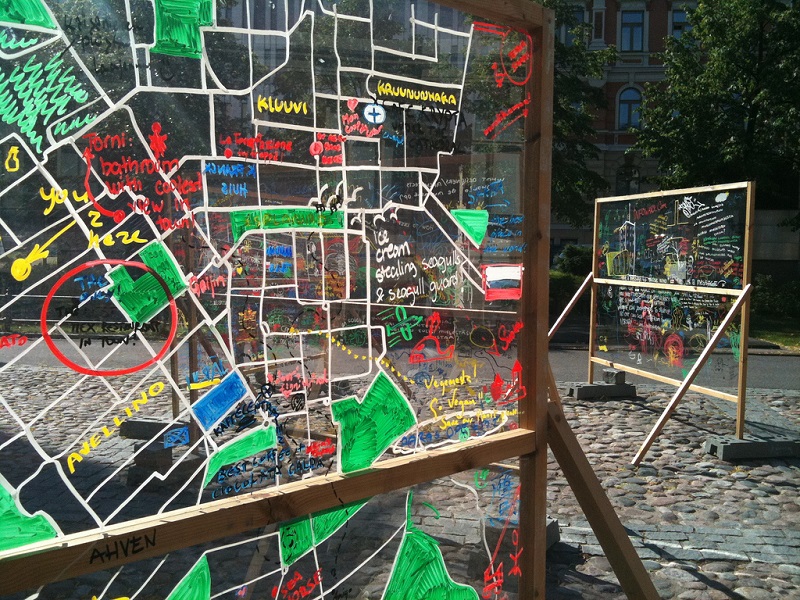
BEFS NEWS
BEFS has responded to the latest Position Statement published by Scottish Government on the planning review. BEFS has expressed disappointment that the scope of the review has shifted from major reform to a series of procedural changes. BEFS has flagged up the inherent tension in seeking to balance greater community participation with the planning system while speeding up and simplifying decision-making processes. For a review of BEFS Members’ submissions and links to some of BEFS members’ submissions, read our news release.
Following BEFS event on barriers to community engagement in planning, we have two blogs that follow the planning theme this week.
Nick Wright, of Nick Wright Planning, reflects on the findings of his report on barriers to community engagement in planning, commissioned by the Scottish Government.
Leah Lockhart, The Democratic Society, outlines some of the key themes that came out of the discussion at BEFS event and how digital engagement can overcome barriers to community engagement.
In our third blog this week, Harry Woodward, Tenant Participation Officer, Dunedin Canmore, writes in a personal capacity about Paul Sng’s documentary ‘Dispossession: The Great Social Housing Swindle’ and reflects on BEFS event with Tower Block UK.
I am sure you are all looking forward to Doors Open Days in September. Also, don’t miss the Festival of Architecture 2017 next month.
CONSULTATIONS
European Union (Withdrawal) Bill (SP 08/17)
The Scottish Parliament Finance and Constitution Committee intends to undertake scrutiny of the Bill including consideration of the expected legislative consent memorandum following the Parliament’s summer recess. In order to inform the Committee’s evidence taking, the Committee is seeking views on the impact of the Bill upon the devolution settlement and the expected legislative consent memorandum.
The closing date for responses is Friday 29 September 2017.
Historic Environment Scotland (HES) has launched a consultation on its Gaelic Language Plan for 2018 to 2023.
The consultation runs from 15 August to 31 October.
House of Lords Select Committee on Citizenship and Civic Engagement Call for Evidence:
The committee is keen to hear from a wide range of individuals, groups and organisations in order to understand the nature of the citizenship challenge for different parts of society; the aim being to identify new ways of building bridges within and between communities, and to support civic engagement.
Deadline: 8 September 2017.
PUBLICATIONS
Rural heritage under threat: looking after our landscapes post Brexit (The Heritage Alliance)
HLF funding for community asset transfer (HLF)
SCOTTISH GOVERNMENT NEWS RELEASES
Brexit threatens environmental ambition (SG 17/08/17)
The Scottish and Welsh environment ministers will today pledge to work together to resist the UK Government’s attempt to take control of devolved powers.
Taking action on climate change (SG 16/08/17)
Organisations across Scotland are being encouraged to host events and raise awareness of the impact of climate change as part of Climate Week 2017. Running from 18 – 22 September, Scotland’s Climate Week will highlight the actions people and organisations can take together to reduce emissions and adapt to a changing climate.
£4.4 million announced for energy efficiency projects across Scotland (SG 10/08/17)
Scotland’s Energy Efficiency Programme (SEEP) phase 2 pilots. Councils will share £4.4 million to improve energy efficiency in homes, businesses, public buildings and community projects. 15 local authorities will use the funding to deliver innovative ways to reduce emissions and tackle fuel poverty.
Brexit Bill talks (SG 09/0/17)
Speaking after today’s meeting with UK First Secretary of State Damian Green on the issue of the repatriation of powers following Brexit – which was also attended by Deputy First Minister John Swinney and Scottish Secretary David Mundell – Minister for UK Negotiations on Scotland’s Place in Europe Michael Russell said: “Today was a useful opportunity for an exchange of views between ourselves and the UK Government on Brexit and the repatriation of powers it will involve.”
‘Schools Out’ for the Queensferry Crossing (SG 09/08/17)
Following confirmation that the official opening by The Queen will take place on 4 September, and in response to local feedback, an additional 10,000 people from local schools and community groups on both sides of the Forth will have the chance to walk onto the bridge the next day (5 September). Then, from 6 September onwards, the bridge will re-open to traffic, with no pedestrian access.
Queensferry Crossing official opening (SG 04/08/17)
Date set for new Forth bridge to be opened by The Queen. The Queensferry Crossing will be officially opened by Her Majesty The Queen on 4 September 2017.
Funding our maritime heritage (SG 04/08/17)
£500,000 for the Scottish Fisheries Museum’s iconic flagship, Reaper, has been announced during the 2017 Year of History, Heritage and Archaeology, by Culture Secretary Fiona Hyslop. The funding will allow for a full refit of the historic herring drifter, which for the last thirty years has acted as an outreach ambassador for the museum, for Fife and for Scotland. This will be its most comprehensive refit since 1903.
Scotland’s coastline at risk (SG 04/08/17)
New mapping tool highlights threat to coastline. Nearly a fifth of Scotland’s coastline is at risk of erosion, threatening some of the country’s most prized land and infrastructure within the next 30 years.
NEWS RELEASES
First Ever Heritage Awareness Day Launched (HES 17/08/17)
HES is urging people across Scotland to come face to face with history as details of the inaugural Heritage Awareness Day were revealed at the iconic Leith Theatre today (Wednesday 16 August). Heritage Awareness Day – Scotland’s first-ever day dedicated to celebrating heritage – will take place on Friday 6th October, as the country continues to celebrate the Year of History, Heritage and Archaeology.
Voting is now open for the Scotland’s Most Beautiful High Street (STP 15/08/17)
After receiving fantastic entries, a judging panel of representatives from Scotland’s Towns Partnership and Keep Scotland Beautiful have drawn up a shortlist of 10 finalists. The winner will be decided by an online public vote, which will be open until 1 October 2017. The winner will be announced at Scotland’s Towns Conference in Paisley on 21st November 2017.
Historic Environment Scotland Launch Gaelic Language Consultation (HES 15/08/17)
HES has launched a consultation on its Gaelic Language Plan for 2018 to 2023. The plan seeks to build upon the organisation’s success with Gaelic development, which includes the incorporation of Gaelic interpretation into 29 of its historical sites, a learning program that has benefitted over 4,000 pupils and teachers and a strong portfolio of Gaelic media content for adult learners.
Could superfast broadband aid planning in Scotland? (RICS 14/08/17)
The Scottish Government has pledged to ensure that 100 per cent of Scotland has access to superfast broadband by 2021. But is there a way to maximise this pledge in conjunction with the planning system?
Homelessness in Scotland predicted to rise by over 50% by 2041 (SHN 10/08/17)
There are currently 11,800 people across Scotland either sleeping rough, staying in hostels, living in unsuitable temporary accommodation, sofa surfing or experiencing other forms of the worst types of homelessness such as squats, refuges or sleeping in cars. Now new expert analysis conducted for Crisis by Heriot-Watt University has revealed that this figure is expected to rise to 12,200 by 2021 before accelerating to 18,100 – a rise of 53% on current levels – in 2041.
Search is on for Scotland’s next generation of social innovators (Firstport 09/08/17)
The Social Innovation Competition – which opens for applications today (9 August) – celebrates and supports individuals and start up companies in Scotland that are using their creativity and imagination to solve pressing social issues, focusing on culture, heritage and tourism. This is particularly relevant as Scotland celebrates the 2017 Year of History, Heritage and Archaeology.
Housing crisis ‘hitting young Scots and PRS tenants more than most’ (SHN 08/08/17)
Young people and private renters are disproportionately affected by a “terrible shortage” of affordable homes in Scotland, according to a new report. Figures from Shelter Scotland’s ‘Impact Report’ have highlighted that a shortage of affordable homes, welfare reform and stagnant wages have seen tenants struggling to afford housing costs.
Seminars will help congregations with building maintenance (CoS 04/08/17)
Caring for church buildings is one of the most challenging tasks facing any congregation or presbytery. Whether you are undertaking a major refurbishment of your church or halls, or you simply need to make a roof repair, building repairs raise questions about everything from funding sources to planning regulations.
£15 million Northern Cultural Regeneration Fund to boost region’s tech, creative and cultural industries (DDCMS 04/08/17)
Towns and cities across Northern England will be able to bid for a share of a new £15 million fund to help build a lasting regional legacy from the Great Exhibition of the North, Culture Secretary Karen Bradley announced today.
A survey is *still* not the answer to everything – return of the alternative evaluation techniques (SCVO 08/17)
After what we’re sure was a long and trying wait, we’re delighted to present the eagerly awaited follow-up to A Survey is not the Answer to Everything! Determined to avoid falling into the all too common ‘disappointing second album’ trap, we’ve been biding our time, doing our research, and are pretty confident that these evaluation techniques will blow your socks off.
Home Secretary commissions major study on EU workers (HO 27/07/17)
The Home Secretary has today (27 July) commissioned the Migration Advisory Committee to examine the role EU nationals play in the UK economy and society.
HLF funding for community asset transfer (HLF 24/07/17)
Research, undertaken by Locality, examining the extent of the funding HLF has provided for asset transfer projects. The transfer of ownership and management was encouraged in the in the 2011 Localism Act. According to research by the New Local Government Network, over 70% of local authorities have carried out at least one asset transfers and 95% of local authorities expect asset transfer to play an increasingly important role in the next 5 years.
MEMBERS NEWS
Digital Towns Pilot Programme: Call for Applications (STP 08/17)
Scotland’s Towns Partnership is seeking applications from Towns, City Neighbourhoods, Business Improvement Districts and other town stakeholder organisations to participate in the national Digital Towns Pilot Programme, which is being supported by Scottish Government.
Applications are due by 5pm, Thursday 31st August 2017.
IHBC’s new Note on ‘Townscape’: Addressing knowledge gaps in heritage policy development (IHBC 04/08/17)
The IHBC has launched a new Guidance Note (GN2017/4) on ‘Townscape as an important concept in conservation area management’, to explain the importance the Institute places on townscape as a specific concept in the proper management of conservation areas, and address current gaps in national policy development in England.
PAS takes part in TEDx event at Queen Margaret University (PAS 05/17)
PAS Chief Executive Petra Biberbach was invited to speak at this year’s TEDx QMU event a few weeks ago. The theme was ‘Our Transgenerational World’.
Petra spoke about ‘Bridging the Gaps’ between our different generations, placemaking from an intergenerational perspective – and why all ages must be more involved in shaping their communities. The video is now online.
SCT Annual Conference 2017: 50 Years of Conservation Areas (SCT)
SAVE THE DATE! 27 November 2017
As part of our 50th anniversary celebrations and recognising that the Civic Amenities Act was passed in 1967, the Scottish Civic Trust’s next annual conference, in partnership with Historic Environment Scotland and The Institute of Historic Building Conservation, will tackle the theme of “Fifty years of conservation areas” – what has been learned, what has been lost, and what are the threats and opportunities in the future.
50 Favourite Scottish Doors for Doors Open Days 2017 (SCT)
As part of its 50th anniversary celebration the Scottish Civic Trust is inviting everyone from celebrities to members of the public to nominate their favourite Scottish door. For fifty consecutive days this summer, we will celebrate a favourite door to a Scottish building. Find out what happened behind each door to make it so special in people’s lives – Granny’s house? First holiday? Best gig? School? Favourite castle? Even a pub?
Skills, Knowledge and Behaviours for a New Planning System (RTPI 31/07/17)
Craig McLaren, Director of RTPI Scotland, discusses research led by RTPI on future skills needs for planners. Earlier in the year RTPI Scotland was commissioned by Scottish Government undertake research into the skills needs for planners. This was undertaken in the context of the Review of the Planning System.
EVENTS
For the latest information about BEFS Members’ events see our events calendar.
Playing the Past Kicking off
When: Monday 21st August.
Where: Cathkin Park in Glasgow.
Archaeology Scotland’s ‘Playing the Past’ project will be kicking off on Monday 21stAugust to uncover Cathkin Park’s rich sporting heritage as part of the 2017 Year of History, Heritage and Archaeology. Originally known as Hampden Park, Cathkin Park’s football stadium had played host to games since 1884 with games that attracted thousands of supporters. The stadium fell into disrepair after the home team, Third Lanark, folded 50 years ago in 1967. The park still holds the remains of the pitch and the terracing.
Archaeology Scotland will be excavating and surveying Cathkin Park in Glasgow ahead of the Open Day on Saturday 26 August. ‘Playing the Past’ is the park’s first archaeological excavation and members of the public are invited to view the progress throughout the week.
There are still spots available to take part in the excavation and an Open Day will also run from 11am to 4pm on Saturday 26 August with the opportunity to explore a mobile museum and excavate. Visitors are encouraged to bring along any images and memories from the park to be recorded. This event will also act as the launch for the annual Scottish Archaeology Month.
If you would like to take part in the excavation, please get in touch with the team at adopt@archaeologyscotland.org.uk to book your place.
Join us for an exclusive and fascinating trip to the Isle of May
When: Sunday 3rd September 2017.
Where: Isle of May.
We will visit the harbour, lighthouse, beacon, wartime remains, the bathhouse and St Adrian’s Priory. As an extra we will also gain entry to the ‘low lights’ and the engine room. Your host, Peter Yeoman, excavated some of the archaeology on the island and will give his insight and experience to much of the island 4000+ year history. On top of all that, the wonderful birdlife and seals will be all around. Our bus will pick up from west Edinburgh at 8.30am (location tbc) and take us to Anstruther where we will board the May Princess to sail out to the island. However you can opt to meet the group at Anstruther for the reduced price below. The sailing trip will be last around 4 ½ hours. There are toilet facilities at Anstruther and within the visitor centre on the island. Most of the island is accessible with care. The bus will return to Edinburgh around 5pm.
Tickets cost (includes ferry): Archaeology Scotland members £50. Non-members £55. Ticket cost (meeting at Anstruther): Archaeology Scotland members £33. Non-members £36
To book call 0300 012 9878 or register and pay at our website
Scottish Shared Transport Conference
When: Thursday 21 September 2017.
Where: The Golden Lion Hotel, 8 – 10 King Street, Stirling FK8 1BD.
In partnership with the RTPI, Carplus Bikeplus is excited to announce the launch of the Scottish Shared Transport Conference 2017. Shared transport initiatives are helping to create engaged communities, and a sustainable future for us all. This free to attend conference will discuss the importance of planning for a low-carbon lifestyle, demonstrate viable car ownership alternatives, highlight successful projects, and provide access to those at the forefront of establishing new approaches to sustainable living in towns and cities. Hear from expert speakers including Daisy Narayanan from Scotland’s Towns Partnership, and Colin Black from Arcadis, plus learn from interactive break-out sessions. More details here:
RTPI Scotland Annual Conference – The New Agenda: Planners as Visionaries, Facilitators and Enablers
When: Tuesday 3 October 2017.
Where: COSLA Conference Centre, Edinburgh.
The conference will look at the key issues we face in Scotland to develop an agenda for change. It will hear about opportunities, challenges faced and the new thinking and doing required from inspirational and forward thinking people. Conference delegates will have the opportunity to discuss these with others and help develop and agree the way forward.
Edinburgh, Lothians and Borders Archaeology Conference
When: Saturday November 18, 2017 from 9:00am – 4:45pm.
Where: Queen Margaret University, Musselburgh.
This annual conference is organised by City of Edinburgh Council, East Lothian Council and Scottish Borders Council. It provides an important opportunity to hear and discuss first-hand accounts of the archaeological fieldwork and research being undertaken in Edinburgh, East Lothian, Midlothian, and the Scottish Borders.
TRAINING
One day course: The Use of Drone Aircraft in Surveying Buildings, Landscapes and the Wider Historic Environment
The Scottish Traditional Skills Training Centre is presenting a Course in the Use of Drone Aircraft in Surveying the Condition and Assessing the Conservation, Repair and Maintenance requirements of difficult to access areas of historic buildings, bridges and other important elements of our Built and Landscape Heritage.
Resourcing Scotland’s Heritage is delivering a series of training courses and events across Scotland.
Our training is best suited to registered charities and constituted community groups. Take a walk through our simple question and answer page to determine which course is right for you. We have two main training courses and a series of ‘In Focus’ events. If you are interested in any particular event or fundraising topic, please do get in touch – we may be able to bring an event to your area info@scotheritage.org.
Traditional Building Skills Training
Scottish Lime Centre Trust offer a wide range of vocational and professional courses combining theory and practical working sessions designed to ensure that there are courses to suit everyone.
VACANCIES
Application for International Project Officer (EWHT)
We are looking to appoint an International Project Officer to assist with the delivery of the Heritage Skills Build Peace and Capacity in Mardin and Diyarbak?r project. EWH and the Istanbul-based Association for the Protection of Cultural Heritage (KMKD) have formed a partnership to deliver a joint training programme for two historic cities in Turkey.
Closing date for applications: 5pm on Wednesday 23rd August 2017.
RIAS Consultancy – Manager (RIAS)
The Royal Incorporation of Architects in Scotland (RIAS) is looking for an experienced professional to join our RIAS Consultancy team on a flexible part-time basis. The post offers the opportunity for someone with flare and drive, to join the Secretary and Treasurer’s office and help to develop the existing RIAS Consultancy business. RIAS Consultancy has over 20 years of unrivalled experience in developing the full range of competitive processes for selecting design teams and contractors. The appointee must be able to promote and communicate client aspirations in a manner that engages the design and construction community.
Closing date is Friday 1st September 2017 Interviews will take place on Friday 8th September 2017.
Transformation and Business Services Director (SNH)
SNH are looking for someone with experience and a track record in the following areas:
– A strategic approach to acquiring, managing and using information and expert knowledge to meet corporate objectives.
– An ability to analyse and prioritise information and communicate it authoritatively to a range of customers including senior politicians and the SNH Board.
– Effective management of people and finances to ensure high performance, collaborative working and efficiency.
– Working in a senior management team to provide leadership to the organisation, helping to set and deliver corporate goals and adjusting to the requirements of change in a leadership team context.
– Effective working with a wide range of stakeholders.
Closing date: Midnight on 3 September 2017
Information in the Bulletin is extracted from a number of websites including the Scottish Government (SG); the Scottish Parliament (SP); Architecture and Design Scotland(A+DS); Historic Environment Scotland (HES); Scottish Natural Heritage (SNH); Scottish Council for Voluntary Organisations (SCVO); English Heritage (EH); Design Council (DC); Department of Communities and Local Government (DCLG); Department of Culture, Media and Sport (DCMS); Department of Environment and Rural Affairs (DEFRA); National Assembly for Wales (NAW); Forestry Commission Scotland (FCS); Scottish Government Building Standards (SGBS); Europa Nostra (EN); Historic England (HE).
If you have any questions or comments on the above, or would like to submit information to be included, please get in touch with Saskia Smellie or tel: BEFS Office on 0131 220 6241.
BACK
BEFS has now submitted a response to the Scottish Government’s position paper on the planning review, published in advance of an anticipated Planning Bill this autumn.

BEFS has engaged with the review of the Scottish Planning system since it was launched in September 2015. The Forum has held workshops with Members, established a taskforce drawn from its membership to examine the proposals and recently held an open discussion on the research paper Barriers to Community Engagement in Planning. Working with the planning taskforce BEFS has now submitted a response to the Scottish Government’s position paper on the planning review, published in advance of an anticipated Planning Bill this autumn.
BEFS has expressed disappointment that the scope of the review has shifted from major reform to a series of procedural changes and has flagged up the inherent tension in seeking to balance greater community participation with the planning system while speeding up and simplifying decision-making processes. Strengthening regional agency is seen as desirable and the loss of Strategic Development Plans is of concern and the removal of Supplementary Planning Guidance is not supported as it can at times mitigate the unfortunate absence of local authority expertise. Extending Permitted Development Rights would likely have unintended consequences in the quality of small scale development and extending Simplified Planning Zones to include conservation areas may not be simple at all.
Reviewing BEFS Members submissions there is a shared consensus that the ambition at the outset is absent and that the opportunity for positive change is not being grasped. There is a shared refrain that warns against centralisation of decision making. There is also observation that there is a lack of integration with other policy agendas and as the National Trust for Scotland points out “there are seventeen references to housing in the position statement – but no references to landscape, or biodiversity, or amenity”. Is it a Planning Bill or Housing Bill that is being prepared?
The responses raise questions about capacity and resource to implement the proposals, for example, without additional resource the uptake of Local Place Plans will be iniquitous. Questions are also raised as to the absence of robust rationale being provided for equal rights of appeal not being explored, and criticism lack of detail on many of the proposals is also frequent.
A brief look at other published responses reveals similar concerns. The Scottish Federation of Housing Associations does not think that the proposals will deliver more quality affordable homes, Homes for Scotland says that there is a “distinct overall lack of detail” and Scottish Environment LINK is disappointed to see none of its concerns addressed in the position statement.
At the discussion on Barriers to Community Engagement in Planning there was a shared sense from community representatives and planning practitioners that as long as the success of planning was measured by speed of decision making neither meaningful community participation and quality place making can be achieved. The survey undertaken by the researchers revealed that 92% of community respondents and 59% of professionals agreed with the statement that “planning is not effective at engaging communities”. This is a stark statistic and explains why equal rights of appeal remains a background conversation that is getting ever louder and will no doubt make its presence felt in the passage of the Planning Bill in parliament.
In 2015 Alex Neil MSP, then Social Justice Secretary, wanted the “game changing review” to result in planning playing “a more positive and effective role in creating high quality places for current and future generations”. As it stands, respondents to the Scottish Government’s position statement do not appear to see this being the result.
You can read BEFS response in full, along with those of our Members, here.
BACK