



Leah Lockhart, Digital Democratic Engagement at The Democratic Society, reflects on BEFS recent event on barriers to community engagement in planning.
 Earlier this month I went along with a few of my colleagues from the Democratic Society to a talk hosted by BEFS to discuss a piece of research the Scottish Government had commissioned, Barriers to community engagement in planning: a research study. My colleagues and I are not actively involved in planning or built environment circles but we are public engagement practitioners so the research outputs and discussion in the room were very familiar to us.
Our mission at the Democratic Society is to ‘bring better democracy everywhere’ and although the word ‘democracy’ might conjure up images of politicians and voting, we are a non-partisan organisation working to strengthen and shorten links between citizens and the organisations that affect their lives. There’s a strange kind of comfort or solidarity in hearing people outside my professional networks articulate almost exactly the same problems I encounter in my day to day work. But it’s also very frustrating. The core issues brought out in Barriers to community engagement are not new, in fact they are evergreen. How can so many people talk so openly for so long about the problems of governments failing to carry out meaningful public engagement and never seem to make progress?
Barriers to community engagement is a very well presented and accessible document and the discussion about it at BEFS, led by John Lord of Yellow Book Ltd and Nick Wright of Nick Wright Planning, was very motivating. As a digital engagement specialist, I tend to parse everything through questions of how the internet or other digital technologies might help or hinder community engagement. Below are three things I can’t stop thinking about since the event. Each point is focused around the What Works- opportunities for practical action portion of the report (section 7.19, page 58 and figure 7-4) because we have a responsibility to act now.
- Make the most of existing guidance and good practice: ‘The theory and practice of community engagement has been thoroughly examined and documented. There is no need to add to the existing body of guidance, we just need to apply it consistently and determinedly.’ Local authorities are especially stubborn in the belief that they are unique and this is a huge barrier to any kind of meaningful change or innovation in policy making or service delivery. Functionally, councils are the same but they are forever re-creating the wheel, especially when it comes to community engagement. By starting from scratch all the time, councils are creating distractions that keep them from actually engaging anyone. There is no end to information and practitioner communities online through which peer support, knowledge exchange and community engagement can happen. Resources could be much better spent leveraging existing networks and learning from others than creating new guidance or frameworks.
- Connecting with the seldom-heard. This recommendation spells out some of the core tenets of digital engagement: ‘meet people on their turf and at the times that suit them best; offer a range of meeting times and venues; offer opportunities to participate in different ways.’ It also recommends ‘ensuring venues are wheelchair accessible; providing signing services; reimbursing travel costs and publicising events in languages other than English.’ The internet does not close and it is wheelchair accessible. It enables video for signing, subtitles for transcriptions and there are no travel costs to visit it. Our experience at Democratic Society of helping councils complement offline engagement with online engagement has demonstrated to us that people with unsociable working hours, care responsibilities, physical disability, anxiety about socialising and more, really appreciate an online pathway to participation. Increasingly, members of the public will expect to be able to communicate with their public services online and planning is no exception.
- Using Plain English, effective communication and feedback. The report reflects feedback from survey participants that bad communication, terrible online services and way too much jargon are ‘seen as a means of excluding and intimidating ordinary members of the public’ and ‘ways in which local authorities ration participation in planning rather than actively promote it.’ It’s easy to suspect councils of being shady by not communicating well or not providing visible feedback loops but it’s my experience they don’t usually have the right skill sets to carry these things out. By being supported to learn better ways to engage online, to understand how online communities work and to realise the potential for greater transparency through having a strong online presence, planners could go a long way to being effective communicators.
I’m excited about the conversations happening right now in the built environment professions and I will be spending more time trying to link with people around community engagement in planning. I have a lot to learn from this new network about issues specific to planning but for members interested in good public engagement generally, we already have so much in common. Thanks to BEFS for welcoming us outsiders and for awakening my inner planning nerd!
BACK
Nick Wright, of Nick Wright Planning, reflects on the findings of research commissioned by the Scottish Government into barriers to community engagement in planning.
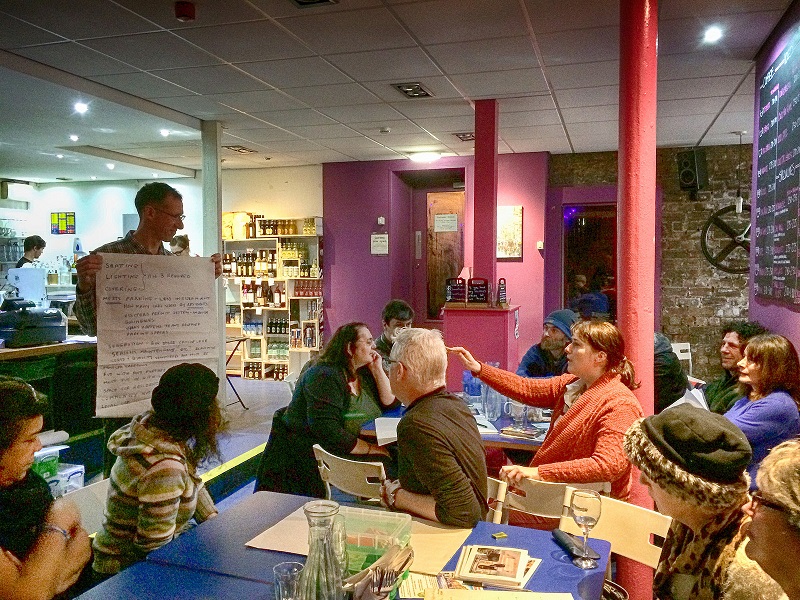
When I first heard of the Scottish Government’s proposed research into barriers to engagement in planning, I expected the barriers would relate to access to information, too much jargon, and outmoded communications channels like statutory notices.
How wrong I was! As part of the team with Yellow Book and the Scottish Community Development Centre appointed to do the research, I quickly discovered that these and similar points – important though they are – are really second-order issues.
The research revealed that of far more importance to people in local communities who engage with planning is something far more fundamental: a lack of trust.
In an online research survey with over 1,600 responses, a staggering 86% of community/civil society respondents disagreed with the statement “there is mutual trust, respect and confidence between the players”. The proportion of professional respondents who disagreed, 83%, was scarcely any lower.
Trust of developers, trust of professionals, trust of local authorities – all appear to be in short supply. Maybe it’s symptomatic of the wider malaise afflicting governance and politics in these days of Brexit and Trump. Whatever the cause: the clear message from the research was that, unless trust is (re-)built, fixing the second-order issues will be as effective as the proverbial finger in the dyke.
A healthy crowd of BEFS members and other interested folk got together on 1 August to find out more about the research findings, and consider whether the engagement proposals outlined in the Scottish Government’s recent Position Statement on the Planning Review would overcome the barriers identified in the research.
There isn’t space here to go into the detail of the barriers research and its findings. You can get the report online here or view a summary in the 1 August presentation here.
The question posed on 1 August was: will the proposals in the Scottish Government’s Position Statement on planning reform successfully overcome the barriers to engagement?
We discussed three key areas that emerged from the research findings. Below, I have summarised proposals from the Position Statement that relate to each area; please note that the Position Statement did not, however, respond to the barriers research, these are purely my attempts to make connections.
Firstly, what’s the purpose of engagement? (information, consultation or empowerment?) How much engagement should there be? Where should it end?
On these questions, the Position Statement suggests that the proposed new Local Place Plans should be consistent with Local Development Plans, that community and spatial planning should be aligned, that young people should be more involved, and that there should be consideration of how to shift from consultation to empowerment.
But what of other seldom-heard groups of society beyond young people? And how can we better link planning into the community empowerment and community planning agendas?
A second area of the research findings related to the complexity of planning, and the inevitability of tensions. On these issues, the Position Statement urges involving people earlier in the process and production of guidance on rights and responsibilities.
Will these be enough to restore trust? What about people who haven’t been involved earlier in the process (newcomers to an area, for example), especially with a ten yearly Local Development Plan review? And is guidance enough to ensure that everyone – professionals, developers and the public – behave responsibly?
Finally, in relation to the lack of trust and transparency that was identified in the research, the Position Statement proposes amendments to Pre Application Consultation, removal of applicants’ “free go” after a refusal or appeal dismissal, stronger enforcement and training for professionals.
All these proposals from the Position Statement are very important but, fundamentally, will they be enough to tackle the mistrust in our system that seems to be endemic?
We will have more clues on that when the final proposals are published later this year. My hope is that the government doesn’t rely on legislation to build trust; I believe it will need a much more concerted package of action and resources, as we learned from the importance of the ‘culture change’ proposals during the last round of reforms in 2006.
Nick Wright, Nick Wright Planning
BACK
Harry Woodward, Tenant Participation Officer, Dunedin Canmore, writes in a personal capacity about Paul Sng’s documentary, Dispossession: The Great Social Housing Swindle.

Built Environment Forum Scotland’s joint screening of Paul Sng’s film ‘Dispossession – the Great Social Housing Swindle’ with Tower Block UK was relevant, topical and added to by a lively and interesting debate at the Screening Room in George Square on 26 July.
Sng’s previous film, ‘Sleaford Mods – Invisible Britain’ was a documentary that captured the story of the band mentioned in the title against the background of the 2015 General Election. Dispossession is another documentary in the style of ‘someone who tells the stories of people who challenge the status quo.’ And a good story it was too.
Paul Sng himself was present to take part in a debate after the screening chaired by BEFS Director, Euan Leitch, which comprised Tom Slater from Edinburgh University’s School of Geosciences, Edinburgh Tenants Federation (ETF) Chair Betty Stevenson and ETF Executive Committee member Heather Ford.
The debate was perhaps less focused on the film and more on Edinburgh’s housing situation. Stevenson and Ford between them combining years of social housing tenants’ activism, answered questions about how Edinburgh Council responded to poor housing situations they had experienced. Stevenson did, however, provide useful insight into the demolition of the Red Road flats in Glasgow, which featured in the film, with residents from the flats interviewed saying the communities in Red Road were destroyed by the demolition. Stevenson had met with residents of the flats herself and said that many people she spoke to were desperate to move; there was a significant amount of people affected by stress and mental health issues from living in the blocks and overall Stevenson’s message was people in communities have to work together with officialdom to improve communities; regeneration isn’t just about blowing down and then building up again, in a people as well as a physical sense.
In fact, this was the main theme of the film: communities from Bath, Glasgow, Nottingham and the high rise blocks in the London areas of Lambeth, Southwark and Tower Hamlets showed the corporate machinations that were preventing local people from remaining in the areas they lived and loved in, captured beautifully in the images and interviews shown in the film. The story is best viewed to form your own conclusions on how bad the situation is in the areas featured in the film, whether you blame it on ‘market forces’, the demise of local government house building programmes or just the predatory greed of large development corporations to acquire land to generate more profits for their shareholders.
If you haven’t seen it, the opportunity for that should be forthcoming again soon in Edinburgh with a showing due at the Cameo in September and in local community centres (part funded by Unite the Trade Union), hopefully giving more people the chance to view a film that could do for social housing what Ken Loach’s ‘I, Daniel Blake’ did for the Welfare Benefits system. Try and catch it if you can.
The lack of time prevented perhaps a more detailed discussion on Edinburgh’s housing situation, where the huge land values and the need for a greater programme of new build affordable housing might have led to more insights from the body of politicians, academics, students and community activists who attended, but overall well done to those who organised it and especially to Paul Sng for a timely film that, on the back of the Grenfell tragedy, reminds people that housing is for people to live in, not for rich people to invest their money in.
BACK
Get The Latest Built Environment News, Consultations, Publications And Vacancies.

BEFS NEWS
BEFS has responded to the consultation on energy efficiency and condition in private renting housing, which proposes a gradual introduction of standards using energy performance certificates as a method for assessment. BEFS has highlighted that EPC ratings do not apply readily to traditional buildings, and notes that management practice is a key factor, along with an understanding of how traditional buildings perform. Read BEFS full response here.
The deadline to response to the Places, People and Planning – Position Statement is coming up on 11th August. Don’t miss the opportunity to have your say.
There are still a few days left to nominate individuals or groups for the Scottish Heritage Angel Awards 2017.
One day left of the early bird offer for RTPI’s annual conference, The New Agenda: Planners as Visionaries, Facilitators and Enablers, in Edinburgh in October.
BEFS recently hosted a film screening of Paul Sng’s documentary ‘Dispossession: The Great Social Housing Swindle’ followed by a Q&A with the director, in collaboration with Tower Block project at University of Edinburgh. In the first of our blogs, Kate Houghton, Planning Policy & Practice Officer RTPI Scotland, reflects on the documentary and lessons for a planner.
In our second blog this week, BEFS Chair, Graeme Purvis, tells us about the restoration of an overgrown renaissance garden in Granton as a catalyst for urban renewal.
CONSULTATIONS
Places, People and Planning – Position Statement – June 2017
Closes 11 Aug 2017.
Climate Change Bill
The Scottish Government intends to introduce a new Climate Change Bill with even more ambitious targets. Proposals include setting targets based on actual emissions, increasing the 2050 target to 90% emissions reduction, and making provisions for a net-zero greenhouse gas emissions target to be set when a credible and costed pathway can be demonstrated.
Opened 30 Jun 2017. Closes 22 Sep 2017.
Community Empowerment and Common Good Property: Consultation on Draft Guidance
This is a consultation on guidance for local authorities on how to fulfil the requirements of Part 8 of the Community Empowerment (Scotland) Act 2015 in relation to common good property.
Opened 30 June 2017. Closes 29 September 2017.
The Socio Economic Duty
In 2017, Scotland will become the first part of the UK to introduce the socio-economic duty. The Scottish Government wants to make sure that this duty is introduced so as to have maximum positive impacts. So it’s important to get implementation right and this consultation paper is a key way to make sure we do.
Opened 18 Jul 2017. Closes 12 Sep 2017.
CONSULTATION RESPONSES
A Consultation on Procedure of the First-tier Tribunal (FTT) Housing and Property Chamber – Analysis of responses to the public consultation
PUBLICATIONS
Annual and Quarterly Planning Performance Statistics, 2016/17 (SG 25/07/17)
Up My Street – Buildings at Risk Catalogue 2017-18
SAVE Britain’s Heritage’s latest Buildings at Risk Catalogue features over 100 decaying buildings from across the country in need of new owners or new uses.
SCOTTISH GOVERNMENT NEWS RELEASES
Tenants and landlords to benefit from new regulations (SG 28/07/17)
Letting agents have six months to prepare for compliance with a new, statutory Code of Practice, set to improve standards and empower customers. Housing Minister Kevin Stewart is writing to all commercial letting agents to highlight the changes and their responsibilities, and the need to comply by January 31 2018.
£1.2m for affordable housing in Fort William (SG 26/07/17)
200 homes planned for Upper Achintore site. At least 200 new affordable homes will be built in Fort William, following the award of a £1.2 million grant from the Scottish Government to Lochaber Housing Association (LHA). The site will develop a variety of mixed tenure homes for rent and private use, on the Association’s recently acquired site at Upper Achintore.
People and Communities Fund (SG 25/017/17)
Organisations across Scotland, supporting hundreds of community led projects that put people first, are to receive £8.6m funding for the year 2017/18. The funding, announced by Housing Minister Kevin Stewart today (July 25th), will have a positive impact on thousands of lives in Scotland – with support ranging from training/upskilling, employability advice, activities for young people, peer mentoring, and healthy eating initiatives.
Planning decision times published (SG 25/07/17)
Local Development decisions were quicker in 2016/17. The average decision time for Local Developments (26,986 applications) in 2016/17 was 9.2 weeks, four days quicker than the average of 9.7 weeks in the previous year and the quickest annual figure since the start of this data collection in 2012/13. Local housing applications were decided in an average of 12.7 weeks, one week quicker than the previous year (13.7 weeks).
Socio-economic duty (SG 18/07/17)
Public sector to do more to reduce inequalities. In a UK first, public bodies in Scotland will be required to put reducing poverty and inequality at the heart of their decision making.
Cladding and school buildings (SG 14/07/17)
Scottish Government provides further update. Building standards systems and regulations for high rise domestic properties in Scotland means that the specific type of ACM, which was used on Grenfell Tower, should not be used in their cladding systems.
Increase in affordable housing (SG 07/07/17)
The Scottish Government has committed more than £1.75 billion over the next three years to enable local authorities to plan and deliver the affordable housing needed in their communities, delivering the ambitious target of at least 50,000 affordable homes by 2021.
Regenerating coastal communities (SG 06/07/17)
£4.3 million to improve access and facilities. Projects for attracting tourists, creating new jobs and boosting economic growth in coastal communities will receive £4.3 million funding.
NEWS RELEASES
Share your success with SURF (SURF 01/08/17)
SURF is currently welcoming applications to our 2017 SURF Awards for Best Practice in Community Regeneration. Each year, SURF and the Scottish Government team up to highlight, share and celebrate success and innovation in efforts to improve the physical, social and/or economic fabric of disadvantaged communities across Scotland through the prestigious SURF Awards.
RTPI Awards for Research Excellence 2017: shortlist announced (RTPI 28/07/17)
From cycling to commuting, housing to land ownership and the digital economy – this year’s RTPI Awards for Research Excellence shortlist, announced today, reflects the depth and breadth of planning research. Seventeen research projects are competing across five categories: Planning Consultancy Award, Academic Award, Early Career Researcher Award, Student Award, and the Sir Peter Hall Award for Wider Engagement.
Heritage 2020 Action Plans published (HA 27/07/17)
The Heritage 2020 vision concentrates on five strategic areas for collaboration, each of which will be developed further by a cross-sector working group looking at new ways of working together on the priorities of each theme. All five Heritage 2020 working groups have now published action plans and these can be viewed on each group’s page alongside information on the groups’ most recent meetings.
All-Party Parliamentary Inquiry into Arts, Health and Wellbeing Launches Report (AHRC 21/07/17)
A new report has been launched showing that the arts have a significant and positive impact on health and wellbeing. Creative Health: The Arts for Health and Wellbeing comes as the result of an inquiry led by the All-Party Parliamentary Group on Arts, Health and Wellbeing (APPGAHW). The research was funded by the Arts and Humanities Research Council, the Wellcome Trust, and Paul Hamlyn Foundation.
City Deal boost for Edinburgh and south-east Scotland (BBC News 20/07/17)
The UK and Scottish governments are each investing £300m in the project. The money will be used to support innovation, infrastructure, housing, tourism and culture including a new concert hall in St Andrew Square.
Five towns and cities shortlisted for UK City of Culture 2021 (DDCMS 14/07/17)
Coventry, Paisley, Stoke-on-Trent, Sunderland and Swansea have been shortlisted to host UK City of Culture 2021, Minister for Arts, Heritage and Tourism, John Glen announced today
Change of name for DCMS (DDCMS 03/07/17)
In a move that acknowledges the way the Department’s remit has evolved, the Prime Minister and Culture Secretary Karen Bradley have agreed a departmental name change. The Department will continue to be referred to as DCMS in all communications, but is now the department for Digital, Culture, Media and Sport.
National Lottery gives 500 Scottish groups reason to celebrate (BLF 27/06/17)
Over £3.8 million in National Lottery funds is today (TUES 27 JUNE) being shared by almost 500 groups across Scotland. The windfall means grassroots groups delivering everything from wheelchair football to after-school holiday clubs and drama workshops to hip-hop dance sessions now get the green light to go ahead.
Energy efficient buildings: increased energy savings and better living conditions (EU 26/06/17)
The Council agreed today its position on a proposal for a revised directive on the energy performance of buildings. The aim of the proposal is to promote energy efficiency in buildings and to support cost-effective building renovation with a view to the long term goal of decarbonising the highly inefficient existing European building stock.
MEMBERS NEWS
Communities Across Scotland To Benefit From New Community Development Grant Funding (AHF 01/08/17)
This year, The Architectural Heritage fund (AHF) launched a new grant fund supported by Historic Environment Scotland (HES). Due to additional three-year funding of up to £200,000 from HES, the AHF is able to expand its grant-giving programme to include a new Scottish Community Development Grant that will help support historic building regeneration projects in communities across Scotland.
Six Stunning Sites Unearthed in Search for Scotland’s Hidden Gems (SoAoS 01/08/17)
Winners chosen by popular vote include Viking-era monuments, a “castle on the hill” and a medieval burial ground. Dig It! 2017, the year-long celebration of archaeology, has been coordinating the Scotland-wide search. Over 12,000 votes have been cast over the last two months and with the polls now closed, the winners have been revealed.
50 Favourite Scottish Doors (SCT 01/08/17)
As part of its 50th anniversary celebration the Scottish Civic Trust is inviting everyone from celebrities to members of the public to nominate their favourite Scottish door. For fifty consecutive days this summer, we will celebrate a favourite door to a Scottish building.
Royal High School Update (AHSS 25/07/17)
Following the local elections in May, the City of Edinburgh Council have appointed a new Development Management Sub-Committee. The committee will meet on the 31st August 2017 to consider the second hotel application from Duddingston House Properties and the Urbanist Group for the former Royal High School on Regent Terrace. Anyone is welcome to attend the proceedings which will start at 10.00am in the City Chambers on the Royal Mile, Edinburgh.
Festival of Architecture 2017 (AHSS 25/07/17)
If you enjoyed the Festival of Architecture 2016, you’ll be delighted to learn that the Royal Incorporation of Architects in Scotland are bringing the festival back for a second year!
Bold ambitions and strong community engagement – 2017 Student Award winners announced (A&DS 07/17)
A bold proposal with an ambitious idea about democracy and a detailed plan with strong community engagement scoop Scotland’s student awards. Paschalis Kyrtsopoulos, University of Strathclyde, and Naomi Rubbra, ESALA, are winners at annual A&DS and RIAS Scottish Student Awards for Architecture 2017.
IHBC makes history again: New joint conservation practice statement (IHBC 24/06/17)
The IHBC has launched our joint ‘Conservation Professional Practice Principles’ at the 2017 Day School and AGM in Manchester, which offers a new, accessible statement on practice principles for specialists working in built and historic environment conservation roles.
Edinburgh World Heritage to support restoration of historic Turkish cities near Syrian border (EWHT 20/06/17)
Edinburgh World Heritage announced today that it had been awarded funding by the British Council’s Cultural Protection Fund, in partnership with the Department for Culture, Media and Sport, to support the restoration of the historic cities of Mardin and Diyarbakir in a region of Turkey that has suffered as a result of the recent escalation of violence and political uncertainty.
2017 CSGN Forum Survey Results (CSGN 06/07/17)
The 2017 CSGN Forum drew inspiration from across the globe with leading experts from Italy, Belfast and Copenhagen underlining the need for greenspace, green infrastructure and active travel routes in cities and urban environments.
Introducing HLF’s Heritage Ambassadors (HLF 06/17)
HLF has recruited a group of 16-25 year old ‘ambassadors’ to help transform the way young people experience and interact with heritage. Drawn from across the UK, the 17 new Heritage Ambassadors will help decide how money is awarded through HLF’s new £10million Kick the Dust funding programme. They will also work with HLF to find ways of increasing the number of young people visiting and getting involved with heritage.
EVENTS
For the latest information about BEFS Members’ events see our events calendar.
A walk in the footsteps of John Hope: Hidden Stories of The Meadows
When: 12 AUGUST 2 P.M. – 4 P.M
Where: Meet at the East end of The Meadows by the entrance to the East Meadows Play Park on Melville Drive EH9 9EX.
Once the site of the Borough Loch, the Borough Muir has witnessed important events in the history of Scotland. Guardian Historian Christopher Dingwall and Marilyn Brown, author of Scotland’s Lost Gardens, will lead a walk and describe the changes which have occurred in its layouts The Meadows over several hundred years. They will also explain its role in the social life of Edinburgh.
Tickets cost £5 and can be paid for either on line through BACS sort code 30-25-81, SGLH account 11313660, reference “Meadows”, or in cash on the day.
Falkland Craft Symposium
When: 18-20 August 2017.
Where: Falkland Centre for Stewardship, Falkland Estate.
Talks, Discussions, Workshops, Demonstrations, Networking and Site Tours. A celebration of craft skills inspired by the craft of the House of Falkland. Options to attend one, two or three days. Tickets cost from £20 per person and covers site tours, all talks, workshops and demonstrations, lunch, refreshments and even a ceilidh on Saturday night!
Contemporary Houses of Lower Deeside
When: Saturday 19th August, from 2PM – 4PM.
Where: Aberdeenshire.
Join us for a visit to cutting-edge contemporary houses in Lower Deeside, Aberdeenshire. Included will be 64 Kirk Brae, Cults, which is designed, owned and inhabited by AHSS North East’s treasurer, Mr Charles Smith. The £12 fee will include tea.
Sustainable Building 2017: creating homes and communities for the future
When: September 6th 2017
Where: Saracen House, Glasgow
This conference will not only consider the incorporation of sustainable principles within the process of new buildings and the retrofitting of existing stock, changes in public policy, the evolution and innovation of design, the development of new materials, the creation of jobs and apprenticeships within these new communities; it will also examine the progress made towards reaching Scotland’s ambitious housing targets.
Book Conservation Skills for Paper Conservators 2-Day Workshop
When: 14th – 15th November.
Where: National Library of Scotland, 159 Causewayside, Edinburgh.
A theory and practical workshop for 10 delegates run by Icon accredited book conservator Caroline Scharfenberg. This workshop addresses the need for paper conservators to have a basic knowledge about book structures and the typical damage found in book collections. These skills will enable paper conservators to stabilise book collections and to better assess damage and the required repair. It will also allow paper conservators to better identify damaged bound material, which will have to be addressed by a professional accredited book conservator.
Save the Date! Harold Plenderleith Memorial Lecture 2017
When: 30th November 2017
Where: Edinburgh, exact venue tbc.
Icon Scotland group is delighted to announce that this year’s lecturer will be Helen Shenton, Librarian and College Archivist of Trinity College Dublin, Ireland. More details to follow.
TRAINING
Resourcing Scotland’s Heritage is delivering a series of training courses and events across Scotland.
Our training is best suited to registered charities and constituted community groups. Take a walk through our simple question and answer page to determine which course is right for you. We have two main training courses and a series of ‘In Focus’ events. If you are interested in any particular event or fundraising topic, please do get in touch – we may be able to bring an event to your area info@scotheritage.org.
Traditional Building Skills Training
Scottish Lime Centre Trust offer a wide range of vocational and professional courses combining theory and practical working sessions designed to ensure that there are courses to suit everyone.
VACANCIES
Scotland’s Garden and Landscape Heritage Contract
Scotland’s Garden and Landscape Heritage (SGLH) is seeking applications for a contract to initiate and manage an innovative and exciting, two phase project. The purpose of the project is to develop for publication a Conservation Strategy and Conservation Guidance Notes for Landowners. It will cover the CAVLP and Falkirk Council areas commencing October 2017. This project represents the second stage of a pilot project (‘Glorious Gardens’) launched by SGLH in 2014.
Closing date 11/8/17.
Chartered Institute for Archaeologists – Board of Directors lay director recruitment
Do you want to help the leading professional body representing archaeologists working in the UK and overseas? Do you have the governance skills required to help to direct a small but ambitious organisation? CIfA, the Chartered Institute for Archaeologists, is looking for two directors from outside the profession. If you are interested, or know someone who might be, please see the Information for candidates and Application form.
Deadline for applications: 28 August 2017. Interviews: 20 September 2017.
Information in the Bulletin is extracted from a number of websites including the Scottish Government (SG); the Scottish Parliament (SP); Architecture and Design Scotland(A+DS); Historic Environment Scotland (HES); Scottish Natural Heritage (SNH); Scottish Council for Voluntary Organisations (SCVO); English Heritage (EH); Design Council (DC); Department of Communities and Local Government (DCLG); Department of Culture, Media and Sport (DCMS); Department of Environment and Rural Affairs (DEFRA); National Assembly for Wales (NAW); Forestry Commission Scotland (FCS); Scottish Government Building Standards (SGBS); Europa Nostra (EN); Historic England (HE).
If you have any questions or comments on the above, or would like to submit information to be included, please get in touch with Saskia Smellie or tel: BEFS Office on 0131 220 6241.
BACK
Kate Houghton, Planning Policy & Practice Officer RTPI Scotland, reflects on BEFS screening of Paul Sng’s documentary, Dispossession: The Great Social Housing Swindle.

Paul Sng’s documentary, Dispossession: The Great Social Housing Swindle, is profoundly affecting, and I recommend that anybody working in the ‘built environment’ finds a way to watch it. Every now and then it is important to be reminded what that ‘built environment’ moniker really means – places, for all of us to live in.
Dispossession briefly charts the history of social housing in the UK, from the response to slum overcrowding in the mid-20th century, to the Right to Buy and the more recent regeneration of social housing. For me though the linchpin on which this story turns is the accompanying rise and fall in the aspiration associated with council housing.
The rolling out of social housing across the UK in the mid-20th century was met by wide-spread aspiration to have the opportunity to live in not just a new, modern home, but an affordable one with security of tenure. Was the Right to Buy, which was introduced in the form we know it in 1979, just an extension and individualisation of this security of tenure? Whether or not we see it that way, the Right to Buy subsumed the earlier aspiration associated with a council house, and consolidated the now taken as given British aspiration to own your own home. But Sng’s film, more than just charting the decline in social housing as a consequence of changing times, gives a raw account of how people who live in social housing have been demonised by some. What used to be a mainstream housing tenure in a market where the average housing cost is not affordable on an average income, has in the popular imagination been transformed into the destination of last resort.
Dispossession gives a voice to the ‘ordinary’ people from many walks of life who live in what remains of the UK’s social housing stock, primarily in London, but also in Glasgow and Nottingham, and allows them to counter the cartoon negative and moralistic portrayal of social tenants that too often pervades in the media. Their stories are varied, but with a common thread – secure housing offered a place to raise a family, a place to build a settled life, or a place to be part of a warm and thriving community. In all cases, the way that housing has been managed, whether in terms of maintenance, redevelopment or even demolition, left its residents feeling disenfranchised and ignored.
The documentary provoked many questions from me. Stories from three very different cities are told without exploring the different underlying forces bringing about change in those places. There was also an absence of voices of those who might feel they are impacted positively by current decision-making, and therefore stories from which we could begin to see which direction we should be travelling in. Experience tells me that these stories are out there.
Nonetheless, I don’t think that mapping the complex solutions we need is the purpose of this film. Rather its value lies in its impossible to ignore documentation of the human cost of our societal failure to value decent housing for all. We won’t find a structural solution until we listen to, and understand, that human cost.
Planning and planners are increasingly aware that we must give higher priority to more meaningful community engagement, and with a wider spectrum of people. This film channels the voices of people affected by the kind of decisions planners make, and therefore inevitably makes for uncomfortable viewing for a planner at times. It is a timely reminder that sincere community engagement is tough. It means hearing things that we don’t always want to hear, and being prepared to really listen to different views and experiences. One contributor to Dispossession speaks of his warm affection for the Red Road Flats: It’s all too easy to dismiss this unconventional view. But, to avoid repeating the mistakes of the past, we have to be willing to listen and see our preconceptions challenged.
Thanks to BEFS and the Tower Block project at University of Edinburgh for the opportunity to view Dispossession in Edinburgh before the film’s commercial screenings in the city and in Glasgow later in the year.
BACK
BEFS Chair, Graeme Purves, tells us about the restoration of an overgrown renaissance garden in Granton as a catalyst for urban renewal.
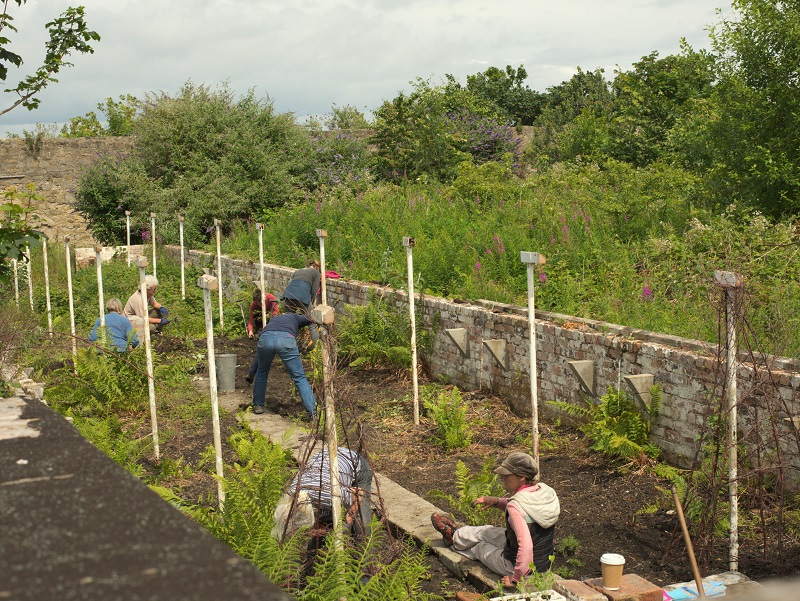 A community-based group in North Edinburgh has begun the work of restoring an overgrown renaissance garden in Granton as a catalyst for urban renewal of the waterfront. The historic garden had previously been the subject of a planning application for housing development but these plans were subsequently withdrawn. In October 2016 the Friends of Granton Castle Walled Garden submitted proposals to Edinburgh City Council’s development company, the EDI Group, to restore it as a working garden and green hub for community activity. Discussions over the winter led to the Friends signing a legal agreement with EDI and securing access to the garden in April.
Granton Castle Walled Garden is probably one of the oldest walled gardens in Scotland. The earliest reference to ‘Grantoun House’ is in 1479 and it is thought that the garden dates from that time. Granton Castle itself was abandoned as a residence in the 18th century, became a picturesque ruin during the 19th century and was finally demolished in the 1920s. However, the walled garden survived and continued in use as a market garden until relatively recent times.
The Friends see the restoration of the garden as offering a wide range of benefits in terms of health and well-being, social cohesion, cross-cultural integration, community education and local capacity-building. Key elements of their vision are that it should be:
- a garden for all to enjoy, with a range of learning, growing and arts activities and a diverse events programme;
- a restored market garden run by the local community, supplying organic produce directly to local people, businesses and schools.
- a living link to the past , serving as a heritage gateway to the waterfront and a green social hub for existing and future communities.
Specific features which have been proposed include a visitor centre and community café, a kitchen garden, a heritage orchard, a plant nursery, a workshop and demonstration area, a medicinal and pigment garden, a restored glasshouse and a polytunnel.
The restoration of Granton Castle Walled Garden as a community asset is supported by a wide range of local stakeholders and national organisations. The Friends are working closely with Scotland’s Urban Past on surveying and recording aspects of the garden’s heritage.
In this first season, volunteers have been busy removing the stumps of tree saplings which had started to colonise the garden and restoring one area to cultivation. The Friends are also working with EDI to make the garden safe and accessible to visitors and preparing a business plan for its long- term development. The garden is one of 28 sites across Scotland featured this summer in the Scottish Society of Antiquaries’ ‘Dig It!’ Hidden Gems competition. It will be open to the public as part of the Cockburn Association’s Doors Open Day programme on Saturday 23 September.
The charity Social Bite has submitted an application for planning permission to erect temporary houses for homeless people on land immediately to the west of the walled garden. If permission is granted, it is expected that the 11 ‘nesthouses’ will be built in the autumn. The Friends are looking forward to working closely with Social Bite and the residents on gardening projects once the development is completed.

Get the latest built environment news, consultations, publications and vacancies.
BEFS NEWS
The Scottish Government has today published an analysis of responses to the consultation on Place, People and Planning, the review of the Scottish planning system, accompanied by a position statement on proposals it plans on taking forward. BEFS Planning Taskforce will be responding to the latter.
As part of the review the Scottish Government commissioned research into barriers to community engagement in the planning system. BEFS has invited two members of the team, John Lord of Yellow Book and Nick Wright to share their findings and recommendations. Book your free place at Barriers to Community Engagement in Planning on 1st August now.
BEFS responded to the recent consultation on Engaging Communities in Decisions Relating to Land, suggesting that the guidance could go further in setting out the types of engagement considered appropriate in different scenarios; querying the meaning of ‘significant land holdings’; and also seeking clarification on how the guidance is to be used in urban areas. Read the full response here.
If you contributed to the ‘What’s Your Heritage’ consultation, the analysis of responses and workshops is now out. This piece of research will contribute to a revision of the designation criteria and advice and consents policy in the Historic Environment Scotland Policy Statement in 2018. BEFS will be working on this with its members in 2017.
The Scottish Thistle Awards 2017/18 have a new category – Historic Environment Scotland – Best Heritage Tourism Experience. To mark the Year of History, Heritage and Archaeology 2017, this award is designed to celebrate Scotland’s rich and vibrant heritage and those who bring it to life.
It might only be half way through the Year of History Heritage and Archaeology, but it’s time to start planning for 2018 the Year of Young People. The aim of the year is to inspire Scotland through its young people.
The ArchiFringe kicks of this weekend and you might have to move fast to book tickets for some of the events which are taking place across Scotland in July. But it’s also an opportunity for a heads-up for the Festival of Architecture taking place in September.
Finally, we’ve picked out some built environment related events from the Edinburgh International Book Festival that might be of interest.
The next bulletin will be at the beginning of August. The team at BEFS wish you a good summer break!
CONSULTATIONS
Places, People and Planning – Position Statement (SG 29/06/17)
Taking into account the wide range of views expressed to the proposals set out in the Places, People and Planning consultation, Scottish Ministers have published a Position Statement which sets out changes they are considering taking forward.
Consultation closes 11 August 2017.
Energy efficiency and condition standards in private rented housing: A Scotland’s Energy Efficiency Programme Consultation
Closes 30 Jun 2017.
CONSULTATION RESPONSES
Planning Review: analysis of consultation responses (SG 29/06/17)
Improving Transparency in Land Ownership in Scotland – Consultation Analysis (SG 28/06/17)
What’s Your Heritage? Consultation Report (HES 20/06/17)
PUBLICATIONS
Planning Review: Young Scot survey results (SG 29/06/17)
Results from the survey commissioned by Young Scot to support our Places, People and Planning consultation.
Questions relating to a possible Land Value Tax: FOI release (SG 29/06/17)
Information request and response under the Freedom of Information (Scotland) Act 2002.
Managing Change in the Historic Environment: Castles and Towerhouses (HES 13/06/17)
The document provides guidance for anyone considering a castle consolidation or restoration project, such as owners, local authorities or other interested parties.
Managing Change in the Historic Environment: Guidance notes (HES)
Download Managing Change in the Historic Environment guidance on making changes in line with Scottish Historic Environment Policy and Scottish Planning Policy.
SCOTTISH GOVERNMENT PRESS RELEASES
Transforming planning (SG 29/06/17)
Proposals to transform the approach to planning for homes and infrastructure projects have been put forward by the Scottish Government. The ‘Places, People and Planning’ position statement sets out aspirations for a more effective system, which supports business while working with communities to ensure development happens in the right places.
Ministerial Working Group on building and fire safety (SG 28/06/17)
The second meeting of a Ministerial Working Group, convened to examine building and fire safety regulatory frameworks, has taken place today.
Homelessness and Housing Options Statistics Published (SG 27/06/17)
Homelessness applications and the number assessed as homeless or likely to become homeless within two months both reduced during 2016/17. However, the number of households in temporary accommodation continues to increase.
Rural Parliament support (SG 25/06/17)
Rural communities will have a stronger voice thanks to funding for the Rural Parliament announced by Environment and Land Reform Secretary Roseanna Cunningham. The £200,000 funding for Scottish Rural Action (SRA) will support delivery of their 2017–19 Action Plan, which contains five policy areas debated and chosen by rural communities at the 2016 Rural Parliament in Brechin.
Comment on cladding and high rise buildings (23/06/17)
Communities Secretary provides further update. Communities Secretary Angela Constance said: “This week, we asked local authorities to give us further information about their high rise domestic buildings. They have reported that they have over 500 high rise domestic buildings in their areas…”
£10 million for affordable housing (SG 23/06/17)
Investment for homes in the Highlands. A £10 million fund to build affordable homes across the Highlands has been announced by Housing Minister Kevin Stewart today (23rd June). The Highland Infrastructure Fund is a partnership with The Highland Council and will support and accelerate the delivery of affordable housing across the region.
Comment on cladding and high rise buildings (SG 22/06/17)
Communities Secretary provides update. Communities Secretary, Angela Constance, said: “Scottish building regulations state that cladding on high rise domestic buildings built since 2005, and cladding added to existing high rise domestic buildings since 2005, should be made of non-combustible materials or a cladding system that has met stringent fire tests.
Protecting the marine environment (SG 21/06/17)
Monitoring of Marine Protected Areas. Fishermen can support the monitoring and surveying of some of Scotland’s most vulnerable marine habitats as part of a new strategy.
Review of building and fire safety regulations (SG 20/06/17)
The first meeting of a Ministerial Working Group, convened to examine building and fire safety regulatory frameworks, has taken place today.
NEWS RELEASES
HES leads climate change initiative (HES 28/06/17)
Historic Environment Scotland (HES) is leading an international initiative to support communities across Northern Europe in assessing the impact of climate change on historic buildings, archaeological sites and other heritage locations.
Engine Shed Officially Opens (HES 26/06/17)
Cabinet Secretary for Culture, Tourism and External Affairs encourages the public to explore Scotland’s built heritage. An exciting new chapter for Scotland’s heritage sector begins today as Historic Environment Scotland unveils The Engine Shed, its pioneering £11m national building conservation centre.
Public will have say in Scotland’s new National Cultural Strategy, says culture secretary (Herald Scotland 26/06/17)
Fiona Hyslop said that the conversation about the plan would be broadened after a meeting of nearly 100 writers, performers, directors, arts company executives, poets and film writers at the Glasgow Women’s Library to discuss the SNP vow to establish the strategy.
Safety of Scotland’s high rise homes to be examined (SP 26/06/17)
The Scottish Parliament’s Local Government and Communities Committee will scrutinise accommodation in Scotland’s high rise communities, by expanding an on-going inquiry into housing and building regulations in Scotland.
Scottish government launches tower block safety review (Urban Realm 26/06/17)
The Scottish Government has launched a tower block safety review in the wake of the Grenfell Tower blaze in London as part of a wider review of building standards in the wake of the tragedy.
Results of Public Campaign, ‘What’s Your Heritage?’ Announced (HES 20/16/17)
A report on what heritage means to Scots has been published today (Tuesday 20 June) by Historic Environment Scotland (HES) and reveals which of Scotland’s places, buildings and monuments should be recognised and celebrated.
How Good is Our Place? Place Standard wins top planning award (A&DS 16/06/17)
The Place Standard developed by Scottish Government, NHS Health Scotland and Architecture and Design Scotland has won in the Excellence in Planning for Wellbeing category in the Royal Town Planning Institute’s (RTPI) Awards for Planning Excellence 2017. The Awards for Planning Excellence are the most established and respected awards in the UK planning industry.
Heritage Alliance and British Council webinar on cultural heritage post Brexit (HA 15/06/17)
Lizzie Glithero-West FSA, Chief Executive of the Heritage Alliance, and Silke Pillnger, Director of EU Arts from the British Council, chaired a webinar ‘What role can Heritage play in the future of the cultural sector post-Brexit’. The discussion started with an in-depth interview with our expert panel – Ben Cowell, Director General of the Historic Houses Association, Henry Owen-John, Head of International Advice at Historic England and Peter Hinton, Chief Executive of the Chartered Institute for Archaeologists. This was followed by an open Q&A session.
Mapping the creative value chains (HA 15/06/17)
The EU has published A study on the economy of culture in the digital age. This maps the different value chains for visual arts, performing arts, cultural heritage, artistic crafts, book publishing, music, film, TV and broadcasting as well as multimedia. The study examines how the competitive position of the cultural and creative sectors (CCS) is affected by digitisation.
Co-producing quality places: Learning for the Place Standard (A&DS)
Community empowerment sits at the heart of the Scottish approach to making places work. Changing places with people is about sharing a sense of the issues and ambitions, supported by examples of the art of the possible.
Digging Deeper: What communities think about regeneration projects (A&DS)
As part of the process of informing and engaging communities in the regeneration of Pennywell, Community Action North [CAN] organised a study trip to Mannheim and Vauban in Germany to learn about the way different communities co-produced places for people. The trip was facilitated by Governance International, who bring a wealth of experience in co-producing better outcomes with citizens.
PARLIAMENTARY QUESTIONS
Questions marked with a triangle (?) are initiated by the Scottish Government in order to facilitate the provision of information to the Parliament.Questions in which a member has indicated a declarable interest are marked with an “R”.
S5W-09693 Daniel Johnson: To ask the Scottish Government how many schools have
aluminium composite cladding panels installed, and what information it has on other buildings that have had these panels installed. (SP 19/06/17)
S5T-00595 Jackie Baillie: To ask the Scottish Government what checks have been undertaken on residential tower blocks and new public buildings, including schools, in light of the recent tragic event at Grenfell Tower. (SP 20/06/17)
S5W-09759 Gordon MacDonald: To ask the Scottish Government when the Queensferry
Crossing will open to traffic. (SP 20/06/17)
S5W-09723 Jackie Baillie: To ask the Scottish Government what guidance (a) has been and (b) will be delivered to (i) housing developers and (ii) local authorities to ensure that social housing developments announced as part of its £1.75 billion investment in affordable housing take account of the needs of ethnic minority families, including the provision of housing that is appropriate for (A) larger families and (B) families that often have to rent housing in the private sector but which are on lower incomes. (SP 20/06/17)
S5W-09767 Daniel Johnson: To ask the Scottish Government how many building control officers there have been in each local authority in each of the last 10 years, also broken down by the number of each type of building that have responsibility for. (SP 20/06/17)
S5O-01165 David Stewart: To ask the Scottish Government whether the ministerial working group on fire safety will review building standards regulations regarding the provision of automatic fire suppression systems. (SP 21/06/17)
S5O-01170 Dean Lockhart: To ask the Scottish Government what action it is taking to increase the availability of social housing in rural communities. (SP 21/06/17)
S5O-01171 Bruce Crawford: To ask the Scottish Government what action it is taking to ensure that local authorities and the housebuilding sector can be confident that the goal of 50,000 new affordable homes by 2021 is reached. (SP 21/06/17)
OTHER PARLIAMENTARY BUSINESS
The Parliament has agreed the following parliamentary recess dates in 2017:
- 1 July to 3 September 2017 (inclusive)
- 7 to 22 October 2017 (inclusive)
DEBATES
Members’ Business Debate on the subject: The Scottish Civic Trust, 50 Years of Protecting Scotland’s Built Heritage
Motion debated:
S5M-05856 Linda Fabiani: The Scottish Civic Trust, 50 Years of Protecting Scotland’s Built Heritage—That the Parliament congratulates the Scottish Civic Trust on its 50th anniversary; notes that the trust began in 1967 to respond to the destruction of buildings and townscapes around Scotland; acknowledges that it helped to save New Lanark from dereliction and assisted in developing a network of local civic trusts around Scotland; welcomes initiatives that it has established, including Doors Open Day and the My Place Awards; recognises that the trust has an ongoing commitment to save buildings and townscapes, keeping communities at the heart of its movement, and thanks all volunteers, past and present, for their sterling work. (SP 20/06/17)
Read the full transcript of the debate here.
EVENTS
For the latest information about BEFS Members’ events see our events calendar.
Global Challenges in Cultural Heritage Conference
When: 1st – 3rd September 2017.
Where: University of Stirling.
The Global Challenges in Cultural Heritage conference programme has been released with over 20 sessions presented by international speakers from United Kingdom, Europe, China and Australia. The programme offers the opportunity to hear from leading academics and heritage professionals who will discuss the significance and value of cultural heritage using local and international examples. Workshops run by Historic Environment Scotland will offer practical based learning opportunities in digital documentation, building pathology and craft skills. This is a fantastic opportunity for academics and practitioners to collaborate in finding solutions to global cultural heritage challenges.
RTPI Scotland Annual Conference – The New Agenda: Planners as Visionaries, Facilitators and Enablers
When: Tuesday 3 October 2017.
Where: COSLA Conference Centre, Edinburgh.
The conference will look at the key issues we face in Scotland to develop an agenda for change. It will hear about opportunities, challenges faced and the new thinking and doing required from inspirational and forward thinking people. Conference delegates will have the opportunity to discuss these with others and help develop and agree the way forward.
VACANCIES
Banff CARS vacancy – Aberdeenshire Council
You will concentrate on a wide range of issues primarily in relation to building conservation, regeneration, listed buildings and conservation areas. Working in a team, you will be responsible for both statutory work and project implementation. The range of work involves progressing the Banff Conservation Area Regeneration Scheme, giving advice on listed building applications and undertaking conservation area reviews
Check out the built environment related events taking place at the Edinburgh International Book Festival in August.

Sat 12 Aug 4:30pm – 5:30pm
When a major city undergoes regeneration, there are always some cons among the obvious pros. In Disappearing Glasgow, artist and photographer Chris Leslie and Professor of Architecture Johnny Rodger present a joint project exploring how Glasgow’s communities were affected by a post-war modernist experiment which destroyed slums in favour of vast tower block estates. The pair discuss why this high-rise revolution was doomed to failure.
Sun 13 Aug 11:00am – 12:00pm
When Voltaire said, ‘We look to Scotland for all our ideas of civilisation’ he was mainly thinking of Edinburgh. It may no longer be the intellectual hub of the western world, but as Sheila Szatkowski shows in Enlightenment Edinburgh, a guide to the 18th century city, it is still recognisably the same place it was in David Hume’s day.
Sun 13 Aug 12:30pm – 1:30pm
An hour of pure Edinburgh indulgence in the form of a personal journey exploring the city. For A Sketchbook of Edinburgh, Iain Fraser and Anne Fraser Sim, owners of the Elephant House café, have commissioned 150 works from four local artists to illustrate their favourite journeys through the city, and they provide an accompanying cultural, historical and architectural commentary.
Sun 13 Aug 7:15pm – 8:15pm
In St Peter’s, Cardross, architectural historian Diane M Watters and Angus Farquhar, Creative Director of the Glasgow-based arts organisation NVA, tell the fascinating story of the short-lived (1966-79) Catholic seminary that has been called both the best and the worst Scottish building of the 20th century. Derelict for years, it will soon be brought into renewed use as a cultural space. Chaired by Susan Mansfield.
Mon 14 Aug 1:30pm – 2:30pm
Our Writing the City events continue with a fascinating conversation between novelist, commentator and psychogeographer Will Self and Richard Sennett, Professor of Sociology at the London School of Economics. Taking inspiration from Italo Calvino’s Invisible Cities, Self and Sennett explore how the writer inhabits a city and how their creativity shapes the buildings around them. Presented in partnership with Theatrum Mundi.
Mon 14 Aug 3:45pm – 4:45pm
Though written in 1933, the Charter of Athens still defines how and why cities are built. The Quito Papers is an ambitious global project, led by Richard Sennett and Saskia Sassen, which is rethinking the vision of how towns and cities are built in the 21st century. Having been to Beijing, London, New York, and Cumbernauld on our ReimagiNation tour, they present their vision to Edinburgh.
Mon 14 Aug 6:00pm – 7:30pm
Scottish theatre maker Ishbel McFarlane’s Plan is an interactive performance involving a game in which you and your fellow ‘jurors’ build your own imaginary New Town. A show about utopias and refugees, Plan offers a thought-provoking spin on how countries are reshaped following conflict, and has formed a central part of the Book Festival’s ReimagiNation tour of Scotland’s New Towns.
Sun 20 Aug 12:30pm – 1:30pm
EDINBURGH’S STORY, SET IN STONE
Alan McKirdy takes the long view in Edinburgh: Landscapes in Stone, going back 350 million years to when its future site was under a very active volcano. John Peacock, by contrast, begins The Story of Edinburgh a mere 10,000 years ago, with the arrival of the first Mesolithic explorers, ending with the battles between conservationists and planners in the present.
Sun 20 Aug 6:45pm – 7:45pm
BUILDINGS THAT SHAPED SCOTLAND
How best to tell the story of Scotland’s history? A good way would be to do what Historic Environment Scotland have done – assemble a bunch of fine authors to write about the 25 buildings that have shaped this country, starting 5,000 years ago at the Knap of Howar on Papa Westray. Join James Crawford, Alexander McCall Smith, Alistair Moffat and James Robertson for a scintillating hour. Chaired by Ruth Wishart.
Mon 21 Aug 3:45pm – 4:45pm
PROS AND CONS OF A CONCRETE WORLD
Depending on your view, our modern cities are either a triumph of design or the result of architectural tyranny. Critic Tom Dyckhoff examines the radical facelifts our urban spaces have been given over the last half century and concludes that certain experiments backfired. Novelist and architecture writer Christopher Beanland explores the brutalist strand of buildings, and wonders why concrete is so controversial. Chaired by Claire Armitstead.
Wed 23 Aug 4:30pm – 5:30pm
70 YEARS OF SCOTLAND’S NEW TOWNS
Seventy years ago the New Towns Act was established, aiming to build new urban spaces with emerging industry, sanitary housing and plenty of green space. Cumbernauld is one such New Town, and for this event author and STV’s People’s Historian Daniel Gray, who played a key role in our ReimagiNation: Cumbernauld Festival in May, talks to some of the original residents about their experiences of living in this ‘utopia’.
Thu 24 Aug 7:30pm – 9:00pm
HOW CAN SCOTLAND BE A BEACON OF CIVIL SOCIETY?
The 18th century philosopher Voltaire is often quoted as saying ‘we look to Scotland for all our ideas of civilisation’. By that, he meant ‘rules of taste in all the arts, from epic poetry to gardening.’ Does Scotland retain that reputation today? How can its citizens live up to the high standards of their Enlightenment forebears? Join three speakers with different perspectives: celebrated folk singer Karine Polwart; Member of the Scottish Youth Parliament, Thomas McEachan; and technology entrepreneur Chris van der Kuyl, whose Dundee-based company led the development of Minecraft.
Sat 26 Aug 12:30pm – 1:30pm
BUILDING THE BRITISH LANDSCAPE
Cartographer, explorer and co-presenter of BBC’s Coast, Nicholas Crane has turned his hand to painting a true picture of how the British landscape came about – from the evolution of modern cities and countrysides beginning 12,000 years ago with melting glaciers and Mesolithic adventurers, to our contemporary dramas of climate change and global economics. Today Crane asks, what comes next?
Mon 28 Aug 3:45pm – 4:45pm
Green Belts serve many purposes but it’s unlikely that many of us could point to exactly where they lie. Bookseller and publisher, John Grindrod, has a personal connection to the issues revolving around these mystery zones. He delves into the creation and development of the Green Belt, uncovering a fascinating and sometimes bamboozling history.
Mon 28 Aug 7:30pm – 9:00pm
HOW CAN WE MAKE GATHERING PLACES FIT FOR THE 21ST CENTURY?
In ancient Greece, an agora was a place for public assembly; the centre for political life and for spiritual and artistic activity. Today, in a digital era when equality and freedom of speech remain fragile, how much do we need public gathering places like the agora? Join the debate with our panel including NVA’s Angus Farquhar, who is creating the New Agora as a key programme at St Peter’s Seminary in Cardross.
BACK
Get The Latest Historic Environment Events, Jobs, News And Publications In BEFS Bulletin.

BEFS NEWS
A new report, commissioned by Historic Environment Scotland, identifies projects about or connected to heritage in Scotland that have received funding from the EU from 2007-16. The report estimates at least £36.8 million has been awarded to over 280 historic environment projects during 2007-2016. Read a summary of the findings and the full report here. A similar report has been produced for Historic England.
NHS Health Scotland and partners have published a short film about the Place Standard and an evaluation of how it is being implemented across Scotland. Find out more here.
The Council for British Archaeology (CBA) and the Chartered Institute for Archaeologists (CIfA) have issued a joint statement to the new Government outlining a vision for an integrated approach to managing our cultural and natural landscapes.
Nominations have now opened for the third Scottish Heritage Angels Awards in a bid to find those groups and individuals who have played a special part in caring for, recording and celebrating Scotland’s historic environment. The 2017 SURF Awards are also now open for applications from regeneration projects of all sizes.
In our blog this week, Elaine MacGillivray, Project Archivist at the University of Edinburgh, tells us about a two-year project that aims to preserve, conserve, catalogue and virtually reunite two collections of papers of Sir Patrick Geddes.
Finally, don’t miss the Falkirk Traditional Building Skills Demonstration on 22nd – 23rd June. The event will feature demonstrations of traditional building skills with school children, and their teachers, and traditional building experts providing advice on how to repair and maintain traditionally built homes.
CONSULTATIONS
Guidance on Engaging Communities in Decisions Relating to Land
Closes 16 Jun 2017.
Consultation on funding of The Scottish Energy Performance Certificate Register.
Closes 19 Jun 2017.
Energy efficiency and condition standards in private rented housing: A Scotland’s Energy Efficiency Programme Consultation
Closes 30 Jun 2017.
PUBLICATIONS
SCOTTISH GOVERNMENT NEWS RELEASES
Household numbers continue to rise (SG 14/06/17)
The number of households in Scotland has continued to increase to 2.45 million in 2016, according to figures published today by National Records of Scotland (NRS) in ‘Estimates of Households and Dwellings in Scotland, 2016’. Households are single people or groups of people living together.
Climate change ambitions (SG 13/06/17)
Scotland’s status as an international climate change leader will be reinforced through new proposals to reduce greenhouse gas emissions by at least 90% by 2050, Climate Change Secretary Roseanna Cunningham has said.
£1.75 billion boost for investment in affordable housing (SG 13/06/17)
Major long-term commitment to grow number of homes. More than £1.75 billion is being allocated to councils in a major Scottish Government commitment to stimulate investment in affordable housing. It comes as figures published today show the highest levels of activity in the affordable house-building sector in Scotland since the early 1980s.
29% increase in affordable housing approvals (SG 13/06/17)
There were 10,276 approvals for affordable housing over the year ending March 2017, an increase of 29%, or 2,331 homes, on the previous year. Scotland’s Chief Statistician today released the latest Quarterly Housing Statistics for Scotland, which presents the latest quarterly information on new build housing, affordable housing supply and local authority right to buy sales.
Historic Islands Bill introduced (SG 12/06/17)
Supporting, strengthening and protecting island communities. An historic bill has been introduced to Parliament to meet the unique needs of Scotland’s islands now and in the future. The Islands (Scotland) Bill published today (12 June) will help create the right environment for sustainable growth and empowered communities.
Increase in modern apprenticeships (SG 06/06/17)
On track for 30,000 by 2020 target. The number of Modern Apprenticeship starts increased to 26,262 and exceeded the 2016/17 annual target, new statistics have confirmed.
NEW RELEASES
2017 SURF Awards are now open for applications (SURF 13/06/17)
The SURF Awards offer an opportunity for regeneration projects of all sizes to demonstrate value to funders and partners, support team-building and develop a national profile. SURF Award winners also receive additional showcase opportunities through SURF activities throughout the following year. SURF’s annual awards process is delivered in partnership with the Scottish Government. It is open to all community regeneration projects in Scotland that are currently in place or that have been completed within two years of the closing date.
More provisions of the Historic Environment Act in force from 31 May 2017 (WG 01/06/17)
While some provisions of the Historic Environment (Wales) Act 2016 have been in force since May 2016, preparations were needed before others could be brought into effect. Two consultations informed that work, which included the formulation of a suite of supporting secondary legislation to take effect on 31 May 2017.
Brand New Building Conservation Diploma (HES 01/06/17)
Historic Environment Scotland’s conservation hub, the Engine Shed, launches Advanced Diploma Course in Technical Building Conservation – the first of its kind.
MEMBERS’ NEWS
Wemyss Caves 4D (SCAPE 14/06/17)
The SCAPE Trust and Save the Wemyss Ancient Caves Society have just launched an exciting new multi-media website about the Wemyss Caves in Fife. Explore the Pictish carvings, archaeology, wider history and local stories about the caves and coastline in 3D interactive spaces, through video and RTI. An online catalogue brings together much of the documentation and history of the caves in one place for the first time. The website is great example of how to integrate 3D survey data with other digital media to tell the multiple stories of the Wemyss Caves. The project was funded and supported by Fife Council, Historic Environment Scotland and the Heritage Lottery Fund.
Place matters in tackling poverty (RTPI 13/06/17)
Naomi Eisenstadt, Independent Advisor to the Scottish Government on Poverty and Inequality, has reiterated the important role planning and planners have in tackling poverty. Speaking at the 14th Sir Patrick Geddes Commemorative Lecture organised by RTPI Scotland, Naomi explained why the quality of neighbourhoods is vital to reducing poverty, and why local authorities must be strengthened to deliver them alongside more traditional policies such as boosting employment.
Entries now open for Scottish Heritage Angel Awards 2017 (SCT 12/06/17)
Nominations have opened for the third Scottish Heritage Angels Awards in a bid to find those groups and individuals – or ‘Angels’ – who have played a special part in caring for, recording and celebrating the nation’s historic environment. Launched in 2014 and funded by the Andrew Lloyd Webber Foundation (ALWF), and run by the Scottish Civic Trust in partnership with Historic Environment Scotland, Archaeology Scotland and the Scottish Government, the scheme seeks to celebrate both groups and individuals who have gone above and beyond in their efforts to promote, protect and, in many cases, rescue Scotland’s heritage. Nominations will close on Friday 11th August.
CIfA and CBA release joint general election statement (CIfA 09/06/17)
The Council for British Archaeology (CBA) and the Chartered Institute for Archaeologists (CIfA) have outlined to the new Government a vision for the promotion of an integrated approach to managing our cultural and natural landscapes, upholding the principles of sustainable development in the planning system, and ensuring that our archaeology and wider environment will be better protected after Brexit than they are now, and that they can thrive for the benefit of us all.
Scotland’s most beautiful high street (STP 28/06/17)
Scotland’s Towns Partnership and Keep Scotland Beautiful have come together to launch the first ever Scotland’s Most Beautiful High Street competition. Our high streets and town centres are the beating hearts of communities and local economies. Now, together with the Sunday Herald, we want to celebrate the contribution of our High Streets and recognise the efforts made to make these spaces clean, attractive, accessible, vibrant and inclusive for all to enjoy.
PARLIAMENTARY QUESTIONS & ANSWERS
Question S5W-09395: Oliver Mundell, Dumfriesshire, Scottish Conservative and Unionist Party, Date Lodged: 23/05/2017
To ask the Scottish Government what recent steps it has taken to increase the number of affordable homes for (a) rent and (b) purchase in rural communities.
Answered by Kevin Stewart (31/05/2017)
Question S5W-09397: Graham Simpson, Central Scotland, Scottish Conservative and Unionist Party, Date Lodged: 23/05/2017
To ask the Scottish Government how many homes meet the Living Home Standard.
Answered by Kevin Stewart (01/06/2017)
Question S5O-01058: Ruth Maguire, Cunninghame South, Scottish National Party, Date Lodged: 24/05/2017
To ask the Scottish Government whether it will provide an update on the role of community right to buy schemes in towns and cities.
Answered by Roseanna Cunningham (31/05/2017)
Question S5W-09463: Alex Rowley, Mid Scotland and Fife, Scottish Labour, Date Lodged: 25/05/2017
To ask the Scottish Government what its response is to the findings of the report that it commissioned from yellow book ltd, Barriers to community engagement in planning: a research study.
Answered by Kevin Stewart (06/06/2017)
OTHER PARLIAMENTARY ACTIVITY
The Parliament has agreed the following parliamentary recess dates:
• 1 July to 3 September 2017 (inclusive)
• 7 to 22 October 2017 (inclusive)
EVENTS
For the latest information about BEFS Members’ events see our events calendar.
Friends of Glasgow West Talks Programme
When: June 2017.
Where: Hillhead Library, 348 Byres Road (free). All talks are fully illustrated. Talks begin at 6.30pm and last 75 minutes. Arrive early to be sure of a seat! Talks organised by Ann Laird, and supported by Glasgow Life. Contact Ann Laird for full details of upcoming talks.
Tour of Pitfour Estate and Modern Dairy
When: Saturday 17th June from 13:30 – 16:00.
Where: Pitfour Estate, Mintlaw.
Tour of some remains and restorations at the once-magnificent Pitfour Estate, Mintlaw, by kind permission of Mr and Mrs Alan Watson and family. This will be followed by a visit to a nearby award-winning modern dairy at Middleton of Rora by kind permission of Mr and Mrs Bruce Mackie. Bruce and Jane Mackie won one of two ‘Distinction Awards’ in the ‘As Built’ category for Sustainable Innovative Development at the Aberdeenshire Design Awards 2016. The new dairy at Middleton of Rora was designed by Douglas Shand of Shand Building Design and the Dutch vet Nico Vreeburg of Vetvice, a cow welfare consultancy famous for their ‘Cowsignals’ methodology.
Dean Valley Regeneration Plan Walk
When: Tuesday 18th July from 18:00 – 20:00.
Where: Water of Leith.
Andrew Kerr will lead us on a walk along the Water of Leith from Stockbridge to look at the designed landscape of the Dean Valley in the context of the proposed Dean Valley Regeneration Project.
Falkirk Traditional Building Skills Demonstration
When: 22nd and 23rd June, from 9.30am to 3.30pm.
Where: the grounds of Trinity Church, Falkirk town centre.
Forth Valley Traditional Building Forum is hosting an event to raise awareness of the traditional building skills and materials involved in maintaining the historic buildings in Falkirk town centre and across Scotland. The free event will see secondary school pupils from across the district able to gain hands on experience of these traditional trades and perhaps identify potential tradespeople of the next generation. Advisers will be on hand to explain the opportunities that are available and how to access apprenticeships locally in these trades which are vitally important in maintaining our historic environment. Visitors will be able to meet the professionals and enjoy demonstrations in stonemasonry, joinery, slate roofing & painting and decorating. There will also be free advice from the experts on how using traditional methods and materials could enhance your own property.
IHBC Annual School: Transport Infrastructure – the backbone of civilisation
When: Thursday 22nd – Saturday 24th June 2017. Day School – Friday 23rd June 2017.
Where: Manchester.
The 2017 IHBC Annual School examines the rich legacy of transport infrastructure, exploring both its continuing role as a future driver of change and economic growth as well as its impact upon historic places. The Annual School includes three exciting days of lectures, networking and practical learning to share skills, knowledge and understanding; tours exploring all facets of historic and new infrastructure and its impact on the historic environment around Manchester and the North; NETWORKING EVENTS; EVENING RECEPTION & IHBC ANNUAL DINNER with opportunities to pause, take stock and stimulate debate in fascinating venues.
Society of Antiquaries of Scotland Summer Excursion 2017
When: July 1 @ 9:30 am – 5:30 pm
Where: Low Parks Museum and Hamilton Mausoleum, South Lanarkshire.
Join us on a visit to these Grade A listed buildings the first dating back to 1696 built as Portland, the private residence of David Crawford, lawyer and secretary to the 3rd Duke and Duchess of Hamilton. Later, in 1784, purchased by the 8th Duke of Hamilton and made into a coaching inn housing famous travellers, such as Dr Johnson and James Boswell, and Dorothy and William Wordsworth. The second building is the Palace Riding School, built by Alexander, 10th Duke of Hamilton, in 1837 which was also equipped with a gymnasium and regulation boxing ring. In 1983, the building was acquired by the Regimental Trustees of the Cameronians (Scottish Rifles) as a regimental museum.
TRAINING
Resourcing Scotland’s Heritage is delivering a series of training courses and events across Scotland.
Our training is best suited to registered charities and constituted community groups. Take a walk through our simple question and answer page to determine which course is right for you. We have two main training courses and a series of ‘In Focus’ events. If you are interested in any particular event or fundraising topic, please do get in touch – we may be able to bring an event to your area info@scotheritage.org.
Traditional Building Skills Training
Scottish Lime Centre Trust offer a wide range of vocational and professional courses combining theory and practical working sessions designed to ensure that there are courses to suit everyone.
VACANCIES
Volunteer Manager (PAS)
PAS are seeking a Volunteers & Interns Manager to succeed the current manager who is leaving after 11 years in post. The successful candidate will be required to recruit, retain, manage and support PAS’s 420 volunteers, all of whom are built environment professionals, and also manage the PAS Intern programme. An understanding of social media is essential. PAS volunteers assist with delivering an advice service, awareness raising, training and education programmes. With a new Planning Bill in the offing, this is an exciting time for PAS. Deadline for applications is 5pm on Friday 16 June.
The Development Trusts Association Scotland is currently looking to fill the following 2 posts:
• Development Officer
This post is based in Edinburgh, and involves providing advice and support to DTAS members in the southern half of Scotland
• COSS Adviser – Fixed Term Post (to end April 18)
This post is based in Glasgow, and involves providing advice and support to both community organisations and public bodies with the aim of achieving the sustainable transfer of assets into community ownership.The closing date for applications is 9am on Monday 26th June 2017.
Project Officer Temp (Maybole Regeneration)
The Maybole Regeneration (MR) Project is a partnership initiative led jointly by Maybole Community Council and South Ayrshire Council. The role of Project Officer is vital to the success of MR. The post holder will engage with partner organisations, the communities of North Carrick, external Consultants and other stakeholders to take forward key work streams within the overall project plan. The key deliverable will be the submission of a 2nd Stage application to HLF’s Townscape Heritage Scheme during the first quarter of 2018. Closing date for applications is Sunday 25 June 2017.
Activity Officer – Maybole Regeneration
The Maybole Regeneration (MR) Project is a partnership initiative led jointly by Maybole Community Council and South Ayrshire Council. MR is a Townscape Heritage and Conservation Area Regeneration project. It aims to create an attractive, safe and sustainable town centre. MR will provide resources for conservation / restoration work to a range of significant buildings in Maybole, and a programme of activities to encourage engagement with the heritage of the town. An Activity Officer is required to support the Partners as they develop a 2nd Stage bid to the Heritage Lottery Fund and other funding bodies. Closing date for applications is Sunday 25 June 2017.
Elaine MacGillivray, Project Archivist at the University of Edinburgh, tells us about a two-year project which aims to preserve, conserve and catalogue papers of Sir Patrick Geddes.

Sir Patrick Geddes (1854-1932) was a pioneer of the environmental movement and one of the greatest social thinkers of his time. His fascination with the organisation of human societies and their spatial manifestation in the city and country led him to develop a highly individualistic theory of societies and cities. Geddes was a strong advocate of town planning and is perhaps most famous for introducing the concept of “region” to planning and architecture.
In October 2016, the Centre for Research Collections at the University of Edinburgh and the Archives and Special Collections at the University of Strathclyde commenced their collaborative, Wellcome Trust Research Resources-funded, project ‘Evergreen: Patrick Geddes and the Environment in Equilibrium’. This is a two-year project which aims to preserve, conserve, catalogue and virtually reunite two collections of papers of Sir Patrick Geddes held in both institutions.
The project seeks to create a complete catalogue of the collections, enhancing the existing, inadequate catalogues; create an online scalable resource virtually reuniting the collections; undertake a robust preservation and conservation programme, repacking all collections in archival packaging with all significantly damaged items conserved to ensure the long-term preservation of both collections; digitise a small selection of items and make the collections ‘digitisation-ready’; and develop a virtual community and active network of researchers with an interest in Geddes and to engage researchers with the collections.
The collections, which are actually two parts of an original whole, separated by historical accident, are of international significance. Combined, the collections contain over 4000 plans, over 1400 photographic items and in the region of 175000 other items, comprised of papers, notebooks, and correspondence, amongst much more. The collections content ranges from his Cities and Town Planning Exhibitions; The Survey of Edinburgh; his work in India and Israel; his summer schools to his fascinating correspondence with countless networks of contemporaries. The prolific mass and polymathic nature of the collections reflect Geddes’s energy, ideas, relationships and working, and vividly document the development of all Geddes’s theories.
“A preliminary Enquiry, A City Survey, is essential to adequate Town Extension Planning, and still more to City Improvement and Development upon any considerable scale.” (Patrick Geddes, ‘Cities in Evolution’, 1949).
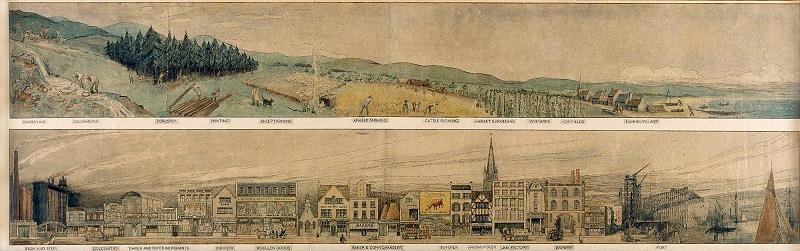
(University of Edinburgh Centre for Research Collections. Coll-1167 – A1.13 – The Valley Section and its social types: in their native habitat and in their parallel urban manifestations).
Project progress to date has seen the retro-conversion of over 750 legacy printed catalogue descriptions to electronic format. An extensive stock-take of the Edinburgh University collections has now been completed with material having now been identified, accounted for and catalogue numbers applied and locations information recorded accordingly. Over 11,000 catalogue descriptions have now been assessed and a programme of re-cataloguing commenced. This work will facilitate enormous steps forward in improving access to the collections and subsequently, the sharing and investigation of Geddes’s ideas.
The next stage in the project will be for the University of Edinburgh’s Library Digital Development team to generate some possible options for the online resource technical infrastructure. The peculiar systems, the legacy cataloguing styles and their inconsistencies, and by their very polymathic and disparate nature – the collections themselves – will present some interesting cataloguing challenges to overcome. We will require professional and innovative solutions, and perhaps even a Geddesian approach: ‘Vivendo Discimus – By Living we Learn: By Creating We Think’.
The project archivist has been engaging with over 30 key stakeholders and later in the project there will be a number of exciting opportunities for individuals/ groups to engage in more depth with the project and the collections. Previous newsletters can be found on our project blog (soon to be updated), and you can also follow us on Twitter @GeddesEvergreen. If you would like to receive our quarterly newsletter please contact the project archivist, Elaine MacGillivray – elaine.macgillivray@ed.ac.uk.
BACK