



BEFS Chair, Graeme Purves, reviews Lou Rosenburg’s Scotland’s Homes Fit for Heroes: Garden City Influences on the Development of Scottish Working Class Housing 1900 to 1939; The Word Bank (2016).
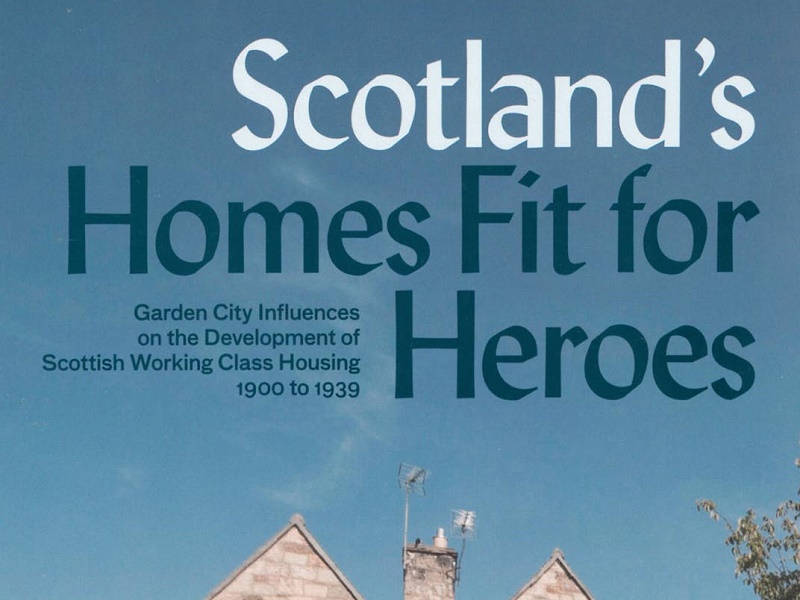
Lou Rosenburg’s book makes a very valuable contribution to our understanding of the evolution of working class housing provision in Scotland in the early part of the 20th Century. It is meticulously researched, well written, attractively laid out and generously illustrated with photographs, plans and period artwork.
The book explores the form and design influences on the 240,000 houses built by Scottish local authorities between 1919 and 1939, with a particular focus on those built under the Town Planning (Scotland) Act 1919, the Coalition Government’s response to the wartime demand for ‘Homes fit for Heroes’. The new housing schemes were strongly influenced by the English arts and crafts forms of the garden cities movement. Cottages became the preferred form of provision as traditional tenements fell out of favour because of their association with overcrowding and insanitary conditions. However, habit and budgetary constraints often led to compromise and a native form of garden suburb development emerged, incorporating distinctively Scottish elements such as pavilion-style tenements and four-in-a-block cottage flats.
Before the First World War, a number of cottage developments influenced by garden suburb principles had been pioneered by local authorities and public utility societies. During the War, the need to accommodate civilian defence workers led to significant new developments at a number of strategically important locations, including Rosyth, Gretna, Greenock, Glengarnock and Invergordon.
By 1925, 25,000 houses had been completed under the 1919 Act, only a fraction of the 120,000 units which the Ballantyne Commission had estimated to be required in 1917. Shortages of labour and materials meant that local authorities and public utility companies were unable to achieve the construction levels required. Despite the generous subsidies made available by central government, high construction costs meant that rents were generally set at levels which were beyond the means of poorer households. In the mind of officialdom, the ability to pay rent quickly became a more important consideration than war service.
Rosenburg’s painstaking scrutiny of valuation rolls has identified some 300 schemes developed under the 1919 Act. These are very widely distributed throughout Scotland, with a remarkable 30% outside burghs. Many are of outstanding quality. Some of the most charming examples were built in small settlements in rural areas, often by county councils. While the contribution of public utility societies was modest, a significant garden cottage scheme was developed by the Kinlochleven Village Improvement Society to provide accommodation for employees of the British Aluminium Company, and the Scottish Veterans’ Garden City Association built nearly 200 houses in small developments across Scotland.
A welcome aspect of Rosenburg’s book is the information he provides on the work of officials such as William E. Whyte, politicians such as John Wheatley and Jean Mann and architects such as Joseph Weekes and John A.W. Grant. The personal contributions to the improvement of housing conditions of figures such as these deserves to be more widely recognised.
With the Scottish Government consulting on the reform of the planning system, Scotland’s Homes Fit for Heroes provides a timely reminder of a period when Government felt confident enough to drive forward improvements in the form and quality of new housing.
Graeme Purves
BACK
Euan Leitch, Director of BEFS, reflects on how social value is understood and how it can be incorporated within built environment policy.

Last week Historic Environment Scotland launched their survey What’s Your Heritage? asking the public about places that make them feel proud or have special meaning for them. This is the initial step of a two stage review of Scottish historic environment policy which will look at the criteria for designation and management of the historic environment.
Elizabeth McCrone, Head of Designations at Historic Environment Scotland, recently attended BEFS Historic Environment Working Group to share the thinking behind the review and what the next steps will be. She made clear that this first stage is targeted at the public, particularly seldom heard groups, rather than the professional or specialist communities already engaged in the historic environment. These will be consulted in the Spring of 2017 before a formal 12-week consultation on any proposals arising from the research. The ‘people first’ approach aligns with the 5 principles of Networked Heritage as recently published by the RSA:
- Start with People: Embed your work where people live daily life
- Heritage is what you choose to make it: Use assets in new ways and identify new assets
- Go beyond yesterday’s battles: Make the offer, rather than the ask
- Open up and lead the change: Think critically about power and leadership
- Help make heritage your local USP: And don’t rely on a strategy…
Sites such as the Tinkers’ Heart have challenged the current designation criteria and the Networked Heritage principles, like What’s Your Heritage?, may open up the criteria to include social value. It’s not by chance that last week BEFS had meetings with academics from the Universities of Glasgow and Stirling who are also exploring how social value is understood and how it can be incorporated within policy.
Some heritage professionals are disconcerted by this shift in approach. Is it a challenge to the role of the professional and dumbing down heritage? It certainly shouldn’t be the latter but it may be the former if it requires changing the language we use and incorporating values that may not have been part of our training. While the public tend automatically to place intrinsic value on pre-20th century places more recent heritage can be more contentious. A current listing proposal for post-war social housing has attracted some rather negative, and troubling, online comment. Is this where professionals could help people think about the transformational impact of social housing in twentieth century history as well as its contribution to the architectural record? Then again, when asked by the RIAS to choose their favourite building of the past century as part of Scotstyle, the popular vote went to Princes Square in Glasgow, vexing some architects. Public tastes and professional tastes do not always marry and, for professionals, understanding the reason why should be important.
But if “heritage is what you choose it to be” does that automatically mean it should be scheduled or listed? How can decision makers accommodate values the public attribute to assets and places that are undesignated by a national heritage organisation? Is designation the only way to protect a place? The HES research combined with the planning system reforms have the potential to result in policy proposals that better acknowledge values at a local level and will require all of us to engage constructively in the discussion.
BACK
Bill Pagan, Board member of BEFS and founding Board member of Cupar Development Trust, reports on progress following Cupar’s CharrettePlus.
It is now well over two years since Cliff Hague led the BEFS visit to Cupar, one of the two additional towns covered by their Small Towns Scotland initiative, 18 months since the proposed Cupar Development Trust (CDT) began to take shape, and over six months since PAS ran the successful CharrettePlus in the town. Even when there are enthusiasts in the local community, wheels turn slowly – partly because of the essential task of bringing the wider community along-side, but of course mainly because cash has to be found for every stage of proposals selected – including the costs of preparing applications for larger-scale funding.

The final report from PAS was welcomed, and has been considered by the town’s coordinating group. It is accepted that there are no easy, cheap or instant fixes. The ambitions, though not spelled out in these terms, follow Geddes’ principles of looking at “Folk, Work, Place”.
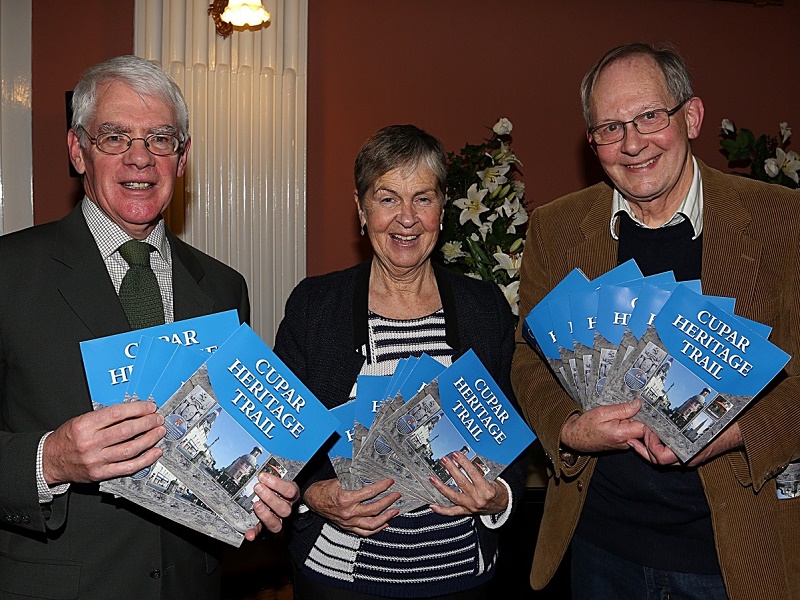
One tangible – literally – development has been the re-issue of Cupar’s Heritage Trail guide. This leaflet was originally published as a joint venture between the Millennium Committee of the Community Council and Fife Council, with text researched and written by Dr. Paula Martin. It was a success, and was reprinted in 2005.
There is no shortage of supportive organisations active in Cupar! One of the display boards at the Charrette listed many of them – as this photograph shows.
The republication this month was a joint venture between Cupar Development Trust and Cupar Heritage (CH), with support from the Community Council, Cupar and North Fife Preservation Society, ABCD Cupar Business Association, and Fife Family History Society. Assistance came also from Fife Council, Fife Historic Buildings Trust, Historic Environment Scotland and the Heritage Lottery Fund, through the CARS and THI schemes already in progress.
And of course other important organisations, not necessarily dedicated to the town of Cupar only, include the local Tourism Association, which welcomes the republication of the leaflet.
The Heritage Trail leaflet was launched at a reception on 22nd November, to which 20 organisations had been invited to send representatives, and which was in fact attended by over 40 people. The reception was held in Cupar’s impressive County Hall, where the initial BEFS meeting had been held, and was formally hosted by the Community Council.
CDT have applied to the Activating Ideas fund of Scottish Government for funds to cover the cost of consultants to prepare a marketing plan for the Heritage Trail, including sign-posting and full interpretation.
The Board of CDT are heavily engaged in the assessment of the “Inner Court” proposal, which was developed before the Charrette, but exhibited there and well received. It is a bold proposal for the regeneration of a vacant and derelict area in the heart of Cupar town centre, lying between the narrows of the Bonnygate (where the infamous “Gap Site” is prominent) and the width of the Crossgate.

The details are commercially confidential, but it is no secret that the major player is expected to be Kingdom Housing, working in partnership with some of the present proprietors. The original Inner Court report, prepared by Cupar-based architects Arc Architects, can be found on the CDT website.
It is of course not only CDT and CH who have been active. For example, further from the town centre, Sustainable Cupar have completed the reinstatement of the Old Moor Road to Ceres – a right of way shown on Roy’s military map of 1746.
The CARS and THI schemes, managed by Fife Historic Buildings Trust, have greatly improved Cupar’s street-scape with their work in St Catherine Street, as the before and after photographs show.
Cupar’s Christmas Fayre, leading up to the switching-on of the annual lights, was another occasion for local organisations to take stands and explain their work. CDT’s was a well-visited stand, and an encouraging number of applications for membership were handed in, while the Chairman entered into the festive mood!

The next major event for CDT is its first AGM, to be held on 1st December, in one of Cupar’s major new assets – the Howe of Fife Rugby Club’s new sports complex. On that occasion, CDT hope to be able to announce that the Activating Ideas application has been successful, and that accordingly the selection process for the consultants will be starting early in the new year. The present eight Board members look forward to welcoming to the AGM both founding and new members of CDT, and hope that additional Board members will be elected.
The formalities of the AGM should be relatively brief. The guest speaker is Diarmaid Lawlor, whose title is Partnerships for Places. It will be fascinating to hear Diarmaid’s view on how, in a small town like Cupar, the existing, dedicated and energetic organisations can make the total of their valued contributions add up to more than the sum of the parts.
The lessons for Cupar from BEFS’ Small Towns Scotland report have been taken on board, and the Charrette process has proved valuable. The then Minister, Marco Biagi, commented on the evident citizen involvement in the Charrette process, and commended CDT and PAS on the high level of community engagement. If BEFS is able to get the information, it will be interesting to see how the other seven towns visited in the Scotland’s Small Towns process have fared since their respective visits, and to what extent they have been able to run with BEFS’ comments and suggestions for their towns. The CDT Board plans to visit some towns in Angus in the spring to see what can be learned from them – some having been through the Charrette process, but none having been included in the BEFS visits.
Meantime, Cupar will be delighted if you visit the CDT website or follow progress via www.cuparcould.com, Twitter, Instagram and Facebook.
Bill Pagan
BACK
Annie Flint, author of www.underoneroof.scot, tells us about the motivation behind the initiative and how to use the website.
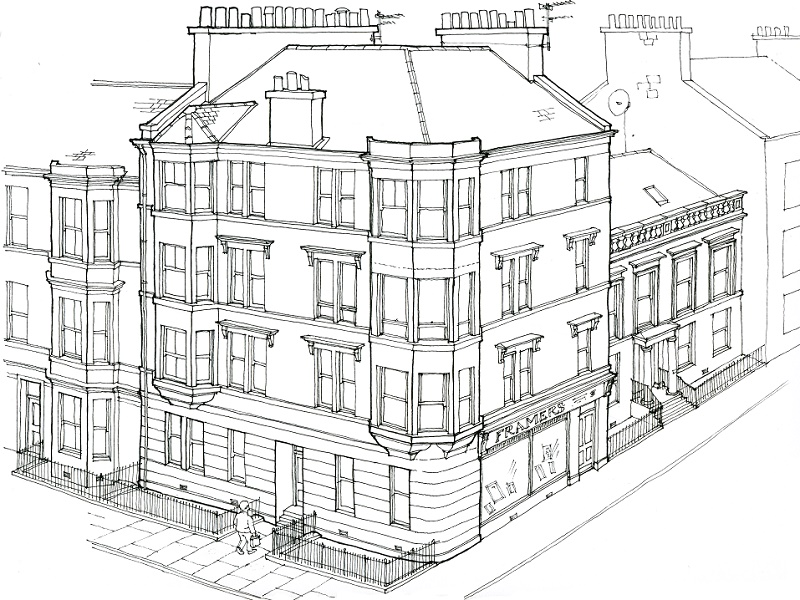
Sooner or later, every organisation working in an urban environment of any size will need to work with flat owners and help them resolve legal and maintenance issues. Over 40% of our housing stock is formed of privately owned and rented flats (so that is not counting council and housing association rented flats). And the proportion of communally owned properties is particularly high in Scottish town centres from north to south, ranging from older tenements to mixed use developments and homes over shops
Under One Roof Scotland is a major new online resource about tenements and flats of all kinds in Scotland. Tackling management, repairs and maintenance, Under One Roof Scotland can help organisations raise awareness about the need for maintenance and advise owners on how to deal with their co-owners, organise repairs and manage builders.
As a BEFS member, you can use Under One Roof Scotland to:
- Keep yourself up to date on “flat” issues by signing up to our occasional newsletters.
- Raise awareness of the need to maintain our tenement heritage by displaying the poster, linking your website to Under One Roof Scotland and writing about tenement repair issues in your own communications.
- Use the ready-made presentations to train your staff and colleagues in the particular issues affecting stone buildings and the law of the tenement.
- Provide a second opinion, backing up your own communications.
Under One Roof Scotland was launched by The RIAS as part of the Festival of Architecture 2016. The need for such a resource was first pointed out by Glasgow’s Factoring Commission which both recognised the changing nature of flat ownership and the need to develop a maintenance culture whilst understanding how difficult it was for owners to identify their rights and responsibilities. Glasgow City Council picked up on the recommendations of the report and helped promote Under One Roof Scotland through local authorities, over 90% of whom have provided funding. Private factors such as Hacking and Paterson and Your Place also contributed funding individually while organisations such as Scottish Government, Historic Environment Scotland, Scottish Federation of Housing Associations, Glasgow and West of Scotland Forum of Housing Associations and the Property Managers Association Scotland also contributed and offered practical support.
Written by Annie Flint and John Gilbert, the originally published by the RIAS over 20 years ago, the site contains over 100 articles on flat owners’ legal responsibilities towards their co-owners and over 70 technical information articles with 100 specially commissioned drawings, 200 photographs and 9 power point style presentations to use at owners meetings
There is also a Repair Symptoms Checkerto help owners pin down what is affecting their building’s health. Downloadable model letters will make the whole process easier for owners. Advice on dealing with owners who refuse to participate in critical repairs is also provided. Have a quick explore!
- Try the Repair Checker to pin down that problem with the building over the road
- Check out Owners and Obligations to find out about the legal “duty to maintain”
- Run through the Meeting Presentations such as “Financing Repairs”
- Download the A4 Poster and pin it up in reception (and in the entrance to your own tenement!)
- Find out more about our Funders and Steering Group Membership
Graphic Resources
Please feel free to use any of the graphics on this Dropbox page. Other resources on the website can be copied freely for non-commercial purposes.
Contact
Please email annie@underoneroof.scot for further access to resources and assistance with organising, or speaking at training and awareness sessions.
Annie Flint
BACK
Euan Leitch, Director of BEFS, explores the possible consequences of Police Scotland office closures and MoD site closures for the built environment.

Last week brought the news that Police Scotland are undertaking an estate review which could result in the closure of 58 offices across Scotland. On the same day it was announced that the MoD will be closing 8 sites in Scotland over the next 16 years. There has already been strong reaction to the potential loss of local police presence in towns and even stronger reaction to the loss of sizable military communities and the impact that will have on local economies. Both announcements will have consequences in the built environment too.
Police Closures
Most of the police offices earmarked are small and centrally located in settlements and a number are former domestic dwellings that could easily revert back to original use. Some are already sharing space with community buildings, such as Kilmacolm, and a few are substantial stone built properties such as in Oban, Taynult and Lochgilphead. Blantyre Police Station is a fine local landmark on the Calder Street roundabout which may in fact merit listing like that at Larkhall, which is C-listed. Haddington and Leith Police Stations are the most significant historic assets that Police Scotland are considering for disposal.
Police Scotland are already in talks with East Lothian Council about co-locating with local authority staff in the recently vacated Sherriff Court which would leave the William Burn designed B-listed building on Court Street in need of a new use. Leith Police Station is the most significant office to be potentially disposed. Formerly the Leith Town Hall, it retains prison cells, courtroom, lavish staircase and Council Chamber decorated by Thomas Bonnar: spaces not easily altered without diminishing their architectural and historical significance. What new use could it be put to? The much larger Leith Custom House is already exploring community use; is there local capacity for more?

Of particular note within Police Scotland’s Estate Strategy 2015 is this principle:
Recycle the estate in the spirit of Community Empowerment; working with communities, voluntary and third sector organisations to enable property to be used by relevant groups; or transfer ownership to support local improvements, initiatives and social enterprises.
So while there may be concern over the provision of local policing, there is an opportunity to be taken by local initiatives which, according to their strategy document, Police Scotland should support.
MOD Closures
The closure of the MOD sites will come with greater consequences and therefore places even greater responsibility on the UK and Scottish governments to mitigate adverse impacts on the local communities, and heritage assets. The closures are staggered: Craigiehall Scottish Army HQ – 2018, Meadowforth Barracks & Forthside Stirling, Redford Cavalry & Infantry Barracks, MOD Caledonia – 2022, Fort George & Glencorse Barracks – 2032. These comprise 6 A-listed, 16 B-listed and 1 C-listed buildings, a scheduled monument and a designed landscape but even these figures are an underestimate as Fort George is far more than just one A-listed building but a group of buildings.
The closure of Craigiehall has been known for some time and is already proposed for housing development although not designated for housing within the Edinburgh Local Development Plan. The large country house dates from the late 17th century and sits within an 18thcentury landscape with a number of 20thcentury additions that are not entirely sympathetic. Redford and Glencorsebarracks possibly are ideally situated to be redeveloped for residential purposes but both sites are large and some similar former institutional buildings remain vacant, even in Edinburgh’s overheating housing market. The management of Fort George is already shared with Historic Environment Scotland but the withdrawal of the MOD will place even greater pressure on their resources.
None of these buildings should be destined for the Buildings at Risk Register. With a long lead in time the national and local agencies along with local communities and communities of interest should already be exploring beneficial new uses.
These may just be the tip of the iceberg when it comes to asset disposal and we, the heritage sector, must be thinking stratgically about how to manage the quantity that public agencies may find surplus to their operational requirements. Is the answer to be found in community development? And what role should the private sector play? Answers on postcards please.
BACK
Pauline Radcliffe, Project Manager of Twin Towns UK, shares with us the Carnegie Trusts’ fresh approach to the well-established ‘twinning’ concept.

Do you belong to a small provincial town in Scotland? What will the development of ‘City Regions’ on Scottish policy agenda mean for your home town? Will City Regions mean more focus on the city and even less on the geographies surrounding it, which will get further left behind? Or are City Regions an opportunity to see a more integrated approach to economic development, hard and soft infrastructure and the connecting of people and place?
Whatever your views on the current policy landscape, at Carnegie UK Trust we believe that towns are critical to the future economic prosperity of the U.K., sustaining and revitalising what the Centre for Local Economic Strategies(CLES) recently called ‘good local society’. ‘Twin Towns UK’ is the latest of our series of Flourishing Towns initiatives which aims to take a fresh approach to the well-established ‘twinning’ concept, by pairing towns across the UK with similar characteristics or socio-economic challenges, to consider how to make positive change a reality in their communities.
Twin Towns UK will support – through finance and expert advice – up to 10 towns to trial bilateral ‘twinning’ arrangements over an 18 month period. Applications are invited until 25 November 2016 from interested organisations that represent their town in some capacity, that know the challenges their town is facing and want to find solutions through collaboration.
With Carnegie UK support, twinned towns will work together to identify specific shared actions that address a challenge common to both places, receive joint socio-economic planning support and have access to additional small ‘catapult’ funds to start delivering entrepreneurial activity that makes change happen. We’re looking for applications led by voluntary non-statutory organisations which are committed to working in partnership across all sectors. Take a look at our straightforward application guidance and short application form and contact me at TwinTowns@carnegieuk.org to discuss your ideas.
Pauline Radcliffe
Project Manager
Twin Towns UK
BACK
Chelsea Charles, Communications Manager Scotland’s Themed Years, VisitScotland Events Directorate, shares some top tips on how to get involved in Scotland’s 2017 Year of History, Heritage and Archaeology.

From World Heritage Sites to ancient monuments, museums to historic battlefields, cultural traditions to our myths, stories, artefacts and legends, Scotland’s 2017 Year of History, Heritage and Archaeologywill celebrate both our tangible and intangible heritage – our buildings, visitor attractions, archaeological sites as well as our diverse traditions and cultures.
Scotland’s Themed Years celebrate the very best of Scotland including its landscapes, people and personality. During each year, both locals and visitors to Scotland can enjoy a programme of events taking place throughout the year in celebration of the themes, as well as lots of opportunities to discover sides of Scotland they might never knew existed. They also deliver impact for Scotland too – encouraging the tourism industry and beyond to collaborate, attract new customers and generate benefits for the economy.
We already know that history and heritage are key motivators for visits to Scotland – it’s what defines the country for many visitors. For example, 32% of visitors cited ‘history and culture’ as a key motivator for their trip, second only to ‘The Scenery and Landscape’ (49%) Visitor Survey 2015. For some particular markets, the attraction itself if particularly strong – 76% of Europeans visited castles / stately homes and 49% of long haul visitors are motivated to come and learn more about Scotland’s history / culture.
The overarching aim of the 2017 Year of History, Heritage and Archaeology is to spotlight, celebrate and promote Scotland’s rich and vibrant product and place, linked with the themes, but it’s also about engagement and participation.
Are you 2017 ready?
5 top tips for getting involved with the year:
From the Scottish Borders to Orkney, and from Fife to the Isle of Skye, we want locals and visitors to relive Scotland’s fascinating past through a range of exciting events, attractions and activities during 2017
- To help organisations, communities and businesses think about how they can get involved, we’ve recently launched our VisitScotland Year of History, Heritage and Archaeology toolkit. Packed with promotional wording, free to use imagery and the option the download the 2017 logo to use across channels – the toolkit is an ideal one-stop-shop to help businesses promote the year ahead – www.visitscotland.org/HHA2017.aspx
- Why not help us spread the word across your digital channels? You can join the conversation using the dedicated hashtag #HHA2017
- Do you have a public-facing event planned for 2017 that could benefit from being part of the 2017 Year of History, Heritage and Archaeology in-kind partner programme? For more information visit www.eventscotland.org/funding/partner-programmes
- Ancestral tourism is an important market in Scotland, with an estimated 50 million people worldwide claiming Scottish ancestry including the key long-haul markets of North America, Australia and New Zealand. The VisitScotland Ancestral Welcome Scheme is relevant for a wide range of businesses from visitor attractions to accommodation providers. The scheme is also open to professionals in the industry who provide family history or genealogy services. To find out more visit http://www.visitscotland.org/business_support/quality_assurance/welcome_schemes.asp
- Use VisitScotland’s marketing resources – why not add a link from your website or other online marketing material to our dedicated section on the Year of History, Heritage and Archaeology – www.visitscotland.com/HHA2017
2017 provides a great opportunity to invite people to come and explore our attractions, our people, our traditions and our distinct cultures but we can’t do it alone – we’d love to hear how BEFS members are getting involved and helping make history with us!
Chelsea Charles
Communications Manager: Scotland’s Themed Years
VisitScotland Events Directorate
BACK
Ross Martin, Chief Executive of Scottish Council for Development and Industry, reflects on the connection between place and productivity in this thought-provoking piece.
The economic competitiveness of our Cities and their Regions has never been more important, and in that description I include our ‘disaggregated cities’ of Ayrshire, the South of Scotland and our Islands, each of which display many of the economic characteristics of our urban centres, e.g. economic diversity, innovative vibrancy and an internationalism which puts the activities of many of our provincial towns in the shade.
Collectively, these diverse socio-economic geographies – the places in which we all live, work and play – are the bedrock of Scotland’s economy, providing the infrastructure, both hard and soft, for businesses to flourish and in which quality public services can be designed and delivered. The connections between people and their places are what gives our country its distinctive, definitive and increasingly diverse character, providing the basis for building economic growth and spreading prosperity.
Across Scotland, place is not just where we are, but also who we are.
Our surroundings shape us and tell the world about us, they provide a window into our relationships with each other and reflect how we treat one another too. The state of our places, both public and private, are an indication of the state and resilience of our socio-economic system. For example, whilst we have some spectacular natural scenery, and very creatively designed elements of our built environment, if we linger awhile and look around, we have an awful lot of unproductive place – both a symptom of, and a contributor to our Productivity Puzzle.
Whether it’s the decay and dereliction of our post-industrial landscape, which scars so many of Scotland’s provincial towns, or the forgotten neighbourhoods and sink peripheral housing estates of our cities these places are sad reflections of who we’ve become and an indicator of a dangerous lack of economic engagement for far too many of our population. As we consider a future with no, or limited, access to the EU labour market, we must use the coming together of economic and social policy levers at Holyrood, which have been the split responsibility of Her Majesty’s Government in London and the Scottish Government in Edinburgh throughout the post devolution period, to address this part of our Productivity Puzzle.
If, for example, we devolve responsibility for decision making to the City Region level, within a stronger, more integrated framework of economic and social policy, acting coherently and not diverging into the deep trough of despair of the ‘devolution divide’, (that vacuum for ideas and initiatives falling between the responsibilities of Holyrood and Westminster) can we finally start to tackle the dereliction and decay of our industrial past? Is it now possible, at the City Region level to reconnect people and place by driving local economic activity and therefore boosting national productivity?
SCDI is working to bring both governments together to share a common economic platform for growth and prosperity and ensure that by doing so, we don’t let communities fall between the constitutional cracks as power for economic growth transfers from Westminster to Holyrood. In so doing, we want to open up a debate on the productive use of place, both public and private, in our cities, towns and villages. As we embrace the emerging economy, and it’s likely characteristics of being both more mobile and agile, we’d welcome your thoughts, advice, support and above all engagement in this economic effort.
This blog was originally posted on LinkedIn here.
BACK
John McKinney, Coordinator of the Scottish Traditional Building Forum (STBF), introduces us to the invaluable work of the forum.

STBF is a group of forums across Scotland which aims to organise and deliver events which will raise the profile of traditional building skills and materials across all sections of population.
The activities can be broken down as follows:
- Skills/Education
- Repair and Maintenance/Energy Efficiency
- Sharing Information
- Celebrating the positive contribution of traditional buildings
Skills/Education
STBF has organised a number of skills demonstrations aimed at giving local school children a hands on event to try some of the key traditional building skills.
These have been delivered in Edinburgh, Glasgow, Callander, Falkirk, Thornhill and with others planned for Perth and Kirkcaldy.
We have even engaged with a younger potential traditional building skills workforce with a mini-golf course featuring traditional building skills and materials which was situated on George Street, Edinburgh during the whole of the Edinburgh Festival Fringe 2016.
It was an exceptionally busy attraction with the aim to bring traditional roofs, windows, stonework and other elements of traditional buildings down to ground level for people to interact with.
STBF will continue to look for innovative ways of promoting the traditional building sector and the need to repair and maintain traditional buildings.
Repair & Maintenance/Energy Efficiency
Many STBF skills events are held in high profile locations in the towns and cities and are used to demonstrate the traditional building skills to key influencers in young people’s career choices but also raise the profile for the need to repair and maintain traditional buildings.
The Scottish Government estimates that £600 million is spent on pre- 1919 buildings each year but the Scottish Housing Condition Survey highlights that 72% are not wind and watertight and this has shown little improvement over the years despite the considerable investment by owners.
STBF looks to raise the profile of the need to get the building envelope wind and watertight as a primary measure to making a home energy efficient while providing guidance on how to do this. This is mainly done by directing members of the public to existing publications including the Historic Environment Scotland Inform Guides.
Low Carbon Impact
Residential sector accounts for 33% of carbon emissions in Scotland. Of the existing domestic structures we have today, 85% will still be in use by 2050 Climate Change (Scotland) Act has specified an 80% reduction in carbon emissions.
Sharing Information
STBF has run a number of IHBC Accredited CPDs to architects, surveyors, local authorities and city heritage trusts. STBF sees this as a very positive development by enabling interaction across the supply chain.
Those to architects and surveyors have been organised in conjunction with Architecture and Design Scotland and Royal Incorporation of Chartered Surveyors respectively.
This has led to numerous requests to deliver CPDs to individual practices which the forum has been delighted to organise.
We are always looking to add to our portfolio of CPDs and are thankful to Stone Federation GB, National Federation of Roofing Contractors and Historic Environment Scotland for delivering these on behalf of the forum.
Celebrating the Positive Contribution of Traditional Buildings
STBF has also actively raised the profile of the traditional building skills and materials issues within the Scottish Parliament.
Several MSPs, including the Culture Secretary, have attended the skills events run by the forum and have taken very little encouragement to have a go at the trades themselves. This has proved very popular and memorable for the MSPs.
The Edinburgh Traditional Building Forum has just run its 5th Edinburgh Traditional Building Festival (part of the official Edinburgh Festival Fringe) and was once again sold out with over 700 attending the events.
We aim to raise the profile of traditional building skills and materials and the skills and materials required to ensure they are able to be maintained and enjoyed by future generations.
Emily Tracey (Vice Convenor of the Edinburgh Traditional Building Forum) organised a presentation to the Cross Party Group in the Scottish Parliament on Construction which then formed the topic for a debate in the Scottish Parliament and the day was completed with a Garden Lobby Reception in the Scottish Parliament which was very well received and attended by numerous MSPs which included an address from the Culture Secretary.
Last year, STBF started involvement in Doors Open Day events and this is something we are looking to build on in the future. We ran an event in The Lighthouse, Glasgow and supported the event at The Engine Shed, Stirling. We will be returning to both of these venues this year and learning the lessons so we can deliver even more successful events.
John McKinney, Coordinator of the Scottish Traditional Building Forum.
Seán O’Reilly, Director of IHBC and founding member of BEFS, reflects on the role of BEFS and ‘place-care’.

The origins of BEFS, or Built Environment Forum Scotland, represent an interesting and important moment in the evolution of what might be called ‘place-care’. That is a clumsy phrase, I know, that not many might really want to use, but it carries few of the associations that have only too frequently handcuffed our sector. Terms like ‘historic’, ‘built’ and ‘environment’, or the portmanteau-like combinations that we construct to echo our own more personal predilections, such as ‘historic environment’ and ‘built environment’, too easily may be more about defining the territory we want to occupy than resolving the issues we want to address.
Similarly, awareness of any prospective disjunction between formal title – built environment – and actual locus (everywhere, and when) was hugely important at the founding of an organisation like BEFS precisely because inclusion had to lie at its heart: many of the people helping to shape our places would not even recognise the BEFS agenda, never mind realise their relevance to its objects. The remit of the new link body of BEFS would have to encompass everyone’s place of work, play and rest, as well as the places they had yet to inhabit, or even experience. So, in naming BEFS, it was crucial not to alienate those players that its own members already found so difficult to engage with, crucial because BEFS was to be the most important mechanism its members could access to secure that wider engagement and, for many, the only one.
In summary, the naming of ‘Built Environment Forum Scotland’ was a challenge for all those involved, especially for those officers, such as myself, who were trying to capture the wide scope that the new organisation would need to encompass to deliver on its ambitions. We faced then the same critical question we recognise today: might the titular reference to the ‘Built Environment’ lead to the exclusion of those that did not necessarily see themselves as sitting within its broad tent, and so lead more to exclusion than inclusion.
Significantly, perhaps, at the time of the naming of BEFS, the decision to identify first with that which had been ‘built’ – rather than, for example, that which might be ‘historic’ – was made in part at least with our own historic circumstances in mind. A potential host organisation for our interests – Scottish Environment & Amenity Link or SEAL – existed before BEFS was formally established, though it focused largely on the natural environment. SEAL also then served as a network for some key historic environment interests, though its agenda inevitably was shaped by management strategies that reflected natural environment priorities.
After SEAL re-named itself as LINK, the organisation published a report in 2002 on the historic environment which centred on archaeological issues. That work galvanised an already burgeoning awareness of the need for a more holistic, cross-sector approach to place-related issues centred around cultural, amenity, urban and related considerations, including not least those of enhancement and improvement. It soon became clear that the member interests of the ‘body to be known as BEFS’ could not be effectively served if operated simply as a kind of cultural thread within an equivalent body for the natural environment, like LINK. So the explicit reference to ‘built’ environment in the new body of BEFS might have indicated – consciously or otherwise – an easy but formal distinction from the ‘natural’ environment link body.
The other thread in this background to the titling of BEFS arose when BEFS’ earliest promoters made the case to secure core-funding from the then national heritage agency, Historic Scotland. We focussed on a simple but challenging approach: that having a title framing the ‘built’ environment would help ensure the most inclusive relevance to ‘place-care’ interests – including development and construction sectors. These interests could then be more easily encompassed within Historic Scotland’s heritage agenda ‘without prejudice’ to wider objectives, and the heritage agenda discreetly subsumed with the kind of all-embracing remit needed to maximise both value for money, by funders, and success, for the sector.
Fortunately, Historic Scotland soon recognised that its own aims could be best achieved by supporting BEFS as a third party interest that explicitly focussed its operations far beyond any core departmental heritage remit. In adopting this strategy, Historic Scotland also undertook what some have seen as its most innovative conservation strategy to date. It acted on a core truth that many parts of our sector still struggle with: the historic environment was not a ‘thing’ as such, any more than the built environment was a ‘thing’. Rather ‘historic’ and ‘built’, in these terms and titles, only indicated single, reduced perspectives on the infinitely more complex phenomenon of ‘place’, a phenomenon to which anyone can, and should, bring their own perspectives and visions.
Historic Scotland saw BEFS as a body that could respond to places that exist within a collective experience, not alternatively as cultural or natural, built or historic, perspectives that those who name them naturally take as their default. Those terms captured nothing more than more individual approaches, and any thought that the adoption of such terms conferred superior rights or authority on the ‘namer’ would miss the point: a body like BEFS had to engage directly with everyone involved in places, doing all it could to operate in support of others getting the right outcome for all.
So, through funding BEFS, Historic Scotland demonstrated its understanding that the best way to look after its own sectoral ‘historic environment’ perspective on an entity as complex as ‘place’ was to make sure that all of the perspectives on that place – social, residential, environmental, commercial, financial – would be encompassed, informed, shaped and even on occasion led within a wide, ‘place-care’ agenda. This strategy was shrewd, targeted and cost-effective all in one!
Historic Scotland could see that BEFS would engage most by valuing and understanding the breadth of interests and perspectives involved. It would achieve most by making sure that those same interests and perspectives were fully informed and engaged with all the matters relevant to their roles, including of course any heritage values. And it would deliver most, for all of its members, by ensuring that those heritage values were properly embedded and proportionately represented across all the processes involved in shaping places.
BEFS’ earliest founders also reflected the full diversity of lead interests required to respond to this broad agenda, across heritage (such as AHSS and SCT); planning (RTPI) and development (RIAS), and the same breadth of interests that shape best practice in ‘place-care’ generally. That cross-disciplinary spectrum of ‘place-care’ interests also came to be represented in the IHBC’s model for conservation skills and processes, our Conservation Cycle (Chart 3), as both BEFS’ members and IHBC conservation embed heritage values as a constructive consideration (evaluation) within process of managing changing places through planning (management) and development (intervention). This model characterises conservation as an iterative process that can be applied as good practice in any ‘place-care’ operation – conservation-driven or otherwise, though most memorably it aligns with World Bank environmental management processes – while capturing also the headline specialist practice areas represented by the originators of BEFS.
For BEFS today, as members continue to grow and learn from the lessons BEFS offers and the experiences it generates, the object must be to maintain the widest purview relevant to the core interests of BEFS’ members in ‘place-care’: challenging received ideas; batting back the urge to tick the proffered box, and leaping into the many spaces between BEFS’ own members so that it can bridge and span their work most effectively, and for all our benefit.
In those early meetings with Historic Scotland a key message was that investing in heritage care and advocacy through a conduit structured like BEFS would be not only uniquely appropriate but, to Scotland’s great and global credit, nothing less than visionary. BEFS today is no less unique, appropriate or visionary as, with a universality of membership underpinned by its holistic understanding of how, why and when places change, BEFS’ combination of embedded heritage awareness and structurally inclusive representation continues to capture the essence of what is needed for effective ‘place-care’.
I look forward to seeing more of that vision in action, in BEFS, in Scotland and, hopefully, beyond.
No pressure then Euan!