



BEFS Director reflects on the built environment hustings held this month in Glasgow and Edinburgh.

In the last week Built Environment Forum Scotland has supported hustings in Glasgow and Edinburgh with a focus on the built environment in advance of the local government elections on the 4th May. The events were organised by locally based organisations, the New Glasgow Society and Edinburgh World Heritage. What did we learn at them?
All candidates declared their love for the heritage of the respective cities but the Edinburgh candidates were slightly more specific in also declaring support of the draft Edinburgh World Heritage Management Plan – reflecting the specific interest of the organisers. Across both events there was acknowledgement that things were not perfect, that communities needed to be listened to but also that local authorities were tied by budget cuts and lack of relevant powers on some issues.
Business Rates were a hot topic in Glasgow – but controlled by Scottish Government – and combined with retail unit management by City Property – with several councillors on the Board – came in for significant criticism. Land Value Tax was supported by some Glasgow candidates and affordable housing was also a shared priority. Candidates tended towards the general comment on existing policy and processes, wanting better building maintenance, use of compulsory purchase orders etc. but the SNP candidate specifically proposed a “city architect” and a “historic Glasgow zone”. Details on the role and power of the city architect are unclear and as was pointed out on Twitter, Glasgow already has a Central Conservation Area. You can follow some of the online Twitter commentary at #ngsqt, informed, illuminating and entertaining.
The Edinburgh hustings had a stronger focus on short term lets, and the perception of an over provision of hotel and student accommodation within the city centre. The candidates were united in acknowledging that the local authority does not currently have the powers to address the phenomenon of Airbnb and have asked The Scottish Parliament to legislate on it. There was a general acknowledgement that Edinburgh now had adequate hotel provision but some candidates wished to see hotels spread to the outskirts of the city. A similar tack was taken on student accommodation, that it needed to be spread rather than concentrated – the reality is that student accommodation has been opposed by communities wherever it has been proposed, central or suburban.
Both events became more heated as they progressed, Edinburgh quite significantly with a loud cheer for the audience member who said that the public had been betrayed by the City of Edinburgh Council. Councillors were asked why they should be voted for and the reply was ‘based on our record’: the absence of published voting records on council committees makes this rather difficult. Questions that remain unanswered were on how to improve building maintenance and whether local authorities retained enough conservation skills in-house.
Both events revealed the public passion for the built environment and the level of expertise available within communities. They also reveal the complexities of decision making and the lack of joined up thinking within local authorities which leads to the planning process becoming a focus for communities to express dissatisfaction with a wide range of issues not subject to planning legislation.
The Place Standard Tool is being increasingly adopted for community engagement and it seems that “influence and sense of control” frequently receives low scores. The audiences at these hustings were also clearly frustrated by this and while there is no quick fix to this within the current system, continuing local dialogue with the successful candidates is necessary and hopefully BEFS Advocacy Toolkit will provide a starter for those wishing to begin.
********
Further summaries of the Edinburgh hustings can be found from Edinburgh World Heritage, Cliff Hague and the Broughton Spurtle.
BACK
Graham Marchbank, a member of the Scottish Executive Committee of the RTPI, offers a great case study of how a community came together to rebuild a Victorian wall.
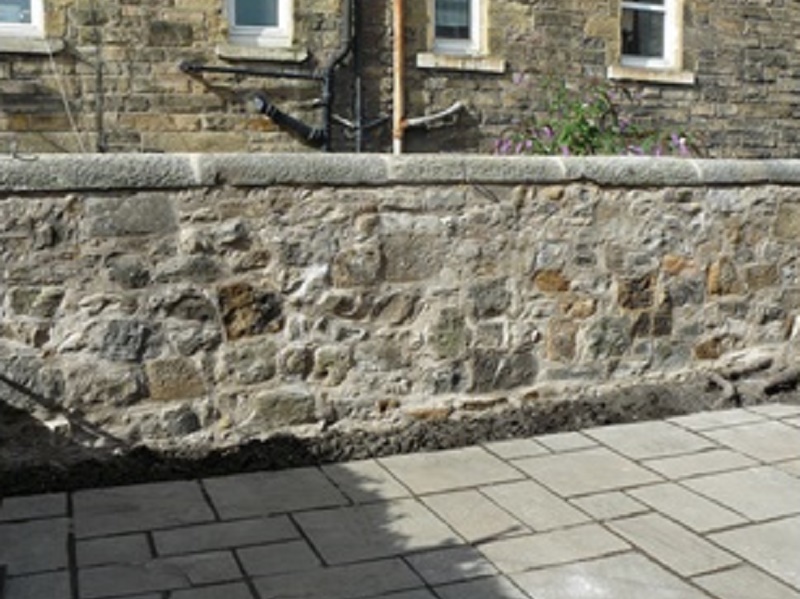
A group of residents in adjacent terraced streets in the Pilrig Conservation Area in Leith are now the satisfied owners of a safe and sound section of Victorian garden party-wall.
The wall was listing badly at about 11 degrees from the vertical and had started to collapse owing in part to structural weaknesses (Fig. 1).
Fig 1. Fig. 2


Research shows that:
Historically, building materials were largely selected based on what was available locally. For centuries prior to the widespread availability of lime, binders such as earth and clay were commonly used in Scotland. The use of these declined as they were superseded by lime, and then cement, in modern construction.
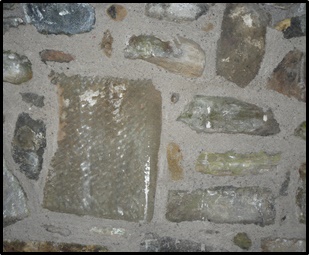
However when the section of this wall was brought down, it was evident that soil had been used as an inferior construction binder (Fig. 2) rather than lime mortar, probably in the 1890s when the houses were built on land assigned from the Balfour Estate. The soil all had to be carted away along with any rotted or degraded sandstone (deeds from the 1890s state that the stone for the houses came from Clunievar Quarry just west of Dunfermline) unsuitable for reuse.
Following demolition by hand, stone by stone, the wall was rebuilt in a traditional style (Fig. 3). The middle of the wall was filled in with smaller stones then a quicklime slurry was poured over them to bind them in (Fig. 4), giving additional strength.
Fig. 3 Fig. 4


Pointing was “knocked back” while still damp to provide a smart finish (Fig. 5). Existing stone was used where possible along with sandstone recovered from another job at one of the properties.
Fig. 5 Fig. 6

Finally the wall was topped out with the original coping stones (Fig. 6), kept damp under sackcloth to set for a couple of days, and the job was done.
Contractor:
Muir Stone Repair, summer 2016.
BACK
Joaquin Basile Patron, Communications Intern at Prince’s Regeneration Trust, reflects on his impressions of BEFS two-day conference, Financing the Historic Environment.
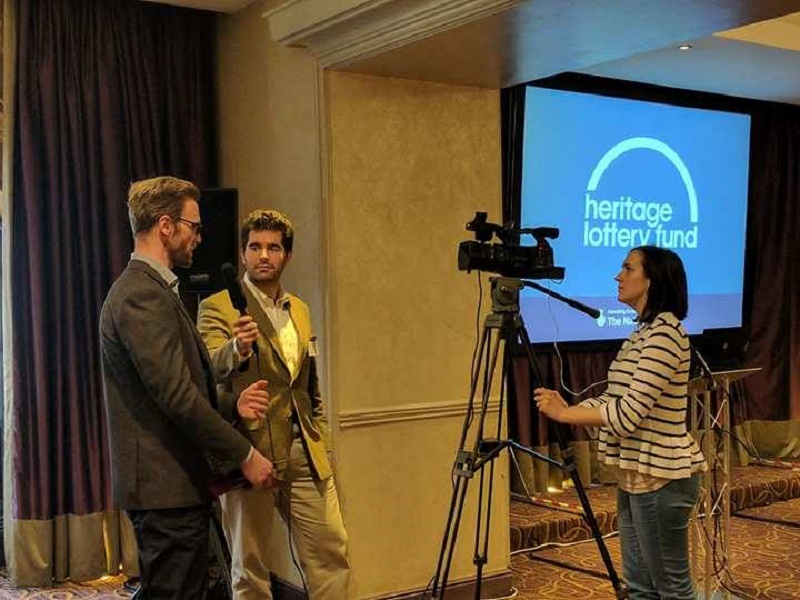
On the 29 and 30 of March 2017, I attended the conference Financing the Historic Environment organized by Built Environment Forum Scotland, Heritage Lottery Fund Scotland and the BRICK (Building Resources, Investment & Community Knowledge) programme run by The Prince’s Regeneration Trust (PRT) where I currently work.
As a communications intern from Uruguay who has lived in London for less than two months, my background in heritage is limited, making the chance to be a part of this conference a great opportunity for increasing my understanding of relevant issues within the heritage field. Before I attended this conference, I did not know how heritage projects managed to obtain funding, and I was curious to discover the different processes that organizations must go through to achieve their goals. Listening to all the presentations and interviewing some of the key people at this conference allowed me to understand that finding funding for heritage projects can be a struggle, but with determination and community engagement, it is not impossible and, indeed, there are many success stories.
Different methods to achieve financial goals were successfully explored in both days of Financing the Historic Environment. On day one, a main topic discussed was “Commercial Investment in the Historic Environment,” which guided participants to better understand this alternative method for obtaining funds for project development. Representatives from Scottish Property Federation, Trevor Osborne Property Group and the Royal Bank of Scotland examined the risk factors behind investing in a historic building. Although the speakers initially established a slightly pessimistic scenario for historic buildings by agreeing on the greater economic appeal of modern buildings, they did share hope for those who intended to restore heritage sites. When an audience member enquired on how to address some of the given risks, the speakers agreed that, although the lack of flexibility and lower-level efficiency of historic buildings represent a risk to investors, the negative impact of these factors might be decreased through community engagement, increasing a project’s chances for funding.
On day two, I was able to understand the benefits of tourism on the preservation of historic treasures. On the section “Heritage Tourism Investment” Jana Hutt from Knockando Woolmill, Martin Hulse from Dunston Staiths and Paul Higson from Portsoy Sail Loft discussed their work on projects that were meant to attract tourism. Although combining touristic activity and historic buildings can be a challenging task, these speakers emphasized how a deep knowledge of a heritage project can benefit the project’s outcomes. When an attendee asked about the importance of collaboration among different heritage projects, Ms. Hutt argued that it is important to collaborate with other local projects to achieve better results. Day two also provided examples of success stories to help inspire delegates who are working on similar projects.
Overall, “Financing the Historic Environment” was a huge success, trending locally on Twitter (with #HeritageFinance) and with great attendance both on 29th and 30th of March. Personally, this conference has taught the difficulties for some projects to reach completion but also how rewarding it is for all those who were involved every step of the way. The tools provided by each speaker will hopefully encourage the preservation of other historic buildings that are significant to the history of the United Kingdom and that have the potential to provide new jobs and revive a local community. The diversity of the speakers presenting at Financing the Historic Environment further elevated this event by exposing me and the rest of the attendees to the benefits (and challenges) of obtaining both public and private funding and by providing insights into different heritage projects. Events such as Financing the Historic Environment share BRICK’s goals of supporting community groups that are trying to create a better future for their local area by saving their heritage sites. I believe that these kinds of events can be meaningful for communities and lead to new projects. I sincerely hope that more collaborations among heritage organizations happen in the future to preserve, what I see to be, one of the biggest parts of the UK’s culture.
BACK
Advocacy from the perspective of someone who has been on the receiving end of it in national and local government.
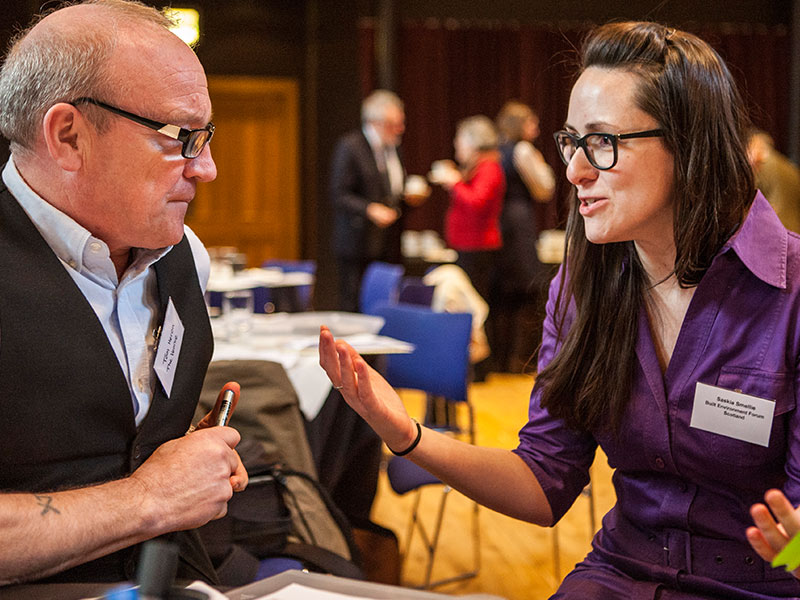
Earlier this month, BEFS launched an advocacy toolkit designed to give organisations and individuals the information needed to confidently speak up for their local built environment with politicians and councillors. Coinciding with the launch and ahead of the local government elections in May, BEFS organised a workshop on advocacy for its membership. We invited former Labour MP for Edinburgh North & Leith and former Councillor, Mark Lazarowicz, to share his perspective. The aim of the workshop was to hear about the dos and don’ts of advocacy from someone who has been on the receiving end of it for over 30 years, both in local and national government. We were also joined by Museums and Galleries Scotland’s Relationships and Partnerships Development Manager, Devon McHugh, who shared ideas and her experience one year into an advocacy campaign of behalf of approximately 400 museums across Scotland.
By the end of the afternoon, our speakers had clearly identified a number of key messages on successful advocacy, including the importance of building relationships with politicians, the need to involve constituents and ‘keep it local’ and that the time for advocacy head of the local elections is now!
Mark Lazarowicz kicked off the discussion with pragmatic and practical advice on contacting your local politicians. The most effective advocacy is from constituents. Therefore, if you are an organisation, get your members involved. He emphasised the importance of contacting the politician responsible for the issue in hand; do not address local politicians on national policy and vice versa. Remember that both local and national politicians have full time jobs, so do not turn up unannounced or unprepared. Be practical in your approach. Bulk emails do have their place and a high volume of emails from constituents may well get an issue on the agenda. Summarise key points and link to further information as opposed to sending large chunks of text. Invite all your local representatives to your events, to meet your group or organisation, to visit that historic site or exhibition, as ahead of elections they will likely welcome the opportunity to meet constituents. Mark also stated that the role of cross party groups and providing evidence to cross party committees at a national level should not be underestimated.
In relation to the upcoming elections, this is the time to get pledges of commitment from your local politicians to champion your local built environment interests. A good option for making contact with politicians is at larger cross party hustings. Provide evidence and data to support your key points and link with human stories and the impact on communities and people. You can also contact your representatives via social media. Politicians often manage their own social media accounts and will follow discussions on local issues or respond to your questions. Remember that local party manifestos and councillors’ pledges and commitments are managed at a local level. There is no central party line. So, develop key messages based on local interests and the impact of the built environment on local communities.
Ultimately, both guest speakers highlighted that engagement with politicians and councillors is not only feasible but also expected. Politicians and councillors expect to be at the receiving end of advocacy ahead of an election and if invited to events in their local area or ward are often delighted to attend. Politicians are interested in and beholden to their constituents. Therefore, advocacy needs to be about people and communities not just things. As Devon put it, lead with the work you do, how it is important, and how it makes people’s lives better. Build relationships with your local politicians, approaching them with a positive message or invite them to an event or to meet your team. This will make them more receptive when an issue arises. Finally, tailor your advocacy to local needs and interests.
For more tips and tools on which of your local representatives to contact and how, as well as information around messaging and building the case for the built environment, check out BEFS Advocacy Toolkit.
BACK
Kilmacolm Civic Trust share with us how their work concerns more than the built environment.

Kilmacolm lies close to Port Glasgow, Greenock, Paisley and Glasgow Airport, yet it’s surrounded by countryside. Two swathes of Green Belt run into the village, reinforcing its bucolic appeal. A rural hamlet through most of recorded history, there are few references to the built environment until 1489, when King James IV personally oversaw some alterations to nearby Duchal Castle, attacking it with the famous Mons Meg cannon during a siege.
The arrival of the railway in 1869 transformed the village and its prospects. The clean air drew new, wealthy entrepreneurs, who wanted to raise their families away from the grime and pestilences of Glasgow – while the railway let them live close enough to the ports and factories to keep an eye on their growing businesses.
They commissioned the leading architects of the day to build fine houses, including Charles Rennie Mackintosh, William Lieper, Austin Laird and James Salmon. Many of these are to be found in the higher ground in the village, and this area has enjoyed Conservation Area status since 1976. In 2014 conservation status was also given to the heart of Kilmacolm, with its unique late Victorian/Edwardian character. In 1876 William Quarrier established his first Orphan Home, creating Quarriers Village two miles away, alongside the river Gryffe; and its original core is a further Conservation Area. The closure of the railway line in 1983 eventually led to the creation of a cycle track, which has become a popular amenity.
Both these villages are the focus of the Kilmacolm Civic Trust, formed in 1969. Our objective is to enhance, preserve and promote the character and amenities of Kilmacolm, Quarriers and the surrounding countryside, not just within the Conservation Areas.
The built environment is extremely important to us, and each month our Executive Committee examines all relevant planning applications, to help secure our heritage and try to ensure the highest calibre of any future development. Of course we can’t keep the villages in aspic, and homes, new and old, will always need to adapt to the changing needs of their inhabitants. Indeed, rather than being excessively conservative, sometimes we’re disappointed that applicants and architects are not a little bolder, or that materials have not been selected with the same care that has gone into designing otherwise promising new structures.
The work of the Trust concerns more than the built environment – we are proud custodians of an extensive archive of documents, books, maps and memorabilia. We are beginning an exciting project to list, organise and safely store this material, and digitising items where possible. The cost and time entailed are daunting, especially at this first stage, as our Committee members painstakingly go through the boxes of documents to list each item. The Trust has been extremely fortunate to have expertise within the Committee, as well as practical help from both Glasgow University Archive Service and Inverclyde Libraries. Right now, we’re learning about copyright issues and how to negotiate the funding maze.
Ultimately, this project will enable the Trust to engage more fully with its members, local residents, and beyond, and to create more dynamic resources for academic and lay interests alike.
Our other, equally ambitious project is to create an Oral History, and several exploratory recordings have already taken place as proof of concept. Our ‘talking heads’ format, with two locals reminiscing on a theme has produced some fascinating stories about village life, and residents’ adventures further afield. We were captivated by a tale of Stalin’s gift of a (live) reindeer to a local resident’s young daughter during WWII. Unfortunately the animal didn’t survive the journey from Murmansk!
In the past two years we have also worked on projects with local schools, helping to develop artistic skills and engage the students’ interest in the villages. A permanent exhibition has been established in the Kilmacolm Community Centre, of pupils’ architectural drawings, mounted on slates by a local community enterprise. Spreading our brief even further, a second set of slates was commissioned for our French twin town of Mérignies.
A creative writing project by pupils of St Columba’s School and their Writer in Residence resulted in a series of monologues about village life, which were recorded and posted online. These included an account of a true story about a visit by Charles Rennie Mackintosh to his clients, the Davidsons at Windyhill, the home he had designed for them.
So for Kilmacolm Civic Trust, the built environment is important, but the further challenge is for us to re-awaken the material in our custody, to crystallise the living memories of our residents, and to ensure our youngsters understand their stake in our wonderful corner of Scotland. With our 50th Anniversary in two years’ time, we’re celebrating our past and embracing the future!
BACK
BEFS Chair, Graeme Purves, reflects on the challenges and opportunities for the built environment sector in 2017.

We are clearly in a period of significant uncertainty. The full ramifications of the Brexit vote remain unclear but while political debate continues, the built environment sector must seize the opportunity to make our case for the contributions we make, not only to the economy but also to social and cultural wellbeing. Built Environment Forum Scotland (BEFS), like our counterpart Heritage Alliance, fulfils an advocacy role for the historic environment and with its Members takes this message to all levels of government.
The built environment is a physical record of historical change across the centuries. Amongst other things it tells of migrations, the changing relationships between the peoples of Britain and Ireland, influences on what was built and how it was built from the Continent of Europe, the impacts of changing patterns of land use, industrialisation, deindustrialisation and social change. More than that, often the local, idiosyncratic built environment makes people feel ‘at home’, rooted and connected to places they care about passionately.
Over the next few years it will be crucial for the sector to make sure that the legislative environmental protections that we currently enjoy are not diminished. In times of economic uncertainty there can be a push towards relaxing these protections as a means to stimulate economic activity in the short term while overlooking the economic benefits of building maintenance and the value of the embodied carbon and social value contained within existing buildings. There are also opportunities we must take within the changing legislative landscape, possibly none greater than to equalise the rate of VAT between maintenance of existing buildings and the construction of new ones. A group of BEFS Members has formed a taskforce to keep the wider membership and decision-makers briefed on the consequences and opportunities that will arise for the sector in our changing relationship with the European Union.
Across the United Kingdom, changes in the planning system have potential to impact substantially on the built environment. The Scottish Government is currently consulting on changes to the planning system and its commitment to “making better places” is welcome. However, informed by our members who work across the UK we are alert to the dangers implicit in simplification of the planning process and we have established a taskforce to scrutinise proposed changes.
BEFS takes a people-focused approach to our built heritage, recognising its value in terms of social engagement and wellbeing. Empowering communities can achieve positive results at a time of public sector retrenchment. If communities are to assume greater responsibility in relation to the conservation of historic buildings, we must ensure that they are able to access the resources and professional support they need.
2017 is the Year of History, Heritage and Archaeology, arguably that’s every year for BEFS, and also the year of local authority elections. Local councillors play a major role in determining the allocation of local resources and how local heritage is championed. They respond to the communities that talk to them, the communities that have solutions that just need help in realising them. It is important that advocates for the historic environment engage with candidates before the elections on May 4th and continue dialogue afterwards to ensure local heritage is valued and cared for.
In changing times, it is vital that the built environment sector makes its voice heard in the political arena and BEFS and its Members will be working hard in 2017 to ensure that it is.
Graeme Purves
Chair
Built Environment Forum Scotland
BACK
Hew Edgar, Policy Manager for RICS Scotland, discusses a Tenement Health Check policy proposal published by the Royal Institute of Chartered Surveyors in Scotland.

Is your roof a catalogue of problems? Copyright John Gilbert @Under One Roof Scotland
Following significant stakeholder engagement, we have published our Tenement Health Check policy proposal. This establishes mandatory five-year building condition surveys, with an objective to tackle poor maintenance in residential properties with common parts.
We believe that a significant part of Scotland’s existing housing stock is at risk from lack of maintenance – this must be addressed urgently. Building maintenance is key to sustaining and future-proofing the fabric of buildings of every kind and nowhere is this more problematical than in the case of buildings in Common Ownership.
Our Tenement Health Check policy proposal outlines how Government intervention, owner responsibility and greater stairwell communication can ensure well-maintained buildings can provide adequate living conditions now and for generations to come. Neglected buildings cause social problems and end up being condemned, which will only exacerbate a housing supply problem that is already critical.
Poor maintenance of buildings in common ownership is prevalent throughout Scotland, irrespective of location and whether or not third party management arrangements are in place; this points to systemic problems that require government action. We propose, as part of the solution to this, measures to encourage, and if necessary compel, common owners to have condition surveys undertaken every five years.
The harrowing state of Scotland’s tenements
The Scottish Housing Condition Survey for 2015 was published in December 2016 and painted a harrowing picture of the current condition of Scotland’s housing stock – particularly the “old stock”, which were built pre-1919.
The figures indicated that the number of tenement properties in Scotland reached 579,000; equating to 24% of all domestic property, the most common type of dwelling in Scotland.
Tenements that were built pre-1919 amounted to 218,000 (38% of tenement stock, 9% of total stock), making them the second most common occupied property type in Scotland, behind post-1982 detached properties.
We have deep concerns that this survey’s figures indicated that 68% of pre-1919 dwellings are with “critical disrepair” (down from 72% in 2014) and 8% of pre-1919 dwellings are with “Critical, Urgent & Extensive disrepair” (up from 5% in 2014).
It is clear that property maintenance is not high on the agenda of either Government or owners; this could have huge ramifications for future generations.
This is a national problem that requires a national solution; we hope that property maintenance will be a considered a key Government policy in 2017.
Tenement Health Check Policy Proposal
BACK
BEFS Chair, Graeme Purves, reviews Lou Rosenburg’s Scotland’s Homes Fit for Heroes: Garden City Influences on the Development of Scottish Working Class Housing 1900 to 1939; The Word Bank (2016).
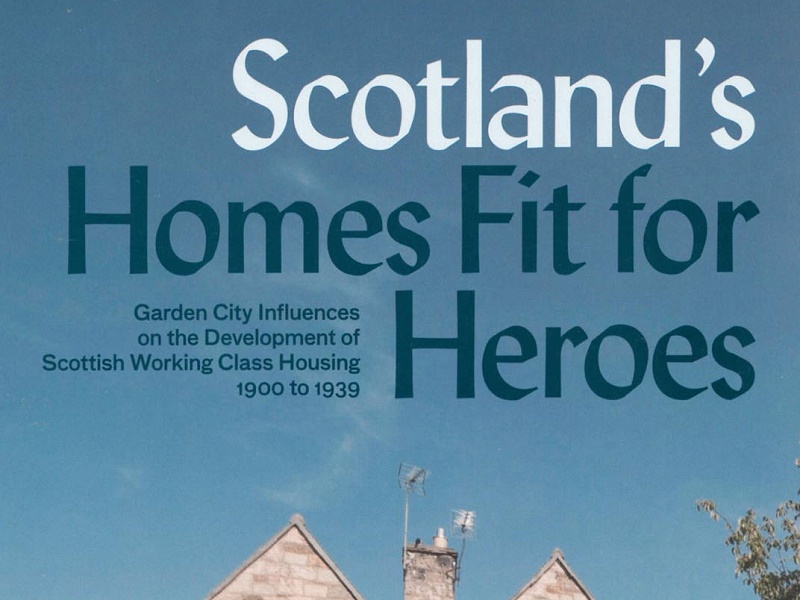
Lou Rosenburg’s book makes a very valuable contribution to our understanding of the evolution of working class housing provision in Scotland in the early part of the 20th Century. It is meticulously researched, well written, attractively laid out and generously illustrated with photographs, plans and period artwork.
The book explores the form and design influences on the 240,000 houses built by Scottish local authorities between 1919 and 1939, with a particular focus on those built under the Town Planning (Scotland) Act 1919, the Coalition Government’s response to the wartime demand for ‘Homes fit for Heroes’. The new housing schemes were strongly influenced by the English arts and crafts forms of the garden cities movement. Cottages became the preferred form of provision as traditional tenements fell out of favour because of their association with overcrowding and insanitary conditions. However, habit and budgetary constraints often led to compromise and a native form of garden suburb development emerged, incorporating distinctively Scottish elements such as pavilion-style tenements and four-in-a-block cottage flats.
Before the First World War, a number of cottage developments influenced by garden suburb principles had been pioneered by local authorities and public utility societies. During the War, the need to accommodate civilian defence workers led to significant new developments at a number of strategically important locations, including Rosyth, Gretna, Greenock, Glengarnock and Invergordon.
By 1925, 25,000 houses had been completed under the 1919 Act, only a fraction of the 120,000 units which the Ballantyne Commission had estimated to be required in 1917. Shortages of labour and materials meant that local authorities and public utility companies were unable to achieve the construction levels required. Despite the generous subsidies made available by central government, high construction costs meant that rents were generally set at levels which were beyond the means of poorer households. In the mind of officialdom, the ability to pay rent quickly became a more important consideration than war service.
Rosenburg’s painstaking scrutiny of valuation rolls has identified some 300 schemes developed under the 1919 Act. These are very widely distributed throughout Scotland, with a remarkable 30% outside burghs. Many are of outstanding quality. Some of the most charming examples were built in small settlements in rural areas, often by county councils. While the contribution of public utility societies was modest, a significant garden cottage scheme was developed by the Kinlochleven Village Improvement Society to provide accommodation for employees of the British Aluminium Company, and the Scottish Veterans’ Garden City Association built nearly 200 houses in small developments across Scotland.
A welcome aspect of Rosenburg’s book is the information he provides on the work of officials such as William E. Whyte, politicians such as John Wheatley and Jean Mann and architects such as Joseph Weekes and John A.W. Grant. The personal contributions to the improvement of housing conditions of figures such as these deserves to be more widely recognised.
With the Scottish Government consulting on the reform of the planning system, Scotland’s Homes Fit for Heroes provides a timely reminder of a period when Government felt confident enough to drive forward improvements in the form and quality of new housing.
Graeme Purves
BACK
Euan Leitch, Director of BEFS, reflects on how social value is understood and how it can be incorporated within built environment policy.

Last week Historic Environment Scotland launched their survey What’s Your Heritage? asking the public about places that make them feel proud or have special meaning for them. This is the initial step of a two stage review of Scottish historic environment policy which will look at the criteria for designation and management of the historic environment.
Elizabeth McCrone, Head of Designations at Historic Environment Scotland, recently attended BEFS Historic Environment Working Group to share the thinking behind the review and what the next steps will be. She made clear that this first stage is targeted at the public, particularly seldom heard groups, rather than the professional or specialist communities already engaged in the historic environment. These will be consulted in the Spring of 2017 before a formal 12-week consultation on any proposals arising from the research. The ‘people first’ approach aligns with the 5 principles of Networked Heritage as recently published by the RSA:
- Start with People: Embed your work where people live daily life
- Heritage is what you choose to make it: Use assets in new ways and identify new assets
- Go beyond yesterday’s battles: Make the offer, rather than the ask
- Open up and lead the change: Think critically about power and leadership
- Help make heritage your local USP: And don’t rely on a strategy…
Sites such as the Tinkers’ Heart have challenged the current designation criteria and the Networked Heritage principles, like What’s Your Heritage?, may open up the criteria to include social value. It’s not by chance that last week BEFS had meetings with academics from the Universities of Glasgow and Stirling who are also exploring how social value is understood and how it can be incorporated within policy.
Some heritage professionals are disconcerted by this shift in approach. Is it a challenge to the role of the professional and dumbing down heritage? It certainly shouldn’t be the latter but it may be the former if it requires changing the language we use and incorporating values that may not have been part of our training. While the public tend automatically to place intrinsic value on pre-20th century places more recent heritage can be more contentious. A current listing proposal for post-war social housing has attracted some rather negative, and troubling, online comment. Is this where professionals could help people think about the transformational impact of social housing in twentieth century history as well as its contribution to the architectural record? Then again, when asked by the RIAS to choose their favourite building of the past century as part of Scotstyle, the popular vote went to Princes Square in Glasgow, vexing some architects. Public tastes and professional tastes do not always marry and, for professionals, understanding the reason why should be important.
But if “heritage is what you choose it to be” does that automatically mean it should be scheduled or listed? How can decision makers accommodate values the public attribute to assets and places that are undesignated by a national heritage organisation? Is designation the only way to protect a place? The HES research combined with the planning system reforms have the potential to result in policy proposals that better acknowledge values at a local level and will require all of us to engage constructively in the discussion.
BACK
Bill Pagan, Board member of BEFS and founding Board member of Cupar Development Trust, reports on progress following Cupar’s CharrettePlus.
It is now well over two years since Cliff Hague led the BEFS visit to Cupar, one of the two additional towns covered by their Small Towns Scotland initiative, 18 months since the proposed Cupar Development Trust (CDT) began to take shape, and over six months since PAS ran the successful CharrettePlus in the town. Even when there are enthusiasts in the local community, wheels turn slowly – partly because of the essential task of bringing the wider community along-side, but of course mainly because cash has to be found for every stage of proposals selected – including the costs of preparing applications for larger-scale funding.

The final report from PAS was welcomed, and has been considered by the town’s coordinating group. It is accepted that there are no easy, cheap or instant fixes. The ambitions, though not spelled out in these terms, follow Geddes’ principles of looking at “Folk, Work, Place”.
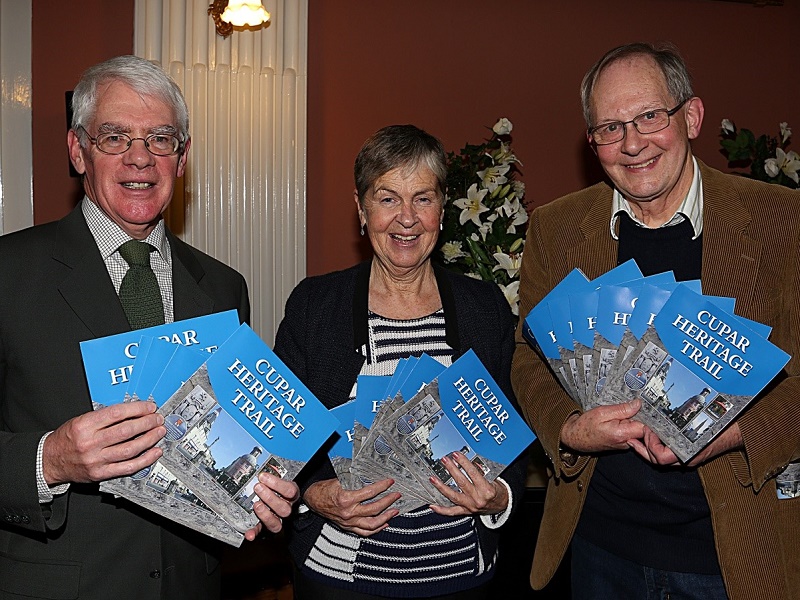
One tangible – literally – development has been the re-issue of Cupar’s Heritage Trail guide. This leaflet was originally published as a joint venture between the Millennium Committee of the Community Council and Fife Council, with text researched and written by Dr. Paula Martin. It was a success, and was reprinted in 2005.
There is no shortage of supportive organisations active in Cupar! One of the display boards at the Charrette listed many of them – as this photograph shows.
The republication this month was a joint venture between Cupar Development Trust and Cupar Heritage (CH), with support from the Community Council, Cupar and North Fife Preservation Society, ABCD Cupar Business Association, and Fife Family History Society. Assistance came also from Fife Council, Fife Historic Buildings Trust, Historic Environment Scotland and the Heritage Lottery Fund, through the CARS and THI schemes already in progress.
And of course other important organisations, not necessarily dedicated to the town of Cupar only, include the local Tourism Association, which welcomes the republication of the leaflet.
The Heritage Trail leaflet was launched at a reception on 22nd November, to which 20 organisations had been invited to send representatives, and which was in fact attended by over 40 people. The reception was held in Cupar’s impressive County Hall, where the initial BEFS meeting had been held, and was formally hosted by the Community Council.
CDT have applied to the Activating Ideas fund of Scottish Government for funds to cover the cost of consultants to prepare a marketing plan for the Heritage Trail, including sign-posting and full interpretation.
The Board of CDT are heavily engaged in the assessment of the “Inner Court” proposal, which was developed before the Charrette, but exhibited there and well received. It is a bold proposal for the regeneration of a vacant and derelict area in the heart of Cupar town centre, lying between the narrows of the Bonnygate (where the infamous “Gap Site” is prominent) and the width of the Crossgate.

The details are commercially confidential, but it is no secret that the major player is expected to be Kingdom Housing, working in partnership with some of the present proprietors. The original Inner Court report, prepared by Cupar-based architects Arc Architects, can be found on the CDT website.
It is of course not only CDT and CH who have been active. For example, further from the town centre, Sustainable Cupar have completed the reinstatement of the Old Moor Road to Ceres – a right of way shown on Roy’s military map of 1746.
The CARS and THI schemes, managed by Fife Historic Buildings Trust, have greatly improved Cupar’s street-scape with their work in St Catherine Street, as the before and after photographs show.
Cupar’s Christmas Fayre, leading up to the switching-on of the annual lights, was another occasion for local organisations to take stands and explain their work. CDT’s was a well-visited stand, and an encouraging number of applications for membership were handed in, while the Chairman entered into the festive mood!

The next major event for CDT is its first AGM, to be held on 1st December, in one of Cupar’s major new assets – the Howe of Fife Rugby Club’s new sports complex. On that occasion, CDT hope to be able to announce that the Activating Ideas application has been successful, and that accordingly the selection process for the consultants will be starting early in the new year. The present eight Board members look forward to welcoming to the AGM both founding and new members of CDT, and hope that additional Board members will be elected.
The formalities of the AGM should be relatively brief. The guest speaker is Diarmaid Lawlor, whose title is Partnerships for Places. It will be fascinating to hear Diarmaid’s view on how, in a small town like Cupar, the existing, dedicated and energetic organisations can make the total of their valued contributions add up to more than the sum of the parts.
The lessons for Cupar from BEFS’ Small Towns Scotland report have been taken on board, and the Charrette process has proved valuable. The then Minister, Marco Biagi, commented on the evident citizen involvement in the Charrette process, and commended CDT and PAS on the high level of community engagement. If BEFS is able to get the information, it will be interesting to see how the other seven towns visited in the Scotland’s Small Towns process have fared since their respective visits, and to what extent they have been able to run with BEFS’ comments and suggestions for their towns. The CDT Board plans to visit some towns in Angus in the spring to see what can be learned from them – some having been through the Charrette process, but none having been included in the BEFS visits.
Meantime, Cupar will be delighted if you visit the CDT website or follow progress via www.cuparcould.com, Twitter, Instagram and Facebook.
Bill Pagan
BACK