



BEFS Policy & Advocacy Officer, Ailsa Macfarlane asks, is it time to rethink our definition of community and consider how it is applied?

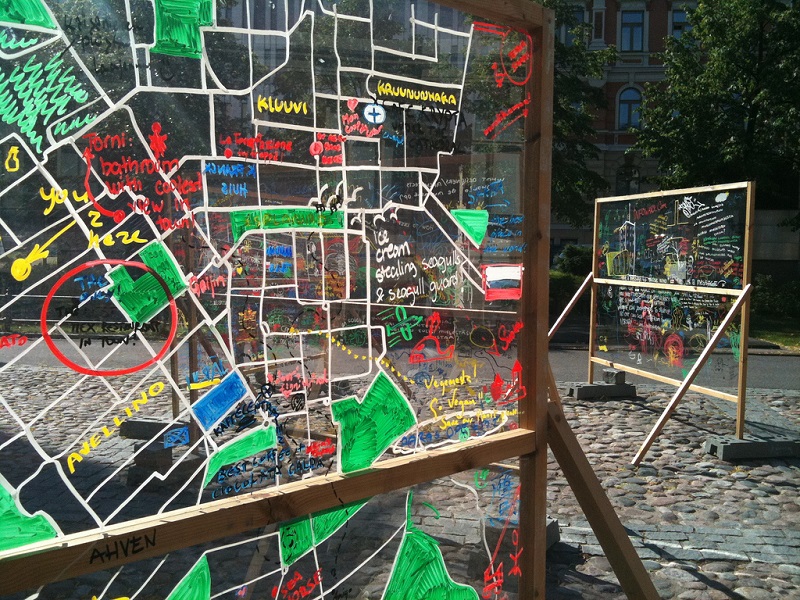
Is the concept of community, like the concept of the ‘housewife’ – somewhat dated, incongruous and failing to communicate the diversity of experience and circumstance? A label applied rather than a label chosen.
The following tweet helped to tease out some of the concerns I find with the current use of ‘community’ as a descriptor:
“How to make communities walkable – and better places to live […]”
It isn’t communities that become more walkable. It is places, areas – a mappable surface of land. Communities are truly formed – by and of – people; the place could be seen as subservient to those located there.
Community is too often used as a short-hand description for an area, with the people implied – but not necessarily central to the issue being discussed. In relation to the text of the tweet above – people will have to do the walking; this may involve difference choices and opportunities – it may involve understanding of behavior, it may require behavior-change; and those things involve individuals.
From a heritage perspective are we torn between place-based issues and communities which may be formed, defined and exist, out-with a locale? Simultaneously attempting to answer the issues of place and the rights and concerns of those involved.
We hear about Community values, community importance, community significance – but what do we really mean by community? I’m suspicious that what was once organic and holistic, (perhaps previously also based on assumption) is now fractured and manufactured. Something which is not necessarily innate.
Whilst it could be argued the formation of communities was always circumstantial – our circumstances seem now to have many more variables: from less homogenous groupings of relations, to further travel for service provision and/or employment, to more single-person dwellings.
If we asked people who their community are –would those around their locale play a central role in the hierarchy? Family, friends, colleagues, (if there are) children- their friends and associated families, the consistent interactions with others where we shop and relax. These aspects of life may be geographically close to ‘home’ or some distance away. This can apply to rural and urban locations – if the local school is now closed, the local council offices moved away, the bus service limited – then the patterns of consistent interactions are reduced and the foundations that formed communities previously – are also eroded.The digital tools of the modern world can further reduce the necessity for human interaction in everyday life, additionally limiting the ability for communities to form organically.
Within a heritage environment it can feel that communities are currently co-created. Created by people and by conflict. There are the obvious examples – the shared (whether through choice or circumstance) groups – of interest, locality or experience.
But that sense of ‘community’ seems to be co-created by circumstance. Often coalesced by reaction/resistance to external (or even internal) factors. Is community now purely defined by ‘the other’? Is formation occurring in order to gain an identity and get a voice?
Who is represented will always be subjective and whilst I’m not sure there will ever be a clear answer to this – if we start with the principle that individuals having a voice and being able to articulate that voice in all circumstances (be they positive, benign, or challenging) is key to enabling informed outcomes – can we now start talk about social voices, rather than a community?
Social voices brought together by – circumstance, locality, experiences, interests. It’s a reflection and expression of society – micro or macro. Community too often implies cohesion and agreement – which when manufactured will be fragile and ultimately contentious.
A society – that’s already fractious and contentious, but also driven by a need to continue.
It almost exists without definition.
Expecting and reflecting the different social voices found within a place will not be easy, but it might be a more honest way forward. When we reduce any group to a simple descriptor we reduce the expression of a variety of experiences. The term ‘housewife’ did little to express the variety of lives lived within the descriptor – perhaps the same is now true for ‘community’.
BACK
BEFS Director Euan Leitch asks, should politicians be influencing the final outcome of planning decisions?
Two recent planning decisions by Scottish Ministers are of note.
Ministers accepted the advice of their Reporter and refused consent for a large scale leisure and tourism development which included over 1000 houses and the consolidation of Loudon Castle, East Ayrshire. Permission was refused on the following grounds:
- There is no certainty that the scale of proposed housing development is the minimum level required as enabling development.
- The scale of the proposed enabling housing development would have an adverse impact on the Loudoun Castle Historic Garden and Designed Landscape.
- The separation of the proposed tourism leisure proposals from the proposed housing for enabling funding purposes is not acceptable.
- Furthermore, the scale of the proposed enabling housing development, and lack of suitable masterplanning mean that, in their present form, the proposals would not result in a well-planned sustainable community.
There is not an infrequent assumption that economics and housing numbers trump other planning matters such as heritage and sustainability, but in this case it is the converse. The full report, while lengthy, is worthy of further examination.
The other decision is in relation to the proposed expansion of Hyndford Quarry into the buffer zone of the New Lanark World Heritage Site. This has been a long running case and the Scottish Government Reporter found the western and southern expansion of quarry to be in line with policy and recommended that the proposals would:
- Contribute to overcoming an identified shortfall in the minerals reserve (landbank);
- Protect and preserve the character, integrity and quality of the New Lanark World Heritage Site, its setting and Outstanding Universal Value;
- Avoid compromise to the integrity of the Falls of Clyde Designed Landscape, its character and the objectives of its designation;
- Safeguard listed buildings, their settings, and any features of special interest they possess;
- Preserve or enhance the character or appearance of the New Lanark and Falls of Clyde Conservation Area;
- Protect scheduled ancient monuments and their settings;
- Not adversely affect the overall quality of special landscape areas;
- Not harm nature conservation interests;
- Support sustainable economic development; and
- Provide an acceptable restoration scheme.
For the western extension of the quarry Ministers found the opposite to be the case, that it contravened a range of regional and local planning policy, and are therefore only minded to grant permission for the southern extension of the quarry. The full report is again worth reading but raises similar questions as before around why East Ayrshire Council , Historic Environment Scotland and the Scottish Government Reporter are interpreting planning policy and heritage values so differently from Scottish Ministers?
As the Planning (Scotland) Bill has been progressing through parliamentary scrutiny, one repeated refrain has been on the topic of Ministerial intervention in the planning process, and the refrain is usually that it should be resisted. But is that wholly desirable? The thousands of people who objected to the Hyndford Quarry extension will be grateful for Ministerial intervention, but when Ministerial decisions go the other way there is usually disquiet expressed about their role. Perhaps we have to accept, or embrace, that planning is fundamentally political.
BACK
News, views and upcoming events in the Built Environment sector

BEFS News
Many will have picked up the news that the Heritage Lottery Fund has rebranded as the National Lottery Heritage Fund, as part of its Strategic Funding Framework 2019-24. There are further details in the News Release section below and they are holding open workshops in West Lothian, Dumfries and Galloway, Glasgow, Inverness and Dundee over the next few months. Places are free but limited so booking is necessary.
You can still register to attend our Prioritisation & the Historic Environment Event at The Scottish Story Telling Centre on Monday 25 February. Discover more about our findings from the December workshop on the heritage sector and hear an update on how it complements the Our Place in Time – Built Heritage Investment Plan Group.
HES currently has 2 consultations running, covering four policy and managing change documents. BEFS has already held a workshop to gather Member views but, as ever, we encourage all organisations and individuals to form their own Consultation responses with further detail relating to their areas of knowledge and expertise.
The first, covers both Demolition and the Adaptation of Listed Buildings documents and closes at 6pm on Friday 15th February.
The second, covers Designations and Scheduled Monument Policy and this closes on Tuesday 19th February.
There is also still time to contribute to the cross-party Scottish Parliamentary Working Group on Tenement Maintenance’s Consultation. Your responses are required by 27 February 2019; full details of the interim recommendations and how to respond can be found here.
Finally, don’t miss out on the range of upcoming events and training featured below.
Consultations
Valuation of Development Land (RICS)
Help shape valuation surveyors’ day to day work
Opened: 7 January 2019. Closes: 18 February 2019
Reinvigorating Commonhold: the alternative to leasehold ownership (Law Commission)
Opened: 10 December 2018. Closes: 10 March 2019
Consultation Responses
Scotland’s Forestry Strategy – 2019-2029 (SG 06/02/19)
Publications
Cultural Cities (CC 05/02/19)
Annual Cities Outlook Report (CFC 28/01/19)
Building Beautiful (PE 28/01/19)
Inform Guide: Damp Gables (Engine Shed 15/01/19)
Scottish Government News Releases
Action Against Flooding (SG 06/02/19)
Communities across Scotland to benefit from more than £700,000 additional funding to improve flood protection.
Compulsory Purchase in Scotland: A guide for property owners and occupiers (SG 04/02/19)
Guidance for property owners and occupiers who believe they may be affected by a Compulsory Purchase project.
New Fire Safety Standards for Scottish Homes (SG 01/02/19)
New rules to reduce deaths in household fires, with improved standards introduced for fire and smoke alarms in Scottish homes.
High Hedges (Scotland) Act 2013 – Revised Guidance to Local Authorities 2019 (SG 31/01/19)
Revised guidance, following discussions with local authorities and interest groups, updating the High Hedges (Scotland) Act 2013 and addressing problems caused by high hedges.
Planning Application Decision Times Published (SG 29/01/19)
Statistics on quarterly planning performance, detailing number of planning applications decided across Scotland and average decision times for most types of application, including housing.
More Homes for Scotland (SG 25/01/19)
Funding increase assisting the drive to increase the supply of affordable homes via the 2019/20 Scottish Budget.
News Releases
Scottish Land Commission champions engagement process for successful land management (SLC 31/01/19)
Launch of new Protocol and toolkit setting out practical advice on how landowners, land managers and communities can work together to make better – and fairer – decisions about land use.
Heritage Alliance Travel Grant (IHBC 31/01/19)
The Heritage Alliance, with support from the British Council, is offering travel grants to support UK heritage professionals to develop mutually beneficial international projects and partnerships for their organisations. Apply here
Deadline: 5pm, Friday 15 February. Travel must be completed by 1 November 2019.
Scottish led project to be part of CACHE knowledge exchange funded projects (Cache 30/01/19)
University of Stirling project concerning Tenant Participation in the Private Rented Sector is one of five projects being funded.
New-look National Lottery Heritage Fund unveils plans for the next five years (HF 30/01/19)
A major devolution of decision-making across the whole of the UK is at the heart of new plans to distribute more than £1billion of National Lottery money to the UK’s heritage over next five years.
Heritage Alliance opens survey estimating Brexit impacts on heritage employees (IHBC 29/01/19)
The Heritage Alliance is calling on sector bodies to complete, share & retweet its 5-minute survey on EU Workers to help understand how Brexit will affect heritage sector employees.
Scotland’s Towns Partnership’s Funding Finder (STP 29/01/19)
The Funding Finder is the go-to place to source potential funding. Comprising nine categories, the Finder provides easy to read information on current funding streams, highlighting announcements of new funds and application deadlines. Download the January 2019 Funding Finder for more details.
2020 World Monuments Watch (WMF 29/01/19)
Nominations have opened for the 2020 World Monuments Watch. 25 sites from around the world in need of urgent action will be partnered with local stakeholders to design and implement targeted activities—including advocacy, planning, education, and conservation interventions in the historic built environment.
Deadline: 5pm, 1 March 2019
Social housing and green infrastructure design fund launched (GSS 28/01/19)
An opportunity for a path-finding social housing provider to access a package of financial and design support, helping to deliver an innovative social housing development and maximising the benefits of the vegetated land and water within and around housing sites.
Design Council launches Inclusive Environments CPD (DC 28/01/19)
Launch of a course for built environment professionals, providing them with an increased understanding and knowledge of inclusive design as standard practice at a national level.
My Place Awards and My Place Photography Competition (SCT 28/01/19)
The My Place Awards celebrate buildings, landscape, public realm and civic projects that have had a positive impact in local neighbourhoods, and delivered tangible benefits for communities.
Deadline: 22 February 2019
Funding announced for new collaborative centre for cultural value (AHRC)
The Arts and Humanities Research Council, part of UK Research and Innovation, has announced new funding for the creation of a collaborative Centre for Cultural Value, the first of its kind in the UK.
Opinion & Comment
Ministers reject plans for £450m Loudoun Castle resort (BBC 07/02/19)
How private landlords are destroying our tenements (SHN 05/02/19)
Community Engagement in decisions relating to land (SLC 05/02/19)
Prince Charles could ditch Scottish Eco-Village (TFN 04/02/19)
Leith Walk Development Campaign – latest (TER 30/01/19)
Holmhead Stone Circle: A Megalithic Mistake (HES 28/01/19)
A wider perspective on the planning bill: why we are where we are with planning – Dr Andy Inch (PD 27/01/19)
Political uncertainty ‘takes toll’ on building activity (RICS 24/01/19)
Edinburgh Council could buy your tenement flat and rent it back – to get it fixed (EEN 24/01/19)
Parliamentary Questions
Questions marked with a triangle (?) are initiated by the Scottish Government in order to facilitate the provision of information to the Parliament.Questions in which a member has indicated a declarable interest are marked with an “R”.
Question S5W-21388: Oliver Mundell, Dumfriesshire, Scottish Conservative and Unionist Party, Date Lodged: 04/02/2019
To ask the Scottish Government what help it offers to communities that are seeking to (a) improve the appearance of buildings that are considered to be “eyesores” and (b) bring derelict buildings back to use.
Expected Answer date 04/03/2019
Question S5W-21336: Gail Ross, Caithness, Sutherland and Ross, Scottish National Party, Date Lodged: 30/01/2019
To ask the Scottish Government how complete the Scottish Land Register is.
Expected Answer date 27/02/2019
Question S5W-21277: Kezia Dugdale, Lothian, Scottish Labour, Date Lodged: 29/01/2019
To ask the Scottish Government what its position is regarding the banning of most domestic wood burning stoves by 2022, in light of plans by the UK Government to do so.
Expected Answer date 26/02/2019
Parliamentary Questions & Answers
Questions marked with a triangle (?) are initiated by the Government in order to facilitate the provision of information to the Parliament.
Question S5W-21030: Murdo Fraser, Mid Scotland and Fife, Scottish Conservative and Unionist Party, Date Lodged: 16/01/2019
To ask the Scottish Government whether it is responsible for the protection and enhancement of the country’s historic environment.
Answered by Fiona Hyslop (28/01/2019)
Question S5W-21031: Murdo Fraser, Mid Scotland and Fife, Scottish Conservative and Unionist Party, Date Lodged: 16/01/2019
To ask the Scottish Government whether Historic Environment Scotland, as a statutory consultee in the A9 dualling project, is responsible for the protection and enhancement of the (a) historic environment and (b) inventory battlefield at Killiecrankie.
Answered by Fiona Hyslop (28/01/2019)
Question S5W-21032: Murdo Fraser, Mid Scotland and Fife, Scottish Conservative and Unionist Party, Date Lodged: 16/01/2019
To ask the Scottish Government whether it considers it conferred sufficient power on Historic Environment Scotland to be able to protect and enhance the (a) historic environment and (b) inventory battlefield at Killiecrankie.
Answered by Fiona Hyslop (28/01/2019)
Question S5W-20978: Bill Bowman, North East Scotland, Scottish Conservative and Unionist Party, Date Lodged: 14/01/2019
To ask the Scottish Government what its position is on the Scottish Retail Consortium’s call for local authorities to be able to use a portion of the town centres fund for reducing non-domestic rates.
Answered by Derek Mackay (23/01/2019)
Question S5W-20977: Bill Bowman, North East Scotland, Scottish Conservative and Unionist Party, Date Lodged: 14/01/2019
To ask the Scottish Government when it will publish details of its proposed town centres fund, and what its position is on the Scottish Retail Consortium’s call for business improvement districts and other organisations to be eligible to bid for funding.
Holding Answer issued by Derek Mackay (28/01/2019)
Other Parliamentary Activity
Motions: Graham Simpson: Housing Through the Lens of Ageing (17/01/19)
Debates: Housing through the Lens of Ageing (29/01/19)
Events
AF2019 February Meet-up – Inverness
Date & time: Saturday 9 February; 10:15 (10:30 start) – 13:00
Venue: The Bike Shed, 21D Grant Street, Inverness IV3 8BN
Join the first Architecture Fringe meet-up in the North of Scotland!
These free-to-attend meet-ups are very laid back and are open to anyone considering taking part in or contributing to the Architecture Fringe 2019 Open Programme. The Open Programme is a non-curated platform for self-directed projects, exhibitions, events and happenings. The meet-ups are an opportunity for you to hear more about the Architecture Fringe itself, to share your project thoughts and ideas, get feedback and meet new people. The meet-ups are analogue so just bring ideas or images to stick up on the wall. Open to all, free to attend. A lovely way to spend a Saturday morning!
The State Funeral and Heraldry of Mary Queen of Scots
Date & time: Monday 11 February (18:00-19:00) in Edinburgh, Tuesday 12 February (19:30-20:30) in Aberdeen.
Venue: Monday in the National Museum Scotland auditorium, Edinburgh, EH1 1JF (use Lothian Street entrance); Tuesday in the Regent Building Lecture Theatre, Regent Walk, Aberdeen, AB24 3FX.
Lecture by John Malden FSA Scot, President Heraldry Society of Scotland Royal Heraldry.
Preserving and Interpreting the Berlin Wall in a World of New Walls
Date & time: Wednesday 13 February; 18:00 (£6 – booking via website)
Venue: The Engine Shed, Forthside Way, Stirling, FK8 1QZ
The Berlin Wall was the Icon of the Cold War, symbolising a divided world until its political fall in November 1989. Today, not much is left of the world famous155km structure. Thanks to efforts initiated in December 1989, seven sections of the Wall and other border installations were listed and officially designated Historic Monuments by 1992. Today, the Berlin Wall Foundation is responsible for four prominent sites with a total of approximately 4 Million visitors a year. How are these precious physical remains being treated? What stories are being told, and what does the Berlin Wall stand for today?
Tackling Flooding Together
Date & time: Saturday 16 February; 10:30-14:30
Venue: The National Christian Outreach Centre, Riggs Road, Perth PH1 1PR
The Scottish Flood Forum (SFF) is holding another of its successful community networking events with support from Floodre who are engaging with flood risk communities across Britain as part of their transition plan. This community focussed event will give people the opportunity to share experience and discuss what we can do to tackle flooding together in a mutually supportive environment, so come along and give your views.
Heritage Trust Network Event: Scotland Members’ Meeting – Dundee
Date & time: Monday 18 February; 10:00-15:00
Venue: Dundee Central Baptist Church
Join us for our quarterly members’ meeting, to hear key speakers and build your contacts within Scotland’s network of Building Preservation Trusts and Community Groups involved in the rescue of historic buildings. This meeting will focus on the new National Lottery Heritage Fund (former Heritage Lottery Fund) and will offer the chance to hear all about the new funding streams available and ask any questions. Non-members are welcome to attend their first meeting without joining up, Attendance is free.
Highlands’ Heritage Hooley
Date & time: Tuesday 19 February; 18:00-20:00
Venue: Inverness Town House, High Street, Inverness IV1 1JJ
Join us for some lively conversation about what’s happening in Scottish heritage in a beautiful setting with music and refreshments. We’re inviting groups involved with the built environment to learn from each other’s experiences and build up local connections, with the opportunity to pick the brains of the sector’s major stakeholders. Representatives from Historic Environment Scotland, Heritage Lottery Fund, the Architectural Heritage Fund and the Heritage Trust Network, as well as local authorities, will all be there to answer your burning questions over a glass of something cheering in deepest darkest February.
Transforming Transport – Getting from A to EV
Date & time: Thursday 21 February, 14:00
Venue: The Studio, Level 9, 67 Hope Street, Glasgow, G2 6AE
From operators of energy assets, electricity networks to those working in transport, infrastructure and smart technology, this is a must attend event for anybody concerned with the detail surrounding the decarbonisation of our transport fleet. This event boasts speakers at the forefront of the transport transition – and is an excellent opportunity to learn about practical challenges and commercial opportunities delivering low-carbon transport will bring.
Central Belt Heritage Hooley
Date & time: Tuesday 26 February; 18:00-20:00
Venue: Linlithgow Burgh Halls, Linlithgow, EH49 7AH
Join us for some lively conversation about what’s happening in Scottish heritage in a beautiful setting with music and refreshments. We’re inviting groups involved with the built environment to learn from each other’s experiences and build up local connections, with the opportunity to pick the brains of the sector’s major stakeholders. Representatives from Historic Environment Scotland, Heritage Lottery Fund, the Architectural Heritage Fund and the Heritage Trust Network, as well as local authorities, will all be there to answer your burning questions over a glass of something cheering in deepest darkest February.
Talks at the Lane present Colm Moore on Temporal Architecture
Date & time: Thursday 28 February; 18:30
Venue: Custom Lane, 1 Customs Wharf, Leith EH6 6AL
Custom Lane invites you to join Colm Moore of Clancy Moore Architects to discuss their practice as part of the Talks at the Lane series.
Colm Moore is a partner of Dublin based architecture practice Clancy Moore. Established with Andrew Clancy in 2008, the practice works across Ireland and Europe seeking to understand ‘context‘ the fullest sense of the word – physical, historical, social, legislative and economic.
Since 2008 the practice has been the recipient of a number of national and international awards including the 2012 AAI Downes Medal for excellence in architectural design. In 2015 the practice was one of four emerging Irish practices involved in the London Festival of Architecture. Then in 2018, they were presented with the accolade of BD Young Architect of the Year. The practices work has been published and exhibited worldwide.
This talk follow on from Izat Arundell & Collaborators, Rural Office for Architecture and STUDIO NIRO.
Booking Details
Archaeological Science: looking to the future
Dates & times: Monday 11 March; 18:00-19:00 in Edinburgh & Tuesday 12 March; 19.00-20.00 in Lerwick.
Venues: Monday in the National Museum Scotland auditorium, Edinburgh, EH1 1JF (use Lothian Street entrance); Tuesday in the Shetland Museum and Archives, Hay’s Dock, Lerwick, ZE1 0WP.
Lecture given by Dr Lisa Brown FSA Scot MCIfA, Archaeological Science Manager at Historic Environment Scotland.
Planning for Low Carbon Heat
Date & time: Tuesday 12 March; 10:00 – 16:00
Venue: Quaker Meeting House, 7 Victoria Terrace, Edinburgh, EH1 2JL
The way we heat our buildings is going to change dramatically in the coming years. The new Planning (Scotland) Bill, Local Heat and Energy Efficiency Strategies and district heating regulations will have a significant impact on how planning approaches energy and place, with the potential to improve air quality, reduce carbon emissions and create new, local economic opportunities.
Zero Waste Scotland is hosting a free workshop to help planners understand more about the changing policy landscape and how these changes might be addressed in practice. The session is free for all planning professionals, whether in the public or private sector.
RICS CPD Day, Dunblane
Date & time: Thursday 14 March; 08:30 – 17:10
Venue: DoubleTree by Hilton Dunblane Hydro, Perth Rd, Dunblane, FK15 0HG
Join RICS CPD Day, Dunblane to enhance your capabilities and knowledge around today’s ever-changing market trends, legislation and technical guidance. Learn from leading industry professionals and take away practical solutions which can be implemented into your daily practice – benefiting both your business and personal professional development. The conference offers a choice of 18 breakout sessions to allow you to tailor the day specifically to your personal CPD needs, network with colleagues and peers in your region and put your questions to leading experts in their field.
RTPI Scotland Young Planners Conference 2019
Date & time: Wednesday 20 March; 09:00–17:30
Venue: Apex Hotel, Dundee
Our 2019 Young Planners’ Network conference takes place in the beautiful city of Dundee. This year we will be looking at how young planners can ‘deliver great places now and for the future’. A jam-packed line up with some of the most esteemed built environment professionals in the country will be complemented by afternoon workshops, helping improve and refine skills critical for your development as a professional planner. We are expecting another sell-out event so don’t delay and book tickets today.
Our Past, Our Future: Young People & Heritage
Date & time: Wednesday 27 March; 09:30-17:00
Venue: AK Bell Library, Perth
This one-day conference at the AK Bell Library in Perth will bring together a range of speakers to share their experiences working on different heritage engagement projects across Scotland. We will reflect upon activities undertaken during the Year of Young People (2018) and explore how best to support young people’s interest in the past as they become the heritage caretakers of the future. The keynote address will be given by Dr Jeff Sanders who has delivered high-profile projects for the Society of Antiquaries of Scotland, including the successful Dig It! engagement programme since 2015.
Training
Conservation of Timberwork
Dates: Monday 18 February – Tuesday 26 March 2019 (5 days)
Venue: Forth Valley College, Stirling
Timber is one of Scotland’s most significant building materials. It has a rich history from cruck frame houses to decorative internal timbers, and is used across a range of building features. This course will provide an introduction to the essential biology of timber used in Scotland over the centuries, and will trace its sources, from early early samples of Scots origin to imports from the Baltic states and North America.
Examine timber’s physical properties, its natural weathering and decay processes, and its resilience to man-made damage or interference. You will learn about the complex issues surrounding decay caused by wet and dry rots, and current best practice methods to remove and prevent fungal problems in timber.
You will learn current conservation principles and how to undertake appropriate repairs, from an initial survey, through to specification, procurement and on-site repair of existing or installation of new material – all according to best current principles of best conservation practice.
Cost: £420.
Historic Concrete and Cements Conservation
Dates: Monday 19 February – Tuesday 26 March (5 days, TBC)
Venue: Forth Valley College, Stirling
Examine the relatively recent traditions of cement, gypsum and lime concrete construction in Scotland’s in Scotland’s built environment, and the practical conservation issue surrounding this important traditional building material.
This course will give an overview of the development and use of concrete since the 18th century and the manufacture of its most common forms. You will discover the wide range of structures built using this material across Scotland, from lighthouses and viaducts, to houses and office blocks.
You will also learn about the practical challenges faced in repairing and conserving historic concrete structures. Discover the appropriate methods of surveying historic concrete structures, diagnosing defects and the urgency and practicality of repairs or treatment. You will also learn how to devise specifications for repairs using appropriate and sustainable materials, safe work practices and working with contractors with the necessary expertise.
Cost: £405.
Drystone Walling
Date: Saturday 2 March, 09:30 – 4:30
Venue: Merryhill Training Centre, Fife KY11 3DR
Have you always wanted to try drystone walling? Would you like to add to your skills set? Why not join us for this one day workshop aimed at those who would like to learn the basics of dry stone walling to be able to undertake their own projects. During the course you will construct a new drystone wall and also gain the techniques needed to repair existing structures.
Dates: Monday 4 March – Monday 3 June; 09:00 – 17:00
Venue: RICS, 125 Princes Street, Edinburgh, EH2 4AD
Gain status in the market as a qualified expert witness
This 12-week blended learning programme designed to give you a sound knowledge of the law and best practice. Practically orientated and founded on the official RICS Professional Guidance, this course will ensure you develop the core competencies needed to be an effective expert witness.
What are the core competencies?
• Managing the appointment
• Managing the post appointment process
• Constructing a comprehensive expert report
• Cooperating productively with other experts
• Delivering effective expert evidence in court
CTA:
Repairing Traditional Masonry P1 – Professional Level 1
Dates: Tuesday 5 – Wednesday 6 March
Venue: Charlestown Workshops, Fife KY11 3EN
This is our most popular 2 day workshop for building professionals and provides an introduction to the effective conservation and repair of traditional masonry structures and buildings, for the most part using traditional lime based mortars.
By the end of the course attendees will be able to recognise vernacular and historic finishes to masonry buildings and will gain an understanding of building diagnostics in order to be able to develop specifications in relation to exposure, season, substrates and the nature of masonry repairs required.
Making & Using Hot Mixed Lime Mortars
Date: Friday 8 March
Venue: Merryhill Training Centre, Fife KY11 3DR
This one day workshop aims to provide an introductory guide to the preparation and use of ‘hot mixed’ lime mortars, that is, mortars prepared by slaking quicklime, sand and natural hydraulic lime binders (and possibly other additives like tallow or pozzolans) to more closely mimic the appearance and technical performance of conservation mortars and in some cases offer advantages in use and technical performance over more conventional ‘cold mortars’. More and more clients and specifiers are asking building contractors to make and use ‘hot mixed’ mortars on their repair jobs, so get ahead of the game and brush up your knowledge and skills with us.
Vacancies
Prince’s Foundation Building Craft Programme
Applications are now open for the Prince’s Foundation Building Craft Programme, where you will work with a wide range of building crafts and expert craftspeople to take your skills to the next level.
The Foundation believe it is crucial to preserve these valuable skills, which are gradually being lost as the average age of workers in the Historic Buildings sector approaches retirement age. The course is designed for craftspeople looking to bridge the gap between basic qualifications and becoming a master craftsperson working in the heritage sector.
Deadline: Friday 1 March
Get The Latest Built Environment News, Events, Vacancies, Consultations And Publications In Our News Bulletin.

BEFS News
The cross party Scottish Parliamentary Working Group on Tenement Maintenance published interim recommendations last week that it sees as central to improving how owners maintain communal property. The recommendations include statutory:
• property inspections,
• owner associations,
• sinking funds.
The working group is seeking responses by 27th February 2019 with full details of the interim recommendations and how to respond here.
In December BEFS held a workshop with individuals from across the heritage sector who had responded to our earlier call for ideas on prioritisation. The follow up event, open to all, will be on Monday 25th February at the Scottish Story Telling Centre in Edinburgh. We plan on sharing the findings of the workshop, update on how it complements the Our Place in Time – Built Heritage Investment Plan Group and look at one organisational prioritisation matrix. Booking details here.
Historic Environment Scotland has opened a consultation on its Designations and Scheduled Monuments Policy. BEFS Membership will be examining this along with the consultation on Demolition, Use and Adaptation of Listed Buildings guidance in early February.
In September 2018 BEFS responded to the Scottish Government Culture Strategy consultation. On 23/01/2019 the Scottish Government released a number of publications analysing the responses to the 2018 consultation. Full details can be found here.
Early in the summer of 2018 BEFS Members, SCAPE, were part of the project ‘Learning From Loss’ which examined the impacts of climate change on heritage and the interface with local communities. They have now published papers and an excellent short film. You can find both here.
The Planning (Scotland) Bill will give communities the right to develop proposals for the development and use of land through a new type of plan, known as a Local Place Plan. PAS have designed a short survey to gather views on what support communities would like to see and what barriers they believe would stop them taking part.
Greenspace Scotland are seeking professionals in the natural/built environment and youth work sector to form a Scotland-wide Skills Bank to support the Young Placechangers programme. As a member of the Advisory Board, BEFS would recommend taking the opportunity to join as a Skills Bank member. Deadline for applications is: 5pm 11 February 2019
BEFS Trustee and Director of Scottish Confucius Institute for Business & Communication at Heriot-Watt University, Ian Baxter has blogged in response to BEFS recent workshop on prioritisation. It is a thought provoking piece discussing the need to proactively put ourselves in others’ shoes and asking if behaviour change is the heritage sector’s next strategic challenge.
In our second blog, Bill Pagan, BEFS Trustee and a founder of the Cupar Development Trust, provides an update on activities in the town following the 2017 charrette with interesting details on being a pilot Digital Improvement District.
Finally, if you have been keeping up with some of the online chatter about different approaches to heritage you might find this podcast on of interest.
Consultations
Scotland’s Construction Sector Inquiry – Call for Views
The Scottish Parliament’s Economy, Energy and Fair Work Committee is seeking views on the construction sector in Scotland.
The closing date for receipt of submissions is Wednesday 13 February 2019
Consultation on Scottish Charity Law
Opened 7 Jan 2019. Closes 1 Apr 2019
Consultation on Principles and Practice for Designation and Scheduled Monument Policy and Procedures (HES)
Deadline: 6pm on Tuesday 19 February 2019
Demolition of Listed Buildings and The Use and Adaptation of Listed Buildings (HES)
Deadline: 6pm on Friday 15 February 2019
Consultation Responses
Building Standards Compliance and Fire Safety Consultation Analysis Report
A Culture Strategy for Scotland Responses
Publications
Architecture and Design Scotland’s Annual Review (A&DS 18/01/19)
Planning, Economy, Place Literature Review (SG 17/01/19)
Energy Performance of Buildings Directive: second cost optimal assessment (MHCLG 14/01/19)
Building for our future: A vision for social housing (Shelter 08/01/19)
Marine Protected Area Network – 2018 Report to the Scottish Parliament (SG 21/12/18)
Review of Tenancy Deposit Schemes in Scotland (SG 21/12/18)
Guidance for public bodies covering the purchase of products or services where heritage is an issue of concern (SG 19/12/18)
Launch of a new strategic framework for heritage science (NHSF 05/12/18)
Scottish Government News Releases
Boost for Tay cities region (SG 07/01/19)
First Minister Nicola Sturgeon has confirmed £40 million will be invested in the new road, which will link the A9 over the River Tay to the A93 and A94 north of Scone, reducing congestion in Perth and opening up sites for housing and economic development.
Less Favoured Areas scheme (SG 07/01/19)
Hill farmers and crofters in Scotland’s most remote areas will continue to receive assistance under the Less Favoured Area Support Scheme (LFASS) into 2020.
News Releases
GovTech Catalyst funding secured (SNH 22/01/19)
An innovative project that will help improve planning around Scotland’s most valuable natural sites has secured funding of up to £1.25 million. Scottish Natural Heritage (SNH) has been granted the award through the UK-wide GovTech Catalyst Challenge to develop a new online service for protected areas.
IHBC Marsh Awards (IHBC 15/01/19)
Submissions are open for the IHBC Marsh Award ‘Successful Learning in Heritage Skills’. The award is designed to recognise the contribution of an individual for their significant learning in traditional building activities and craft skills. Deadline: 28 February 2019
Architecture Fringe 2019 – Open Call pack (AF 09/01/19)
The Architecture Fringe 2019 Open Call is now open for confirmed submissions to the 2019 Open Programme. You can submit your events, projects, exhibitions and happenings using the button below. The Open Call closes for confirmed submissions at 12 noon on Monday 8th April 2019
Shelter Report: RICS backs findings as starting point (RICS 08/01/19)
RICS believe the Shelter report recommendations must be picked up and driven forward by government. RICS has long called for more government resources to improve the housing sector, including more awareness and oversight at ministerial level, a national organisation to keep plans on track, and an independent ombudsman service to ensure fairness.
23 Remarkable Places Listed in 2018 (HE 20/12/18)
A former lifeboat house in Essex, two Rolls Royce testing hangars in Nottingham and a thatched memorial bus shelter in Dorset are among our highlights of the places listed in 2018
The My Place Awards and My Place Photography Competition 2019 (SCT)
The Scottish Civic Trust are delighted to announce the launch of their new My Place Scotland website. Entries for both the My Place Awards and My Place Photography Competition 2019 can now be made online. The closing date for both is Friday 22 February 2019
Place Value Wiki call for submissions
Place Value Wiki is a collaborative platform for anyone interested in the empirical links between aspects of place quality and aspects of place value.
Opinion & Comment
Handling Scotland’s derelict sites (James Simpson & Ian Hood, Scotsman 06/01/19)
Scotland’s proposed new Rights Act and land reform (SLC 11/12/18)
Dundee: Think global, act local (Design Council 11/12/18)
Parliamentary Questions
Questions marked with a triangle (?) are initiated by the Scottish Government in order to facilitate the provision of information to the Parliament.Questions in which a member has indicated a declarable interest are marked with an “R”.
Question S5W-20977: Bill Bowman, North East Scotland, Scottish Conservative and Unionist Party, Date Lodged: 14/01/2019
To ask the Scottish Government when it will publish details of its proposed town centres fund, and what its position is on the Scottish Retail Consortium’s call for business improvement districts and other organisations to be eligible to bid for funding.
Question S5W-20978: Bill Bowman, North East Scotland, Scottish Conservative and Unionist Party, Date Lodged: 14/01/2019
To ask the Scottish Government what its position is on the Scottish Retail Consortium’s call for local authorities to be able to use a portion of the town centres fund for reducing non-domestic rates.
Events
Country house politics: negotiating boundaries between the public and the private
Date: Monday 28 January; 16.00
Venue: Board Room, Scottish Confucius Institute for Business & Communication (Postgrad Centre Room 1.02, First floor)
Seminar organised jointly by Confucius Institute & Intercultural Research Centre
Speaker: Dr Ben Cowell, Director-General of Historic Houses
Sustainable Construction Launch: Meet & Greet with Sandy Halliday
Date: Thursday 31 January; 17.30– 19.00
Venue: RIAS Bookshop, 15 Rutland Square, Edinburgh, EH1 2BE
Come along to the RIAS Bookshop for a meet and greet with Sandy Halliday to celebrate the launch of Sustainable Construction (Second Edition). Sandy will give a short talk followed by a Q&A and book signing. Copies of the book will be available to purchase on the evening for the special discounted price of £32.99.
RSA Edinburgh Area: Shaping New Places Through the Human-Centred Smart City
Date: Tuesday 5 February; 18.00–19.45
Venue: Edinburgh Centre for Carbon Innovation, Old High School, 12 Infirmary Street, Edinburgh EH1 1LZ
“How can the ‘Smart City’ be imagined as a place for people, where technology is servant, not master? How is the ‘Smart City’ understood by different cities internationally? How are wellbeing and human flourishing, climate change, inclusive growth, and other pressing agendas addressed through this concept? If not ‘smart’ then what would a city be?” These are the questions being addressed at the RSA Edinburgh Area Network re-launch in February.
Culture & Business Fund Scotland – Perth Roadshow
Date: Wednesday 6 February; 13.00-16.00; Evening Reception: 17.00-19.30
Venue: Workshop-Perth Museum and Art Gallery, 78 George Street, Perth, PH1 5LB. Reception-Perth Theatre, 185 High Street, Perth PH1 5UW
The event will offer tips on developing creative partnerships with businesses, a detailed session on the application criteria and a Q&A to answer queries about the fund. This afternoon workshop will be followed by an evening reception for businesses taking place at 5pm in Perth Theatre. The event will offer businesses information about CBFS and how partnerships with cultural organisations can bring significant social and economic impact for all involved.
To book your place at one or both of these events, contact: Events or call: 0131 556 3353.
The State Funeral and Heraldry of Mary Queen of Scots
Date & time: Monday 11 February (18.00-19.00) in Edinburgh, Tuesday 12 February (19.30-20.30) in Aberdeen
Venue: Monday in the National Museum Scotland auditorium, Edinburgh, EH1 1JF (use Lothian Street entrance); Tuesday in the Regent Building Lecture Theatre, Regent Walk, Aberdeen, AB24 3FX
Lecture by John Malden FSA Scot, President Heraldry Society of Scotland Royal Heraldry.
Preserving and Interpreting the Berlin Wall in a World of New Walls
Date & time: Wednesday 13th February; 18.00 (£6 – booking via website)
Venue: The Engine Shed, Forthside Way, Stirling, FK8 1QZ
The Berlin Wall was the Icon of the Cold War, symbolising a divided world until its political fall in November 1989. Today, not much is left of the world famous155km structure. Thanks to efforts initiated in December 1989, seven sections of the Wall and other border installations were listed and officially designated Historic Monuments by 1992. Today, the Berlin Wall Foundation is responsible for four prominent sites with a total of approximately 4 Million visitors a year. How are these precious physical remains being treated? What stories are being told, and what does the Berlin Wall stand for today?
Archaeological Science: looking to the future
Date & time: Monday 11 March (18.00-19.00) in Edinburgh, Tuesday 12 March (19.00-20.00) in Lerwick
Venue: Monday in the National Museum Scotland auditorium, Edinburgh, EH1 1JF (use Lothian Street entrance); Tuesday in the Shetland Museum and Archives, Hay’s Dock, Lerwick, ZE1 0WP
Lecture given by Dr Lisa Brown FSA Scot MCIfA, Archaeological Science Manager at Historic Environment Scotland.
Training
Business Briefing: Preparing Your Business for Audit (Edinburgh)
Date: Tuesday, 22 January 2019, Registration: 08.45 | Event 09.00-11.00
Venue: RSM, First Floor, Quay 2, 139 Fountainbridge, Edinburgh, EH3 9QG
Cost: Free for Arts & Business Scotland members, £25 + VAT for non-members.
Audit is more than a grudge purchase! How to prepare for and get the most from your audit. All charities with over £500k of income require an external audit and RSM, as one of the leading UK charity auditors, are committed to helping the Charities sector to ensure it gets real value from external audit to help management and Trustees to fulfil their governance responsibilities. If you are a finance manager/ director or Trustee of a charity which requires an audit this session is for you.
A Guide to Tax for Arts & Heritage Organisations (Edinburgh)
Date: Wednesday, 23 January 2019, Registration: 12.30 | Event 13.00 – 16.30
Venue: Arts & Business Scotland, Rosebery House, 9 Haymarket Terrace, Edinburgh, EH12 5EZ
Cost: Members. £55 + VAT for Arts & Business Scotland members (Arts & Heritage). £85 + VAT for Arts & Business Scotland members (Corporate). Non-Members: £85 + VAT for non-members (Arts & Heritage). £105 + VAT for non-members (Corporate)
This half-day seminar is a must for all financial or budget holding staff and anyone who wants to know how tax affects (and can benefit) arts and heritage organisations with charitable status in Scotland. The accompanying general tax guide provides a practical summary of the training and guidance on how tax affects the arts and heritage organisations. The event and guide are also a great refresher and reference for those who need reminding of basic principles and want to know how different taxes interact with each other.
Legacies: How to Develop a Campaign and Secure Long-Term Financial Security
Date: Tuesday, 5 February 2019 Registration: 10.15 | Event 10.30 – 16.30
Venue: Arts & Business Scotland, Rosebery House, 9 Haymarket Terrace, Edinburgh, EH12 5EZ
Cost: Members. £145 + VAT for Arts & Business Scotland members (Arts & Heritage); £195 + VAT for Arts & Business Scotland members (Corporate). Non-Members. £195 + VAT for non-members (Arts & Heritage); £245 + VAT for non-members (Corporate)
Legacies are the fastest growing source of income in the voluntary sector – up over 50% in the last ten years. Not just for big named charities, the fastest growing sector in this area of fundraising is the cultural sector, embracing both arts and heritage organisations. This course, specifically for the cultural sector in Scotland, has been created in partnership with and will be delivered by Richard Radcliffe who has over 30 years’ experience in helping non-profits grow legacy income.
Beyond The GDPR – How to Market and Fundraise Lawfully (Edinburgh)
Date: Thursday, 7 February 2019 Registration: 12.30 | Event 13.00 – 16.30
Venue: Arts & Business Scotland, Rosebery House, 9 Haymarket Terrace, Edinburgh, EH12 5EZ
Cost: Members. £55 + VAT for Arts & Business Scotland members (Arts & Heritage); £85 + VAT for Arts & Business Scotland members (Corporate). Non-Members. £85 + VAT for non-members (Arts & Heritage); £105 + VAT for non-members (Corporate)
Laura Irvine, partner at Davidson Chalmers LLP, will provide an update on marketing, fundraising and data protection law. The activity around the GDPR and getting ready for implementation proved a significant challenge for cultural organisations and sometimes the approach taken was based on incorrect advice or pressure as some organisations dealt with databases issues. As the dust settles and as a new law, the ePrivacy Regulation is pending, this training day will be an opportunity to reflect on marketing and fundraising activities in a post-GDPR world. With ample opportunities to discuss the approach your organisation took and is now taking and to find out what the legal position is and is likely to be going forward. Book now for this new post- GDPR training event.
Sponsorship: Developing Creative Partnerships (Edinburgh)
Date: Tuesday, 26 February 2019. Registration: 10.15 | Event 10.30 – 16.30
Venue: Arts & Business Scotland, Rosebery House, 9 Haymarket Terrace, Edinburgh EH12 5EZ
Cost: Members. £95 + VAT for Arts & Business Scotland members (Arts & Heritage); £145 + VAT for Arts & Business Scotland members (Corporate). Non-Members. £145 + VAT for non-members (Arts & Heritage); £195 + VAT for non-members (Corporate)
This ‘how-to’ guide to sponsorship will take you through the key steps to sponsorship from attracting a business to nurturing and developing long lasting cultural and business partnerships. If you have little experience or just want a refresher on this area of fundraising, then this seminar is aimed to help you on your journey to sponsorship success. Peppered with sponsorship stories gathered from Arts & Business Scotland match funding programmes.
Telling It Like It Is – Effective Copywriting (Edinburgh)
Date: Wednesday, 27 February 2019 Registration: 10.15 | Event 10.30 – 16.30
Venue: Arts & Business Scotland, Rosebery House, 9 Haymarket Terrace, Edinburgh EH12 5EZ
Cost: Members. £95 + VAT for Arts & Business Scotland members (Arts & Heritage); £145 + VAT for Arts & Business Scotland members (Corporate). Non-Members. £145 + VAT for non-members (Arts & Heritage). £195 + VAT for non-members (Corporate)
This one-day training session is aimed at anyone looking to improve their copywriting skills to support their fund-raising activities. Offering a combination of project-based, hands-on writing exercises with tips, techniques and critical theory, the session explores the five stages of the copywriting process. While the training provides a specific focus on writing a case for support, the resulting learning can be applied to all kinds of fundraising communications.
Vacancies
Project Intern Officer – RTPI Scotland
A fantastic opportunity to work at RTPI Scotland in a crucial year for the Scottish planning system. An ideal role for any budding policy or planning professionals.
Application Deadline: Monday 28 January 2019
Building Repair (Grants) Manager – Glasgow City Heritage Trust
An exciting opportunity has become available for a professional to support the implementation of the Trust’s building repair grants programme for the benefit of all people living and working in and visiting Glasgow.
Please don’t hesitate to contact the Director Torsten Haak on: 0141 552 1331 for an informal discussion.
Application Deadline: Thursday 31 January 2019
Next Step Initiative is offering The Ethnic Minority Career Museum, & Built Environment Heritage Traineeships (With Bursary).
Applications are open for 7 full time 12-month accredited work-based placements in heritage management starting March 2018.
Training Bursary grant of £13,500 gross per annum.
Available Positions:
Conservation & Culture Traineeship x 1 (Edinburgh)
Museums & Galleries Traineeship x 2 (Edinburgh)
Technical Conservation Skills Traineeship x 2 (Stirling)
Museum and Heritage Traineeship x 2 (Glasgow)
Please see the following link for more information: Traineeships
If you have problems downloading the Application Pack, please email: Recruitment
Extended application deadline: Monday 4 February 2019 at 5pm
Ian Baxter, Board Member of BEFS asks, is behaviour change the next strategic challenge for the heritage sector?

The Built Environment Forum Scotland (BEFS) recently ran a workshop to explore aspects of prioritisation within the heritage sector. This was related to a Historic Environment Scotland work stream arising from a commitment within the last SNP Manifesto to explore funding priorities for public monies within the historic built environment, in order to ensure the dwindling pot of available public monies go to where they are most needed / effective. The workshop also allied to a decade-old collaborative thought experiment which I have been undertaking in a slightly ad hoc way with Dr Simon Gilmour, Director of the Society of Antiquaries of Scotland. This has, over an extended period, sought to investigate scenario planning approaches and long-term horizon scanning (sometimes called futurology) for the sector. The use and applicability of such futures-oriented approaches are intimately linked through policy direction and strategic organisational intentions to funding streams and decision-making mechanisms. They also try to understand how and why organisations behave in the way they do, responding to external drivers affecting their operational and policy environments. This in turn affects the way they interact with each other; and collectively across organisations, the way the sector as whole focuses its attention on specific issues at certain points in time.
Details of the recent workshop and the resultant discussion are reported elsewhere via the usual BEFS communication channels, but in reflecting on the day, and via wider discussion within the workshop co-ordinating team, it is worth trying to step back and consider macro-challenges which will influence the prioritisation debate as it moves forward. Bringing together the sector to try and create a matrix of funding priorities sounds entirely reasonable as an effective tactical response within a wider strategic movement to prioritise what we do with an asset base which we cannot realistically look after in its entirety. Sector wide applicability of a single tool, or even agreement of a single approach to using a flexible toolkit in organisations with different aims and priorities, divergent stakeholder views, and widely varied interests in sub-sets of the heritage asset base may be too big a challenge to contemplate in practice though. But, if theoretically it is a good idea, what really stops us from doing it?
The reasons we can’t are complex and relate to organisational and stakeholder autonomy, and a set of behaviours, both individual and organisational, which can hardwire nervousness of the unacceptability of monolithic behaviour; instil worry about a democratic deficit in decision-making; exacerbate tensions to do with perceptions of exclusivity and inclusivity; and worry about the prospect of change with foreseen or unforeseen consequences that we don’t like the sound of, even before we know what it might be.
Individually and collectively within the sector we already recognise a wide set of macro level issues both as consideration or sometimes as threat: these include issues like climate change, stakeholder inclusion and emergent ideas like intergenerational equity. We are already thinking and discussing the ways in which they may affect the historic environment generally and how we can incorporate them or mitigate against them, and thus protect assets we want to save and/or pass to the next generation. We also already conceptualise and manage the micro issues, on a daily basis within our personal and organisational forms – as professionals and agents / having agency within a specific sector forming part of a bigger ecosystem of planning and managing the environment around us. The mid-range, however, that gap between the big concepts and the micro objects/actions – the realm of behavioural systems – is one that we still struggle with, and I would argue that in order to move things forward collectively both better understanding of behaviours, and subtle behaviour change is perhaps the next strategic challenge to engage with.
What do I mean by ‘behaviour change’ as a strategic approach? Well, listening to the various stakeholders expressing their views in the prioritisation discussion, I was struck by the thoughtful and deeply analytical ways in which all of the individuals present engaged with the process of sifting ideas on the heritage asset base and its need, and by consequence where/how we might prioritise that need. Alternative views on issues were chewed over; viewpoints were balanced; and ultimately, consensus was reached collectively within the room, perhaps surprisingly, with many items flagged for higher or lower prioritisation. What we didn’t do however was fully articulate why we individually, organisationally, and ultimately collectively, took particular stances, and how those stances might have changed or might change in any period of time. We didn’t put ourselves in others’ shoes (professionally), as we perhaps assumed we understood the stance of an architect versus a planner, or an archaeologist versus an advocator implicitly. I would argue that assumed implicit understanding or tacit knowledge holds us back, as our professional and organisational identities still mask and influence what we say or are prepared to say to foreground motivations for our behaviour in the present. For example, why as an academic in the workshop did I de-prioritise the funding for academic study in the matrix? Why did nobody challenge me on this? What was I thinking? Was I betraying my own profession, or was I making a stance as part of a projected persona, trying to be some kind of enfant terrible of the afternoon, disrespecting something I should be defending to the hilt?
I am not saying we need to laboriously psychoanalyse the way we talk about and respond in our professional consideration of heritage in workshop situations, but I do think that we might explore our behaviour in order to better recognise and articulate our individual and corporate behaviours. In essence we need to be much clearer about the ‘mid range’ linkage between individual stakeholders and the big issues. We need to be much more open about the tacit knowledge we use, that which isn’t codified. We need to re-identify and flag the drivers which influence us individually and corporately, and how these have changed and will change again. Organisational and professional expectations (whether it is related to professional standards or institutional mission) affect subtly the way in which individuals collectively discuss, disagree and arrive at consensus. These influences change over time, and what was foremost in our individual or organisational mindsets at the time of writing Our Place in Time (for example), may not be the most pressing issues to address now. I don’t think we would have had a workshop outcome of consensus in the same way a couple of years ago, or longer – so what has caused us to behave in this way right now?
Discussion abounded in the room about what we did care about and what is of less interest. I think we need to be bolder and braver about admitting what and why things do and don’t concern us any more, and how the concerns change subtly but relatively quickly from one year to the next. A broader consideration of the way in which we frame our responses to consultations, and foregrounding the current drivers which affect the way in which we engage with heritage issues would, I think, help to bridge the micro and the macro – to build and articulate better the ‘mid range’ thinking which links the consideration of the day to day operational challenges against the grand challenges which the wider world faces, and where we try to deploy effective management of the historic environment in order to add value to the world we live in, and explain fully the decisions we make now for those that come after.
BACK
Bill Pagan, Board member of BEFS, and founding Board member of Cupar Development Trust, updates us on progress in Cupar.

In the past three years, Cupar Development Trust (CDT) has achieved funding for the town from Scottish Government, Fife Council, Big Lottery, Heritage Lottery Fund, Fife LEADER and others, totalling nearly £150,000. Following the CharrettePlus, led by PAS in 2016, an Interpretive Plan was published in 2017. At the end of 2018, the first two staff members joined CDT’s team.
During 2018, three new initiatives took place, independently of the CDT. First, the University of St Andrews received funding to catalogue the archive of the Royal Burgh of Cupar from 1364 to 1975. The archive has been held by the University for some time, and has been available to researchers, but this project, due to be completed by the end of this year, will provide a catalogue available to search on line. This will make an exciting addition to Cupar’s Interpretive Plan (IP).
Second, Fife Council instructed an archaeological dig on the town’s Moot Hill. This area, the site of Cupar’s early Courts from 12th – 16th centuries, had never been explored before. In fact, few in the town knew it was the site of the Courts/Moots, since the street signs refer to “Moat Hill”. At first, the dig produced only some relatively routine medieval and later artefacts. Then, on the last day, lower levels produced cremated human bones, which are now back from carbon dating:
ARCHAS Archaeology reported: “We were able to extract a small sample of the cremated bone which has been Radiocarbon dated to approximately 1750 BC, roughly the transition from the Early to the Middle Bronze Age nearly 4000 years ago. Although only a small part of this large feature was investigated it is very likely that what was revealed is a Bronze Age Cremation pit in the centre of Cupar. It is also highly probable that there will be other similar features located close to the pit already identified as these features are often found in small clusters.”
This exciting result provides evidence of Cupar being an ancient settlement, whereas previously historians had started the Fife story with assumptions about the Celts being defeated by the Romans. Funding is now being sought for a further dig in 2019.
Third, Cupar was chosen by Scotland’s Towns Partnership (STP) for the Scottish Government’s Digital Towns Pilot – the first in the country. The town centre is now being established as a “Digital Improvement District” (DID). At the end of the experimental period, ABCD, Cupar’s Businesses Association, hopes that the pilot will have persuaded a majority of businesses in the town centre to support it into the future, and contribute to it, as is the established formula for BIDs.
So what was CDT doing in 2018? Much effort went into raising funding, and what a process this is – especially when done by volunteers! But when successful, morale lifts instantly and the positive publicity raises awareness in the town. I am delighted to report that the Board of CDT managed to secure some important funding in 2018.
With encouragement and support from Fife Council, CDT successfully secured a Fife LEADER grant to cover the costs for two staff members from November 2018 to December 2019. Fife Council then topped up the grant, and the two staff are now funded until the end of March 2020. We now enjoy the benefit of a Community Projects Co-ordinator, and an Administration & Finance Officer.
They will make very important contributions to the delivery of the Interpretive Plan (IP). The Working Group for the delivery of the IP includes representatives of the Community Council, Cupar Heritage, Cupar Businesses’ Association, local Tourist interests, and CDT.
The first projects of the plan are generically entitled “Classic Cupar”. Where they involve research and interpretation, the results will be uploaded to a digital archive for Cupar, using “CMCFlow”, the digital asset management system developed and maintained by CMC Associates.
- “Classic Cupar 1”, grant funded by HLF, will provide a digital archive of local heritage collections. It will be delivered by a partnership among CDT, Cupar Heritage, and CMC Associates.
- “Classic Cupar 2”, a discrete part of ‘Digital Cupar’, will build a calendar of past, current and future events in the town. This will contribute both to the town’s history and to the co-ordination of events organised by Cupar’s many thriving organisations.
- “Classic Cupar 3”, funded by National Lottery Awards for All, reflects the determination that the delivery of Cupar’s Interpretive Plan will be inclusive – important in a town whose population includes the elderly and the less able. It will deliver a new community event – a festival for children with special needs and their carers. The project will be delivered by a partnership between Kilmaron Special School and CDT.
Other events, not formally part of Classic Cupar, support the IP’s objectives. For example, a cheerful tea party for some of Cupar’s longest-established residents, designed to gather information on the history of Cupar’s shops, produced so much detail, boosted by memorable anecdotes, that putting even a summary of it into a form suitable for CMCFlow is proving a mammoth task! The history of Cupar’s shops, and these anecdotes, complement an independent research project by Cupar Heritage, who have commissioned Lindsay Lennie, an authority on historic shopfronts in Scotland, to carry out an architectural survey of some 25 shopfronts in the town.
It is clear that 2018 was a busy year for those planning for events and activity in Cupar. The aim for 2019 is to start actual delivery – and to plan ahead for major events in 2022. More on that later!
You can follow progress via www.cuparcould.com, Twitter , Instagram and Facebook.
A website for Classic Cupar is coming soon!
BACK
Get The Latest Built Environment News, Events, Vacancies, Consultations And Publications In Our News Bulletin.

BEFS News
The Scottish Government has published the Draft Budget for 2019-20. Historic Environment Scotland’s grant will be reduced by 3.2% but this is anticipated to be balanced by a 4.6% increase in income. A Town Centre Fund of £50m is being created to “invest in inclusive growth which supports town centres to become more diverse and sustainable”, delivered through local authorities. Planning Development will receive an increase of 26% in support of planning reform but this increase includes resource previously allocated to administration. Architecture and Design Scotland’s budget remains static as does Planning and Environmental Appeals and Scottish Natural Heritage. Creative Scotland’s budget is reduced by 6%. The Scottish Parliament will likely vote on the budget in February. Full details.
The Scottish Government has published the results from the latest housing conditions survey. Key findings include that 50% of all of Scotland’s homes have disrepair to critical elements (which refers to weather tightness and structural stability). 68% of all of Scotland’s traditionally built homes (pre-1919) have disrepair to critical elements, compared with 67% in 2016. 40.3% of all dwellings failed to meet the Scottish Housing Quality Standard, compared with 44.7% in 2016.
The Scottish Government is encouraging all stakeholders to respond to the Migration Advisory Committee call for evidence on the Shortage Occupation List.
Historic Environment Scotland are asking for your views on the content and functionality of two Managing Change in the Historic Environment Guidance Notes: the Demolition and the Use and Adaptation of Listed Buildings.
BEFS recent Historic Environment Working Group (HEWG) focused on a workshop gathering responses to the HES Historic Environment Policy Consultation (which closed at the start of December). The responses from this well attended workshop were synthesised into a formal consultation response, which can be found here.
Graham Simpson MSP has kindly sponsored the Tenement Maintenance Parliamentary Reception taking place on Wednesday 16 January 2019. Further details on how to book on can be found here.
Rebecca Tenant, Chair Landscape Institute Scotland, calls for a united approach to landscape, place & change to ensure that Scotland’s landscapes are embedded in our communities, in our first blog this week.
Ewan Allinson reflects on asymmetries of power and tensions between conservation and community interests, following BEFS Community Empowerment and Landscape event, in our second blog.
In our final guest blog following this event, Andrew Ormston, Director and Lead Consultant at Drew Wylie Projects, discusses the cultural value of land.
Katherine Pollard, Policy Officer, Scottish Land Commission, explores the potential of Compulsory Sale Orders to be a powerful instrument to help tackle the blight of vacant and derelict sites in Scotland, in our fourth blog this week.
At our AGM earlier this month, BEFS wished Graeme Purves a fond farewell following four years as BEFS Chair. We would like to thank him for his enthusiasm, expertise and support of the team.
We would also like to welcome our new Chair, Iain McDowall, who chaired his first BEFS Board meeting last week. Iain has a wealth of experience in the built environment as a Chartered Surveyor as well as in governance. Further details and a short bio can be found here. We welcome him to the team and look forward to working together.
We also welcome our newest Board member, Sarah Kettles.
Finally, team BEFS would like to wish you a very merry festive season and a fantastic start to 2019!
Consultations
The Demolition and The Use and Adaptation of Listed Buildings (HES)
This consultation will close at 6pm on Friday 15 February 2019.
Commonhold Consultation (Law Commission 10/12/18)
Opened 10 December 2018 and closes on 10 March 2019.
Construction and Scotland’s Economy – Call for Views (SP 06/12/18)
The closing date for receipt of submissions is Wednesday 13 February 2019.
Publications
Energy Performance Certificates: An Alternative Approach (Common Weal 17/12/18)
Investigation of Potential Land Value Tax Policy – Options for Scotland (SLC 10/12/18)
Land Focus: Land Value Tax Briefing Paper (SLC 10/12/18)
Heritage Lottery Fund Policy Directions (DCMS 07/12/18)
Housing Conditions Survey 2017 (SG 04/12/18)
House of the rising son (or daughter) – Housing, Wealth and Debt (Resolution Foundation 04/12/18)
The case for reforming private renting: Interim report (IPPR 04/12/18)
Building for the Baby Boomers (Policy Exchange 03/12/18)
Brexit and the UK’s environmental ambitions (IPPR 30/11/18)
Increasing the Supply of Social Housing: What are the current options? (Class 26/11/18)
Scottish Government News Releases
Tackling social isolation and loneliness (SG 18/12/18)
Scotland has become one of the first countries in the world to develop a national strategy to deal with the serious problem of social isolation.
£2m to assist Glasgow’s fire recovery (SG 14/12/18)
Around £1.85 million of the Scottish Government’s Fire Recovery Fund is to be used by Glasgow City Council to provide business rates relief and support business recovery.
Statistical News Release – Life Expectancy (SG 12/12/18)
Statistics published today by the National Records of Scotland indicate that life expectancy for those born in 2015-2017 varies between Scotland’s council areas by up to 7.2 years for males and 5.0 years for females.
More affordable homes (SG 11/12/18)
Latest figures show a 21 percent rise in the number of affordable homes delivered in Scotland during the last year.
4% increase in number of new build homes completed (SG 11/12/18)
There were 18,182 new build homes completed across all sectors over the year ending June 2018, an increase of 4%, or 695 homes, on the previous year.
Scotland signs up to forestry pledge (SG 11/12/18)
A global ambition to restore landscapes and forests has been supported by First Minister Nicola Sturgeon.
Building Scotland Fund (SG 10/12/18)
Industrial and commercial developments around the country will be given support, under the first release of funding from the £150 million Building Scotland Fund. The Scottish Partnership for Regeneration in Urban Centres (SPRUCE) has received £25 million to help fund a wide range of commercial and industrial projects.
Building and fire safety (SG 06/12/18)
Sound alerts for evacuation in high rise buildings and extending the mandatory installation of sprinklers in new flats, will be introduced in legislation next year.
News Releases
RIAS / RIBA Awards for Scotland 2019 (RIAS 12/18)
Open for Entries – The RIAS / RIBA Awards for Scotland 2019, celebrating the best in Scottish architecture! The deadline for entries is 21st February 2019. An early bird discount of 10% is available until 7th February 2019.
IHBC Marsh Award for Successful Learning in Heritage Skills 9IHBC 12/18)
IHBC Marsh Award for Successful Learning in Heritage Skills is designed to recognise the contribution of an individual for their significant learning in traditional building activities and craft skills, related to the appropriate care, maintenance or improvement of buildings and their context. Anyone can make a nomination by filling a short form online. Deadline 28 February 2019.
COSLA claims Scottish Budget will lead to cuts (COSLA 13/12/18)
COSLA has said the “Budget Reality” is that it will lead to a £237m cut to local authority funding, in contradiction to the Cabinet Secretary’s claims that it supports local government.
New ‘exceptional talent’ visa for architects (RIBA 11/12/18)
Today (11 December 2018) RIBA and the Home Office announced that from 10 January 2019, the Tier 1 (Exceptional Talent and Exceptional Promise) visa will be available to applicants from architecture, with RIBA playing a role in assessing applications made under the scheme.
Report examines merits of land value tax in Scotland (SLC 07/12/18)
A new report looking at land value tax, published today, Monday 10th December, suggests that land value taxation could help deliver Scotland’s land reform objectives and raise revenue in a more progressive way.
Winners Announced: The 2018 ‘20th Anniversary’ SURF Awards for Best Practice in Community Regeneration (SURF 07/12/18)
Representatives of the five category winning initiatives for 2018 were personally congratulated on their inspiring work by the Scottish Government’s Cabinet Secretary for Local Government and Communities, Aileen Campbell MSP.
Quitting UNESCO would be an act of cultural vandalism (Holyrood Magazine 05/12/18)
Hidden amid all the Brexit hysteria, movements within the UK Government to withdraw the UK from UNESCO should give cause for alarm.
Archaeology Scotland helps teachers to bring Scotland’s history to the classroom (CiFA 05/12/18)
Archaeology Scotland, along with the major Scottish heritage organisations including Historic Environment Scotland, Dig it! Surgeons’ Hall Museums, and National Museums Scotland, have put forward their best resources on Scotland’s past, which will now be accessible in one place – Heritage Resources Portal:
New planning bill duties could see Scottish system grind to a halt, planners warn (RTPI Scotland 05/12/18)
The latest draft of the Planning (Scotland) Bill will place up to 88 new duties and responsibilities on planners without the resources required to undertake them, according to figures published today from the Royal Town Planning Institute Scotland (RTPI Scotland).
AJ Architecture Awards 2018: Architect of the Year (AJ 04/12/18)
Congratulations to Collective Architecture. The Glasgow and Edinburgh-based architects really couldn’t be better named. Not only does the 42-strong firm itself operate as a collective – a limited company owned by an employee-owned trust – but the firm has steadily established a reputation for forging high-quality and socially conscious architecture from its close collaboration with clients in Scotland and beyond.
Land value capture to have a proactive role in place making (04/12/18)
Ways in which Scotland can successfully harness land value capture to create places where people want to live are being explored by the Scottish Land Commission.
Calls for meaningful action on land value capture (HCLG 29/11/18)
The Housing, Communities & Local Government Committee has called for “meaningful action” on implementing measures on land value capture.
Opinion & Comment
Battlefield Registration – what is it trying to protect? (Nick Bridgeland 14/12/18)
Where’s the Party? The ever changing face of our social spaces (Iain Anderson, HES, 11/12/18)
How we are influencing the Scottish Planning Bill (Craig McLaren, RTPI Scotland 04/12/18)
Parliamentary Questions & Answers
Questions marked with a triangle (?) are initiated by the Government in order to facilitate the provision of information to the Parliament.
Question S5W-20182: Andy Wightman, Lothian, Scottish Green Party, Date Lodged: 26/11/2018
To ask the Scottish Government what its position is on extending the Housing Voluntary Grant Scheme beyond a one-year cycle to assist voluntary organisations in better planning and preparing the delivery of long-term housing-related projects and services.
Answered by Kevin Stewart (06/12/2018)
Question S5W-20186: Rachael Hamilton, Ettrick, Roxburgh and Berwickshire, Scottish Conservative and Unionist Party, Date Lodged: 27/11/2018
To ask the Scottish Government what the (a) purpose and (b) remit is of its Short Term Lets Delivery Group; which groups are represented on it; on what dates it has met; what future meetings are planned; which stakeholders it has engaged with, and by what date it will present its findings.
Answered by Kevin Stewart (06/12/2018)
Question S5W-20200: Graham Simpson, Central Scotland, Scottish Conservative and Unionist Party, Date Lodged: 27/11/2018
To ask the Scottish Government what the mandatory minimum Energy Performance Certificate (EPC) level is for new home completions.
Answered by Kevin Stewart (03/12/2018)
Events
For the latest information about BEFS Members’ events see our events calendar.
Planning for Low Carbon Heat
Date: Tuesday 12 March 2019
Venue: Quaker Meeting House, 7 Victoria Terrace, Edinburgh, EH1 2JL
The way we heat our buildings is going to change dramatically in the coming years. The new Planning (Scotland) Bill, Local Heat and Energy Efficiency Strategies and district heating regulations will have a significant impact on how planning approaches energy and place, with the potential to improve air quality, reduce carbon emissions and create new, local economic opportunities.
Zero Waste Scotland is hosting a free workshop to help planners understand more about the changing policy landscape and how these changes might be addressed in practice. The session is free for all planning professionals, whether in the public or private sector.
IHBC Annual School – Nottingham 2019 ‘Heritage, Risk & Resilience. Confronting conservation calamities’
Date & time: Full School: Thursday 4 – Saturday 6 July 2019
Day School: Friday 5 July 2019
Venue: Nottingham.
The IHBC will hold its 21st Annual School in Nottingham, from 4-6 July 2019, hosted by the IHBC East Midlands Branch.
The Annual School focuses on the theme of ‘Heritage, Risk & Resilience: confronting conservation calamities’ and explores:
• Heritage challenges and insights into solutions for Fire | Flood | Structural Failure
• Case studies – Technical, practical and strategic advice
• Planning for the worst: dealing with the aftermath
The Annual School includes three exciting days of:
• Tours – Nottingham, Leicester, Derby & the East Midlands
• CPD support: Up to 20 hours Continuing Professional Development linked
• Business opportunities: Sponsors, exhibitors, networks & supporters
Vacancies
Next Step Initiative is offering The Ethnic Minority Career Museum, & Built Environment Heritage Traineeships (With Bursary)
High Quality Grant-Supported Traineeship at Scottish Heritage Organisations
Available Positions:
Conservation & Culture Traineeship x 1 (Edinburgh)
Museums & Galleries Traineeship x 2 (Edinburgh)
Technical Conservation Skills Traineeship x 2 (Stirling)
Museum and Heritage Traineeship x 2 (Glasgow)
Applications are now open for 7 full time 12-month accredited work-based placements in heritage management starting March 2018. Training Bursary grant of £13,500 gross per annum.
Application deadline: Midday Friday 11th January 2019.
Heritage Officers x2 East Lothian Council
Two exciting opportunities to lead heritage projects with East Lothian Council.
Heritage Lottery Fund Great Place Scheme – Preston Seton Gosford Heritage Connections Project Officer (FT, fixed term 2 years, flexible working available)
Historic Environment Scotland – Cockenzie Conservation Area Regeneration Scheme Project Officer (FT fixed term 4 years, flexible working available) .
Applications open: 11th of January 2019
Closing date: 27th of January 2019
Board Members – Architecture and Design Scotland
How would you like to help shape Scotland’s built environment?
Architecture and Design Scotland: Appointment of 4 Board Members. Scottish Ministers are looking to appoint 4 new members to the Board of Architecture and Design Scotland (A&DS). We are interested to hear from Architects and other related professions as well as those with significant experience of communications, media or marketing as we look to build a new team to drive A&DS forward.
The closing date for applications is 25 January 2019
Andrew Ormston, Director and Lead Consultant at Drew Wylie Projects, discusses the cultural value of land in relation to recent events on landscape and communities.

Photo taken at the Argentinian pavilion at the Venice Biennale 2018 -the work of Javier Mendiondo, Pablo Anzilutti, Francisco Garrido and Federico Cairol
An interesting week for discussions in Edinburgh that link to the cultural value of land. This prompted me to ask a group of human geographers for advice on a seminal text. Cue gentle laughter and a reminder that there are scores to choose from. And of course, there are. Cultural value and land (or property, regeneration etc.) has been everywhere for a long time, particularly in relation to environmental debates. So why does it not pop up more often in policy debate and strategic discussion?
An interesting debate on the recent ‘Community Empowerment and Landscape’ report (organised by BEFS) had presentations by many of the key players. It was clear that community involvement/empowerment as a driver for policy development in Scotland has been embraced across a wide spectrum of interests. There are also a growing number of success stories emerging from policies in community empowerment and community asset transfers. The ‘social’ is taking its place alongside the ‘economic’. Furthermore, as Dr Kirsteen Shields of Edinburgh University argued, this is framed by a concern for human rights as embedded in the European Convention of Human Rights (CRAE), and the UN Covenant on Economic, Social and Cultural Rights (ICESCR).
However, while culture also forms part of this framing it doesn’t make its way through to policy. Despite some great practice, such as the Midsteeple Quarter in Dumfries or Moniave festival village down the road, you will mostly find cultural value and the land described in terms of cultural tourism in Scotland. A vibrant cultural community is easily translated as a visitor destination. Similarly, Scotland’s spectacular heritage sites and buildings can dominate what is considered to be culturally valuable in the places where they are situated.
It is also relatively easy to articulate cultural value around its instrumental use in tackling some of the challenges of empowering communities and land. Sally Reynolds of the Carloway Estate Trust contrasted her childhood, growing up in a village in Lewis with 100 other kids to the situation now, the same community but one child. Depopulation haunts Scotland and it isn’t just the economy that will struggle with the Brexit end of free movement. Sally was optimistic for the future seeing community ownership as stimulating a rural renaissance, but we also know that culture is a fundamental element of what attracts people to live in an area.
Community empowerment doesn’t equal democracy and it can reinforce the hierarchies of communities of interest that make up a community of place. It can be tough for a minority voice to speak in a smaller community. Culture can give voice to those marginalised in communities, whether by age, status, sexuality, ethnicity or geography in a way that more decision orientated mechanisms can’t.
The discussion in Edinburgh queried the ‘stickability’ of valuable pilot projects and I, for one, lament the absence of culture in projects that are exploring a more holistic approach to place based planning. The land use strategy pilots in the Scottish Borders and Aberdeenshire being one example. The importance of the way people feel about a place or the land came up, and some took this into the spiritual or theological domain. There is an interesting body of work and practice that considers this, particularly in relation to environmental concerns. However, at a more practical level, involving cultural professionals directly in the processes of planning and regeneration connects people and re-imagines places and does not require metaphysical explanation. I still have positive memories of a project that situated a culture team in the planning department of a town and seconded a planner in the culture department. The results were impressive, even if it was in an era of overheated growth.
But it is the actual cultural value of land or place that needs to be considered here. Should we not be thinking about what the cultural entitlement is for residents of a particular place? Should it include something like the culture houses of Soviet era Poland, the maker spaces of Scandinavia, reinvented libraries, night time transport, or broadband speeds that work for everyone? Culture is not like the air we breath, it doesn’t just happen. It needs facilities, access, skilled people, and some money. Yes, lots of people in lots of places do creative work, but when it comes to developing that work people in rural areas and poorer areas are not as well served.
The point was made that there is much to learn from international examples of good practice. Work from Switzerland, Bolivia, Chile and Wales was quoted and I made a mental note to brush up on good international cultural practice in relation to place and the land. The issue of cultural strategy in countries where cities are home to most of the assets and austerity has diminished rural access has come up during my work in various countries, from Poland to Jordan.
I thought the discussion at the Scottish Parliament’s Cross Party Group on Towns and Town Centres a couple of days later made the point again. Here we had a real sense of purpose, in some cases campaigning zeal from institutions you would expect to be more bureaucratic in approach, from Scottish Natural Heritage to Scottish Land Commission. The work under discussion was mostly funded with ‘new; money (even though some of this was EU funding, which, of course, may become extinct). The overall impression of the various presentations was a determination to progress by making the most of opportunities that policy developments have created. There are questions about the coherence and coalescing of this developmental drive, but there is no doubt it is changing the ‘environmental environment’. In contrast the drive and energy of progressive cultural organisations is not always matched by external policy ambition. Cultural debate in Scotland can become locked in unhelpful polemics: elite arts versus popular culture; middle class versus working class; tangible heritage versus intangible heritage; the existing cultural estate versus new and emerging practice. A growing interest in data and metrics hasn’t always helped this. Rather than a SMART culture, an understanding of what we mean by the cultural value of land and place is needed. Cultural empowerment is as important as the economic and social aspects of community empowerment. We need to have an approach that is understood by, and meaningful across the full spectrum of Scotland’s progressive policy developers.
Originally published by Andrew Ormston on LinkedIn on 5th December 2018, here.
BACK
Ewan Allinson reflects on asymmetries of power and tensions between conservation and community interests, following BEFS Community Empowerment and Landscape event.

Spring thunder over Watgarth, Forest-in-Teesdale, Co. Durham. April 2018 © Ewan Allinson
The Community Land Scotland roadshow has been touring the UK, making vivid thereby the empowerment differential that Scottish devolution has brought into being. The report Community Empowerment and Landscape – published jointly by Community Land Scotland and Inherit – is the basis of the roadshow and essential reading for all who seek to address asymmetries of power in the British countryside. When the roadshow rocked up in Manchester, Alastair McIntosh tweeted from the Isle of Lewis “it would be great if you could share during the day what English folks make of our land reform, and whether they see any strategy unfolding to advance their own. (I often find they admire ours, but despair at the prospects for theirs.)”
Not long before, when the roadshow passed through Edinburgh, I had been the spellbound Sassenach in the room, accepting how deep is the chasm that separates the prospects of the crofter from that of England’s tenant hill farmers.
I was there on behalf of the HLF/Arts Council funded Northern Heartlands Great Place Scheme in west Co. Durham which includes as feudal a corner of England as you’ll find. To the north of the river in Teesdale, most farms belong to Lord Barnard’s Raby Estates, all distinguished by their white lime-washed houses and barns. To the south of the river, where much of the land had, until recently, belonged to the Earl of Strathmore, the properties have handsome buff sandstone exteriors. As feudalisms go, the estates have been relatively benign, enabling young families without capital to make a go of hill farming. Communities here are resilient but confidence is wavering.
Dr Sally Reynolds, one of the panellists at the Edinburgh event, spoke about the boost to local confidence occasioned by the Carloway Estate Trust land buy-out on the Isle of Lewis. Dr Reynolds, who is the trust’s development officer and who grew up on the island, described how the buy-out reversed a path of rapid community decline. This is a story needing heard by all who presume to rule on the ‘viability’ of remote communities.
Dr. Chris Dalglish, the author of Community Empowerment and Landscape, identified some of the faultlines that stand in the way of local empowerment more generally. Not least among these is the the tension between conservation interests and community interests. This tension is as endemic as it is unnecessary and is the subject of my own work with Teesdale farmers, applying philosophy to bring their unheeded expertise and knowledge to the fore. Dr. Dalglish remarked that while this Participation Deficit is being dealt with in pilot cases here and there, such efforts need now to be normalised. Given that real injustices flow from this deficit, it was great to hear from Dr Kirsteen Shields, a lecturer in international law and food security at Edinburgh University. Dr Shields spoke on the scope for the law to address these asymmetries of power. At the moment, locals do have a right – which is enshrined in policy – to participate in decision-making, but this is poorly implemented in practice. The implementation of rights is not fixed so by teasing out the tensions between environmental, social and cultural rights, the law can help embed the right to participation. She counselled that it will require the efforts of ‘non-experts’ to push this forward.
At the close of the event, I pitched in to suggest that one human right that crofters and hill farmers might appreciate is not to have their spiritual and sometimes theological covenant with the land cheapened by the ‘services’ terminology of neo-liberal landscape policy. I was very heartened by the panel’s responses.
BACK
Katherine Pollard, Policy Officer, Scottish Land Commission, explores the potential of Compulsory Sale Orders to be a powerful instrument to help tackle the blight of vacant and derelict sites in Scotland.
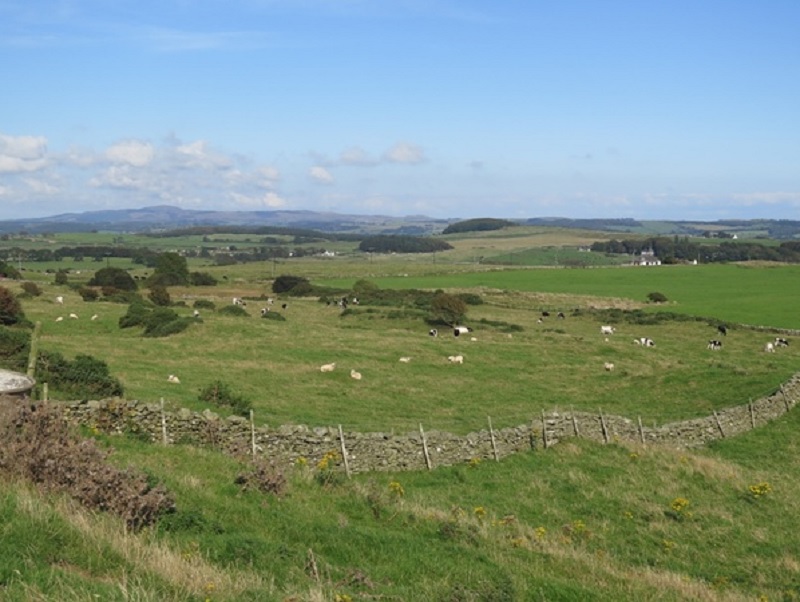
With around 11,600 hectares of vacant and derelict land in Scotland (an area almost twice the size of the City of Dundee) and more than 37,000 long-term empty homes in the country, vacant and derelict sites can present real challenges for communities across Scotland. Scottish Government figures estimate that a third of us live within 500 metres of a derelict site, this figure reaches 61% in Glasgow. Often smaller areas of vacant and derelict land or buildings can have a detrimental impact on a community, acting as magnets for crime and anti-social behaviour. Regeneration of such sites could be game-changing for the local economy and communities, especially where housing, urban green space or cultural facilities needs are great.
The Scottish Land Commission is working to create a Scotland where everybody benefits from the ownership, management and use of the nation’s land and buildings. As part of our work on land for housing and development we are focusing on ways to transform vacant and derelict land and bring it into a more productive and equitable use, delivering economic and social benefits.
The Scottish Land Commission has been taking some important steps in this area. We’ve launched the Vacant and Derelict Land Task Force in partnership with Scottish Environmental Protection Agency (SEPA). The Task Force is looking at innovative ways to transform and bring thousands of acres of long term vacant and derelict land back into productive use.
We also produced a proposal for a potential new power to help tackle the blight of vacant and derelict sites in Scotland- the Compulsory Sales Order (CSO). Working with a wide range of experts and organisations with extensive experience ranging from regeneration, housing, valuation and human rights, enabled us to create a detailed framework for how a CSO could work. The Scottish Land Commission submitted this proposal to the Scottish Government in August. It is intended to be a framework to inform any future work undertaken by Scottish Government on bringing forward CSO legislation.
Why a CSO? In the current regeneration toolbox, Scotland has mechanisms that allow planning authorities and communities to buy vacant and neglected sites. However, what happens when neither have a specific end use in mind for problematic sites? What if the authority or a community body does not have the capacity or resources to take on the site themselves? Seeing such sites being put into some kind of productive use that will benefit the local community is often desirable but the current tools available might not always be appropriate.
A CSO power would offer an additional route for planning authorities to deal with such eyesore sites. By enabling a transfer of ownership, these sites could be transformed. This is backed up by research evidence which suggests that a change in ownership that transfers a property from a passive to an active owner is often a necessary pre-condition for bringing vacant and derelict sites back into productive use.
A CSO would give a planning authority (on a case-by-case basis) the chance to:
- firstly, investigate a site. This would be very important step because it provides an opportunity to bring about a mutually acceptable resolution between the authority and the owner. This step must be taken before a formal order could be issued, demanding the sale of the property via an auction. A CSO is not intended to be a punitive instrument it can help facilitate a constructive dialogue with owners of problematic sites, arguably one of its strengths.
- provide a more reliable measure for valuing vacant and derelict urban sites. An auction is an efficient way for revealing the true market price of a site at any given point in time, especially when they are difficult to value or estimate as there may be no accurate comparisons.
- commit a new owner to bringing the property into a productive use. Conditions attached to the sale would mean that new owners are required to complete the development and bring the site into a productive use within a fixed period of time.
We need to ensure that our built environment is making the most for people living there and for Scotland by delivering well planned, sustainable communities as part of the place-making agenda. A CSO has the potential to be a powerful additional instrument for urban renewal and to improve the quality of places, making more of Scotland’s land. Read the full proposal here.
Katherine Pollard
Policy Officer
Scottish Land Commission