



Rachel Tennant, Chair Landscape Institute Scotland, calls for a united approach to landscape, place and change to ensure Scotland’s landscapes are embedded in communities.
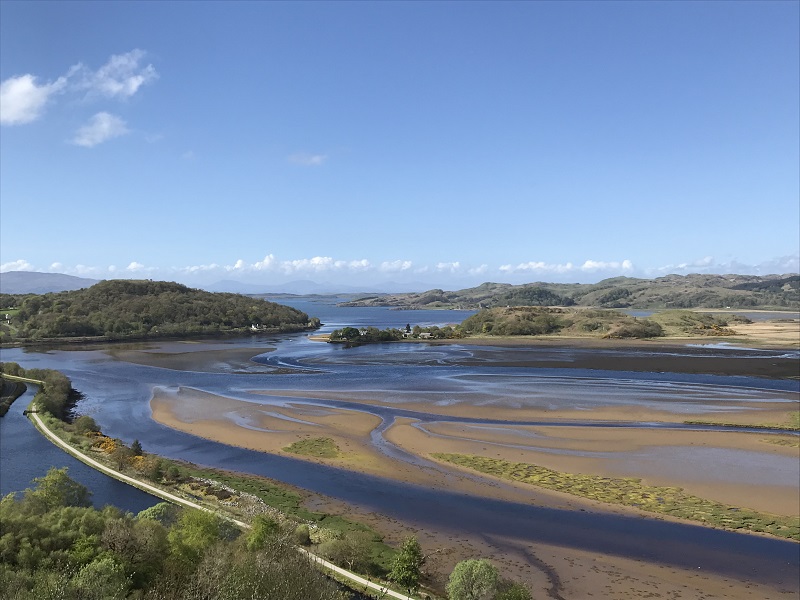
I attended with interest this discussion chaired by BEFS in Partnership with Community Land Scotland and Inherit following on from the publication of the research report ‘Community Empowerment and Landscape’ in September this year. The report examines the relationship between communities of place and landscape designations.
The debate was wide ranging in attempting to distil the positive steps that can be taken towards empowering community participation, as a human right, in decisions that affect the landscape and places that they live in.
I was heartened by the summing up of the report’s recommendations: –
- Sustainable, rights based and accountable;
- Empowered people with legitimate voices; and
- A modern multi-objective approach to conservation practice.
Whilst the report focuses on the rural environment, as landscape designations mainly cover these areas, community participation is also vital in urban areas. The European Landscape Convention (ELC) to which Scotland is a signatory through the UK, upholds that all landscapes matter as they impact on and shape people’s lives.
In the last year we have seen a number of reports and strategies published all seeking change and betterment in Scotland’s relationship with our landscapes. ‘A New Blueprint for Scotland’s Rural Economy’ by National Council of Rural Advisers; ‘Landscape for Scotland’ from the Landscape Institute Scotland and ‘Scotland’s Geo-Diversity Charter’ by the Scottish Geodiversity Forum. In addition, the Scottish Government has released draft strategies on Forestry, the Environment, the new Place Principle has been launched and Historic Environment Scotland and Scottish Natural Heritage have prepared Corporate Strategies – all of which effect communities and landscapes. This is with a backdrop of the Planning Bill, land reform and a proposed new Human Rights Act in Scotland.
Forgive the pun but it’s a busy landscape out there.
Scotland’s international commitments clearly set out the relationship between landscape, people and place. The ELC recognises landscapes in law as an essential component of people’s surroundings, an expression of diversity of their shared cultural and natural heritage and a foundation of their identity. In addition it seeks to ensure greater participation of the public, authorities and other parties in decisions that affect landscape and to further integrate landscape into all its policies.
Landscape and natural capital are clearly embedded in the United Nations seventeen Sustainable Development Goals, to which Scotland is also a signatory. The Scottish Government use these Goals as a principal in its own National Performance Framework.
These commitments exist in law and are profound. The ‘Scotland is Now’ campaign, by the Government, shamelessly uses the landscape as a backdrop to set our country on the world scene. So, what do we need to do to influence those in power to recognise and help them implement these commitments?
The findings of recent UN research identifies a lethal range of challenges that face our society in the coming years. Aging, low fertility, migration, climate change, automation and Artificial Intelligence are six trends that will fundamentally affect all countries in the developed north. In addition to this are scarcity of resources, environmental degradation, loss of biodiversity, and pollution of air, soil and water.
Ian McHarg, author of ‘Design with Nature’ believed that:-
“we can intelligently and creatively meet human needs within the limits of the environment and thereby contribute to overall diversity and dynamic stability, which is synonymous with human and planetary health”
There were no outcomes from this interesting debate and that is a mistake. It is a noisy world and voices need to be heard at the right level to meaningfully make the balanced decisions and changes needed. There is no time to worry about the particular emphasis of individual organisations in this arena – we need to work together to ensure a collective voice. Scotland’s landscapes and people depend on this.
Landscape Institute Scotland in association with other organisations with an interest in landscape, community and place, wish to form the Scottish Landscape Alliance. We believe in a united approach to landscape, place and change through good design, stewardship and promotion to balance community, economic, cultural and biodiversity needs. We welcome further discussion to ensure that all Scotland’s landscapes are embedded in our communities to safeguard their continuing value and benefit to the health, wellbeing and prosperity of our nation for future generations.
Rachel Tennant FLI Hon FRIAS
Chair Landscape Institute Scotland
scotland.landscapeinstitute.org
mail.scotland@landscapeinstitute.org
BACK
Get The Latest Built Environment News, Events, Vacancies, Consultations And Publications In Our News Bulletin.
BEFS News
The Scotland’s Historic Environment Audit (SHEA) 2018 is now out! Historic Environment Scotland takes a look at the trends and the latest findings from the SHEA, highlighting the top five tends in Heritage Healthcheck: Five trends of the sector.
You may note that this article refers to historic environment case studies hosted by BEFS. A wide range of organisations, communities and individuals care for the historic environment across the private, public and voluntary sector. In order to celebrate, share and learn from the rich array of successful projects and initiatives taking place across Scotland, we have collated a selection of case studies.
The Planning Bill has now completed Stage 2 – we await formal notification of when Stage 3 will commence, but this close to Christmas we appreciate that no movement is likely before 2019. Throughout the Bill process BEFS compiled a document of all the amendments as they were submitted. We have also created a summary of our briefings provided to the Local Government and Communities Committee. Both documents can be found here.
Over the last year, the issue of tenement repair and maintenance has been rising up the Scottish parliamentary agenda, and seen the establishment of the cross party Working Group on Tenement Maintenance, of which BEFS and RICS are the secretariat. The working group will be publishing an interim report at RICS Tenement Maintenance Parliamentary Reception sponsored by shadow Minister for Housing and Communities, Graham Simpson MSP in January 2019.
Scotland’s Archaeology Strategy has launched ‘Celebrating Archaeology in Scotland 2018’, The new magazine celebrates the best of Scotland’s Archaeology and shows how Scotland’s Archaeology Strategy is being delivered. If you would like your project to feature in future publications, you can fill out a case study form as well as provide feedback on the magazine here.
Linda Fabiani MSP, invites you to attend the AGM for the Cross Party Group on Architecture and the Built Environment. The meeting will include a debate and discussion asking, ‘How can the CPG become an agent of change?’
Congratulations to the winners of the Scottish Awards for Quality in Planning. The Judges have recognised Glasgow City Council with an Overall Award for its Glasgow Canal Regeneration Partnership project.
Consultations
Draft Action Plan on Open Government – we want to hear your views
Shortage occupation list 2018: call for evidence
Consultation Responses
Heat and energy efficiency strategies: second consultation analysis (SG 22/11/18)
Publications
Soft Power Superpowers – Global trends in cultural engagement and influence (British Council 11/18)
Principles of Selection for Listed Buildings (DCMS 11/18)
Brexit Update (SPICe 27/11/18)
The Zubairi Report: the lived experience of loneliness and social isolation in Scotland
Ending Homelessness Together: High Level Action Plan (SG 21/11/18)
Social Housing in Scotland (UK Centre for Housing Evidence 20/11/18)
Transient Visitor Taxes in Scotland: Supporting a National Discussion (SG)
Small Landholdings Landownership & Registration Research Summary (SG)
Private sector rent statistics: 2010 – 2018 (SG)
Scottish Government News Releases
Average two bedroom private rents up by 1.5% (SG 27/11/18)
From 2017 to 2018, all areas of Scotland, with the exception of Aberdeen and Shire, Greater Glasgow and Renfrewshire/Inverclyde, have seen increases in average rents for 2 bedroom properties.
Ending homelessness (SG 27/11/18)
A shift towards rapid rehousing will see homeless people housed in long-term and settled accommodation solutions that meets their needs as quickly as possible. This is one of the key aims in the Ending Homelessness Together Action Plan. The plan sets out measures for national and local government and the third sector who provide frontline services.
Scottish Crown Estate (SG 21/11/18)
Local authorities and communities will have a stronger voice in the management of Scottish Crown Estate assets.
News Releases
Regeneration Plan for Nairn Wins National ‘Future Town’ Design Competition (STP 29/11/18)
A plan to revitalise the Highland town of Nairn has been voted by the public as winner of the national ‘FutureTown’ Design Competition.
RIBA House of the Year (RIBA 28/11/18)
Lochside House by HaysomWardMiller Architects has won RIBA House of the Year 2018. Lochside House is a modest, sustainable home which sits in a magical location on the edge of a Scottish lake in the West Highlands.
European Architectural History Network Conference 2020 – Call for Session and Roundtable Proposals
The European Architectural History Network is delighted to announce its next biannual meeting at the University of Edinburgh, UK, 10th -13th June 2020. Anyone wishing to chair a Session or a Roundtable debate at EAHN2020 are invited to submit proposals by 31st December, 2018.
Not So Pretty Vacant. Taskforce starts task of reducing vacant and derelict land (SLC 26/11/18)
The Vacant and Derelict Land Taskforce will start the process of finding 100 sites with the best potential for development at its meeting today (Monday November 26).
Orkney islanders given £260,000 for estate purchase (BBC 26/11/18)
An island community has been awarded £260,000 to purchase more than 1,700 acres of peatland and pasture.
Community ownership should become routine option for communities across Scotland, says new report (SLC 23/11/18)
Community ownership should become a normal and realistic option for communities to acquire land and assets, according to recommendations on community ownership published today Friday 23 November, 2018.
Tay Cities Deal signed (Tay Citites 23/11/18)
Partners in the £700 million Tay Cities Region Deal have gathered in Perth to sign up to deliver the Heads of Terms for the agreement.
PAS & Article 12 – Success at the Planning Awards (PAS 22/11/18)
PAS and Article 12 were awarded in the Partnership category for the engagement of young Gypsy/Travellers with planning and placemaking through our Heritage Lottery funded project “In the Footsteps of Geddes”.
Heritage Impact Fund – new partnership fund to be launched in early 2019 (AHF 19/11/18)
As part of our ongoing work to increase the levels of social investment supporting the heritage sector, the AHF is delighted to announce a new partnership fund: The Heritage Impact Fund (HIF).
Public Votes Turriff as ‘Scotland’s Most Beautiful High Street’ (STP 11/18)
Aberdeenshire town Turriff has been voted by the public as Scotland’s Most Beautiful High Street, recognising the heritage, beauty and unique experience the town centre offers.
Unlocking hidden history with Scotland’s Urban Past (HES 21/11/18)
Over the past four years Scotland’s Urban Past (SUP) has worked with community groups to bring the history around them to life and show how the urban environment has evolved. Find out about just three of the unique methods adopted by SUP.
Upgrade to Scottish Town Data Tool USP Unveiled (STP 19/11/18)
A fresh upgrade to an innovative website providing in-depth information on Scotland’s towns has been unveiled. From greenspace to migration, new indicators in the open-access tool provide additional support to all those who work for positive change in Scotland’s towns.
UK Withdrawal from UNESCO – World Heritage UK Press Statement (UKWH 13/11/18)
Following newspaper reports concerning the UK’s continued membership of UNESCO, World Heritage UK are pleased to note the following reported clarification statement from the Department for International Development.
Reduce VAT to 5% on repairs and approved alterations to listed buildings – Government response (UKP 08/11/18)
We recognise the valuable contribution to UK Heritage made by owners of listed buildings. We continue to promote our country’s heritage and we will ensure that everyone can enjoy and benefit from it.
Parliamentary Questions
Questions marked with a triangle (?) are initiated by the Scottish Government in order to facilitate the provision of information to the Parliament.Questions in which a member has indicated a declarable interest are marked with an “R”.
Andy Wightman S5W-20182
To ask the Scottish Government what its position is on extending the Housing Voluntary Grant Scheme beyond a one-year cycle to assist voluntary organisations in better planning and preparing the delivery of long-term housing-related projects and services.
Rachael Hamilton S5W-20186
To ask the Scottish Government what the (a) purpose and (b) remit is of its Short Term Lets Delivery Group; which groups are represented on it; on what dates it has met; what future meetings are planned; which stakeholders it has engaged with, and by what date it will present its findings.
Graham Simpson S5W-20200
To ask the Scottish Government what the mandatory minimum Energy Performance Certificate (EPC) level is for new home completions.
Parliamentary Questions & Answers
Questions marked with a triangle (?) are initiated by the Government in order to facilitate the provision of information to the Parliament.
Portfolio Questions – Culture, Tourism & External Affairs – Wednesday 28 November
Johann Lamont – Glasgow School of Art update; Brian Whittle – industrial heritage sites; Alison Harris – major tourist attractions promotion; Gail Ross – support to archaeological projects.
Question S5O-02615: David Stewart, Highlands and Islands, Scottish Labour, Date Lodged: 21/11/2018
To ask the Scottish Government what assessment it has made of the impact of the North Coast 500 on tourism and infrastructure, and how best the route can be used to develop these.
Answered by Ben Macpherson (28/11/2018)
Events
For the latest information about BEFS Members’ events see our events calendar.
Conservation Ethics and Approaches
Date: Wednesday 12 December 2018.
Venue: Engine Shed.
This one-day seminar will explore recent thinking around approaches to managing the loss and decay of heritage assets. The heritage sector today faces a number of significant and diverse challenges including the effects of reduced budgets and the increasing impact of climate change.
Edinburgh World Heritage’s ‘Christmas at the Tron’
Date: Thursday 13 December.
Venue: The Tron Kirk, 122 High Street, Edinburgh.
Join us this December for a fundraising Christmas party for the Tron Kirk in the centre of Edinburgh’s World Heritage site. The Tron has always held a special place in the hearts of Edinburgh residents as a meeting point where crowds would gather to ring in the New Year. However, this iconic Category A listed building features on the ‘at risk’ register and we need your help to secure its long-term future. We at Edinburgh World Heritage aim to restore the building and transform it into a permanent exhibition, retail, and community space where visitors and local residents can learn more about our city’s rich heritage.
Vacancies
Board of Directors lay director recruitment
Do you want to help the leading professional body representing archaeologists working in the UK and overseas? Do you have the governance skills required to help to direct a small but ambitious organisation? CIfA, the Chartered Institute for Archaeologists, is looking for a director from outside the profession
A November 2018 update.

The Planning Bill has now completed Stage 2 – we await formal notification of when Stage 3 will commence, but this close to Christmas we appreciate that no movement is likely before 2019.
BEFS briefed members of the Local Government and Communities Committee for each sitting in relation to the Bill. These briefings were informed by those on the BEFS Planning Taskforce.
BEFS has now produced a summary document of those briefings, and the outcomes in relation to the specific amendments which had been commented upon previously.
Throughout the Bill process BEFS compiled a document of all the amendments as they were submitted. This helped to inform members as to issues arising. This document has also been included on our website – at the end of the document we have included a link to the new draft Planning (Scotland) Bill which incorporates all those amendments passed at Stage 2.
We will continue to monitor progress, and in early January the Planning Taskforce will meet to discuss areas for further development as Stage 3 approaches.
BACK
Get The Latest Built Environment News, Events, Vacancies, Consultations And Publications In Our News Bulletin.

BEFS News
A new digital toolkit for the cultural heritage sector has been launched. The Inspiring Fundraising Toolkit is specifically designed to build up knowledge and skills in fundraising within the heritage sector. This online resource is the legacy of the four-year Resourcing Scotland’s Heritage partnership programme, led by Arts & Business Scotland with Archaeology Scotland, Built Environment Forum Scotland, greenspace scotland and Museums Galleries Scotland.
An accompanying report, The State of Heritage Funding Now Report, has also been published. This specially commissioned report shows a continued strong reliance by the heritage sector on grant and lottery funding with only a third of heritage organisations surveyed currently sourcing any funding from corporate support. BEFS Policy Officer Ailsa Macfarlane considers the findings of the report.
Due to high demand, we have released more tickets (and moved to a larger venue) for our upcoming event with the Scottish Land Commission and Inherit. Book your place for Community Empowerment and Landscape on 3rd December at the Scottish Storytelling Centre now!
Stage 2 of the Planning (Scotland) Bill came to a close yesterday (14/11/18). Watch this space for an overview of the amendments and the voting results.
Midway through 1926 the provision of Edinburgh’s council housing passed from the Burgh Engineer to the City Architect. Was there a difference in approach?, asks Steven Robb, from Historic Environment Scotland, in our first blog this week.
In our second blog, BEFS Trustee Jocelyn Cunliffe reflects on the Architectural Heritage Society of Scotland’s and Scottish Civic Trust’s recent conference, ‘Destination High Street – restoring vibrancy to Scotland’s towns’.
Finally, BEFS Vice-Chair Peter Burman draws our attention to an inspiring Sheffield-based project. This short film by Masters in Architecture students at the University of Sheffield documents creative community engagement and a community-focused vision for Meersbrook Hall, a grade II listed building and part of the Guild of St George’s ‘Ruskin Museum at Meersbrook Hall’ project, funded by Heritage Lottery Fund.
Consultations
Local Governance Review: Democracy Matters: Your Community. Your ideas. Your Future.
Closes 30 November 2018.
George Street and First New Town Design Project (City of Edinburgh Council)
Opened 9 Nov 2018 and closes 25 Jan 2019.
Open Space Strategy Consultation (Glasgow City Council)
Opened Monday 15 October and closes 10 December 2018.
Uncovering the Environment: The Use of Public Access to Environmental Information
Publications
A connected society: a strategy for tackling loneliness (DCMS 15/11/18)
Quantifying kindness, public engagement and place (Carnegie UK Trust 13/11/18)
Scotland’s Place in Europe: Science and Research (SG 05/11/18)
Priorities for the Historic Environment of Wales (Cadw)
Managing Scheduled Monuments in Wales (Cadw)
Understanding Listing in Wales (Cadw)
Land Value Capture (HCLGC 09/18)
News Releases
Scotland’s Towns Week: What’s On and How To Get Involved (STP 15/11/18)
On Monday 19 November Scotland’s Towns Week begins: the annual national campaign to celebrate the country’s towns and improvement districts.
Fight for Scotland’s Nature (Scottish Environment LINK 13/11/18)
Fears sparked by Brexit as well as mounting evidence of the global ecological crisis has promoted 35 environmental charities from across Scotland to come together to ‘Fight for Scotland’s Nature’ and gather support for a Scottish Environment Act.
Design for Ageing (LIS 12/11/18)
In August, Amber Roberts was announced as the winner of the £5,000.00 Mark Turnbull Travel Award for her proposal Scotland’s Future Landscapes: Ensuring Resilience for the Profession. The award aims to use overseas travel to gain insight into innovative landscape practice to address the current landscape challenges facing Scotland. Amber’s proposal will investigate design for ageing populations as well as strengthening Scottish Landscape Education through the legacy and influence of Ian McHarg.
Holyrood committee votes against planning appeal amendments (SHN 08/11/18)
Proposals to introduce new rights for communities to appeal planning decisions have failed to pass a key stage of the parliamentary legislative process.
Concern expressed over proposed land register (ECCLRC 08/11/18)
Much of Scotland’s land will remain outside the proposed Register of Controlled Interests in Land, whose purpose is to make land ownership more transparent, according to a report by the Environment, Climate Change and Land Reform Committee.
Heritage at Risk 2018 (HE 08/11/18)
Today Historic England publishes the 2018 Heritage at Risk Register, the annual snapshot of the health of England’s historic places.
20 Years of Heritage at Risk (HE 08/11/18)
Twenty years ago, we published our first ever Register of Buildings at Risk across England. It featured 1,930 buildings and structural scheduled monuments that were neglected, broken and unloved. Two decades on, we’re delighted to announce that over two thirds of buildings and structures on the 1998 Register are now safe.
RPA and CIfA launch new Archaeological Ethics Database (CIfA 07/11/18)
CIfA is proud to report that The Register of Professional Archaeologists (the Register) and CIfA have released a new Archaeological Ethics Database as an ongoing joint project. It combines over 500 sources on archaeological ethics in a central, searchable place for students, researchers, and professionals, and is designed to be used internationally.
Housing on tenanted farms to meet the Repairing Standard (SLC 07/11/18)
Scotland’s Tenant Farming Commissioner (TFC), Bob McIntosh, is advising that the agricultural holdings sector needs to come together to agree a way forward to ensure agricultural housing is subject to the same standards as private rented housing.
Nuclear archive wins Scotland’s best building award (BBC 06/11/18)
A national archive for the civil nuclear industry has won a top Scottish architecture prize. Nucleus in Wick has been constructed to hold more than 70 years’ worth of information and up to 30 million digital records. It has won the Royal Incorporation of Architects in Scotland (RIAS) Andrew Doolan Best Building in Scotland Award for 2018.
Future Parks Accelerator – now open (HLF)
The Future Parks Accelerator (FPA) is a new UK-wide initiative between HLF and the National Trust. Local authorities and communities are now invited to submit expressions of interest for the FPA, which will provide funding and support for organisations to develop bold and ambitious plans for parks and green spaces.
So what’s the value of a Can Do space?
Scotland has 479 localities with a resident population of 1000+, all with empty buildings. That’s £6 billion+ worth of property vacant in Scotland. We also know that 48% of home based businesses plan to grow. What if they collaborated? Watch our short video for our Can Do Places vision.
£5m boost from CITB to get hard-to-reach candidates into construction (CITB 31/10/18)
CITB’s biggest-ever funding opportunity opens today, with a £5 million commission to help under-represented groups into the construction industry.
National Churches Trust_ Visit Churches Survey (ComRes)
Churches Trust commissioned this survey to understand the reasons why the public visit churches, chapels or meeting houses and what would make them more likely to visit for tourism or leisure.
World Monuments Watch – Nominations Now Open
The World Monuments Watch uses cultural heritage conservation to increase community resilience, enhance social inclusion, and build new skills in the conservation field and beyond.
Community Grants now available! (GCHT)
Glasgow City Heritage Trust has recently launched a new Community Grants Scheme, with grants of up to £2000 available to support projects largely developed by community members that engage communities with Glasgow’s historic built environment.
Opinion & Comment
RTPI welcomes Scotland’s lead on statutory Chief Planning Officers (RTPI Scotland 14/11/18)
RTPI Scotland welcomes the LGCC resistance of third party rights of appeal (RTPI Scotland 07/11/18)
Housing in Agricultural Tenancies that are occupied by the tenant (SLC 07/11/18)
Parliamentary Questions & Answers
Questions marked with a triangle (?) are initiated by the Government in order to facilitate the provision of information to the Parliament.
Question S5W-19087: Rhoda Grant, Highlands and Islands, Scottish Labour, Date Lodged: 27/09/2018
To ask the Scottish Government what analysis it has carried out on the relationship between the Planning (Scotland) Bill, and the Islands (Scotland) Act 2018.
Answered by Kevin Stewart (15/10/2018)
Question S5W-19127: Pauline McNeill, Glasgow, Scottish Labour, Date Lodged: 01/10/2018
To ask the Scottish Government how many households in each local authority area have (a) applied for and (b) received support for (i) loft, (ii) cavity wall, (iii) room in roof, (iv) solid wall and (v) other forms of insulation from area-based energy-efficiency schemes in each of the last 10 years.
Answered by Paul Wheelhouse (09/11/2018)
Question S5W-19128: Pauline McNeill, Glasgow, Scottish Labour, Date Lodged: 01/10/2018
To ask the Scottish Government how many households in each local authority area have (a) applied for and (b) received support from the Home Energy Efficiency Programmes for Scotland (HEEPS) in each of the last 10 years.
Answered by Paul Wheelhouse (09/11/2018)
Events
For the latest information about BEFS Members’ events see our events calendar.
Edinburgh, Lothians and Borders Archaeology Conference
Date: Saturday November 17, 2018
Venue: Queen Margaret University, Musselburgh
This annual conference is organised by City of Edinburgh Council, East Lothian Council and Scottish Borders Council. It provides an important opportunity to hear and discuss first-hand accounts of the archaeological fieldwork and research being undertaken in Edinburgh, East Lothian, Midlothian, and the Scottish Borders.
Improving Energy Efficiency
Date: 22 November, from 9.30am – 4.30pm.
Venue: The Engine Shed, Stirling, FK8 1QZ
Our one-day seminar will be an in-depth look ahead at the challenges of improving energy efficiency in traditional buildings, with a strong focus on meeting current and future standards. A wide range of experts who work across Scotland’s built environment will present on various subjects. Join us to hear from speakers from the Scottish Government and the private and rural housing sector. We will explore issues around Standard Assessment Procedures (SAPs) and Energy Performance Certificates (EPCs). We’ll also look at fabric interventions from our pilot refurbishment projects, as well as the experiences of building owners. Booking essential.
IHBC Scotland Branch AGM & Conference ‘Design at the Water’s Edge’
Date: 29 November 2018
Location: Dundee.
The AGM will follow a CPD day on the theme of Design in Dundee (UNESCO City
of Design). How do we assess new design in historic contexts, and how can design work to enhance a sense of place? The morning includes a tour at the new V&A Dundee to discuss the ways that members interface with design issues on a daily basis: design review, design awards etc. Bring an example to share of good/ bad/ ugly design on an A4 page. The afternoon include the SC Branch AGM, the conference on Design in Historic Contexts and option to attend the ICON Scotland Plenderleith Conservation lecture (bookable separately) and a dinner together.
Free to IHBC members. Non-members £10 (pay on the day). Please book with Scotland@IHBC.org.uk.
Talks at the Lane: Niall Maxwell on Rural Office for Architecture
Date & time: 11th December 2018 at 6.30pm
Venue: Custom Lane, Leith.
Talks at the Lane, an eclectic and informative series of lectures and conversations around the themes of design and making, is bringing the innovative Wales-based architect Niall Maxwell to Custom Lane in Leith as part of their Season One programme. Niall, whose practice the Rural Office for Architecture (ROA) has won an RIBA award for every project it has completed since 2012, will be discussing his views on cultural identity and regionalism in the context of design, and will showcase some in-progress and completed work from ROA. For more info about the Talks at the Lane.
Training
Moisture in Buildings: Analysis & Challenges
Date: 29 November, from 9.30am – 4.30pm.
Venue: The Engine Shed, Stirling, FK8 1QZ.
This short one-day course aims to demystify some of the heritage science techniques available to today’s professionals. Scotland’s climate is changing at an unprecedented rate, with altering patterns of precipitation and an increasing frequency of unpredictable and extreme weather events.
Since the 1960s, annual precipitation has increased by over 20%. This has had serious implications for decay processes in the built environment. You will learn how conservation science can help to detect and monitor the moisture in buildings. This seminar will highlight research into the impact of soluble salts, the biodeterioration processes and the behaviour of moisture following building refurbishments. Please note: Booking essential.
APD – Unfired Earth Conservation
Date: 29 November. 3 days over 3 weeks: 18.5 taught hours
Venue: The Engine Shed, Stirling, FK8 1QZ
Examine the use of unfired earth construction in Scotland’s historic built environment, a practice with ancient and obscure origins yet more relevant than ever. You will touch on repair and restoration techniques using traditional and modern tools, and follow the full life cycle of a repair project – from survey and diagnosis to on-site installation. Conservation repair principles are an important area of discussion throughout. Booking essential | T: 01786 234 800. Price £270.
Vacancies
Development Management Archaeologist
Perth & Kinross Heritage Trust is looking to appoint a Development Management Archaeologist on a full-time, 1 year fixed term (maternity cover) basis to deliver our archaeological development management service to Perth and Kinross Council and Transport Scotland as well as contributing to our exciting community archaeology and outreach activities.
The closing date for applications is 17:00 on Friday 16 November 2018.
Policy and Influencing Manager
The Landscape Institute (LI) is looking for a Policy and Influencing Manager. This is a new permanent post which will work with the policy team and LI members, to develop policy and to help ensure that the LI is recognised as a knowledgeable and influential professional body.
The deadline for applications is midnight, Sunday 2nd December.
BACK
BEFS Policy Officer Ailsa Macfarlane considers the findings of the recent The State of Heritage Funding Now research report.

This newly released research exists as part of the legacy of the partnership programme Resourcing Scotland’s Heritage (RSH) – along with the new toolkit to encourage and enable fundraising skills across the sector. Programme partners: Archaeology Scotland, Arts & Business Scotland, Built Environment Forum Scotland, greenspace scotland, and Museums Galleries Scotland formed the RSH project to help the heritage sector learn to fundraise from private sources – gaining awareness, skills and confidence, as well as providing networking opportunities. The four year RSH programme was funded by National Lottery players through the Heritage Lottery Fund Catalyst Umbrella Grant programme.
There may be much discussion around reduced funding levels – but what can be evidenced, and how can we mitigate against those reductions? The aim of this research was for a robust report providing analysis and recommendations. This was based not only on intensive desk-based literature reviews into available funding across the heritage sector in Scotland, but also stakeholder consultations, and a widely disseminated sector survey. This is my perspective on the findings – but I encourage you to draw your own conclusions.
Findings & Analysis:
There’s some stark information to absorb.
- National Lottery funding has decreased, and is likely to decrease again – the imminent Heritage Lottery Fund (HLF) Strategic Funding Framework will require new/enhanced ways of working too. Historic Environment Scotland (HES) continue as a major funder, with no growing pot, and increases in applications – here the competition to achieve funding increases. The dependence on these funders remains a risk for the sector.
- Local Authority collective spend on Cultural, Heritage, Museum & Gallery and Library services has reduced by 7% between 2007/8 and 2014/15. There are also known reductions across Planning & Economic Development budgets, departments where many heritage-skills professionals are based. These reductions in funds are not due to reverse any time soon.
- Direct donations to the arts and sports/recreation make up only 3% respectively – whilst potentially small, these can be a key part of fundraising from private sources.
- There is a continued dependence on Trusts and Foundations across the sector – there are now concerns arising that the levels of grant support supplied by some are outstripping the performance of the endowments that funded them. This raises questions as to whether future levels of support can be relied upon.
- Business investment in heritage, via sponsorship/partnerships is an area well developed by some, but ignored by many smaller organisations. Improving this through commercially based approaches and advocacy, which not only increases awareness of heritage generally, but highlights the wider benefits heritage can and does provide, could entice further business investment in the sector.
- Tourism has been a boon financially over the past few years for many organisations; both market circumstances and global media have provided positive drivers for those wishing to visit Scotland and its heritage. However, both factors bring with them opportunities and challenges, factors which in themselves need resourcing appropriately. They are also subject to fluctuation – so planning for both triumph and disaster may be wise.
- Non-grant finance is an area where many funders already operate (Architectural Heritage Fund), or are considering developing their offer (HLF). Research highlighted within the report shows that this is an area which many find controversial, perceive to be high-risk, or actively avoid. Here a knowledge base needs to be developed and expanded to find solutions which fit the organisation in question. Information on particular aspects is available from specialist organisations, such as Community Shares Scotland. The squeeze on other funding types may make these forms of funding more appealing for organisations in the future – increased awareness and knowledge of this area will be of great benefit to the sector.
Recommendations:
These fall into the categories of Research & Evidence and Ongoing Sector Support. And, here the news can be seen more positively:
- More research, survey gathering, data-collection in various forms are suggested. Not only do we need the information, but I suspect we need to be open to data transparency, and sharing what we know. The steps are sometimes small and tentative, but a more collegiate approach to demonstrate the good work happening across the sector seems to be possible.
- A drive to diversifying income streams is called for. I see a sector working towards better: training, partnerships, collaboration and awareness. Building a greater understanding of where the money is coming from – be it heritage, creative, social, regeneration, or commercial funding.
- The changing funding landscape has been a driver for organisations to demonstrate an understanding of a wider range of outcomes to their ongoing work. Social, community, regenerative and many other factors are beginning to be better evidenced, and better expressed, by heritage organisations. Clearly substantiating not only what we do, but what the associated benefits are – and how this relates to the funder requirements, and even the National Performance Framework will be key to future funding success.
- Many of the recommendations point towards a sector which needs to embrace a portfolio approach to financing the heritage sector – what’s referred to as the ‘golden-tripod’ – with a third of funding coming from each: private, public and enterprise sources.
This report points the way to developing how the sector may be able to improve organisational sustainability, shining a light on aspects of fundraising which could prove extremely beneficial. Further training is needed to enable the sector to gain finance from across a wider range of areas, be that fundraising or earned income – but more than training, a strategic approach which enables the capacity for that work to be done is essential.
Within these findings there is a role to be played by intermediary and development organisations. The value of knowing the wider sector-makeup, enabling connections and collaboration, providing spaces to network, and growing capacity through strategic policy development and training opportunities can help enable organisations to find the time to develop their funding for the future. We
Our activity across the sector is currently framed by the potential effects of Brexit. Income from a wider range of sources can be more flexible, ensure more stability, and provide continued life-buoys of certainty in currently choppy seas.
Read the full report: The State of Heritage Funding Now Report
BACK
In 1926 the provision of Edinburgh’s council housing passed from the Burgh Engineer to the City Architect. Was there a difference in approach?, asks Steven Robb, Historic Environment Scotland.

Historically, Council housing was the preserve of Edinburgh’s Burgh Engineer who designed around 750 houses before WW1. However, substantial building only began following the 1919 Housing Act, when Councils were required to provide housing, initially with generous State subsidies.
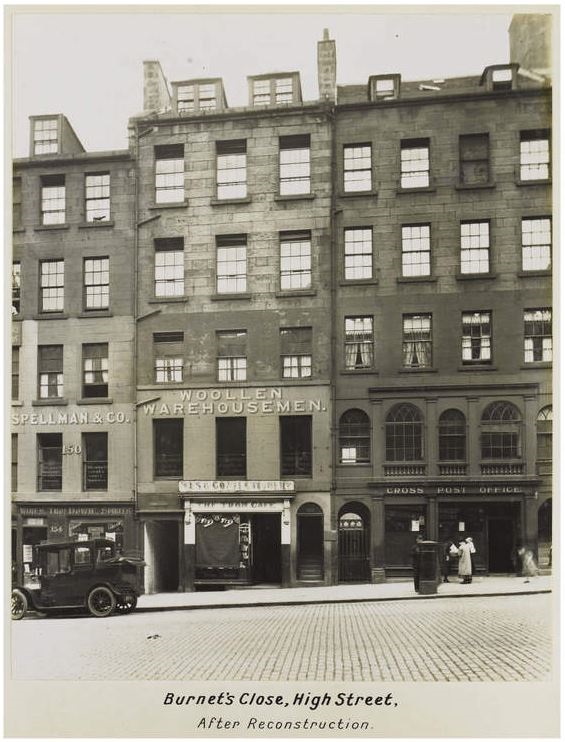
An Old Town tenement ‘reconstructed’ or reconditioned with new dormers by Campbell. Such works often involved the removal of rear additions to open up light to rooms. Courtesy of Capital Collections.
Adam Horsburgh Campbell (1862-1947), Burgh Engineer since 1910, was appointed Director of Housing in 1919. As an engineer his appointment was criticised by the architectural profession, but he had previous experience d
esigning social housing in London.
Campbell immediately sprang into action, planning the subdivision of large vacant New Town houses, and the major reconditioning of Old Town tenements, at half the price of new-build. This saved several historic buildings from loss, but sadly, later subsidies prioritised demolition and new-build, and the focus moved to new housing.
Perhaps due to his engineering background, Campbell had an inventive approach to both materials and procurement. A trip to Holland in 1924 resulted in the Dutch Korrelbeton (no-fine-aggregate) concrete system being used at Lochend (1925). He also agreed for 1000 Duo-Slab concrete and brick houses with the private contractor, WM Airey of Leeds and experimented with flat-roofs, deck-access balconies and timber and steel construction.
These approaches allowed speedy construction and took advantage of subsidies and semi-skilled labour in times of post-war shortage. Concrete was also cheaper than traditional builds, with reduced corridors within homes cutting costs further. Elsewhere, Campbell designed traditional new tenements for Leith and also ‘four in a block’ housing for peripheral estates.
Campbell was due to retire in September 1926, and the Council agreed to separate the Engineer and Director of Housing posts. However, in March 1926 he was offered a two-year extension as Housing Director alone. He declined, explaining that ‘his life and leisure’ had been abandoned to public service. He had been working 16 hour days, and in June pleaded to retire early following strict medical advice. Under Campbell the Council had built more varieties of housing than any other UK city, a total of around 4500 houses (built or contracted). Despite this, an honorarium of £2000 for working above-and-beyond his contract was voted down.

Whitson Crescent, Saughton Golf Course (1931/2). Note the horizontal banding at first floor level on the crescent. Courtesy of Edinburgh Libraries
In June 1926 Ebenezer James MacRae (1881-1951), Edinburgh’s City Architect since mid-1925, absorbed the coveted Director of Housing role. Whilst Campbell’s pragmatism focussed on housing delivery by whatever means, MacRae had slightly differing goals. His religious West Highland upbringing bequeathed him a strong social conscience and charitable view of tenants. His priority was to provide the best housing possible on his straightened budgets, allowing people to prosper and better themselves. He was particularly interested in daylighting and ventilation.
MacRae immediately halted Campbell’s experimentation, returning to traditional stone and roughcast brick walls with slate roofs. This led to delays with materials and the lack of skilled workmen. He retained the separate-trades tender system and kept housing under his direct supervision, resisting direct labour, prefabrication and the involvement of the private sector. This was a popular approach with the trade unions who had opposed Campbell’s methods.
With no reconditioning subsidies MacRae’s city-centre infill housing was mostly new-build, albeit designed to a Scottish character ‘in keeping with surrounding buildings’. Here, he favoured solid 400-600mm thick coursed stone walling with recessed pointing for frontages and visible gables. Elsewhere, he used roughcast brick cavity-walled construction, apart from one housing project built in facing brick at Royston Mains Crescent (1935). Other material and design changes occurred in WW2 when timber was scarce.
MacRae’s numerous trips to Europe, most notably in 1930/1 and 1934 as part of the Highton delegation, (leading to the Report on Working Class Housing on the Continent,1935), enforced his view that European modernism was to be avoided. He disliked flat roofs, deck-access balconies and building above four storeys. He also resisted the ‘Germanic’ communalisation of services.
Four in a block housing designed by Campbell and used by MacRae at Saughton (1932). Courtesy of Edinburgh City Libraries.
Europe did, however, influence his planning layouts, including higher-density blocks set around communal courts at the Pleasance (1934), Craigmillar (1936) and Piershill (1938). Architecturally, horizontal banding, likely sourced from Vienna or Berlin, was introduced at first floor level on new developments, which often, such as at Saughton (1932), Granton (1935), Craigmillar (1936) and Warriston (1936), included a feature crescent. By the time of his retirement in 1946 MacRae had delivered around 12,000 houses as well as important studies on Edinburgh’s historic buildings, a precursor to the listing system.
So, was there a major difference between Campbell and MacRae ? Both men believed in providing tenement housing close to tenants’ workplaces. However, one senses that Campbell, despite being two decades older than MacRae, was more open to innovation in both design and procurement. MacRae insisted on traditional methods and wasn’t willing to sacrifice what he saw as important.
For further info on Campbell’s career, see:
- Concrete, Cosmopolitanism and Low-cost House Design: The Short Architectural career of AH Campbell 1923-1926 by John Frew. Architectural Heritage V (1995), p29-38.
For further information on MacRae and Edinburgh’s inter-war housing, see:
- Ebenezer MacRae and Interwar housing in Edinburgh, by Steven Robb. Book of the Old Edinburgh Club, Volume 13, (2017)
BACK
BEFS Trustee Jocelyn Cunliffe reflects on the Architectural Heritage Society of Scotland’s and Scottish Civic Trust’s joint conference ‘Destination High Street – restoring vibrancy to Scotland’s towns’.

The Architectural Heritage Society of Scotland (AHSS) and the Scottish Civic Trust (SCT) organised a joint conference on Wednesday 7 November 2018 at the Glasgow Royal Concert Hall.
The conference was chaired by Colin McLean, Chair of SCT, who pointed out that how we shop has been changed for ever, whether we use out-of-town outlets or the internet. He reminded the conference that there had been a series of high profile reports, including ‘The Portas review: the future of our high streets’ (2011), and Scotland’s Town Centre Review (2013) to which the Government responded with a Town Centre Action Plan. Most recently the Royal Society of Public Health has published ‘Health on the High Street’.
Jennifer Novotny, the SCT civic connections project worker, presented a paper and a film (by Napier University students) made as part of the Duke of Edinburgh’s Award, by girls on the Action for Children Heritage and Inclusion Programme. This project mentors young women from ethnic minority backgrounds. They had looked at ‘Our High Street’ and carried out a high street scavenger hunt. They were asked to identify something ‘I like about my high street’ and listed lots of variable shops that are accessible and provide everything you need, different options of food takeaways and included ‘its handy for everyone’. They suggested an open to all space to share their culture and meet other people as role models.
Simon Green examined the architectural value of the high street. His definition of architectural value, ‘a slippery fish’, was demonstrated, rather than defined. Lots of buildings are worth nothing because of a heritage deficit. Major buildings are altered or demolished because of the perceived value of the land. Historic Environment Scotland (HES) put value on places through designations, such a listing. Simon looked at the big picture. He defined the High Street as the principal street of our burghs and towns. He suggested that historically it had three elements, the kirk (church), the tolbooth (the town council) and the mercat cross (commerce). Our high streets have changed all the time, including to improve sanitation. Churches may not be the force they were but they are crucial to the burgh, as is civic pride reflected in the fine municipal buildings, law courts, libraries, schools, banks and post offices built in the past. Stores also built prestigious premises. He questioned why do we have to get rid of cars, pointing to the activity associated with people stopping for a short time in Callendar (would they be there if the town had a by-pass?). We close high streets for a run, so why not close them for other events? Civic pride needs to be re-engendered and key buildings of value need to be looked after; high streets are not only about shopping but about living, working and community life.
Susan O’Connor took as her theme the high street as the centre of community life. She compared retail spaces and civic spaces, ownership and means of access. We learned of an elaborate procession which took place in 1872 to celebrate the opening of the new Renfrew Town Hall. The men took part in the processions and the women provided the audience.
The keynote address ‘Thinking the Unthinkable…’ was given by Professor Leigh Sparks, Professor of Retail Studies at Stirling University and Chair of Scotland’s Towns Partnership. He was given the title and decided to work with it saying, ‘It is unthinkable that we are abandoning our heritage in the way we are. It is equally unthinkable that we can go back to the past’. He talked about town centres, not the high street, saying ‘It is the place, the identity of that town’. Decentralising is not just in retailing. Local authority offices and businesses that were formerly in town centres have moved to the periphery. He identified a structural revolution in retailing, but noted that online retailers are moving to physical retailing. There were ideas, such as getting local authority head offices back into towns; bring people in and retail will follow. We also have to build on towns’ stories, think of towns as places of interactions, not just transactions. He suggested that the size and shape of town centres will be smaller, there will be a re-balancing and that we have got to start managing our places better.
Euan Curtis of Glasgow City Council showed images of and discussed projects in Glasgow, at Barras, Shawlands, Govan and Parkhead, where public money has been spent through conservation regeneration schemes, townscape heritage initiatives, in association with the Commonwealth Games and City Deal. There is no ‘one size fits all’. Opportunities need to be exploited; listen to locals and be flexible; funding is a huge issue – these schemes benefited from a more positive funding situation at Glasgow City Council (GCC) than that which exists now, where there is no money to leverage funds from HES or HLF. He pointed out that Shawlands was not a poor area, but it was not rich either and the public realm scheme and efforts to get businesses to work together in relation to commercial refuse led to other shop-owners taking an interest and the formation of a Shawlands Business Improvement District.
Diarmid Lawlor’s topic was ‘Public Money: Repopulating the High Street’. He examined relationships based around care, ‘The Caring Place’; caring for the people and caring for the place. ‘The Caring Place’ is at the centre of a circle consisting of a sense of place (familiar surroundings), a sense of purpose (stuff to do), a sense of support (from people, neighbours) and a sense of worth (feeling wanted). Instead of chasing new money we should look creatively at making better use of what we have. Young people are the community of the future and he showed examples of innovative projects with family focused neighbourhoods and intergenerational complexes with space for children and for old people.
The final speaker, Leona Stewart, a Scottish Glass artist, formed Bright Light Arts, an Ayr based community interest company in 2017, to be able to apply for grants to deliver artist led crafts workshops and prop-making sessions for Ayr’s Day O’ the Deid procession through Ayr town centre at the end of Tamfest. The procession with colourful costumes, amazing props and samba drumming was wonderfully vibrant and involved children and adults across the community. Leona deserves a huge amount of praise for her work, which sadly she recognises is financially not sustainable.
In summary, the event brought together a varied and interesting set of speakers. What now? The built heritage is clearly a key part of the future. Once the High Street was handy for everyone, now it is handy for no one. Some sixty years ago things were allowed to go wrong when shops moved out of town and were followed by business parks and industrial estates. How can we show that we love our communities, places, town centres, and work on their behalf to make them vital resources and physically and socially sustainable? Central and local government and civic society all have a part to play.
BACK
As a legacy of the partnership project Resourcing Scotland’s Heritage, a new digital toolkit for the cultural heritage sector has just been launched.

Arts & Business Scotland Head of Programmes Carl Watt (L) and Rosslyn Chapel Trust Director Ian Gardner (R) review the new digital toolkit website in front of historic Rosslyn Chapel in Midlothian.
This resource, Inspiring Fundraising Toolkit, funded by the Heritage Lottery Fund, is specifically designed to build up knowledge and skills in fundraising within the heritage sector. It was informed by successful delivery of fundraising training and advice to 804 individuals from more than 519 heritage organisations throughout Scotland between 2014-2018.
Resourcing Scotland’s Heritage was a four year programme led by Arts & Business Scotland with Archaeology Scotland, Built Environment Forum Scotland, greenspace scotland and Museums Galleries Scotland, which officially concluded in March 2018.
Alongside this resource we are also delighted to share the accompanying report, The State of Heritage Funding Now Report. This specially commissioned report shows a continued strong reliance by the heritage sector on grant and lottery funding with only a third of heritage organisations surveyed currently sourcing any funding from corporate support and levels of corporate support remaining broadly static within the sector over the past four years.
BACK
Get The Latest Built Environment News, Events, Vacancies, Consultations And Publications In Our News Bulletin.

BEFS News
BEFS is pleased to invite you to Community Empowerment & Landscape, in partnership with Community Land Scotland and INHERIT, on 3rd December at the ECCI in Edinburgh. This event will look at pragmatic steps that can be taken to empower community participation. Places are limited so book now!
Just a few days left to submit your ideas on prioritisation within built heritage, and take part in a robust and open discussion on the topic.
With the publication of the Intergovernmental Panel on Climate Change’s (IPCC) Special Report on Global Warming, BEFS Director Euan Leitch reflects on two recent events and urges action before our past catches up with us, in this week’s blog: Slavery and Climate Change.
BEFS attended the first Why Archives Matter conference day from the Scottish Council on Archives. Here we heard about Archives being used in Health, Wellbeing and Community contexts – with very positive outcomes. BEFS is delighted to be partnering a further Why Archives Matter conference at the Engine Shed in Spring 2019. Keep an eye out for their new film on the central role of archives in Scotland.
BEFS was delighted to attend the Scottish Heritage Angel Awards 2018, and hear from the deserving finalists. Many congratulations to the winners.
Finally, do not forget to check out the array of events and training coming up this month, towards the end of the bulletin.
Consultations
HES Draft Corporate Plan 2019 onwards
Consultation closes on 2 November.
A Consultation on the City for Edinburgh Council proposal for a Transient Visitor Levy/ Tourist Tax within the city
Opened 15 Oct 2018 and closes 10 Dec 2018.
Draft Historic Environment Policy (HEP)
The closing date for feedback is midnight on Monday 3 December 2018.
Open Space Strategy Consultation (Glasgow City Council)
Comments should be received by no later than 10 December 2018.
Consultation Responses
Consultation on Building Standards Compliance and Fire Safety – responses
Tackling social isolation and loneliness: consultation analysis
Publications
Climate Change Plan Monitoring Report October 2018 – Chapter 2 Buildings (SG 31/10/18)
Planning Bill: A revised Fifth Marshalled List of Amendments and a revised Fifth Groupings of Amendments have been published for Stage 2.
Transport (Scotland) Bill: Pavement Parking and Double Parking (SPICe Breifing 30/10/18)
Scotland’s place in Europe: our way forward (SG 15/10/18)
Priorities for the Historic Environment of Wales (WG 10/18)
Reforming Heritage Maintenance Funds: campaign briefing 2018 (Historic Houses)
Response to the Brexit White Paper & MAC report (The Heritage Alliance 12/10/18)
The economic value of culture: a benefit transfer study (DCMS 04/10/18)
Scottish Government News Releases
Tay Cities Region Deal (SG 26/10/18)
Scottish Government pledges £200 million investment. Infrastructure Secretary, Michael Matheson, is challenging the UK Government to match his funding commitment for the Tay Cities Region Deal.
Mitigating the impact of Brexit (SG 11/10/18)
Councils will play an essential role in preparing for the “extremely serious consequences for communities across Scotland” of Brexit, according to the First Minister Nicola Sturgeon.
Sharp rise in European visitors to Scotland (SG 11/10/18)
The number of overseas visitors from Europe increased sharply by 39% in the 12 months to the end of June 2018 according to official statistics released today.
News Releases
National Lottery Strategic Funding Framework 2019-2024 (HLF 10/18)
Earlier this year we asked for your views on our future vision and role, how we can support heritage and how our funding programmes might work. We ran two surveys and over 3000 people responded. Over 1500 of these responses were to our longer questionnaire, which looked in more detail at our proposals. Some of the initial results are emerging.
The Museums + Heritage Awards
The 17th annual Museums + Heritage Awards will celebrate innovative and ground-breaking initiatives from museums, galleries and heritage visitor attractions across the UK and overseas. The Awards shine a spotlight on the diversity of this sector, of museums large and small – from the nationals to one-room volunteer-run museums, from iconic buildings and monuments to the great outdoors, all of which have an equal opportunity of winning one of 14 prestigious awards.
MSPs agree to greater regulation of short-term lets in Planning Bill (SHN 26/10/18)
Landlords will be forced to acquire full planning permission to lease homes by the night on websites including Airbnb after changes to the Scottish Government’s Planning Bill were agreed by MSPs.
Using the past to inspire the future (HES 26/10/18)
Fresh from a major climate change summit in San Francisco, Historic Environment Scotland Climate Change Scientist David Harkin explores the links between cultural heritage and climate action, highlighting how we can use the past to inspire the future.
Land Value Capture measures added to Planning (Scotland) Bill (SCN 25/10/18)
Scottish Greens have welcomed changes to the Scottish Government’s planning bill which they say will help tackle Scotland’s housing crisis by making land for housebuilding more affordable, however housebuilders have called the measures “premature”.
Airbnb set to be regulated as short-term lets amendment to Planning Bill goes through (CS 24/10/18)
AN AMENDMENT to the Planning Bill which would see all short-term lets have to apply for council planning consent has passed stage two of the Bill’s passage through parliament.
IHBC, HE & ALGAO’s LA conservation stats out now – 2018 (IHBC 20/10/18)
Local Authority conservation capacity in England: A small annual increase in conservation capacity follows years of conservation cuts. But still aggregates at 35% cuts over the last 12 years.
Tax Campaigns (Historic Houses 10/18)
At Historic Houses we aim to improve the legislative, policy and regulatory framework within which owners of historic houses look after the nationally important heritage in their care. A key part of this framework is the tax system, which can have a significant impact on owners’ ability to fund the conservation of these places people love to visit.
Coming up for air at Scapa Flow (HES 15/10/18)
Following our online survey, Senior Designations Officer Andrew Fulton reflects on how public engagement is helping to shape thinking about future management of Orkney’s 20th-century wartime underwater heritage.
Opinion & Comment
Monitoring the outcomes of planning – and evaluating its impact (Nick Wright 25/10/18)
Michael Pawlyn of Exploration Architecture on averting climate breakdown (RIBA 23/10/18)
Pulling together: the least we can do in the face of climate change (Daniel Slade RTPI 17/10/18)
How to Turn a Car Town into a Cycling City (Next City 15/10/18)
Supporting Quality Places to Create a Legacy – Ann Allen, Chair of A&DS (A&DS)
The Planning (Scotland) Bill is breaking with key aims (The Planner 11/10/18)
Defending degrowth at ecomodernism’s home (Entitle Collective 2018)
Parliamentary Questions & Answers
Questions marked with a triangle (?) are initiated by the Government in order to facilitate the provision of information to the Parliament.
Question S5W-19081: Claudia Beamish, South Scotland, Scottish Labour, Date Lodged: 26/09/2018
To ask the Scottish Government what role the Land Commission and SEPA partnership taskforce on vacant and derelict land will have in advancing the introduction of compulsory sale orders.
Answered by Roseanna Cunningham (23/10/2018)
Question S5W-19082: Claudia Beamish, South Scotland, Scottish Labour, Date Lodged: 26/09/2018
To ask the Scottish Government what the timescale is for the introduction of the Compulsory Sale Order power.
Answered by Kevin Stewart (08/10/2018)
Question S5W-18849: Miles Briggs, Lothian, Scottish Conservative and Unionist Party, Date Lodged: 17/09/2018
To ask the Scottish Government what recent discussions it has had with local authorities to promote the use of locally sourced stone in buildings and in streetscapes.
Answered by Kevin Stewart (27/09/2018)
Events
For the latest information about BEFS Members’ events see our events calendar.
Architecture Fringe 2019 – The Journey Starts Here
Welcome to the Architecture Fringe 2019! The journey starts here for June 2019. Our provocation for the fourth edition of the ArchiFringe is In Real Life. Got an idea for a self-directed project, exhibition, event or happening? Interested in joining in or helping out? Join us at one of Architecture Fringe’s monthly meet-ups to share your thoughts and proposals, give and receive help and advice, and connect with others. If you can’t make one of the meet-ups, feel free to drop us a line at hello@architecturefringe.com.
Masterplanning and Urban Development – Putting people first
Date: 13 November 2018
Venue: Radisson Blu Hotel, Edinburgh, 80 High street Edinburgh, EH1 TH1
We all want to create liveable cities in which people thrive and prosper, but how to make that ideal come true? The Liveable City’s opening seminar focuses on the political process of moving from vision to action, bringing in experiences from recent years where Danish cities as well as cities around the world have undergone a remarkable transformation. Here, examples of successful project proposals to encourage economic development and investment to an area will be presented, including how to attract landmark projects and early adopters.
PSPC Property Repair Seminar: Caring for your Historic Building
Date: Tues 13 November 2018, 17:15-19:00 (light refreshments from 17:00)
Venue: Civic Chambers, 2 High Street, Perth, PH1 5PH.
Buildings constructed before 1919 are full of traditional features that make them great places to live. Such character also brings specific needs and requirements when it comes to the maintenance and repair of historic buildings. If you own or are considering a historic home, this free evening of short talks and Q&A is for you, offering key guidance at an introductory level to help you maintain the condition and value of a historic property. Come along and pick-up some pointers from industry professionals speaking on a range of useful topics:
- An introduction to practical online repair and maintenance resources for owners of historic homes;
- Essential strategies and considerations when repairing historic buildings;
- Timber window maintenance;
- Finding free technical guidance on maintaining and repairing traditional buildings;
- Involving conservation professionals in repair projects;
- Information on available grant assistance for repairing historic buildings through the Perth City Heritage Fund.
If you are interested in attending then please RSVP to: admin@pspc.co.uk | 01738 635301.
Salvage: Collections & Consequences
Date: 15 November, 9.30am – 4.30pm
Venue: The Engine Shed, Stirling, FK8 1QZ
Join us at the Engine Shed as speakers share their knowledge and experiences around salvage planning and training for collections, and the consequences when it goes right or wrong. Those involved with the care of archives and historic collections in public or private ownership will find this of interest. Price: £27.00 Historic Scotland member; £27.00 Concession; £30.00 Non-member Booking essential.
Insight Tour: Glasgow Cathedral
Date: 15 November, 10.00am – 12.00pm
Venue: Glasgow Cathedral, Castle St, Glasgow G4 0QZ
Glasgow Cathedral dates back as far as the 12th century. It is the most complete surviving medieval cathedral on the Scottish mainland, having survived the Protestant Reformation of 1560 almost intact. Over time, various bishops left their mark through alterations and expansion, including the addition of the rows of Gothic arches and windows with stone divisions (called slender tracery). On this Insight Tour, our District Architect will guide you through the ongoing programme of conservation works, including the replacement of stone in a pinnacle of the North transept. Booking essential | Suitable for ages 16+ | Personal Protective Equipment provided | T: 01786 234 800. Price: £18.00 Historic Scotland member; £20.00 Non-member
Heritage Trust Network Conference 2018
Date: 19-20 November 2018
Venue: The Engine Shed, Stirling
Join us in Scotland for our SKILLS-themed conference where we will address some of the many and varied skills needed to successfully run a heritage building preservation project today. On day one we focus on getting your organisation ready, project off the ground and fundraising, and on day two, we explore the skills needed to manage your project on site, how to work well with volunteers and communities, and making the most of your heritage asset after the building works are completed.
Insight Tour: Bothwell Castle
Date: 20 November, 10.00am – 12.00pm
Venue: Bothwell Castle, Castle Ave, Uddingston, Bothwell, Glasgow G71 8BL
Explore a castle hotly fought over during the Wars of Independence. Bothwell Castle, built on a grand scale in the late 1200s, frequently passed back and forth between English and Scottish hands. Although much of the castle has disappeared over time, it is one of the most impressive Scottish medieval strongholds standing today. One of the most striking features remaining is the grand donjon, a circular keep tower that is without parallel in Scotland. On this Insight Tour, climb the scaffolding with our District Architect for a close-up look at the masonry repairs on the Latrine Tower and to hear about the ongoing conservation works. Booking essential | Suitable for ages 16+ | Personal Protective Equipment (PPE) provided | T: 01786 234 800. Price: £18.00 Historic Scotland member; £20.00 Non-member.
Improving Energy Efficiency
Date: 22 November, 9.30am – 4.30pm
Venue: The Engine Shed, Stirling, FK8 1QZ
Our one-day seminar will be an in-depth look ahead at the challenges of improving energy efficiency in traditional buildings, with a strong focus on meeting current and future standards. A wide range of experts who work across Scotland’s built environment will present on various subjects. Join us to hear from speakers from the Scottish Government and the private and rural housing sector. We will explore issues around Standard Assessment Procedures (SAPs) and Energy Performance Certificates (EPCs). We’ll also look at fabric interventions from our pilot refurbishment projects, as well as the experiences of building owners. Booking essential | T: 01786 234 800. Price £54.00 Historic Scotland members, £60.00 Non-members.
Moisture in Buildings: Analysis & Challenges
Date: 29 November, 9.30am – 4.30pm
Venue: The Engine Shed, Stirling, FK8 1QZ
This short course aims to demystify some of the heritage science techniques available to today’s professionals. Both commonly used techniques and emerging technologies will be demonstrated and explained, including thermal imaging, moisture analysis, X-ray techniques, mortar analysis and stone matching. Delegates will have the opportunity to try some of the techniques first hand, both lab-based and portable; and will learn how to employ the right technique and correctly interpret results to support decision-making and specification. Booking essential | T: 01786 234 800. Price £54.00 Historic Scotland members; £60.00 Non-members.
Training
Confronting Fire: Risks and Prevention for Heritage Buildings
Date: 2 November
Venue: The Dome, New Register House, 3 West Register Street, Edinburgh, EH1 3YT
Join us for the next instalment of our training series on November 2nd as we take a comprehensive look at the risks, management procedures and preventative measures we can employ to protect historic buildings from fire as well as approaches to restore damaged fabric once a fire has occurred.
APD – Mortars, Plasters & Renders
Date: 6 November, 5 days over 4 weeks: 27.5 taught hours
Venue: The Engine Shed, Stirling, FK8 1QZ
Discover the wide range of raw materials used both in the past and today to make mortars, plasters and renders for traditional Scottish structures. This module has a significant practical element, letting you gain first-hand knowledge of how different mortars, plaster and renders should be worked. You will also try out methods of mortar analysis such as acid digestion, X-ray diffraction and petrographic analysis.
Booking essential | T: 01786 234 800. Price: £645.
Introduction to Being a Board Member
Date: Tuesday, 6 November 2018, 10:30 to 16:30.
Venue: Arts & Business Scotland, 1st Floor, Rosebery House, 9 Haymarket Terrace, Edinburgh EH12 5EZ.
Cost: £80+VAT for Arts & Business Scotland members; £120+VAT for non-members
This seminar is designed to help new board members/trustees in the charitable arts & heritage sector (and those who would like a refresher) to understand your roles and responsibilities, including the dividing line between your role and that of the professional staff, demystifying your legal and financial responsibilities, & the board and artistic issues.
APD – Documentation on the Historic Environment
Date: 7 November, 7 days over 6 weeks: 36.5 taught hours
Venue: The Engine Shed, Stirling, FK8 1QZ
Learn how to accurately document a site – via archival research or survey – as a vital first step towards the monitoring and evaluation of its condition. You will examine traditional and innovative site documentation techniques, and ways to archive, manipulate and share survey data. You will also learn how to use key Scottish archives and libraries for architectural research to support conservation or repair projects. Booking essential | T: 01786 234 800. Price: £480.
Crowdfunding for Arts & Heritage Organisations
Date: Friday, 9 November 2018, 09:30 to 16:30
Venue: Arts & Business Scotland, 1st Floor, Rosebery House, 9 Haymarket Terrace, Edinburgh EH12 5EZ.
Cost: £80 + VAT for Arts & Business Scotland members; £120 + VAT for non-members
This event is aimed at organisations who are considering undertaking a crowdfund and who have a project in mind and who want to understand how to plan a crowdfund. The event will cover: The who, what and why of crowdfunding, practical group exercises, methodologies, crowdfunding stories, & developing your network and target audience.
CPD : Patterns of Use of Slate in Scotland
Date: Wednesday 14th November 2018 | 12.30-1.30pm.
Venue: 54 Bell Street, Glasgow.
Scottish slate has been used to roof Scottish buildings for over 400 years. Initially any local stone; flagstone, mica schist or indeed slate, which could be split into slabs, no matter how irregular, was used. Over time however, true geological slate, from the Highland Boundary, Ballachulish, Foudland or Slate Islands groups of quarries came to predominate. But with the improvement in transport in the 19th century, slate from elsewhere in the UK, principally North Wales, became readily available. Welsh slates are larger and more regular than Scottish and can be split thinner, making their use more economical. Today, although Welsh, Cornish and Cumbrian slate is still available, most roofing slate is imported from Spain. Recent work on Moy Castle on Mull, the Briggait and Paisley Museum and Art Gallery will be used to demonstrate these trends.
The Use of Lime Mortar in the Conservation, Repair & Maintenance of Traditional Buildings
Dates: Thursday 15th & Friday 16th November
Venue: Banff Castle
This highly popular, 2-day “hands-on” Course will address both the theory and practical use of Lime Mortar in the conservation, repair and maintenance of Traditional Buildings, Walls, and other Stone Built Structures. In addition to the importance of using the correct tools and materials, the Course will focus on mixing Lime Mortar, as well as the skills and techniques involved in its use in a wide range of applications, including pointing and harling. For more details and to book simply get in touch by phone, on 01888 511347, or by e-mail, to soundcraft@towiebarclay.co.uk.
A Guide to Tax for Arts and Heritage Organisations
Date: Friday, 16 November 2018, 09:30 to 12:30
Venue: Arts & Business Scotland, 1 Floor, Rosebery House, 9 Haymarket Terrace, Edinburgh EH12 5EZ
Cost: £40 +VAT for Arts & Business Scotland members; £60 +VAT for non-members
This half-day seminar is a must for all financial or budget holding staff and anyone who wants to know how tax affects (and can benefit) arts and heritage organisations with charitable status in Scotland. It will specifically look at current and common issues including the tax status of grant income, box office arrangements, room hires, trading activities, memberships, fundraising and sponsorship. It will highlight the tax savings that can be available (including the creative industries tax relief) and the issues and opportunities that frequently affect arts and heritage organisations.
Webinar: Cyber Insurance – why your organisation needs it!
Date: Tuesday, 20 November 2018, 10:00 to 11:00
Venue: Remote
Cost: Free for Arts & Business Scotland members; £10 + VAT for non-members
This webinar will help demystify the cyber risks to business by talking through live scenarios and how cyber insurance can help your business triage any situation, meet legal obligations and get back up and running as quickly as possible. The session covers: the cyber risks to an organisation, an introduction to cyber insurance and claims process as well as cyber theft and the need for a commercial crime insurance policy.
Business Briefing: Social Media – What’s your message?
Date: Wednesday, 28 November, 10:00 to 12:30
Venue: RSM | 69 Wellington Street | G2 6HG Glasgow | United Kingdom
Cost: Free for Arts & Business Scotland members; £10 + VAT for non-members This session will help you think about setting simple goals for your social media strategy. You will come away from the session with a clearer idea of how content can help you bring about change, sell more, recruit volunteers, increase understanding of difficult issues, engage with influencers and beyond. You’ll get to see real-world examples of content in action on: Instagram, Facebook, Twitter, LinkedIn, Snapchat & YouTube.
APD – Unfired East Conservation
Date: 29 November, 3 days over 3 weeks: 18.5 taught hours
Venue: The Engine Shed, Stirling, FK8 1QZ
Examine the use of unfired earth construction in Scotland’s historic built environment, a practice with ancient and obscure origins yet more relevant than ever. You will touch on repair and restoration techniques using traditional and modern tools, and follow the full life cycle of a repair project – from survey and diagnosis to on-site installation. Conservation repair principles are an important area of discussion throughout. Booking essential | T: 01786 234 800. Price: £270
Vacancies
Heritage Lottery Fund / National Heritage Memorial Fund Trustee for Scotland
The Trustee for Scotland presents an exciting and challenging opportunity for an individual with a strong commitment to, and enthusiasm for Scotland and rest of the UK’s diverse heritage, to make a lasting contribution.
Application deadline has been extended by DCMS to 7th November.
External Mentors in Geography or Urban Studies
Do you have over 2 years’ work experience in a geography or urban studies profession and have a degree? Want to help inspire and support undergraduates with their future career direction and studies? The School of Energy, Geoscience, Infrastructure and Society (EGIS) at Heriot-Watt University is looking for interested mentors to take part in the Urban Studies Undergraduate External Mentoring Programme. EGIS has strong and well established links with professional practice, with many of our graduates employed in senior positions in the public and private sector. The programme helps Urban Studies undergraduates at Heriot-Watt University to focus on long-term career planning, and provide a focus for linking their academic studies to the world of work. The feedback from the scheme has been extremely positive, from both mentors and mentees, making it a really valuable experience for all involved! For more information on how to participate please contact Dr Gina Netto- G.Netto@hw.ac.uk
BACK
We must act or our past will catch up with us, argues BEFS Director Euan Leitch, reflecting on two recent events in Edinburgh.

Last week in Edinburgh two of BEFS associate members held events that may at first appear unconnected. The Cockburn Association’s annual lecture was on the Role of Urban Ecology in the Future of Edinburgh while Edinburgh World Heritage held a lecture on Edinburgh and the Slave Trade: the True Cost of the New Town.
Sir Geoff Palmer OBE elaborated on the Edinburgh wealth built out of the tobacco, linen and sugar trades, the delay in the abolition of slavery caused by Henry Dundas’ intervention and the wealth Edinburgh residents gained from the financial compensation received by the owners of slaves upon its eventual abolition. The prosperity arising from the abuse of humans made for grim listening, brought home by Sir Geoff talking about visiting places in Scotland that had benefited from the abuse of his Jamaican ancestors, places such as Dairsie in Fife, where the coarse osnaburg linen was woven that was worn by plantation slaves. Sir Geoff Palmer reflected on the dual connection he shares with the former Prime Minister William Gladstone as a resident of his Midlothian constituency and Gladstone’s father likely owning Sir Geoff’s ancestors: “Be very careful what you do in the past, it might catch up with you in the future!” Sir Geoff Palmer’s talk was not to encourage the toppling of statues or demolition of buildings but to make historical connections explicit. Amending the plaque at the base of the Melville Monument to insert the fact that Henry Dundas’ actions prolonged the slave, trade by arguing for its ‘gradual’ abolition, being one example.
Professor Sandy Halliday and René Sommer Lindsay delivered a joint lecture for the Cockburn Association. Sandy gave a whistle stop tour of projects around Europe and Scandinavia that are taking an enlightened approach to sustainable development, buildings that are ‘net-zero’ in energy consumption and generation or in the case of refitted-office block, PowerHouse Kjørbo in Norway, one that exports electricity. Her lecture included examples of policies in Berlin and Malmo that ensure 30% of development sites are given over to green or blue infrastructure, and highlighted the environmental investment priorities of Germany’s state owned KfW bank. René shared details of the Klimarvarter project in Østerbro, Copenhagen, which aims to create a climate resilient neighbourhood, through the creation of green infrastructure that can handle increased rainfall and be replicated across the city.
What links these two lectures? The past catching up with us: our environmental past and present.
Sandy Halliday highlighted the WWF calculation that the UK consumes three times as much of the planet’s resources than it should do, our 200 years of industrial production and consumption are having real consequences. The Intergovernmental Panel on Climate Change’s (IPCC) Special Report on Global Warming of 1.5 °C was published in early October. The report made explicit that whilst meeting that target of keeping global temperature rise to 1.5 °C is possible it would require a radical change in our approach to land and energy use. We have twelve years in which to take radical action. The 1.5 °C temperature increase itself may have a devastating impact on environments in the Middle East and Africa, affecting 100 million people. Turtles swimming in plastic reefs and bleaching corals may tug heart-strings but large scale population displacement tends to elicit different responses.
So perhaps our past isn’t imminently catching up with us in Scotland (or is it?), instead our past is catching up with more vulnerable parts of the planet. The day-to-day realities of the slave trade also tended to happen elsewhere and maybe we excuse some of our ancestors for their ignorance but we cannot plead ignorance of the fact that our environmental choices yesterday and today are going to have serious impacts on humans in the near future. We might find ourselves appalled by the callus view our predecessors had of slavery but will our descendants be any less appalled by our societal choices in the face of mounting environmental evidence?
Upon reading the headline statements of the IPCC report I had half expected there to be a collective sharp intake of breath and recognition across a range of disciplines that this was an emergency, followed by a universal call to action. On reading some press releases in response, it’s more of a collective shrug, arguing for gradual decarbonisation to lessen the economic impact.
But what of action? The IPCC report is framed by the UN’s Sustainable Development Goals, of which Scotland is a signatory. The Scottish Government is currently drafting planning legislation and policy – climate change can be at the heart of that. Derek McKay is drafting the Scottish Budget – climate change should be the driver in how we develop as a nation. Historic Environment Scotland are producing their Corporate Plan for 2019 onwards, climate change should be at the heart of that agenda.
Will our gradual approach to decarbonisation be viewed as equally reprehensible by our descendants?
The Edinburgh World Heritage Lecture is available on Facebook, here.
The Cockburn Association will be providing a summary of their annual lecture on their website.
The IPCC report is available on their website, here.
BACK