



Ewan Allinson reflects on asymmetries of power and tensions between conservation and community interests, following BEFS Community Empowerment and Landscape event.

Spring thunder over Watgarth, Forest-in-Teesdale, Co. Durham. April 2018 © Ewan Allinson
The Community Land Scotland roadshow has been touring the UK, making vivid thereby the empowerment differential that Scottish devolution has brought into being. The report Community Empowerment and Landscape – published jointly by Community Land Scotland and Inherit – is the basis of the roadshow and essential reading for all who seek to address asymmetries of power in the British countryside. When the roadshow rocked up in Manchester, Alastair McIntosh tweeted from the Isle of Lewis “it would be great if you could share during the day what English folks make of our land reform, and whether they see any strategy unfolding to advance their own. (I often find they admire ours, but despair at the prospects for theirs.)”
Not long before, when the roadshow passed through Edinburgh, I had been the spellbound Sassenach in the room, accepting how deep is the chasm that separates the prospects of the crofter from that of England’s tenant hill farmers.
I was there on behalf of the HLF/Arts Council funded Northern Heartlands Great Place Scheme in west Co. Durham which includes as feudal a corner of England as you’ll find. To the north of the river in Teesdale, most farms belong to Lord Barnard’s Raby Estates, all distinguished by their white lime-washed houses and barns. To the south of the river, where much of the land had, until recently, belonged to the Earl of Strathmore, the properties have handsome buff sandstone exteriors. As feudalisms go, the estates have been relatively benign, enabling young families without capital to make a go of hill farming. Communities here are resilient but confidence is wavering.
Dr Sally Reynolds, one of the panellists at the Edinburgh event, spoke about the boost to local confidence occasioned by the Carloway Estate Trust land buy-out on the Isle of Lewis. Dr Reynolds, who is the trust’s development officer and who grew up on the island, described how the buy-out reversed a path of rapid community decline. This is a story needing heard by all who presume to rule on the ‘viability’ of remote communities.
Dr. Chris Dalglish, the author of Community Empowerment and Landscape, identified some of the faultlines that stand in the way of local empowerment more generally. Not least among these is the the tension between conservation interests and community interests. This tension is as endemic as it is unnecessary and is the subject of my own work with Teesdale farmers, applying philosophy to bring their unheeded expertise and knowledge to the fore. Dr. Dalglish remarked that while this Participation Deficit is being dealt with in pilot cases here and there, such efforts need now to be normalised. Given that real injustices flow from this deficit, it was great to hear from Dr Kirsteen Shields, a lecturer in international law and food security at Edinburgh University. Dr Shields spoke on the scope for the law to address these asymmetries of power. At the moment, locals do have a right – which is enshrined in policy – to participate in decision-making, but this is poorly implemented in practice. The implementation of rights is not fixed so by teasing out the tensions between environmental, social and cultural rights, the law can help embed the right to participation. She counselled that it will require the efforts of ‘non-experts’ to push this forward.
At the close of the event, I pitched in to suggest that one human right that crofters and hill farmers might appreciate is not to have their spiritual and sometimes theological covenant with the land cheapened by the ‘services’ terminology of neo-liberal landscape policy. I was very heartened by the panel’s responses.
BACK
Katherine Pollard, Policy Officer, Scottish Land Commission, explores the potential of Compulsory Sale Orders to be a powerful instrument to help tackle the blight of vacant and derelict sites in Scotland.
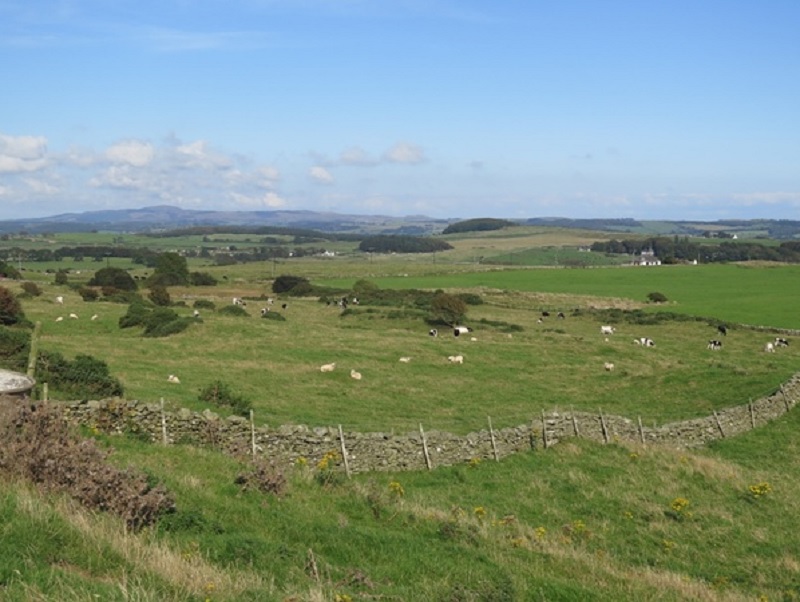
With around 11,600 hectares of vacant and derelict land in Scotland (an area almost twice the size of the City of Dundee) and more than 37,000 long-term empty homes in the country, vacant and derelict sites can present real challenges for communities across Scotland. Scottish Government figures estimate that a third of us live within 500 metres of a derelict site, this figure reaches 61% in Glasgow. Often smaller areas of vacant and derelict land or buildings can have a detrimental impact on a community, acting as magnets for crime and anti-social behaviour. Regeneration of such sites could be game-changing for the local economy and communities, especially where housing, urban green space or cultural facilities needs are great.
The Scottish Land Commission is working to create a Scotland where everybody benefits from the ownership, management and use of the nation’s land and buildings. As part of our work on land for housing and development we are focusing on ways to transform vacant and derelict land and bring it into a more productive and equitable use, delivering economic and social benefits.
The Scottish Land Commission has been taking some important steps in this area. We’ve launched the Vacant and Derelict Land Task Force in partnership with Scottish Environmental Protection Agency (SEPA). The Task Force is looking at innovative ways to transform and bring thousands of acres of long term vacant and derelict land back into productive use.
We also produced a proposal for a potential new power to help tackle the blight of vacant and derelict sites in Scotland- the Compulsory Sales Order (CSO). Working with a wide range of experts and organisations with extensive experience ranging from regeneration, housing, valuation and human rights, enabled us to create a detailed framework for how a CSO could work. The Scottish Land Commission submitted this proposal to the Scottish Government in August. It is intended to be a framework to inform any future work undertaken by Scottish Government on bringing forward CSO legislation.
Why a CSO? In the current regeneration toolbox, Scotland has mechanisms that allow planning authorities and communities to buy vacant and neglected sites. However, what happens when neither have a specific end use in mind for problematic sites? What if the authority or a community body does not have the capacity or resources to take on the site themselves? Seeing such sites being put into some kind of productive use that will benefit the local community is often desirable but the current tools available might not always be appropriate.
A CSO power would offer an additional route for planning authorities to deal with such eyesore sites. By enabling a transfer of ownership, these sites could be transformed. This is backed up by research evidence which suggests that a change in ownership that transfers a property from a passive to an active owner is often a necessary pre-condition for bringing vacant and derelict sites back into productive use.
A CSO would give a planning authority (on a case-by-case basis) the chance to:
- firstly, investigate a site. This would be very important step because it provides an opportunity to bring about a mutually acceptable resolution between the authority and the owner. This step must be taken before a formal order could be issued, demanding the sale of the property via an auction. A CSO is not intended to be a punitive instrument it can help facilitate a constructive dialogue with owners of problematic sites, arguably one of its strengths.
- provide a more reliable measure for valuing vacant and derelict urban sites. An auction is an efficient way for revealing the true market price of a site at any given point in time, especially when they are difficult to value or estimate as there may be no accurate comparisons.
- commit a new owner to bringing the property into a productive use. Conditions attached to the sale would mean that new owners are required to complete the development and bring the site into a productive use within a fixed period of time.
We need to ensure that our built environment is making the most for people living there and for Scotland by delivering well planned, sustainable communities as part of the place-making agenda. A CSO has the potential to be a powerful additional instrument for urban renewal and to improve the quality of places, making more of Scotland’s land. Read the full proposal here.
Katherine Pollard
Policy Officer
Scottish Land Commission
Rachel Tennant, Chair Landscape Institute Scotland, calls for a united approach to landscape, place and change to ensure Scotland’s landscapes are embedded in communities.
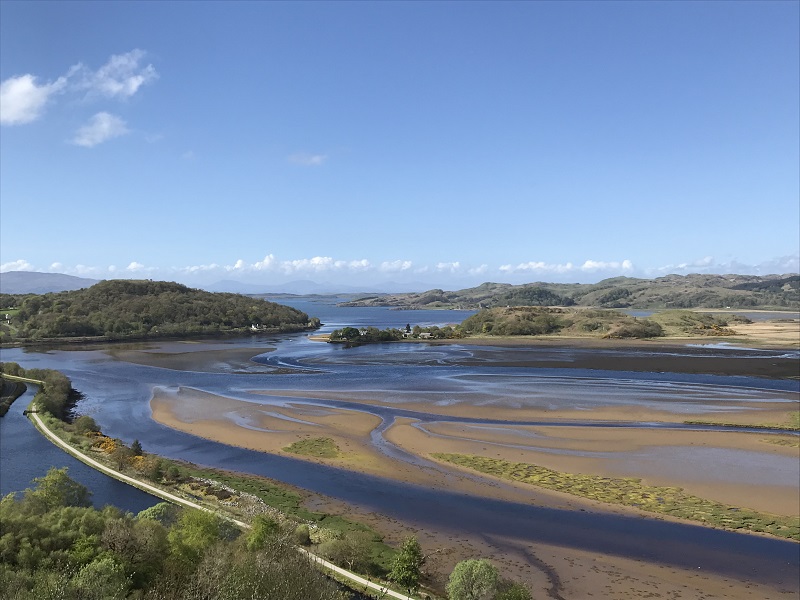
I attended with interest this discussion chaired by BEFS in Partnership with Community Land Scotland and Inherit following on from the publication of the research report ‘Community Empowerment and Landscape’ in September this year. The report examines the relationship between communities of place and landscape designations.
The debate was wide ranging in attempting to distil the positive steps that can be taken towards empowering community participation, as a human right, in decisions that affect the landscape and places that they live in.
I was heartened by the summing up of the report’s recommendations: –
- Sustainable, rights based and accountable;
- Empowered people with legitimate voices; and
- A modern multi-objective approach to conservation practice.
Whilst the report focuses on the rural environment, as landscape designations mainly cover these areas, community participation is also vital in urban areas. The European Landscape Convention (ELC) to which Scotland is a signatory through the UK, upholds that all landscapes matter as they impact on and shape people’s lives.
In the last year we have seen a number of reports and strategies published all seeking change and betterment in Scotland’s relationship with our landscapes. ‘A New Blueprint for Scotland’s Rural Economy’ by National Council of Rural Advisers; ‘Landscape for Scotland’ from the Landscape Institute Scotland and ‘Scotland’s Geo-Diversity Charter’ by the Scottish Geodiversity Forum. In addition, the Scottish Government has released draft strategies on Forestry, the Environment, the new Place Principle has been launched and Historic Environment Scotland and Scottish Natural Heritage have prepared Corporate Strategies – all of which effect communities and landscapes. This is with a backdrop of the Planning Bill, land reform and a proposed new Human Rights Act in Scotland.
Forgive the pun but it’s a busy landscape out there.
Scotland’s international commitments clearly set out the relationship between landscape, people and place. The ELC recognises landscapes in law as an essential component of people’s surroundings, an expression of diversity of their shared cultural and natural heritage and a foundation of their identity. In addition it seeks to ensure greater participation of the public, authorities and other parties in decisions that affect landscape and to further integrate landscape into all its policies.
Landscape and natural capital are clearly embedded in the United Nations seventeen Sustainable Development Goals, to which Scotland is also a signatory. The Scottish Government use these Goals as a principal in its own National Performance Framework.
These commitments exist in law and are profound. The ‘Scotland is Now’ campaign, by the Government, shamelessly uses the landscape as a backdrop to set our country on the world scene. So, what do we need to do to influence those in power to recognise and help them implement these commitments?
The findings of recent UN research identifies a lethal range of challenges that face our society in the coming years. Aging, low fertility, migration, climate change, automation and Artificial Intelligence are six trends that will fundamentally affect all countries in the developed north. In addition to this are scarcity of resources, environmental degradation, loss of biodiversity, and pollution of air, soil and water.
Ian McHarg, author of ‘Design with Nature’ believed that:-
“we can intelligently and creatively meet human needs within the limits of the environment and thereby contribute to overall diversity and dynamic stability, which is synonymous with human and planetary health”
There were no outcomes from this interesting debate and that is a mistake. It is a noisy world and voices need to be heard at the right level to meaningfully make the balanced decisions and changes needed. There is no time to worry about the particular emphasis of individual organisations in this arena – we need to work together to ensure a collective voice. Scotland’s landscapes and people depend on this.
Landscape Institute Scotland in association with other organisations with an interest in landscape, community and place, wish to form the Scottish Landscape Alliance. We believe in a united approach to landscape, place and change through good design, stewardship and promotion to balance community, economic, cultural and biodiversity needs. We welcome further discussion to ensure that all Scotland’s landscapes are embedded in our communities to safeguard their continuing value and benefit to the health, wellbeing and prosperity of our nation for future generations.
Rachel Tennant FLI Hon FRIAS
Chair Landscape Institute Scotland
scotland.landscapeinstitute.org
mail.scotland@landscapeinstitute.org
BACK
In 1926 the provision of Edinburgh’s council housing passed from the Burgh Engineer to the City Architect. Was there a difference in approach?, asks Steven Robb, Historic Environment Scotland.

Historically, Council housing was the preserve of Edinburgh’s Burgh Engineer who designed around 750 houses before WW1. However, substantial building only began following the 1919 Housing Act, when Councils were required to provide housing, initially with generous State subsidies.
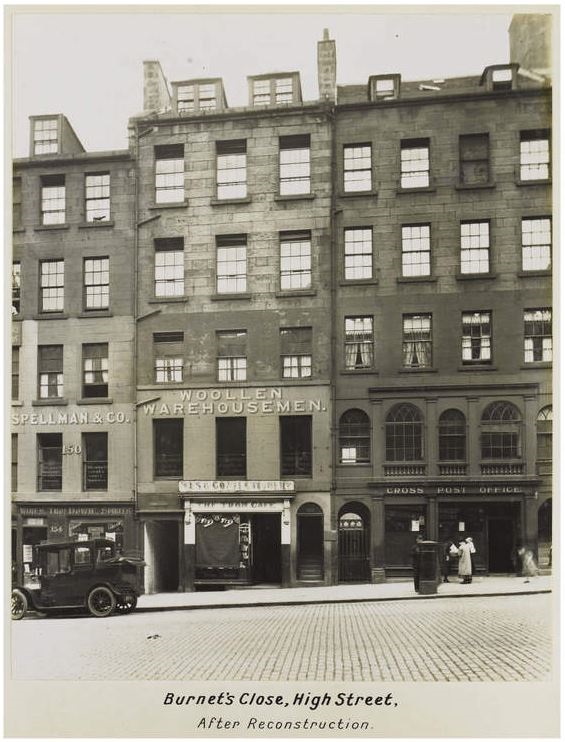
An Old Town tenement ‘reconstructed’ or reconditioned with new dormers by Campbell. Such works often involved the removal of rear additions to open up light to rooms. Courtesy of Capital Collections.
Adam Horsburgh Campbell (1862-1947), Burgh Engineer since 1910, was appointed Director of Housing in 1919. As an engineer his appointment was criticised by the architectural profession, but he had previous experience d
esigning social housing in London.
Campbell immediately sprang into action, planning the subdivision of large vacant New Town houses, and the major reconditioning of Old Town tenements, at half the price of new-build. This saved several historic buildings from loss, but sadly, later subsidies prioritised demolition and new-build, and the focus moved to new housing.
Perhaps due to his engineering background, Campbell had an inventive approach to both materials and procurement. A trip to Holland in 1924 resulted in the Dutch Korrelbeton (no-fine-aggregate) concrete system being used at Lochend (1925). He also agreed for 1000 Duo-Slab concrete and brick houses with the private contractor, WM Airey of Leeds and experimented with flat-roofs, deck-access balconies and timber and steel construction.
These approaches allowed speedy construction and took advantage of subsidies and semi-skilled labour in times of post-war shortage. Concrete was also cheaper than traditional builds, with reduced corridors within homes cutting costs further. Elsewhere, Campbell designed traditional new tenements for Leith and also ‘four in a block’ housing for peripheral estates.
Campbell was due to retire in September 1926, and the Council agreed to separate the Engineer and Director of Housing posts. However, in March 1926 he was offered a two-year extension as Housing Director alone. He declined, explaining that ‘his life and leisure’ had been abandoned to public service. He had been working 16 hour days, and in June pleaded to retire early following strict medical advice. Under Campbell the Council had built more varieties of housing than any other UK city, a total of around 4500 houses (built or contracted). Despite this, an honorarium of £2000 for working above-and-beyond his contract was voted down.

Whitson Crescent, Saughton Golf Course (1931/2). Note the horizontal banding at first floor level on the crescent. Courtesy of Edinburgh Libraries
In June 1926 Ebenezer James MacRae (1881-1951), Edinburgh’s City Architect since mid-1925, absorbed the coveted Director of Housing role. Whilst Campbell’s pragmatism focussed on housing delivery by whatever means, MacRae had slightly differing goals. His religious West Highland upbringing bequeathed him a strong social conscience and charitable view of tenants. His priority was to provide the best housing possible on his straightened budgets, allowing people to prosper and better themselves. He was particularly interested in daylighting and ventilation.
MacRae immediately halted Campbell’s experimentation, returning to traditional stone and roughcast brick walls with slate roofs. This led to delays with materials and the lack of skilled workmen. He retained the separate-trades tender system and kept housing under his direct supervision, resisting direct labour, prefabrication and the involvement of the private sector. This was a popular approach with the trade unions who had opposed Campbell’s methods.
With no reconditioning subsidies MacRae’s city-centre infill housing was mostly new-build, albeit designed to a Scottish character ‘in keeping with surrounding buildings’. Here, he favoured solid 400-600mm thick coursed stone walling with recessed pointing for frontages and visible gables. Elsewhere, he used roughcast brick cavity-walled construction, apart from one housing project built in facing brick at Royston Mains Crescent (1935). Other material and design changes occurred in WW2 when timber was scarce.
MacRae’s numerous trips to Europe, most notably in 1930/1 and 1934 as part of the Highton delegation, (leading to the Report on Working Class Housing on the Continent,1935), enforced his view that European modernism was to be avoided. He disliked flat roofs, deck-access balconies and building above four storeys. He also resisted the ‘Germanic’ communalisation of services.
Four in a block housing designed by Campbell and used by MacRae at Saughton (1932). Courtesy of Edinburgh City Libraries.
Europe did, however, influence his planning layouts, including higher-density blocks set around communal courts at the Pleasance (1934), Craigmillar (1936) and Piershill (1938). Architecturally, horizontal banding, likely sourced from Vienna or Berlin, was introduced at first floor level on new developments, which often, such as at Saughton (1932), Granton (1935), Craigmillar (1936) and Warriston (1936), included a feature crescent. By the time of his retirement in 1946 MacRae had delivered around 12,000 houses as well as important studies on Edinburgh’s historic buildings, a precursor to the listing system.
So, was there a major difference between Campbell and MacRae ? Both men believed in providing tenement housing close to tenants’ workplaces. However, one senses that Campbell, despite being two decades older than MacRae, was more open to innovation in both design and procurement. MacRae insisted on traditional methods and wasn’t willing to sacrifice what he saw as important.
For further info on Campbell’s career, see:
- Concrete, Cosmopolitanism and Low-cost House Design: The Short Architectural career of AH Campbell 1923-1926 by John Frew. Architectural Heritage V (1995), p29-38.
For further information on MacRae and Edinburgh’s inter-war housing, see:
- Ebenezer MacRae and Interwar housing in Edinburgh, by Steven Robb. Book of the Old Edinburgh Club, Volume 13, (2017)
BACK
BEFS Trustee Jocelyn Cunliffe reflects on the Architectural Heritage Society of Scotland’s and Scottish Civic Trust’s joint conference ‘Destination High Street – restoring vibrancy to Scotland’s towns’.

The Architectural Heritage Society of Scotland (AHSS) and the Scottish Civic Trust (SCT) organised a joint conference on Wednesday 7 November 2018 at the Glasgow Royal Concert Hall.
The conference was chaired by Colin McLean, Chair of SCT, who pointed out that how we shop has been changed for ever, whether we use out-of-town outlets or the internet. He reminded the conference that there had been a series of high profile reports, including ‘The Portas review: the future of our high streets’ (2011), and Scotland’s Town Centre Review (2013) to which the Government responded with a Town Centre Action Plan. Most recently the Royal Society of Public Health has published ‘Health on the High Street’.
Jennifer Novotny, the SCT civic connections project worker, presented a paper and a film (by Napier University students) made as part of the Duke of Edinburgh’s Award, by girls on the Action for Children Heritage and Inclusion Programme. This project mentors young women from ethnic minority backgrounds. They had looked at ‘Our High Street’ and carried out a high street scavenger hunt. They were asked to identify something ‘I like about my high street’ and listed lots of variable shops that are accessible and provide everything you need, different options of food takeaways and included ‘its handy for everyone’. They suggested an open to all space to share their culture and meet other people as role models.
Simon Green examined the architectural value of the high street. His definition of architectural value, ‘a slippery fish’, was demonstrated, rather than defined. Lots of buildings are worth nothing because of a heritage deficit. Major buildings are altered or demolished because of the perceived value of the land. Historic Environment Scotland (HES) put value on places through designations, such a listing. Simon looked at the big picture. He defined the High Street as the principal street of our burghs and towns. He suggested that historically it had three elements, the kirk (church), the tolbooth (the town council) and the mercat cross (commerce). Our high streets have changed all the time, including to improve sanitation. Churches may not be the force they were but they are crucial to the burgh, as is civic pride reflected in the fine municipal buildings, law courts, libraries, schools, banks and post offices built in the past. Stores also built prestigious premises. He questioned why do we have to get rid of cars, pointing to the activity associated with people stopping for a short time in Callendar (would they be there if the town had a by-pass?). We close high streets for a run, so why not close them for other events? Civic pride needs to be re-engendered and key buildings of value need to be looked after; high streets are not only about shopping but about living, working and community life.
Susan O’Connor took as her theme the high street as the centre of community life. She compared retail spaces and civic spaces, ownership and means of access. We learned of an elaborate procession which took place in 1872 to celebrate the opening of the new Renfrew Town Hall. The men took part in the processions and the women provided the audience.
The keynote address ‘Thinking the Unthinkable…’ was given by Professor Leigh Sparks, Professor of Retail Studies at Stirling University and Chair of Scotland’s Towns Partnership. He was given the title and decided to work with it saying, ‘It is unthinkable that we are abandoning our heritage in the way we are. It is equally unthinkable that we can go back to the past’. He talked about town centres, not the high street, saying ‘It is the place, the identity of that town’. Decentralising is not just in retailing. Local authority offices and businesses that were formerly in town centres have moved to the periphery. He identified a structural revolution in retailing, but noted that online retailers are moving to physical retailing. There were ideas, such as getting local authority head offices back into towns; bring people in and retail will follow. We also have to build on towns’ stories, think of towns as places of interactions, not just transactions. He suggested that the size and shape of town centres will be smaller, there will be a re-balancing and that we have got to start managing our places better.
Euan Curtis of Glasgow City Council showed images of and discussed projects in Glasgow, at Barras, Shawlands, Govan and Parkhead, where public money has been spent through conservation regeneration schemes, townscape heritage initiatives, in association with the Commonwealth Games and City Deal. There is no ‘one size fits all’. Opportunities need to be exploited; listen to locals and be flexible; funding is a huge issue – these schemes benefited from a more positive funding situation at Glasgow City Council (GCC) than that which exists now, where there is no money to leverage funds from HES or HLF. He pointed out that Shawlands was not a poor area, but it was not rich either and the public realm scheme and efforts to get businesses to work together in relation to commercial refuse led to other shop-owners taking an interest and the formation of a Shawlands Business Improvement District.
Diarmid Lawlor’s topic was ‘Public Money: Repopulating the High Street’. He examined relationships based around care, ‘The Caring Place’; caring for the people and caring for the place. ‘The Caring Place’ is at the centre of a circle consisting of a sense of place (familiar surroundings), a sense of purpose (stuff to do), a sense of support (from people, neighbours) and a sense of worth (feeling wanted). Instead of chasing new money we should look creatively at making better use of what we have. Young people are the community of the future and he showed examples of innovative projects with family focused neighbourhoods and intergenerational complexes with space for children and for old people.
The final speaker, Leona Stewart, a Scottish Glass artist, formed Bright Light Arts, an Ayr based community interest company in 2017, to be able to apply for grants to deliver artist led crafts workshops and prop-making sessions for Ayr’s Day O’ the Deid procession through Ayr town centre at the end of Tamfest. The procession with colourful costumes, amazing props and samba drumming was wonderfully vibrant and involved children and adults across the community. Leona deserves a huge amount of praise for her work, which sadly she recognises is financially not sustainable.
In summary, the event brought together a varied and interesting set of speakers. What now? The built heritage is clearly a key part of the future. Once the High Street was handy for everyone, now it is handy for no one. Some sixty years ago things were allowed to go wrong when shops moved out of town and were followed by business parks and industrial estates. How can we show that we love our communities, places, town centres, and work on their behalf to make them vital resources and physically and socially sustainable? Central and local government and civic society all have a part to play.
BACK
We must act or our past will catch up with us, argues BEFS Director Euan Leitch, reflecting on two recent events in Edinburgh.

Last week in Edinburgh two of BEFS associate members held events that may at first appear unconnected. The Cockburn Association’s annual lecture was on the Role of Urban Ecology in the Future of Edinburgh while Edinburgh World Heritage held a lecture on Edinburgh and the Slave Trade: the True Cost of the New Town.
Sir Geoff Palmer OBE elaborated on the Edinburgh wealth built out of the tobacco, linen and sugar trades, the delay in the abolition of slavery caused by Henry Dundas’ intervention and the wealth Edinburgh residents gained from the financial compensation received by the owners of slaves upon its eventual abolition. The prosperity arising from the abuse of humans made for grim listening, brought home by Sir Geoff talking about visiting places in Scotland that had benefited from the abuse of his Jamaican ancestors, places such as Dairsie in Fife, where the coarse osnaburg linen was woven that was worn by plantation slaves. Sir Geoff Palmer reflected on the dual connection he shares with the former Prime Minister William Gladstone as a resident of his Midlothian constituency and Gladstone’s father likely owning Sir Geoff’s ancestors: “Be very careful what you do in the past, it might catch up with you in the future!” Sir Geoff Palmer’s talk was not to encourage the toppling of statues or demolition of buildings but to make historical connections explicit. Amending the plaque at the base of the Melville Monument to insert the fact that Henry Dundas’ actions prolonged the slave, trade by arguing for its ‘gradual’ abolition, being one example.
Professor Sandy Halliday and René Sommer Lindsay delivered a joint lecture for the Cockburn Association. Sandy gave a whistle stop tour of projects around Europe and Scandinavia that are taking an enlightened approach to sustainable development, buildings that are ‘net-zero’ in energy consumption and generation or in the case of refitted-office block, PowerHouse Kjørbo in Norway, one that exports electricity. Her lecture included examples of policies in Berlin and Malmo that ensure 30% of development sites are given over to green or blue infrastructure, and highlighted the environmental investment priorities of Germany’s state owned KfW bank. René shared details of the Klimarvarter project in Østerbro, Copenhagen, which aims to create a climate resilient neighbourhood, through the creation of green infrastructure that can handle increased rainfall and be replicated across the city.
What links these two lectures? The past catching up with us: our environmental past and present.
Sandy Halliday highlighted the WWF calculation that the UK consumes three times as much of the planet’s resources than it should do, our 200 years of industrial production and consumption are having real consequences. The Intergovernmental Panel on Climate Change’s (IPCC) Special Report on Global Warming of 1.5 °C was published in early October. The report made explicit that whilst meeting that target of keeping global temperature rise to 1.5 °C is possible it would require a radical change in our approach to land and energy use. We have twelve years in which to take radical action. The 1.5 °C temperature increase itself may have a devastating impact on environments in the Middle East and Africa, affecting 100 million people. Turtles swimming in plastic reefs and bleaching corals may tug heart-strings but large scale population displacement tends to elicit different responses.
So perhaps our past isn’t imminently catching up with us in Scotland (or is it?), instead our past is catching up with more vulnerable parts of the planet. The day-to-day realities of the slave trade also tended to happen elsewhere and maybe we excuse some of our ancestors for their ignorance but we cannot plead ignorance of the fact that our environmental choices yesterday and today are going to have serious impacts on humans in the near future. We might find ourselves appalled by the callus view our predecessors had of slavery but will our descendants be any less appalled by our societal choices in the face of mounting environmental evidence?
Upon reading the headline statements of the IPCC report I had half expected there to be a collective sharp intake of breath and recognition across a range of disciplines that this was an emergency, followed by a universal call to action. On reading some press releases in response, it’s more of a collective shrug, arguing for gradual decarbonisation to lessen the economic impact.
But what of action? The IPCC report is framed by the UN’s Sustainable Development Goals, of which Scotland is a signatory. The Scottish Government is currently drafting planning legislation and policy – climate change can be at the heart of that. Derek McKay is drafting the Scottish Budget – climate change should be the driver in how we develop as a nation. Historic Environment Scotland are producing their Corporate Plan for 2019 onwards, climate change should be at the heart of that agenda.
Will our gradual approach to decarbonisation be viewed as equally reprehensible by our descendants?
The Edinburgh World Heritage Lecture is available on Facebook, here.
The Cockburn Association will be providing a summary of their annual lecture on their website.
The IPCC report is available on their website, here.
BACK
Dr Sara Thomas, Scotland Programme Coordinator at Wikimedia UK. shares her enthusiasm for the photo competition Wiki Loves Monuments and encourages entries from Scotland.

Glenfinnan Viaduct by Paul Stümke
Over the past couple of weeks I’ve taken photos of:
- The category A listed ex-theatre where I spent my first summer away from home at 14
- The category A listed University building where I handed in my PhD thesis
- The category B listed house at the bottom of my street that’s been empty for years and with which I’m getting a little obsessed (It’s got a garden! It’s not yet been split up into flats!)
…all in the name of a certain international photo competition called Wiki Loves Monuments. It’s the world’s largest photo competition, organised by various Wikimedia chapters and groups. The aim is to improve the quality and quantity of openly-licensed images of listed buildings and scheduled monuments around the world, making them freely available through Wikimedia Commons. And if you’d like to see which images are missing from the Scottish record, just look at all the red pins on this interactive map.
Picturing Scotland

Eilean Donan Castle by Syxaxis Photography
There are prizes for the top 3 images in Scotland (sponsored by Wikimedia UK and Archaeology Scotland), as well as the top 10 images in the UK, with the

Smailholm Tower by Keith Proven
latter then going forward to the international competition.
You can take a look at what’s already been submitted in Scotland here. And if you wanted to see how we were faring against England, Wales & Northern Ireland, you could do that too. A certain amount of friendly competition never hurt, after all.
Digital preservation through Wikimedia
I’m the Scotland Programme Coordinator at Wikimedia UK, so it’s my job to be enthusiastic at people about open knowledge and open culture – but I usually think about access and learning, rather than preservation. The list of buildings close to my heart isn’t exactly the New Palmyra project, or Wikipedia’s call for people to contribute to the digital reconstruction of the contents of the National Museum in Rio de Janeiro, but working on the competition over the last couple of weeks (I’m not eligible to win anything, I just like taking part) has made me happy to be doing my bit for the preservation of the record.
How you can get involved
All you need is a camera (or indeed, cameraphone), and a Wikimedia Commons account (very easy to set up, and if you already have a Wikipedia account, you don’t even need to do that), and you’re ready to go. There are full instructions on the competition website about how to make your submission.
So, what’s your favourite Scottish listed building, or scheduled monument? Grab your camera.
Dr Sara Thomas, Scotland Programme Coordinator for Wikimedia UK.
Notes
- Full competition details can be found on our website: wikilovesmonuments.org.uk
- You can follow the competition on Twitter in the UK here: https://twitter.com/WikiLovesUK and internationally here: https://twitter.com/wikimonuments
- Connect with the international competition by using #WikiLovesMonuments, and for all things Wikimedia related in Scotland use #ScotWiki
- If you have any questions or would like any further information, please don’t hesitate to drop me a line – sara.thomas@wikimedia.org.uk / scotland@wikimedia.org.uk
Images
https://commons.wikimedia.org/wiki/File:Smailholm_Tower_001.jpg – Highly commended 2017, best image in Scotland.

https://commons.wikimedia.org/wiki/File:Eilean_Donan_at_Dusk.jpg – Eilean Donan at Dusk, Highly commended in 2016.

https://commons.wikimedia.org/wiki/File:Glenfinnan_Viaduct_at_Loch_Shiel_2.jpgf – 2nd place in UK competition in 2017.
BACK
Richard Rodger, Emeritus Professor at Edinburgh University and Fellow of the Academy of Social Sciences, argues that Edinburgh New Town had little to do with town planning.

Consider Abercromby Place, Great King Street, Northumberland Street, and Heriot Row! These and another twenty New Town streets were developed by the trustees of George Heriot’s Hospital. By 1806, Heriot’s had carefully devised a schedule of charges (feu duty) payable annually to the Trust ‘in perpetuity’ on land transferred to individuals for building. Streets were socially differentiated by price: Drummond Place, Mansfield Place, and Bellevue Crescent cost 75% more than land feued in Cumberland Street and Fettes Row.
Heriot’s Trustees controlled development by issuing a fifty page ‘Feu Charter’ specifying the quality of stone, pavement width, height of railings, and many further conditions including the use of properties built on their land. Contrast this with the earliest developments of Prince Street (as it was originally known) and the eastern end of the first New Town, including North and South St Andrew and St David Streets). There the Town Council as the landowner issued short five page contracts designed principally to obtain developers’ agreement regarding sewer connections and cellar supports. Future use was not their concern; prompt disposal of building sites was the Council’s priority.
Potential owners and developers of Council-owned land also agreed to a two-dimensional street ‘plan’ of 1767 by James Craig on display in the Council Chambers. This was ‘shewn to all purchasers and feuars of building-ground’, and the mere sight of it was deemed sufficient to have agreed to the minimalist building conditions regarding cellars and sewers. Uniformity of facades and control of future use were not issues that concerned the Town Council.
As buildings developed so did disputes. Within five years, on the south side of Prince Street the buildings erected (on the footprint of the subsequent North British (Balmoral) Hotel and the adjacent Canal Street) were considered in contravention to the Craig plan which showed no structures on the south side of Prince Street. A series of court cases ensued, and a decision of the House Lords in 1772 resulted in a compromise: that there should be no further structures erected along Prince Street west of what later became the Waverley Steps. Subsequently disputes elsewhere in the New Town produced more work for lawyers but in all cases the integrity of the Craig plan was reasserted.
The New Town was developed as a series building contracts based on a generalised conception of street layout. Nothing was stated about facades, consistency of roof lines, materials, bow windows or dormers. In fact, as Anthony Lewis has shown, the New Town was a series of speculative building developments from the outset. Nothing was stated in the legal documents about the height of walls; the Craig plan was ambiguous about private gardens; and the issue of a change of use was not considered. Such visual consistency as there was in the First New Town owed more to builders’ practices, plagiarised designs, and market conditions.
Matters reached a climax in 1818. Proposals to alter the height of buildings in the rear gardens, and to alter stables for other uses were initially rejected by local courts and then by the House of Lords (1814) as inconsistent with Craig’s drawings. In 1818, the distinguished lawyer, Lord Eldon, reversed this position stating that it was a ‘violent stretch in judicature … to infer a contract from the exhibition of a plan.’ Thereafter, detailed feu charters were essential, and rights and restrictions were legally enforceable but had to be created when the property was initially transferred (feued).
The First New Town was created initially under a series of commercial contracts between landowner and property developer, but from 1818, property law provided the guiding principles, as already established on Heriot’s lands. Thus future use, and reassurance about the future value, of property gave confidence throughout Scotland to the market for land and property. The Eldon decision in 1818, reinforced in another legal case in 1840, confirmed that conditions or real burdens that applied to the initial transfer of land also applied to subsequent transactions relating to that plot.
It was through legal cases and decisions that a degree of visual uniformity was achieved in the Second and Third Edinburgh New Towns. It had little, if anything, to do with town planning.
References
- Lewis, The Builders of Edinburgh New Town 1767-1795 (2014)
- Rodger, The Transformation of Edinburgh: Land, Property and Trust in the Nineteenth Century (2001)
BACK
An accompaniment to the exhibition, Landscape & (Re)settlement / Cruth-tìre & (Ath)tuineachadh, at the Architecture Fringe 2018, by Baillie Baillie Architects.

Former settlement ‘Torseiller’ in Strath Brora © Baillie Baillie Architects
The round-back cottages clung to the earth like long animals whose folded heads were always to the mountain. Lying thus to the slopes they were part of the rhythm of the land itself…There were little herds of these cottages at long intervals, and every now and then a cottage by itself like a wandered beast…
Neil M. Gunn (Butcher’s Broom)
As a society we often venerate historic settlements within bucolic landscape settings – tiny Tuscan hill towns, or remote alpine villages. But notions of building new housing within the natural landscape generally evoke a profoundly negative response. Indeed, this position is enshrined in planning policy. In Scotland, scatterings of small townships, perhaps best described by the Gaelic word clachan, once supported vibrant communities with a rich heritage and culture across much of the mountainous highlands. In the clearances of the eighteenth and nineteenth centuries, sheep were moved onto the land and people were forced out. By the Victorian era the sparsely populated landscape of much of the Scottish Highlands became commonly regarded as a romanticised wilderness. The Straths of Sutherland for example, like that described in Neil Gunn’s novel Butcher’s Broom, today remain comparatively deserted.
As a settlement pattern, the clachan is characterised by a close and reciprocal relationship with the land. Individual houses are informally situated, tracking the topography and set low, even burrowed into the earth. Tenancy of the land permitted space enough for small scale agriculture, resulting in a seemingly free and rhythmic spacing of cottages. There is a perceived continuity of the ground plane in these spaces between; a natural canvas that allows a cluster of buildings to be co-located and embedded within the landscape.
Community Land Scotland’s recent response to the Scottish Government’s Planning Bill consultation supports a case for re-settlement and renewal of some of the areas worst affected by historic forced clearances and continuing economic neglect. There are of course circumstances that call for strict control of development – designated green-belt zones being one example which are legitimately intended to limit the creep of suburban sprawl. However it also seems perverse that the crumbled ruins of settlements which were continuously and sustainably inhabited for many thousands of years are deemed to be scheduled monuments within wild land.
Perhaps the sceptical reaction induced by any and all new housing developments in so-called unspoilt locations is due to a deeply negative association with new housing and mass developer housing, i.e suburbia. If resettlement of cleared highland glens is to occur, it is pertinent that this perception is challenged. In the context of a discourse between preservation of the landscape and the resettlement of sustainable communities, it is imperative that not merely the fact of past depopulation is discussed, but that vernacular forms of dwelling and patterns of inhabitation, with their embedded cultural significance, and responsiveness to the landscape are considered and understood.
This is an old story. The realms of villages, townships, and in Scotland clachans, have seldom been the focus of recent architectural discourse. In response to rapid urbanisation through the nineteenth and early twentieth centuries, urban renewal defined the programme of the Modern Movement, and one must look back to the Picturesque town planning movement to find rural settlement as a central theme in pedagogy and practice. Several notable exceptions exist, such as Peter Aldington’s cluster of village houses in Haddenham, designed and built in the 1960s. Here both the languages of modernism and the vernacular are deftly intertwined, giving expression to a spatially rich grouping of houses which respond sensitively to their village setting and the surrounding landscape of mature trees: at once embedded in tradition and forward looking. Other examples of this synthesis might include Jorn Utzon’s Kingo houses, scattered loosely in contiguous clusters evoking the image of an organically formed hill top village, or more recently Sergison Bates’s housing in Aldershot which revisits the semi-detached typology associated with suburban housing in a manner that situates it more closely with the principles of townscape and the composed ensemble.
A common theme evident in these examples is a disassociation between buildings and formalised tarmac infrastructure and car parking – a feature which often dominates developer housing in Scotland (think suburban cul-de-sac). This seems to allude to a desire for continuity in surface treatment, similar to that which so compellingly anchors the clachan to the earth. Sergison Bates’ early imagery for Aldershot for example, set the houses as objects against a continuous ground plane forming both the street and open gardens, serving to unify the houses against their surroundings. Such imagery is strongly reminiscent of Giorgio Morandi’s still life paintings. There is a synergy between objects and their setting implied in these loosely structured compositions which also resonates with Gunn’s anthropomorphic evocation of highland cottages as “part of the rhythm of the land itself”.
A resonance between buildings, community, and place exists in successful and enduring settlements. But there is an alarming deficiency of the seemingly allusive qualities of cohesion and permanence in the majority of new-build developer housing in Scotland, and the need for coherent planning strategies and settlement models is of even greater importance when considering development in a sensitive landscape context. It is clear however that successful models exist. It could be concluded that remains of the most instructive vernacular precedent, the clachan, exist on the very sites which are subject to re-settlement debate. Nineteenth century architects David MacGibbon and Thomas Ross, practising out of Edinburgh, undertook a tremendously exhaustive survey of ‘The Castellated and Domestic Architecture of Scotland’, which they compiled into a multi-volume publication of that name. Their meticulous survey drawings and sketches (produced on frequent ventures around the country by bicycle and railway) alongside their accompanying scholarship, provided a significant regional source-book, which disseminated into their own work and influenced many contemporaries and successors. In the spirit of MacGibbon & Ross, might it be possible to document and study the clachan as a typology, and thus allude to a contemporary strategy for re-settlement?
Clachans in the Highlands have mostly crumbled beyond recognition as places of dwelling, yet their traces often remain on the land. Ruinous walls or even barely perceptible archaeological impressions are testament to their existence, and such artefacts are still capable of silently communicating the presence of human endeavour, inhibition and together, community. Alexander Fenton visited Arnol clachan in West Side, Isle of Lewis, in May 1964, a place that at the time was comprised of both twentieth century dwellings as well as Blackhouses. In his later publication, The Island Blackhouse, he observed the profound sense that the very distant past seemed to coalesce with the present, noting that “traces are still clear enough to suggest a much more functionally integrated system of communal co-existence”. Today even in the far west of the Western Isles these traces may be on the verge of drifting out of focus. Returning for a moment to Morandi’s still life paintings, they seem to communicate a similar sense of timelessness and the ephemeral. John Berger (2001) writes that Morandi’s objects “seem to be on the point of disappearing”, but then questions whether they are indeed disappearing or in fact emerging – becoming visible – “Traces are not only what is left when something has gone, they can also be marks for a project, of something to come.”
Words by Baillie Baillie Architects, with special thanks to Community Land Scotland.
BACK
BEFS Policy and Advocacy Officer, Ailsa Macfarlane, reflects on discussions on how to improve and use existing building stock at the recent event Carbon Neutral Edinburgh 2050.

The perspectives on building maintenance are multi-faceted, and the Parliamentary Working Group has the potential for real progress on this issue.
That said, sometimes we need to take a step back and consider the bigger picture, the much bigger picture – and how our actions can contribute to positive changes.
Last night (20th June) BEFS were delighted to support and attend Transition Edinburgh’s Carbon Neutral Edinburgh 2050 event at the City Chambers. Immediately prior to this event was an exceptionally well attended AGM, which discussed Transition Edinburgh’s activities over the past year – these ranged from Festival and Food initiatives, to the launch of Zero Carbon Edinburgh, and the potential for a pilot home improvement programme with Changeworks.
Initially we heard from some excellent speakers:
We gained perspectives from Cllr. Neil Gardiner (City of Edinburgh Council) – who discussed Edinburgh’s Local Development Plan (LDP2) and how the city could, and should, develop based on a plan-led system. Prof. Cliff Hague (Chair, Cockburn Association) made it clear that not only do we need more data (where and how much CO2 is produced) but that a full life-cycle approach is key – refurbishment could be a ‘quick win’ to aid the reductions necessary by 2050. Lastly, we heard a provocation from Prof. Sandy Halliday (Gaia Research). She took us through a whistle stop tour of Urban Ecology principles, reminded us that every city cannot survive without its hinterland, and showed the audience a range of inspiring examples from places where green design, and new ways of living, are flourishing: Malmo, Berlin, Tubingen, Zurich, Perth, Portobello!
The discussions then split into smaller round-tables, our topic was: Refurbishment/Upgrading existing buildings. The group was extremely knowledgeable and engaged, with representatives from; large-construction working with heritage buildings, a social landlord, energy efficiency solution organisations, an architect, retrofitting specialists, and an energy efficiency modelling professional.
With around 25% of CO2 emissions relating to buildings and industry globally, and 80% of our building stock already existing in the UK; it is clear that the site specific; person, and building, health appropriate; changes we can make to our existing stock can not only provide more homes, but warmer and healthier homes, schools, and commercial spaces. Ultimately helping to provide a built environment which has a less negative environmental impact on our planet.
The discussion around the topic was wide ranging – from how to approach different types, ages and tenures of buildings; to whether societal change needed legislative ‘push’. We were clear that educating more clearly to promote the financial, wellbeing, societal and environmental benefits of refurbishment would be central to the process of significant change by 2050. However, we also appreciated that this process had to be collaborative – and that the collaboration had to be at all levels, whether that was industry, local authority, neighbourhoods, or communities.
When feeding-back we heard from another table who had been wrestling with the same topic – their clarity was around: Creating a framework where refurbishment can flourish. This encompassed: tax rates (be that VAT or incentivisation); clarity/legislation around statutory obligations; land value capture (both how we value land, and how we charge for vacant properties) – these aspects led the table to suggest a national policy on refurbishment. This would support economies of scale, increasing affordability. (Our table had compared the process of retrofitting for energy efficiency in relation to the alterations made to properties on a wide-scale when modern sanitation was installed.)
Whilst any single event will not provide a solution, or multiple solutions – it is clear that there is growing appetite, awareness and emphasis on how we can improve and use our existing buildings to make them not only the homes, schools and workplaces of the future, but places that do less harm to our future.
BACK