



Get The Latest Historic Environment Events, Jobs, News And Publications In BEFS Bulletin.

BEFS NEWS
The new National Performance Framework indicator measure for historic sites is now live on the Scotland Performs website. For background information on why the indicator was changed read our recommendation to the Scottish Government from 2016.
Ahead of the local government elections, we would like to draw your attention to a recently published book. The Public Affairs Guide to Scotland is an essential A-Z guide for all public, private and third sector policy and corporate organisations in Scotland.
In the last week Built Environment Forum Scotland has supported hustings in Glasgow and Edinburgh with a focus on the built environment. BEFS Director, Euan Leitch, reflects on what was learnt in our first blog.
The second of our blogs this week offers a great case study for communities taking action in their local built environment.
Finally, book now for Scottish Civic Trust’s annual lecture on Glasgow’s Merchant City on 25th April, supported by BEFS.
CONSULTATIONS
Energy efficiency and condition standards in private rented housing: A Scotland’s Energy Efficiency Programme Consultation (SG 07/04/17)
This consultation asks for views on proposals to improve the energy efficiency and condition standards in privately rented housing in Scotland.
Closes 30 Jun 2017.
Draft Management Plan for the Old and New Towns of Edinburgh World Heritage Site (2017-2022) (Edinburgh City Council, HES & EWH)
The Draft Management Plan identifies issues and opportunities within the Site, and presents an action plan for implementation over a five-year period. Issues include care and maintenance of buildings and streets and awareness of World Heritage Site status.
PUBLICATIONS
Minimum Standards of Energy Efficiency in Private Rented Sector Housing: Partial Business and Regulatory Impact Assessment (SG 07/04/17)
This partial BRIA accompanies part 1 of the Scottish Government consultation on efficiency and condition standards in private rented housing. It provides an assessment of the impact of the proposed regulation on various parties and sectors within the Scottish economy. The analysis and data may also help readers in responding to the consultation.
Condition of Private Rented Housing in Scotland – Business and Regulatory Impact Assessment (partial) (SG 07/04/17)
This partial BRIA accompanies part 2 of the Scottish Government consultation on energy efficiency and condition standards in private rented housing. The data provided will help readers assess the impact of proposed changes to the repairing standard which applies to privately rented houses in Scotland.
CDAS Booklet on ‘How Community Development Happens’
The Community Development Alliance Scotland has published a new booklet called ‘How Community Development Happens: Why stronger communities matter and what it takes to develop them’.
SCOTTISH GOVERNMENT PRESS RELEASES
Household numbers projected to rise in Scotland’s National Parks and around its biggest cities (SG 12/04/17)
Figures published today by the National Records of Scotland (NRS) show that the number of households is projected to rise around Scotland’s biggest cities, and within its two National Parks.
VisitScotland and TripAdvisor team up to put Scotland on world stage (SG 08/04/17)
A European-first collaboration between VisitScotland and TripAdvisor will see Scotland’s world-class tourism offering promoted to almost 70 million new potential visitors, generating a potential additional spend of £150 million.
Improving Scotland’s private rented sector properties (SG 07/04/17)
Consultation on energy efficiency and condition standards. New proposals to ensure all privately rented homes in Scotland meet a minimum standard of energy efficiency have been published today for consultation.
NEWS RELEASES
Kilmarnock Traditional Building Skills Demonstration (STBF 18/04/17)
The Fife & Tayside Traditional Building Forum organised an event in Kirkcaldy town centre 13 & 14 March 2017, which featured apprentices, qualified tradespersons and college lecturers demonstrating traditional building skills including masonry, slate roofing, joinery and painting and decorating.
Culross Traditional Building Skills Event (STBF 18/04/17)
The Fife & Tayside Traditional Building Forum organised an event at the National Trust for Scotland property of Culross Palace on 20 & 21 March 2017, which featured apprentices demonstrating traditional building skills including masonry, slate roofing, joinery and plastering.
HES Unveils Plan for Year Ahead (HES 13/04/17)
Historic Environment Scotland (HES) has published its Annual Operating Plan for 2017/18. The plan outlines the organisation’s priorities under five strategic themes: Lead, Understand, Protect, Value and Perform.
Specialist skills shortage could put beloved national treasures into disrepair (RICS 12/04/17)
Britain’s beloved historic buildings are at risk, due to a restoration skills crisis that threatens the future of some of our best-known national treasures, warns a RICS and YouGov survey.
UN Security Council adopts historic resolution for the protection of heritage (IHBC 12/04/17)
The United Nations Security Council has unanimously adopted the historic resolution 2347 – the first ever resolution adopted by the Security Council to focus on Cultural heritage. The unanimous support to the Resolution reflects a new recognition of the importance of heritage protection for peace and security.
EU Prize for Cultural Heritage / Europa Nostra Award 2017 for Scottish project SAMPHIRE (SCT 05/04/17)
The 29 laureates from 18 countries are being recognised for their notable achievements in conservation, research, dedicated service, and education, training and awareness-raising.Among this year’s winners are two outstanding projects from the United Kingdom: the rehabilitation of Cromford Mills: Building 17, Derbyshire; and SAMPHIRE: Maritime heritage project in western Scotland.
Culture Secretary launches new fund to promote Scottish arts, heritage and business collaboration (Arts & Business Scotland 03/04/17)
A pioneering new fund that promotes collaboration between Scottish businesses and arts and heritage organisations to deliver new arts and heritage projects has been officially launched by Cabinet Secretary for Culture, Tourism and External Affairs Fiona Hyslop.
PARLIAMENTARY QUESTIONS
Questions marked with a triangle (?) are initiated by the Scottish Government in order to facilitate the provision of information to the Parliament.Questions in which a member has indicated a declarable interest are marked with an “R”.
S5W-08764 Maurice Golden: To ask the Scottish Government what plans it has to (a) review and (b) regulate speculative land purchasing practices to obtain planning permission on greenbelt and agricultural land (SP 18/04/17)
S5W-08573 Anas Sarwar: To ask the Scottish Government what action it is taking to tackle the issue of damp homes in the (a) private and (b) owner-occupied sector. (SP 10/04/17)
S5W-08674 Maurice Golden: To ask the Scottish Government how many electric vehicle charging points have been included in new housing developments since its Scottish Planning Policy was published in 2014. (SP 10/04/17)
S5W-08675 Maurice Golden: To ask the Scottish Government what research it has carried out on the long-term value of resource efficient building in the housing sector. (SP 10/04/17)
S5W-08676 Maurice Golden: To ask the Scottish Government what modelling it has undertaken of maximising solar energy capture in new housing developments to assess the potential (a) financial benefits to homeowners and (b) wider economic and societal benefits. (SP 10/04/17)
MOTIONS
Motion S5M-05059: Maree Todd, Highlands and Islands, Scottish National Party, Date Lodged: 05/04/2017
Lews Castle
That the Parliament congratulates Lews Castle in the Western Isles on it winning the Channel 4 Great British Buildings competition; understands that it has also been shortlisted for the Great British Buildings Restoration of the Year, a competition that is organised by the Royal Institution of Chartered Surveyors; recognises the significance to the heritage of the Western Isles of restoring this important building; believes that the restoration will also have a positive impact on the area’s economy, and commends everyone involved with the restoration process.
Supported by: Bill Kidd, Joan McAlpine, Alexander Stewart, Douglas Ross, Kenneth Gibson, Donald Cameron, Sandra White, Emma Harper, Stuart McMillan, Richard Lyle, Ben Macpherson, Gillian Martin, Tom Arthur, Fulton MacGregor, David Torrance, Ivan McKee, Jackson Carlaw, Gil Paterson
Motion S5M-05043: Gordon Lindhurst, Lothian, Scottish Conservative and Unionist Party, Date Lodged: 04/04/2017
Consultation Open on Draft Management Plan for Edinburgh World Heritage Site
That the Parliament welcomes the opening of the public consultation on the third Old and New Towns of Edinburgh World Heritage Site Draft Management Plan (2017 to 2022); understands that the plan was drafted by the City of Edinburgh Council, Edinburgh World Heritage and Historic Environment Scotland following an initial consultation on its contents during the summer of 2016, which generated more than 1,000 responses; recognises the requirement for World Heritage Sites to produce such plans explaining how obligations under the World Heritage Site Convention are being met through the protection of its Outstanding Universal Value; understands that the draft plan focusses on the six key themes that scored lowest in the place standard and environmental quality indicators for the site; notes that further public consultation on the draft plan will run from 3 April to 5 June 2017, and encourages members of the public, as well as all interested stakeholders, to get involved.
Supported by: Peter Chapman, Alexander Stewart, Alison Harris, Liam Kerr, John Lamont, Edward Mountain, Maurice Corry, Alex Cole-Hamilton, Donald Cameron, Douglas Ross, Miles Briggs, Oliver Mundell, Jeremy Balfour, Alexander Burnett, Ross Thomson, Andy Wightman, Bill Bowman, Dean Lockhart, Liz Smith
EVENTS
For the latest information about BEFS Members’ events see our events calendar.
Scottish Civic Trust Annual Lecture 2017
When: Tue 25 April 2017 from 17:30 – 19:30.
Where: Scottish Storytelling Centre, 43-45 High Street, Edinburgh EH1 1SR.
Merchant City, one of Glasgow’s most historic areas has experienced many changes in its time, so much so that on more than one occasion it almost disappeared from the face of the earth. Its renaissance in more recent years has become part of the city’s folklore – but the story is not over yet! We will explore how we arrived at the present, and look at some of the issues for the future.
This lecture by architect and historian David Martin is part of a series of events which celebrate, in 2017, the 50th anniversary of both the inaugural meeting of the Scottish Civic Trust and the passing of the Civic Amenities Act 1967 which introduced the concept of conservation areas.
BRICK Workshop 27
When: 9th May, 9:30 am – 4:30 pm.
Where: The Grange Court, Pinsley Road, – Leominster
Our 27th BRICK workshop will take place on 9th May 2017 in Grange Court, Pinsley Road, Leominster, Herefordshire, HR6 8NL. The day will focus on governance, project management as it relates to the project objectives of groups involved in heritage regeneration and using and understanding your Quantity Surveyor. These relevant topics are part of the Prince’s Regeneration Trust’s efforts to help with ensuring a sustainable future for historic buildings and sites. This event will also serve as a networking opportunity for community groups and not-for-profit organisations.
Central Scotland Green Network Forum – How green infrastructure is transforming the way we live
When: 15th June 2017 from 09:00 – 16:30.
Where: John McIntyre Conference Facility, Pollock Halls, 18 Holyrood Park Road, Edinburgh.
This year’s Forum, our seventh, provides an opportunity to explore how green infrastructure projects are transforming the way we develop and repair our cities and towns.
As well as a key note Ministerial speech, during the day delegates will learn about three exciting projects which focus on the use of green infrastructure, innovation and liveability:
• Bosco Verticale in Milan
• Big Lottery Living Landmarks funded Connswater Community Greenway in east Belfast
• Copenhagen’s Gronne Cykeruter or Green Cycle Routes
TRAINING
Resourcing Scotland’s Heritage is delivering a series of training courses and events across Scotland.
Our training is best suited to registered charities and constituted community groups. Take a walk through our simple question and answer page to determine which course is right for you. We have two main training courses and a series of ‘In Focus’ events. If you are interested in any particular event or fundraising topic, please do get in touch – we may be able to bring an event to your area info@scotheritage.org.
Traditional Building Skills Training
Scottish Lime Centre Trust offer a wide range of vocational and professional courses combining theory and practical working sessions designed to ensure that there are courses to suit everyone.
VACANCIES
Digital Advisors South for Digital Towns Pilot Programme
Scotland’s Towns Partnership, in partnership with the Scottish Government, is seeking to appoint two digital advisors on a contract / project basis. The advisor / expert role is to deliver new collaborations and to provide advice around strategy, design, procurement, digital inclusion, and innovation in the context of Digital Towns. If you are interested in applying for this role, Scotland’s Towns Partnership would welcome a very short summary of your skills and expertise along with a fully inclusive day rate on the basis of between 20 – 40 days’ work. Please send your professional summary by 5pm, 28 April 2017 to Elaine Bone at: elaine@scotlandstowns.org.
Policy Adviser, Heritage Skills and Training
The Heritage Lottery Fund is recruiting for a Policy Adviser; Skills and Training to lead our strategic and policy work on heritage skills and training across the UK and manages HLF’s Skills for the Future grant programme. To be competitive in the role, you will need to demonstrate high level knowledge, skills and experience against our selection criteria.
Closing date for online applications will be Midnight Monday 1st May 2017 and interviews will be held in our London office on 8th of May 2017.
BEFS Director reflects on the built environment hustings held this month in Glasgow and Edinburgh.

In the last week Built Environment Forum Scotland has supported hustings in Glasgow and Edinburgh with a focus on the built environment in advance of the local government elections on the 4th May. The events were organised by locally based organisations, the New Glasgow Society and Edinburgh World Heritage. What did we learn at them?
All candidates declared their love for the heritage of the respective cities but the Edinburgh candidates were slightly more specific in also declaring support of the draft Edinburgh World Heritage Management Plan – reflecting the specific interest of the organisers. Across both events there was acknowledgement that things were not perfect, that communities needed to be listened to but also that local authorities were tied by budget cuts and lack of relevant powers on some issues.
Business Rates were a hot topic in Glasgow – but controlled by Scottish Government – and combined with retail unit management by City Property – with several councillors on the Board – came in for significant criticism. Land Value Tax was supported by some Glasgow candidates and affordable housing was also a shared priority. Candidates tended towards the general comment on existing policy and processes, wanting better building maintenance, use of compulsory purchase orders etc. but the SNP candidate specifically proposed a “city architect” and a “historic Glasgow zone”. Details on the role and power of the city architect are unclear and as was pointed out on Twitter, Glasgow already has a Central Conservation Area. You can follow some of the online Twitter commentary at #ngsqt, informed, illuminating and entertaining.
The Edinburgh hustings had a stronger focus on short term lets, and the perception of an over provision of hotel and student accommodation within the city centre. The candidates were united in acknowledging that the local authority does not currently have the powers to address the phenomenon of Airbnb and have asked The Scottish Parliament to legislate on it. There was a general acknowledgement that Edinburgh now had adequate hotel provision but some candidates wished to see hotels spread to the outskirts of the city. A similar tack was taken on student accommodation, that it needed to be spread rather than concentrated – the reality is that student accommodation has been opposed by communities wherever it has been proposed, central or suburban.
Both events became more heated as they progressed, Edinburgh quite significantly with a loud cheer for the audience member who said that the public had been betrayed by the City of Edinburgh Council. Councillors were asked why they should be voted for and the reply was ‘based on our record’: the absence of published voting records on council committees makes this rather difficult. Questions that remain unanswered were on how to improve building maintenance and whether local authorities retained enough conservation skills in-house.
Both events revealed the public passion for the built environment and the level of expertise available within communities. They also reveal the complexities of decision making and the lack of joined up thinking within local authorities which leads to the planning process becoming a focus for communities to express dissatisfaction with a wide range of issues not subject to planning legislation.
The Place Standard Tool is being increasingly adopted for community engagement and it seems that “influence and sense of control” frequently receives low scores. The audiences at these hustings were also clearly frustrated by this and while there is no quick fix to this within the current system, continuing local dialogue with the successful candidates is necessary and hopefully BEFS Advocacy Toolkit will provide a starter for those wishing to begin.
********
Further summaries of the Edinburgh hustings can be found from Edinburgh World Heritage, Cliff Hague and the Broughton Spurtle.
BACK
Graham Marchbank, a member of the Scottish Executive Committee of the RTPI, offers a great case study of how a community came together to rebuild a Victorian wall.
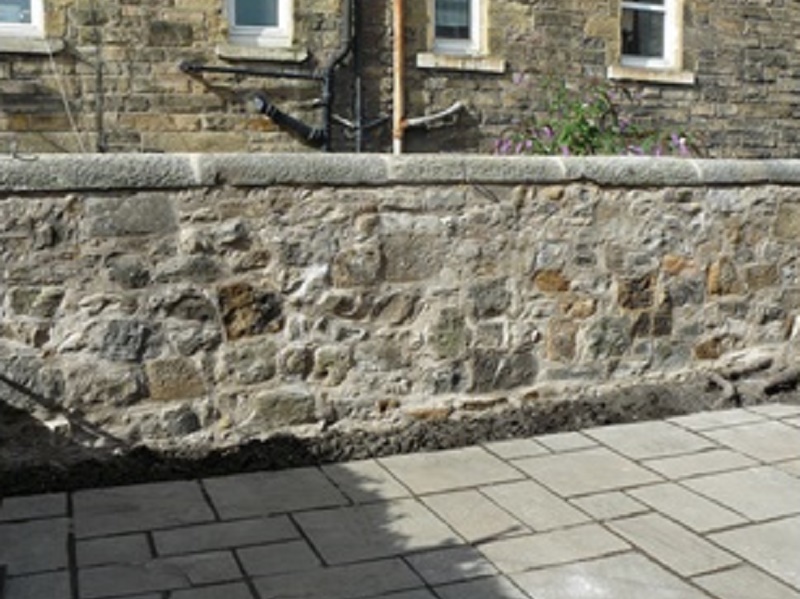
A group of residents in adjacent terraced streets in the Pilrig Conservation Area in Leith are now the satisfied owners of a safe and sound section of Victorian garden party-wall.
The wall was listing badly at about 11 degrees from the vertical and had started to collapse owing in part to structural weaknesses (Fig. 1).
Fig 1. Fig. 2


Research shows that:
Historically, building materials were largely selected based on what was available locally. For centuries prior to the widespread availability of lime, binders such as earth and clay were commonly used in Scotland. The use of these declined as they were superseded by lime, and then cement, in modern construction.
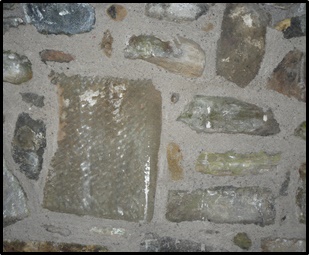
However when the section of this wall was brought down, it was evident that soil had been used as an inferior construction binder (Fig. 2) rather than lime mortar, probably in the 1890s when the houses were built on land assigned from the Balfour Estate. The soil all had to be carted away along with any rotted or degraded sandstone (deeds from the 1890s state that the stone for the houses came from Clunievar Quarry just west of Dunfermline) unsuitable for reuse.
Following demolition by hand, stone by stone, the wall was rebuilt in a traditional style (Fig. 3). The middle of the wall was filled in with smaller stones then a quicklime slurry was poured over them to bind them in (Fig. 4), giving additional strength.
Fig. 3 Fig. 4


Pointing was “knocked back” while still damp to provide a smart finish (Fig. 5). Existing stone was used where possible along with sandstone recovered from another job at one of the properties.
Fig. 5 Fig. 6

Finally the wall was topped out with the original coping stones (Fig. 6), kept damp under sackcloth to set for a couple of days, and the job was done.
Contractor:
Muir Stone Repair, summer 2016.
BACK
Get The Latest Historic Environment Events, Jobs, News And Publications In BEFS Bulletin.

BEFS NEWS
Last week BEFS hosted its annual conference, Financing the Historic Environment, in Glasgow, in collaboration with The Prince’s Regeneration Trust and Heritage Lottery Fund Scotland. To find out more, view the insightful and colourful presentations from a wide range of speakers who contributed to the conference across the two days. Furthermore, Joaquin Basile Patron from Prince’s Regeneration Trust reflects on his impressions of the conference in our blog this week.
Responding to the consultation on the future of the Scottish Planning system, BEFS has highlighted the need for a more evidence-led approach. Read the full submission here. A number of BEFS members’ also responded to the consultation and you can read their submissions on our policy topics page on Planning.
In the run up to the local government elections in May, BEFS is supporting two hustings on the built environment. The first, Architecture and Planning – A Hustings for Glasgow’s Built Environment, is organised by New Glasgow Society and will take place on 12th April at the Lighthouse in Glasgow. The second event will take place on World Heritage Day 2017. Edinburgh World Heritage will be hosting a ‘Heritage Hustings’ in Stockbridge, Edinburgh. They offer an opportunity for the general public to question the candidates on the heritage and built environment issues you feel strongly about. Both events are free but registration via the Eventbrite pages is recommended.
For tips on how to engage with your local candidates ahead of the elections, including who to contact and how, how to make the case for the built environment and useful facts and figures, check out BEFS Advocacy Toolkit. HES’s designated assets tool, which enables you to search for designations by council ward area, may also prove useful when discussing the local impact of the historic environment with politicians.
Finally, we would like to draw your attention to both the Cockburn Association’s Civic Agenda and Scottish Civic Trust’s 6 Point Action Plan ahead of the local elections (under Publications).
CONSULTATIONS
The Scottish Parliament’s Local Government and Communities Committee has today, Tuesday 4 April, launched a call for written evidence on City Region Deals and local growth deals.
The closing date for receipt of submissions is Tuesday 2 May 2017. Guidance on Engaging Communities in Decisions Relating to Land (SG 24/03/17)
Under Part 4 of the Land Reform (Scotland) Act 2016 (“the Act”), Scottish Ministers have a duty to issue “guidance about engaging communities in decisions relating to land which may affect communities” (“the Guidance”). The consultation seeks the views of key stakeholders on the draft Guidance.
Closes 16 Jun 2017.
CONSULTATION RESPONSES
Summary of responses and government response to the permission in principle and brownfield registers chapters of the technical consultation on planning changes
Latest quarterly statistics on planning applications decided in October to December 2016 show that the average decision time for local developments was three days slower than the previous quarter, but one day faster than the equivalent quarter in the previous year.A Civic Agenda for Edinburgh (Cockburn Association 03/04/17)
The Cockburn Association has published a Civic Agenda ahead of the local council elections next month. The agenda recognises that Edinburgh is growing and will continue to grow, but asserts that it is essential that growth is managed in ways that enhance the qualities of the city.
Scottish Social Housing Charter April 2017 (SG 28/03/17)
The first Charter came into effect on 1 April 2012 and was reviewed during 2016. This revised Charter was approved by Parliament and has effect from 1 April 2017.
6-Point Action Plan (SCT 24/03/17)
The Scottish Civic Trust has issued a six-point action plan for the new administrations of Scotland’s local authorities after the May elections.
Scotland strengthens commitment in response to Paris Agreement. A joint agreement committing the Scottish Government and the Government of California to work together to tackle climate change has been signed today.£30 million announced to help makes homes warmer (SG 03/04/17)
Interest-free loans now available to help reduce fuel bills. The Scottish Government’s Home Energy Efficiency Programme Scotland (HEEPS) has announced £30 million of funding to help householders make their homes more energy efficient.
Crown Estate Scotland (SG 01/04/17)
Control of multi-million pound assets will benefit local communities. Powers over the revenue and management of Crown Estate resources in Scotland have been transferred to the Scottish Government, giving communities a stronger voice in how these assets are managed.
£16m for affordable housing (SG 30/03/17)
Investment in new homes to rent for Shetland, Borders and Fife. Affordable housing in Shetland, Borders and Fife has received a boost of £16 million this month thanks to Scottish Government investment in charitable bonds.
UK housing benefit changes ‘shameful’ (SG 26/03/17)
Support for young people at risk of being pushed into homelessness. More young people in Scotland will be at risk of homelessness due to UK Government changes to housing benefit, Social Security Secretary Angela Constance has said.
The European Commission and Europa Nostra revealed today the winners of the 2017 European Union Prize for Cultural Heritage / Europa Nostra Awards, Europe’s top honour in the heritage field.New-look Saltire Civil Engineering Awards launched (ICE 04/04/17)
All professions working in the built environment are invited to nominate projects or project phases located in Scotland and substantially completed in 2016/17. The Saltire Civil Engineering Awards celebrate outstanding civil engineering achievement, innovation and ingenuity in Scotland and have grown into the highest honour for engineering excellence in the built environment.The closing date for submissions will be 4pm on Friday 12 May, 2017.
Are City Region Deals worth the headlines, asks Committee (SP 04/04/17)
The Local Government and Communities Committee is looking for a variety of opinions from organisations and members of the public on the purpose of City and Region Deals, whether they are working for communities and how they are being run.
New measures to unlock brownfield land for thousands of homes (DCLG 03/04/17)
Councils will have new tools to speed up development of derelict and underused land for new homes, Housing and Planning Minister Gavin Barwell confirmed today (3 April 2017). Local authorities across the country will now have to produce and maintain up-to-date, publicly available registers of brownfield sites available for housing locally.
Romans, Picts, Steampunks and Guerrilla Knitters to Celebrate Scotland’s Six Iconic Sites (SoAoS 30/03/17)
Scotland’s six World Heritage Sites will be celebrated with six coordinated events for the first time on World Heritage Day.
Great Place Scheme Scotland (HLF Scotland 29/03/17)
“The Great Place scheme is a challenge to local leaders to work together to put culture right at the centre of their local plans.” – HLF Chief Executive, Ros Kerslake.
Recently launched in Scotland, the Great Place Scheme has been designed by HLF and partners to ensure intelligent investment in place-based regeneration. It offers funding for greater collaboration between cultural, community and civic organisations in tackling issues such as poverty and inequality, employment, education and health. With grants of £100,000 to £1m to support applicants in piloting new, more effective ways of working together, the Great Place Scheme includes everything from city-wide initiatives to smaller, rural schemes.
Royal High School Statement March 2017 (HES 28/03/17)
A statement of our position on the former Royal High School in Edinburgh.
Celebrate YHHA with MyParkScotland (greenspace Scotland 28/03/17)
MyParkScotland is Scotland’s only greenspace crowdfunding platform and on 26 April we’ll launch a History, Heritage and Archaeology project campaign theme to support groups looking for funding. If your organisation is looking for funding for a history or heritage project in your local park or greenspace then this campaign is for you. Being part of the theme will raise profile and increase coverage and donations to your project. Creating a “buzz” around the theme #myparkheritage will allow for better promotion, social media and press both locally and nationally. We are organising a training session for projects taking part on 19th April in Glasgow. To find out more contact Ian Goodman on 01786 849 757 or ian.goodman@mypark.scot.
Edinburgh Castle named 16th most visited UK attraction (HES 27/03/17)
Scotland’s top paid for visitor attraction, Edinburgh Castle, has jumped up two places in the rankings to be named as the 16th most visited attraction in the UK in 2016. Footfall at the historic site exceeded 1.7 million visitors, a 13% increase on 2015.
Climate Change Hat Trick for HES (HES 24/03/17)
Historic Environment Scotland (HES) has been awarded the World Wildlife Fund (WWF) Scotland Public Body Champion Award for the third year in a row in recognition of its work to tackle climate change, it was announced today (Friday 24 March).
Planning Places Survey (Young Scott xx/03/17)
As part of the Scottish Government’s consultation on Places, People and Planning they have asked Young Scot to run a survey aimed at seeking views on how the places where children and young people live, work or go to school should change in the future.
IHBC Guidance Note ‘Community Infrastructure Levy and Historic Buildings’ online (IHBC 22/03/17)
IHBC’s Guidance Note (GN), ‘Community Infrastructure Levy and Historic Buildings’ has been published on the IHBC’s Toolbox. Bob Kindred, IHBC Research co-ordinator and author of this Guidance Note, said: ‘This Guidance Note looks at some examples of current practice regarding the use of (or exemption from) the Community Infrastructure Levy (CIL) with regard to heritage assets.
STBF Featured in Scottish Parliament Answer (STBF 21/03/17)
There are real concerns about the lack of skills tradespeople in the traditional building sector and the Scottish Traditional Building Forum has been extremely active in educational engagement with schools and pupils to raise the profile of the careers available.
STBF Featured in Focus Magazine 2017 (STBF 21/03/17)
The activities of the Scottish Traditional Building Forum across Scotland were featured in this year’s Historic Environment Scotland Focus Magazine (page 54, we are not quite hold the front page yet).
SAH Announces Public Programming at Glasgow Conference (SAH 17/03/17)
The Society of Architectural Historians (SAH) will present a Mackintosh Symposium, public architecture tours and a seminar on heritage and sustainability as part of its 70th Annual International Conference to be held in Glasgow, June 7–11. These public programmes are designed to provide a platform for conference delegates from around the world to celebrate and study the conference’s host city and engage with the local community.
PAS submitted a response to the consultation, informed by input from our policy group, public workshops and our volunteer network. The following is a quick overview of some of the key points made in our response.RTPI Scotland: Scotland needs a clearer national development roadmap (RTPI 04/04/17)
Planners have called on the Scottish Government to establish national development priorities across Scotland and map them out clearly in a new National Development Plan (NDP).
Scottish Awards for Quality in Planning 2017 (PAS 31/03/17)
PAS is pleased to be supporting the Scottish Awards for Quality in Planning #SAQP2017, assisting again in assessing the community engagement aspect of the submitted entries. The awards celebrate achievements in planning, from the detail of processing to the bigger picture. Applications are open until 19 May.
RIAS/ RIBA Awards Scotland – 2017 Shortlist Announced (RIAS 29/03/17)
The Royal Incorporation of Architects in Scotland (RIAS) are pleased to announce a 27 strong shortlist for the 2017 awards.
My Place Award Winners 2017 (SCT 23/03/17)
The winning and commended projects in the Scottish Civic Trust My Place Awards 2017 were announced today, 23 March, by Kevin Stewart, Minister for Local Government and Housing and Colin McLean, SCT Chairman, in The Lighthouse, Glasgow.
RTPI Awards for Research Excellence 2017 (RTPI xx/03/17)
The RTPI Awards for Research Excellence recognise and promote high quality, impactful spatial planning research from RTPI accredited planning schools, and planning consultancies, in the UK, the Republic of Ireland and internationally. The Awards are now open for entries. Entries must be sent electronically to research@rtpi.org.uk by Friday 19th May 2017.
Questions marked with a triangle (?) are initiated by the Scottish Government in order to facilitate the provision of information to the Parliament.Questions in which a member has indicated a declarable interest are marked with an “R”.
S5W-08476 Christine Grahame: To ask the Scottish Government what measures are in place to permit the compulsory purchase of vacant commercial premises in town centres for the purpose of redeveloping them for social housing. (SP 30/03/17)
S5W-08477 Christine Grahame: To ask the Scottish Government what measures are in place to require an assessment of services, such as schools, public transport and medical facilities, to take place as a condition of planning consents for housing developments. (SP 30/03/17)
Questions marked with a triangle (?) are initiated by the Government in order to facilitate the provision of information to the Parliament.
Question S5W-08101: Neil Findlay, Lothian, Scottish Labour, Date Lodged: 14/03/2017.
To ask the Scottish Government when it will next review what is included in home reports.
Answered by Kevin Stewart (22/03/2017)
Question S5W-07841: Jackson Carlaw, Eastwood, Scottish Conservative and Unionist Party, Date Lodged: 07/03/2017.
To ask the Scottish Government when it will respond to the recommendations in the five-year review of the Home Report.
Answered by Kevin Stewart (16/03/2017)
• 1 to 16 April 2017 (inclusive)
• 1 July to 3 September 2017 (inclusive)
For the latest information about BEFS Members’ events see our events calendar.
European Heritage & Cultural Identity
When: Thursday, 13 April 2017 from 17:30 – 20:30.
Where: Edinburgh College of Art, Main Lecture Theatre, 74 Lauriston Place, Edinburgh EH3 9DF.
An open seminar on our shared European tangible and intangible heritage featuring: John Lowrey, University of Edinburgh, Robert Belot, Université Bourgogne Franche-Comté, UTBM, Roel During, Alterra/Wageningen University, Radu Albu Comanescu, Universitatea ‘Babes-Bolyai’ Cluj-Napoca Klausenburg, and Laurier Turgeon, Laboratoire d’enquête ethnologique et multimedia. Entry: £5 towards costs; free to Edinburgh World Heritage members.
2017 Heritage Hustings
When: 18 April 2017 from 6pm-8pm
Where: Saint Stephen’s Stockbridge, Saint Stephen Street, Edinburgh EH3 5AB.
For World Heritage Day 2017, Edinburgh World Heritage will be hosting the city’s first ever ‘Heritage Hustings’ against the backdrop of Playfair’s majestic St. Stephen’s Church. This is your chance to question the candidates on the heritage issues you feel strongly about such as the contribution of new development to the city, the care and maintenance of historic buildings, issues of planning control, and the balance between the needs of visitors and residents.
Supported by Built Environment Forum Scotland
AHSS Strathclyde Group AGM
When: 22 April 10:30 – 13:00.
Where: St Columbkille’s Church, 2 Kirkwood St, Rutherglen, Glasgow G73 2SL.
Cost: £10 (attendance at the AGM is free and the costs relate to donations, lunches and gratuities)
The meeting will take place in the church hall and will be followed by a guided tour. St Columbkille’s is a category A listed church designed by Jack Coia of Gillespie, Kidd & Coia and was completed in 1940. The church has recently undergone an extensive two phased conservation and repair project to both the exterior and the interior led by Mr Brian A. Park of Page/Park Architects. The tour will be conducted by Hamish Macbeth who was also involved with the project.
AHSS Dumfries and Galloway Group event
When: 29 April 14:15 – 16:15.
Where: Gordon Memorial Hall, St. Ninian’s Episcopal Church, Whitepark Road, Castle Douglas, Kirkcudbrightshire, DG7 1EX.
Cost: Free
‘Forgotten Railways of Dumfries and Galloway’ by Angus Rex of the Scottish Railway Preservation Society (SRPS).
Scottish Civic Trust Annual Lecture 2017
When: Tue 25 April 2017 from 17:30 – 19:30.
Where: Scottish Storytelling Centre, 43-45 High Street, Edinburgh EH1 1SR.
Merchant City, one of Glasgow’s most historic areas has experienced many changes in its time, so much so that on more than one occasion it almost disappeared from the face of the earth. Its renaissance in more recent years has become part of the city’s folklore – but the story is not over yet! We will explore how we arrived at the present, and look at some of the issues for the future.
This lecture by architect and historian David Martin is part of a series of events which celebrate, in 2017, the 50th anniversary of both the inaugural meeting of the Scottish Civic Trust and the passing of the Civic Amenities Act 1967 which introduced the concept of conservation areas.
Scottish Civic Trust is celebrating its 50th anniversary
Since 1967 the Trust has been at the forefront of celebrating and protecting Scotland’s historic environment, promoting good modern architecture, and engaging with local communities and the general public through a wide range of activities. The Scottish Civic Trust will be partnering with Glasgow City Heritage Trust to deliver a short series of events with a focus on Glasgow’s heritage, built, cultural and intangible. All events start at 7pm and are held at GCHT Offices at 54 Bell Street:
- Tobacco Merchants and Shipbuilders – Michael Hannon with an introduction by John Pelan
- Glasgow’s Cinema Experiment, Gordon Barr and Gary Painte
- Debate: Conservation vs. Evolution
When: Tuesday 9th May 5.30-7pm.
Where: Tranent Town Hall, Church Street, Tranent.
Vital information will be provided to help you:
• Find out the condition of your property
• Find out the process required to repair and maintain your property
• Learn what funding options are available to you
• Talks from professionals who can start you on the right track
• Q&A opportunity at help desks
Why not come along to this free event. If you would like to attend please BOOK YOUR PLACE rsvp to: conservation@hypostyle.co.ukMore Conservation Challenges – RIAS Spring Seminar
When: 31 May 2017; 13.00 to 17.00.
Where: The Scottish Storytelling Centre, Edinburgh
Cost: RIAS accredited members and members of Practice Services: £22 inc. VAT. RIAS member: £28 inc. VAT. Non-members: £40 inc. VAT
The RIAS conservation spring seminar is now open for bookings. Topics will include conservation work at the Capitol, Washington DC, and the Scottish architectural legacy in India. The technical components will include climate change adaptation for traditional buildings, interpreting thermal imaging and advice on working with lime for pointing and harling, including specification advice and guidance on the causes of failure, 3D laser scanning technique as used in the restoration of Glasgow School of Art. For programme and booking form click here. If you wish to book a place, please complete a booking form and email to Hayley.Kyle@rias.org.uk
Scottish Waterways Trust are looking for someone who can develop and deliver innovative programmes of education, engagement and practical heritage conservation tasks across Scotland’s canal network. Working with children, young people, volunteers and the general public we need someone who can enthuse and motivate people and connect them with the heritage of our canals.
You’ll be able to plan, co-ordinate, deliver and evaluate a range of public events, volunteering days, schools activities, walks, talks and more which help people to learn about, and care for, Scotland’s unique canal heritage. You’ll have experience in delivering programmes to our target groups, be able to build strong relationships with a wide range of key stakeholders and will have a good knowledge of cultural heritage and be skilled in conservation tasks. Travel is an essential part of this role and the post-holder is required to deliver activities in the Highlands and Lowlands, with an office base in Falkirk.
Closing date: Midday on Thursday 13th April.
Joaquin Basile Patron, Communications Intern at Prince’s Regeneration Trust, reflects on his impressions of BEFS two-day conference, Financing the Historic Environment.
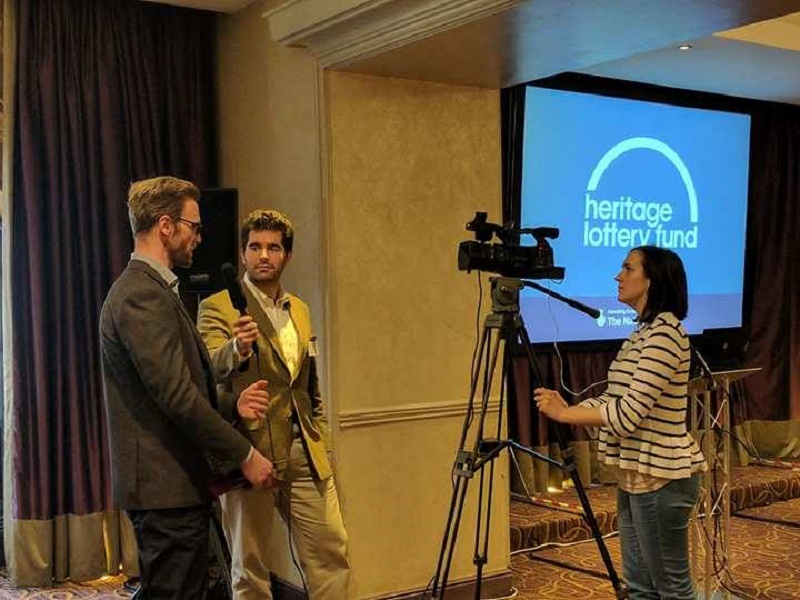
On the 29 and 30 of March 2017, I attended the conference Financing the Historic Environment organized by Built Environment Forum Scotland, Heritage Lottery Fund Scotland and the BRICK (Building Resources, Investment & Community Knowledge) programme run by The Prince’s Regeneration Trust (PRT) where I currently work.
As a communications intern from Uruguay who has lived in London for less than two months, my background in heritage is limited, making the chance to be a part of this conference a great opportunity for increasing my understanding of relevant issues within the heritage field. Before I attended this conference, I did not know how heritage projects managed to obtain funding, and I was curious to discover the different processes that organizations must go through to achieve their goals. Listening to all the presentations and interviewing some of the key people at this conference allowed me to understand that finding funding for heritage projects can be a struggle, but with determination and community engagement, it is not impossible and, indeed, there are many success stories.
Different methods to achieve financial goals were successfully explored in both days of Financing the Historic Environment. On day one, a main topic discussed was “Commercial Investment in the Historic Environment,” which guided participants to better understand this alternative method for obtaining funds for project development. Representatives from Scottish Property Federation, Trevor Osborne Property Group and the Royal Bank of Scotland examined the risk factors behind investing in a historic building. Although the speakers initially established a slightly pessimistic scenario for historic buildings by agreeing on the greater economic appeal of modern buildings, they did share hope for those who intended to restore heritage sites. When an audience member enquired on how to address some of the given risks, the speakers agreed that, although the lack of flexibility and lower-level efficiency of historic buildings represent a risk to investors, the negative impact of these factors might be decreased through community engagement, increasing a project’s chances for funding.
On day two, I was able to understand the benefits of tourism on the preservation of historic treasures. On the section “Heritage Tourism Investment” Jana Hutt from Knockando Woolmill, Martin Hulse from Dunston Staiths and Paul Higson from Portsoy Sail Loft discussed their work on projects that were meant to attract tourism. Although combining touristic activity and historic buildings can be a challenging task, these speakers emphasized how a deep knowledge of a heritage project can benefit the project’s outcomes. When an attendee asked about the importance of collaboration among different heritage projects, Ms. Hutt argued that it is important to collaborate with other local projects to achieve better results. Day two also provided examples of success stories to help inspire delegates who are working on similar projects.
Overall, “Financing the Historic Environment” was a huge success, trending locally on Twitter (with #HeritageFinance) and with great attendance both on 29th and 30th of March. Personally, this conference has taught the difficulties for some projects to reach completion but also how rewarding it is for all those who were involved every step of the way. The tools provided by each speaker will hopefully encourage the preservation of other historic buildings that are significant to the history of the United Kingdom and that have the potential to provide new jobs and revive a local community. The diversity of the speakers presenting at Financing the Historic Environment further elevated this event by exposing me and the rest of the attendees to the benefits (and challenges) of obtaining both public and private funding and by providing insights into different heritage projects. Events such as Financing the Historic Environment share BRICK’s goals of supporting community groups that are trying to create a better future for their local area by saving their heritage sites. I believe that these kinds of events can be meaningful for communities and lead to new projects. I sincerely hope that more collaborations among heritage organizations happen in the future to preserve, what I see to be, one of the biggest parts of the UK’s culture.
BACK
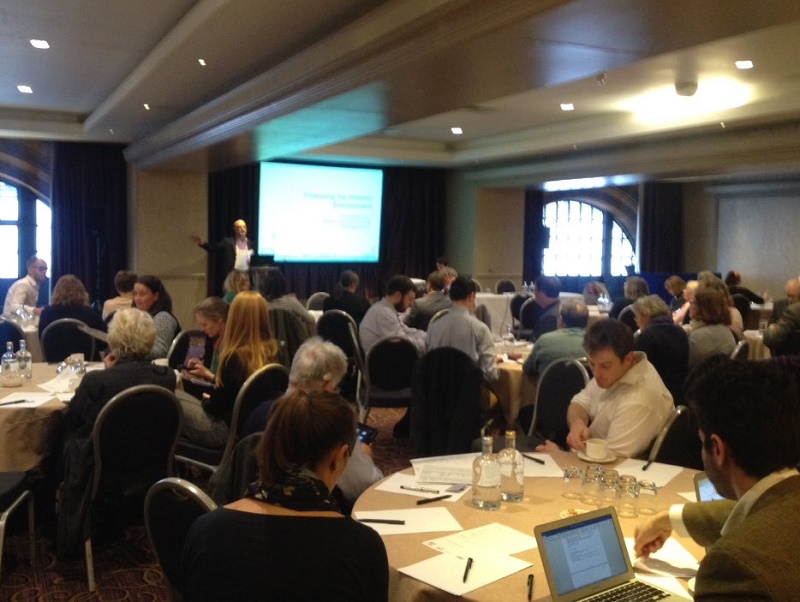
Insightful and colourful presentations from a range of speakers who contributed to BEFS two-day conference in Glasgow.
2017 is the Year of History Heritage and Archaeology, a celebration of what gives Scotland its unique character and draws people to live, work and visit. Caring for these assets is a collaborative effort across the United Kingdom undertaken by a wide range of organisations, from voluntary community groups to large-scale commercial development, public bodies and local and national government.
These are challenging times for public sector budgets and while the Community Empowerment (Scotland) Act creates the potential for transfer of historic assets to communities there remains a need for the commercial sector to invest in historic places. In a changing economic landscape, an era of rapid technological advancement and the need to mitigate the challenges of climate change there is no escape from the historic environment’s need for increased investment.
What are the challenges faced by the investment community in developing historic buildings? How does grant aided investment lever in additional funding and stimulate economic activity? How can local authority and public body asset management make the most of the historic environment? What makes small scale tourist sites financially viable? How are national heritage organisations approaching investment in their portfolios? How can the heritage sector help overcome any barriers?
BEFS two-day conference, organised in collaboration with Heritage Lottery Fund Scotland and the BRICK programme run by The Prince’s Regeneration Trust, explored these questions and how local communities can be at the heart of solutions. To find out more, view the presentations of our wide range of speakers across the two days:
DAY ONE
Commercial Investment in the Historic Environment
- Paul Curran, Scottish Property Federation
- Robert Moore, Trevor Osborne Property Group
- Stuart Heslop, Royal Bank of Scotland
Local Investment
- Sarah Kettles, Conservation Area Regeneration Scheme
- Alan Lodge, Townscape Heritage Initiative
- Robin Webster, Glasgow City Heritage Trust
Keynote
Heritage Asset Management
- Richard Cairns, West Dunbartonshire Council
- Stewart Adams, NHS
- Gary Brown, Brymbo Heritage Group
Keynote
- Ian Marcus, The Prince’s Regeneration Trust
DAY TWO
Heritage Tourism Investment
- Jana Hutt, Knockando Woolmill
- Martin Hulse, Dunston Staiths
- Paul Higson, Portsoy Sail Loft
Keynote
Access to Funding
- Oluwaseun Soyemi, Heritage Enterprise
- Gordon Barr, Architectural Heritage Fund
- Ailsa Raeburn, Scottish Land Fund
Funding the National Collections
- Bryan Dickson, National Trust for Scotland
- David Mitchell, Historic Environment Scotland
Keynote
- Scott McCauley, New Lanark Trust
List of delegates who attended the conference.
BACK
Organised in collaboration with Heritage Lottery Fund Scotland and the BRICK programme run by The Prince’s Regeneration Trust, this conference will take place on 29th-30th March at the Grand Central Hotel, Glasgow.

Date: 29th and 30th March 2017.
Venue: Grand Central Hotel, Glasgow.
Organisers: Built Environment Forum Scotland, Heritage Lottery Fund Scotland and the BRICK programme run by The Prince’s Regeneration Trust.
2017 is the Year of History Heritage and Archaeology, a celebration of what gives Scotland its unique character and draws people to live, work and visit. Caring for these assets is a collaborative effort across the United Kingdom undertaken by a wide range of organisations, from voluntary community groups to large-scale commercial development, public bodies and local and national government.
These are challenging times for public sector budgets and while the Community Empowerment (Scotland) Act creates the potential for transfer of historic assets to communities there remains a need for the commercial sector to invest in historic places. In a changing economic landscape, an era of rapid technological advancement and the need to mitigate the challenges of climate change there is no escape from the historic environment’s need for increased investment.
What are the challenges faced by the investment community in developing historic buildings? How does grant aided investment lever in additional funding and stimulate economic activity? How can local authority and public body asset management make the most of the historic environment? What makes small scale tourist sites financially viable? How are national heritage organisations approaching investment in their portfolios? How can the heritage sector help overcome any barriers?
This two-day conference, organised by Built Environment Forum Scotland, Heritage Lottery Fund Scotland and the BRICK programme run by The Prince’s Regeneration Trust, will explore these questions and how local communities can be at the heart of solutions.
View the full programme here.
BACK
Get The Latest Historic Environment Events, Jobs, News And Publications In BEFS Bulletin.

BEFS News
BEFS conference, Financing the Historic Environment, organised in collaboration with Heritage Lottery Fund Scotland and the BRICK programme run by The Prince’s Regeneration Trust, will take place on 29th and 30th March at the Grand Central Hotel, Glasgow. Check out the programme and booking your ticket here.
In the run up to the local government elections in May, HES has created a tool to search for designated assets by constituency and council ward. This interactive searchable map will prove a useful advocacy tool for you and/or your organisation when discussing the impact of the historic environment with your local politicians.
In addition to BEFS conference, there are a great number of events coming up this month organised by BEFS members and associates. Check out the ‘events’ section for full details.
Consultations
Consultation on HES Managing Change in the Historic Environment: Windows
Consultation on one in a series of guidance notes offering best practice advice on specific topics relating to the historic environment. They provide guidance on making changes to the historic environment in line with Scottish Planning Policy and Historic Environment Scotland Policy Statement. HES is particularly keen to hear from those who have experience in applying for permission to replace windows (whether as an applicant or agent) in listed buildings or within conservation areas and those in local authorities involved in determining applications.
This consultation will close at 6pm on Friday 28 April 2017.
Land Rights and Responsibilities Statement: A Consultation
A consultation on the Land Rights and Responsibilities Statement, which is a set of principles with an overarching vision that will guide the development of public policy on the nature and character of land rights and responsibilities in Scotland.
Closes 10 Mar 2017.
Consultation Responses
Community Empowerment (Scotland) Act 2015 – Participation Requests – Consultation on Draft Regulations – Analysis of Consultation (SG 23/02/17)
This report provides an analysis of responses to the Scottish Government consultation on draft regulations and guidance associated with participation requests under the Community Empowerment (Scotland) Act 2015. The consultation took place between 21 March 2016 and 22 June 2016.
Historic Environment Protection Reform Group
Summer Consultation 2016 responses: Heritage Protection Reform Proposals
Publications
Scottish Local Government Finance Statistics 2015-16 (SG 28/02/17)
Scottish Local Government Financial Statistics is an annual publication that provides a comprehensive overview of Scottish Local Authority financial activity. The publication covers Local Authority income, revenue and capital expenditure, outstanding debt, local taxation and Local Authority pensions.
Scottish Government News Releases
82 new affordable homes for Govan (SG 01/03/17)
£6.8m investment in charitable bonds. South Glasgow is set to benefit from 82 new affordable homes for social rent, helped by £5 million support from an innovative Scottish Government scheme.
Supporting urban regeneration (SG 28/02/17)
The Scottish Government’s SPRUCE (Scottish Partnership for Regeneration in Urban Centres) fund has been so successful that more money is now available. The fund initially invested £50 million, in loan form, in regeneration and energy efficiency schemes across Scotland. As those loans are starting to be repaid and some ahead of time, the investment can be recycled and used to deliver further regeneration projects.
Brexit meeting update (23/02/17)
“Urgent answers needed” on powers, farming, fisheries and environment. Guarantees over future powers and the protection of European funding and market access are needed urgently, Rural Economy Secretary Fergus Ewing said.
Third sector vital to EU stability (23/02/17)
Uncertainty for sector in light of Brexit. Withdrawal from the EU would pose a threat to Scotland’s strong and dynamic third sector, which plays a crucial role in the drive for social justice and inclusive economic growth.
Commitment to regeneration (SG 21/02/17)
Clyde Gateway to benefit from £6.5 million of Scottish Government funding. Scotland’s largest regeneration project, Clyde Gateway has been awarded a £1 million loan from the Scottish Government’s SPRUCE (Scottish Partnership for Regeneration in Urban Centres) fund.
Tackling Climate Change (SG 20/02/17)
£10 million Climate Challenge Fund awarded. More than one hundred organisations across Scotland are to benefit from almost £10 million of funding to support local action to tackle climate change.
Scottish Land Fund awards (SG 16/02/17)
11 community groups share £2.1 million to develop community spaces. Communities the length and breadth of Scotland have been given the green light to realise their ambitions to take ownership of and redevelop local land.
Improving Scotland’s Energy Efficiency (SG 15/02/17)
£11m funding pot opens for new projects. A further £11 million of funding has been made available for councils across Scotland to make homes, public buildings and businesses more energy efficient.
News Releases
£6.2 million funding boost for Scotland’s historic towns and cities (HES 28/02/17)
Alex Paterson, Chief Executive of HES, announces funding to preserve the built heritage of Scotland’s town centres. Seven communities across Scotland will benefit from the latest round of Conservation Area Regeneration Scheme (CARS) funding announced today.
Review of the National Heritage Memorial Fund and Heritage Lottery Fund launched (DCMS & HLF 23/02/17)
The Government has today launched a call for evidence on the roles and responsibilities of the National Heritage Memorial Fund (NHMF) and Heritage Lottery Fund (HLF).
Housing starts hit 9-year high (DCLG 23/02/17)
The number of new build homes that have started to be built continued to rise last year to the highest level since 2007, figures released today (23 February 2017) show.
Rural land prices predicted to fall during Brexit negotiations (RICS 23/02/17)
Demand for farmland in Great Britain has further decreased, having now been declining for the last 18 months, according to the latest RICS/RAU Rural Land Market Survey.
Celebrate Scotland’s history in 2017 (HES 22/02/17)
People across Scotland are being encouraged to get up close and personal with their history this year as we unveil our programme of events for 2017 as part of Scotland’s Year of History, Heritage and Archaeology.
Historic sites break tourism record with four million visitors (HES 15/02/17)
Footfall at Scotland’s heritage attractions up 13% year-on-year. Historic Environment Scotland’s staffed heritage attractions have drawn in more visitors than ever before. Over the last 11 months – from April 2016 to present – a record breaking 4,000,000 people have flocked to historic sites across the length and breadth of the country.
Members’ News
Director’s Notes – February 2017 (EWHT 28/02/17)
Adam Wilkinson’s reflects on a busy start to the year at Edinburgh World Heritage.
SP=EED Verification in Fife (PAS 27/02/17)
Bill Lindsay – Service Manager (Development Plan) – Fife Council – blogs about commissioning PAS to deliver SP=EED Verification to a range of Fife Council staff.
Places, People and Planning – Development Planning (RTPI 24/02/17)
RTPI Scotland will working closely with our members over the coming months to prepare our response to the Scottish Government consultation paper Places, People and Planning. We have already published a paper setting out some key game changers Repositioning Planning. Alongside our Chapters we are running a series of member workshops across Scotland, each one tasked with exploring one of the review’s key themes.
Channel 4, Chocolate Media and RICS join forces to showcase the very best restoration projects (RICS 23/02/17)
Channel 4 has today announced the commission of an exciting new series, ‘Restoration of the Year’, from Chocolate Media. The series features projects entered into the RICS Awards and the series will be made in collaboration with RICS, who will judge the projects.
Delivery vs Engagement – A way through the tension? (RTPI 21/02/17)
Nick Wright gives his take on how to reconcile two potentially conflicting aims of the Planning Review: Better community engagement, and more efficient delivery.
Parliamentary Questions
Questions marked with a triangle (?) are initiated by the Scottish Government in order to facilitate the provision of information to the Parliament.Questions in which a member has indicated a declarable interest are marked with an “R”.
S5W-07480 Monica Lennon: To ask the Scottish Government what financial and practical support it makes available to communities and individuals to participate in the statutory planning process. R (SP 24/02/17)
S5W-07597 Mike Rumbles: To ask the Scottish Government what its position is on whether the initial projected cost of the Forth Replacement Crossing project was an overestimate. (SP 01/03/17)
S5W-07598 Mike Rumbles: To ask the Scottish Government whether it will provide an update on the date the Forth Replacement Crossing will be (a) completed and (b) open to the public, and how this compares with the initial projected date. (SP 01/03/17)
Parliamentary Questions & Answers
Questions marked with a triangle (?) are initiated by the Government in order to facilitate the provision of information to the Parliament.
Question S5W-06974: Pauline McNeill, Glasgow, Scottish Labour, Date Lodged: 08/02/2017
To ask the Scottish Government, further to the answer to question S5W-06198 by Kevin Stewart on 30 January 2017, whether it will provide further details of the “novel proposals” that it is assessing in relation to the building of new mid-market rent homes, and at what stage these assessments are.
Answered by Kevin Stewart (24/02/2017)
Events
For the latest information about BEFS Members’ events see our events calendar.
Painting the City, 250 Years of the New Town
When: Monday 6th March, 6.30pm.
Where: St Andrew’s and St George’s West Church, Edinburgh.
Tickets on the Door, £5
Ahead of his exhibition at the Scottish Gallery in July 2017 the distinguished watercolourist Hugh Buchanan talks about the influence of Edinburgh’s architecture on his work and how it inspired him as a student at Edinburgh College of Art.
Post War Architecture
When: Tuesday 7th March, 6pm.
Where: LT2, Dalhousie Building, Old Hawkhill, University of Dundee, DD1 4EN.
Free. Scotland’s theatres 1951-95 and St Peter’s, Cardross,
Alistair Fair and Diane Watters discuss twentieth century Scottish architecture.
‘A Monumental Essay’: a talk by Alastair Penman.
When: Saturday 11th March, 2pm
Where: Gordon Memorial Hall, St. Ninian’s Episcopal Church, Whitepark Road, Castle Douglas, Kirkcudbrightshire, DG7 1EX
Tickets on the door, £5 including refreshments. Alistair Penman is the director of the Stewartry Archaeological Trust and author of ‘Old Castle Douglas’, ‘Old Kirkcudbright’ and ‘Some Customs, Folklore, and Superstitions of Galloway’.
White, Black and Grey: Recent Discoveries at Aberdeen’s Medieval Friaries
When: 13 Mar 2017 6:00 pm – 7:00 pm.
Where: National Museum Scotland Auditorium (use Main entrance), Chambers Street, Edinburgh, EH1 1JF.
Ms Alison Cameron from Cameron Archaeology Ltd will present a lecture entitled “White, Black and Grey: recent discoveries at Aberdeen’s medieval friaries”.
Save the Royal High School Public Meeting
When: Tuesday 14th March, 6.30pm.
Where: Central Hall, Tollcross, Edinburgh.
Everyone welcome, come along to find out about the new hotel application and what you can do. #SaveRHS
Property Maintenance Event – Caring for our Common Heritage
When: Wednesday 15 March 2017. Registration from 7.00pm Start 7.30pm.
Where: Carmelite Hotel, Stirling Street, Aberdeen, AB11 6JU.
Ensure you and your neighbours protect your biggest asset. With predicted increases of extreme weather events, it has never been more important to work collaboratively with neighbours to ensure that common repairs and maintenance of your traditional tenement or flat are carried out regularly and after damage occurs.
Property Maintenance Event – Remedying Traditional Building Deterioration
When: Thursday 16 March 2017. Registration from 7.00pm Start 7.30pm.
Where: Carmelite Hotel, Stirling Street, Aberdeen, AB11 6JU.
Identifying the causes and remedying the deterioration of traditional buildings can be one of the most challenging aspects of professional practice. This event will consider approaches to better understanding, identifiying and remedying deterioration and will provide the latest thinking on the use of traditional lime mortars.
The restoration of Charles Rennie Mackintosh’s Glasgow School of Art
When: March 21 @ 7:30 pm – 8:30 pm.
Where: Regent Building Lecture Theatre, Regent Walk, Aberdeen, AB24 3FX.
Liz Davidson OBE, Hon FRIAS, IHBC, Senior project Manager, Mackintosh Project, Glasgow School of Art, will present a lecture entitled “Restoring the Mackintosh Building following the 2014 fire”, exploring this iconic structure, the influence of Mackintosh and the Four and its restoration.
Patrick Geddes: A Botanist by Design?
When: Weds March 22nd – 13.00-16.30.
Where: Royal Botanic Garden, 20A Inverleith Row, EH3 5LR.
A Riddle’s Court event in advance of the Patrick Geddes Centre for Learning opening Sept 2017. From his rural Perthshire upbringing via his Professorship at University College, Dundee, botany played a central role in Patrick Geddes’ life and work. This Riddle’s Court event in partnership with the Royal Botanic Garden Edinburgh (RBGE), will include a tour of the herbarium building and, uniquely, will reveal some of Geddes’ own botanical collections. Tickets available on Eventbrite or via SHBT.
Scottish Young Planners’ Conference 2017 – Skills that Young Planners Need to Succeed
When: 22 March 2017.
Where: The Golden Lion Hotel in Stirling.
The Scottish Young Planners’ Conference 2017’s packed programme focuses on developing essential skills. Sessions on leadership from Nicola Barclay, Chief Executive of Homes for Scotland, and innovative working from Irene Beautyman of the Improvement Service will equip delegates to be influential and effective in a reformed planning system. Hands on workshops on development economics, networking and mediation will promote active debate and participation. International contributions will place our responsibilities as planners in the global context of the New Urban Agenda. Registration is available now.
2017 Church Buildings Renewal Trust Conference in Inverness
When: 31 March 2017.
Where: Old High Church in Inverness.
The next conference of the CBRT will be held in the Old High Church in Inverness on 31st March 2017 under the title ‘Open All Hours: Churches for all the Community?’ To book please follow the link.
Training
Resourcing Scotland’s Heritage is delivering a series of training courses and events across Scotland.
Our training is best suited to registered charities and constituted community groups. Take a walk through our simple question and answer page to determine which course is right for you. We have two main training courses and a series of ‘In Focus’ events. If you are interested in any particular event or fundraising topic, please do get in touch – we may be able to bring an event to your area info@scotheritage.org.
Traditional Building Skills Training
Scottish Lime Centre Trust offer a wide range of vocational and professional courses combining theory and practical working sessions designed to ensure that there are courses to suit everyone.
Vacancies
Support Officers at Architectural Heritage Fund (AHF)
We are recruiting freelance part-time contractors in North East England and Northern Ireland and also an employed full-time post in Wales, all to start in April 2017.
Home-based, our Support Officers assist local communities who are seeking to rescue and re-utilise a historic building which they value. The AHF places particular emphasis on targeting help towards supporting community enterprises that wish to set up and/or grow their businesses in historic buildings, particularly those that are at risk and/or transferred from public ownership. Working as part of the Operations Team, each Support Officer will take a proactive approach to tackling heritage at risk by actively seeking out new projects and new types of beneficiaries of AHF support, in collaboration with the Heritage Lottery Fund and other partners.
For each role, experience of working in the heritage sector is not essential, although enthusiasm for the benefits of re-using historic buildings would be an advantage.
For the North East England role we are seeking a Support Officer with additional specialist skills in Communications, Public Relations & Marketing.
Full details including closing dates here.
Learning Officer
War Memorials Trust works to protect and conserve all war memorials within the UK.
The charity seeks a Learning Officer with initiative, enthusiasm and experience to deliver our Learning Programme. The Programme educates young people about the history and importance of war memorials and their preservation. As a conservation charity which gives repair and conservation grants the Trust’s Learning Programme is the means of engaging tomorrow’s custodians – ensuring the work we do today is continued in the years ahead. The Learning Officer delivers the Programme by producing materials and resources, shared on www.learnaboutwarmemorials.org, and undertaking visits to schools and youth groups to promote the importance of our shared war memorial heritage.
Closing date 6th March 2017 10am.
Information in the Bulletin is extracted from a number of websites including the Scottish Government (SG); the Scottish Parliament (SP); Architecture and Design Scotland (A+DS); Historic Environment Scotland (HES); Scottish Natural Heritage (SNH); Scottish Council for Voluntary Organisations (SCVO); English Heritage (EH); Design Council (DC); Department of Communities and Local Government (DCLG); Department of Culture, Media and Sport (DCMS); Department of Environment and Rural Affairs (DEFRA); National Assembly for Wales (NAW); Forestry Commission Scotland (FCS); Scottish Government Building Standards (SGBS); Europa Nostra (EN); Historic England (HE).
If you have any questions or comments on the above, or would like to submit information to be included, please get in touch with Saskia Smellie or tel: BEFS Office on 0131 220 6241
BACK
Get the latest historic environment events, jobs, news and publications in BEFS Bulletin.

BEFS News
We are delighted to introduce BEFS advocacy toolkit on BEFS new website. It is designed to provide the information you need to confidently speak up for your organisation and the built environment with politicians and councillors. It is aimed at organisations working in the built environment in Scotland, but may also be of use to individuals. The toolkit is a responsive document, which we are updating regularly with new content. So, if there is something you would like to see, do get in touch.
Ahead of the local government elections, BEFS also organised a workshop on advocacy. We invited former Labour MP for Edinburgh North & Leith and former Councillor, Mark Lazarowicz, and Museums and Galleries Scotland’s, Devon McHugh, to share their perspectives and experience. Read about it in our blog Advocacy does and don’ts.
Save the date! In partnership with the Heritage Lottery Fund Scotland and the Princes Regeneration Trust, BEFS is holding a conference on Financing the Historic Environment on 29-30 March 2017 in the Grand Central Hotel, Glasgow. Programme and booking details to follow shortly.
BEFS Annual Lecture this year returned to the topic of how Scotland addresses its housing needs. We invited Thomas Aubrey, Director of the Centre for Progressive Capitalism, and Alastair Parvin, co-founder of WikiHouse Foundation, to give their perspectives. If you missed it, you can now watch it here.
Last but not least, Kilmacolm Civic Trust share why their work concerns more than the built environment, in our second blog this week.
Consultations
Fixing our broken housing market: consultation (DCLG 07/02/17)
As part of the housing white paper, we are also consulting on changes to planning policy and legislation in relation to planning for housing, sustainable development and the environment.
Development Plan Consultations
Consultation on Outer Hebrides Local Development Plan: Proposed Plan and Associated Documents
Consultation on Raising Planning Fees
Closes 27 Feb 2017.
Land Rights and Responsibilities Statement: A Consultation
Closes 10 Mar 2017.
Consultation Responses
Property Condition and Energy Efficiency (STBF 08/02/17)
Scottish Traditional Building Forum’s submission of evidence to the Local Government and Communities Committee in response to the committee’s call for evidence on the Draft Climate Change Plan.
Publications
Social Tenants in Scotland, 2015 (SG 14/02/17)
Scotland’s Chief Statistician today released Social Tenants in Scotland 2015, a new Official Statistics publication that presents an overview of social tenants and social rented housing in Scotland for the year 2015 covering topic areas such as stock, household characteristics, housing flows, and rents and income levels.
Housing white paper (DCLG 07/02/17)
Housing white paper and supporting documents setting out the government’s plans to reform the housing market and boost the supply of new homes in England.
Architecture & Design Scotland – Annual Review 2016 (02/02/17)
We have recently published our Annual Review of 2016 – an exciting year which featured the Year of Innovation, Architecture and Design and the Festival of Architecture.
Introduction of an infrastructure charging mechanism: research report (SG 01/17)
This independent research report identifies and assesses the options for the introduction of an infrastructure charging mechanism in Scotland – Stages 1 and 2. Produced by Peter Brett Associates, it was commissioned to inform the review of the planning system.
Planning permission in principle: research report (SG 01/17)
This independent report examines the potential of granting planning permission for sites which are allocated in the development plan. Produced by Ryden LLP, it was commissioned to inform the review of the planning system.
Strategic Environmental Assessment Environmental Report on the Draft Climate Change Plan and Draft Scottish Energy Strategy (SG 27/01/17)
A joint Strategic Environmental Assessment (SEA) of the Draft Climate Change Plan: The Draft Third Report on Policies and Proposals 2017-2032 and Draft Scottish Energy Strategy: The Future of Energy in Scotland. The Environmental Report sets out the findings of this assessment.
Scottish Government News Releases
Strengthening support for creative sector (SG 03/02/17)
Creative Industry Advisory Group members and first meeting announced. Experts from across Scotland’s creative industries will meet for the first time next week to discuss how to make the sector stronger and enhance support, Culture Secretary Fiona Hyslop said today.
History sparks tourism rise (SG 31/01/17)
International visitors drawn by Scottish heritage. Scotland is capitalising on the booming demand from international tourists who wish to explore the country’s history and heritage, Tourism Secretary Fiona Hyslop revealed today. Edinburgh-based Mercat Tours reported record turnover and footfall in 2016 with a 35% increase in history walking tours of the capital in December, compared to the previous year.
News Releases
Historic sites break tourism record with four million visitors (HES 15/02/17)
Footfall at Scotland’s heritage attractions up 13% year-on-year. Scotland’s staffed heritage attractions have drawn in more visitors than ever before. Over the last 11 months – from April 2016 to present – a record breaking 4,000,000 people have flocked to historic sites across the length and breadth of the country.
Professor Leigh Sparks: So you think you know Scottish Towns? (STP 15/02/17)
Deputy Principal of the University of Stirling, and Chair of Scotland’s Towns Partnership, Professor Leigh Sparks introduces the launch of the Understanding Scottish Places 2 data tool.
Place Standard nominated for prestigious planning industry award (A&DS 13/02/17)
The Place Standard is a finalist in the category for Planning for Wellbeing at the Royal Town Planning Institute’s (RTPI) Awards for Planning Excellence 2017. The RTPI Awards are the most established and respected awards in the UK planning industry.
£20m to build homes fit for the future (WG 09/02/17)
Communities and Children Secretary Carl Sargeant today announced a new programme to deliver innovative models of housing to help increase the number of homes built in Wales.
SPAB asks: ‘What’s your favourite old building?’ (IHBC 08/02/17)
The Society for the Protection of Ancient Buildings (SPAB) publishes a ‘National Treasure’ feature in its quarterly SPAB Magazine – what building would you like featured?
Orkney’s Skara Brae shortlisted as UK’s best heritage site (Scotsman 08/02/17)
The 5,000-year-old settlement is the only Scottish visitor attraction on the shortlist drawn up by travel writer Bill Bryson for the BBC Countryfile Magazine Awards.
Government announces ambitious plan to build the homes Britain needs (DCLG 07/02/17)
The government has introduced bold new plans to fix the broken housing market and build more homes across England.
Baroness Andrews leading debate on Built Environment Report in House of Lords (IHBC 03/02/17)
Following on from the publication last year of the report of the Select Committee on National Policy for the Built Environment, it was debated in the House of Lords on Tuesday 24 January, with Baroness Andrews leading discussions.
£10 million for regeneration of town centres (WG 03/02/17)
A £10 million fund to help bring empty, underused sites and premises in town centres back into use has been announced by the Cabinet Secretary for Communities and Children Carl Sargeant.
Civil society calls on EU leaders to recognise fundamental role of cultural heritage for the future of Europe (EN 02/02/17)
Ahead of the informal summit of European leaders on the future of the EU in Valletta on 3 February 2017, 40 European heritage networks that form the European Heritage Alliance 3.3 are urging EU leaders to recognise the fundamental role of Europe’s shared cultural heritage for bringing people in Europe together.
Iconic Leith flats recognised at highest listing category (HES 01/02/17)
Historic Environment Scotland have decided to recognise Leith’s iconic Cables Wynd House (aka the ‘Banana Flats’) and neighbouring Linksview House at Category A. 1960s Brutalist buildings represent integral step in Scotland’s social housing evolution.
Parliamentary Questions
Questions marked with a triangle (?) are initiated by the Scottish Government in order to facilitate the provision of information to the Parliament.Questions in which a member has indicated a declarable interest are marked with an “R”.
S5W-06974 Pauline McNeill: To ask the Scottish Government, further to the answer to question S5W-06198 by Kevin Stewart on 30 January 2017, whether it will provide further details of the “novel proposals” that it is assessing in relation to the building of new mid-market rent homes, and at what stage these assessments are.(SP 09/02/17)
Parliamentary Questions & Answers
Questions marked with a triangle (?) are initiated by the Government in order to facilitate the provision of information to the Parliament.
Question S5W-06198: Pauline McNeill, Glasgow, Scottish Labour, Date Lodged: 16/01/2017
To ask the Scottish Government whether it has any new models planned for building new homes and, if so, what they are.
Answered by Kevin Stewart (30/01/2017)
Question S5W-05981: Andy Wightman, Lothian, Scottish Green Party, Date Lodged: 09/01/2017
To ask the Scottish Government what criteria it uses to determine whether housing can be regarded as “affordable”.
Answered by Kevin Stewart (18/01/2017)
Question S5W-06315: Gordon Lindhurst, Lothian, Scottish Conservative and Unionist Party, Date Lodged: 18/01/2017
To ask the Scottish Government how it can work with Edinburgh City Council to bring the reported 5,000 empty homes in the city back into use in order to tackle housing shortages.
Answered by Kevin Stewart (31/01/2017)
Other Parliamentary Activity
The transcript of the Scottish Government Debate on Improving Scotland’s Planning: Improving Scotland’s Places that took place on Thursday, 26th January 2017 can be read in full here.
Motions
Motion S5M-03748: Fiona Hyslop, Linlithgow, Scottish National Party, Date Lodged: 30/01/2017
Celebrating Our Past: Scotland’s Year of History, Heritage and Archaeology
That the Parliament recognises the contribution that Scotland’s Themed Years play in celebrating and promoting some of its greatest assets; welcomes the 2017 Year of History, Heritage and Archaeology and the opportunities that it provides to celebrate Scotland’s rich and vibrant history and heritage with the people of Scotland and visitors alike, and acknowledges the social, cultural and economic benefits that can be realised by harnessing the opportunities offered by the Year of History, Heritage and Archaeology to raise the profile of Scotland, both nationally and internationally, as a world-class tourism destination.
Supported by: Alasdair Allan
Current Status: Taken in the Chamber on 31/01/2017
Motion S5M-03748.1: Lewis Macdonald, North East Scotland, Scottish Labour, Date Lodged: 30/01/2017
Celebrating Our Past: Scotland’s Year of History, Heritage and Archaeology
As an amendment to motion S5M-03748 in the name of Fiona Hyslop (Celebrating Our Past: Scotland’s Year of History, Heritage and Archaeology), insert at end “, and considers that adequate funding of local authorities, Historic Environment Scotland and other relevant agencies will be essential to maintain the quality and accessibility of museums, galleries and heritage sites in 2017 and beyond.”
Current Status: Taken in the Chamber on 31/01/2017
Events
For the latest information about BEFS Members’ events see our events calendar.
#HHA2017 ScotlandHour
When: Wednesday 22 February, 21:00 – 22:00
Where: Twitter
ScotlandHour is delighted to announce that Dig It! 2017 is the Takeover Host for the #ScotlandHour February 2017 chat celebrating the Year of History, Heritage and Archaeology. Visit the website to find out how to get involved, read the questions ahead of time or learn more about the host and co-hosts.
Period Colour Today: Key Considerations for Architects & Interior Designers
When: 23rd February 2017 from 9am – 1pm.
Where: Scottish Storytelling Centre, 43-45 High Street, Edinburgh EH1 1SR.
Please join us at the first in a series of RIAS approved Edinburgh World Heritage CPD seminars, designed specifically for a professional architecture and interior design audience. At this informative half-day session you will hear about the importance of colour in conserving the values of Edinburgh’s World Heritage Site; learn about the importance of scientific paint analysis with case studies; understand the benefits of using natural paint products; gain a historical perspective based on the interior design of Scottish country houses.
Archaeology Scotland Caves and Castles Time Tour
When: Saturday 25th March 2017.
Where: across central and east Fife.
We will be touring historic and archaeological sites across central and east Fife in the comfort of a luxury bus and travelling back at least 4,000 years on this all-day excursion. Our on-board guide, Peter Yeoman, will be describing the sites and giving insight into the lives of our ancestors as we visit different sites including the Balfarg Henge, Balbirnie Stone Circle, East Lomond Hillfort, Lochore Castle, the intriguing Wemyss Caves and others sites along the way. Places are limited so call 0300 012 9878 to book your seat or email development@archaeologyscotland.org.uk you can also book online.
CIfA2017 Archaeology: a global profession
When: Wednesday 19 to Friday 21 April 2017
Where: Newcastle University.
Our annual conference and training event is bursting with exciting sessions, CPD workshops and networking opportunities. You can see what is on the programme on our website http://www.archaeologists.net/conference/2017
Don’t forget to book your place via Eventbrite.
The Dundee Conservation Lecture series programme is now out and can be viewed here. The programme is now in its 24th year and is a joint initiative between the University of Dundee, The Architectural Heritage Society of Scotland and Dundee Historic Environment Trust.
Training
Asbestos awareness training course
When: Wednesday 29 March between 12pm and 4pm.
Where: The College of Animal Welfare (CAW) in Edinburgh.
RSK Environment Ltd. will deliver the training. The aim of the course is to provide awareness and develop knowledge of the hazards and risks posed by asbestos containing materials (ACMs), in order that employees can conduct work safely. This course is suitable for archaeologists of all levels of experience and responsibility. Places are free for CIfA members! For more details and to book please go to our Eventbrite page.
Vacancies
Trusts & Events Fundraiser Part-Time
Great opportunity for someone with Trust fundraising experience who also likes to get out meeting people at events. Are you good with social media? If you can write a good case for support and are a great organiser then Archaeology Scotland want to hear from you. Grants fundraising is an important part of our funding strategy but equally important is raising awareness of our work through our events. If you think you have the right combination of skills then send us a letter of application and your CV to e.macqueen@archaeologyscotland.org.uk
Closing Date for Applications: 23rd February 2017.
Interviews will be held on the 27th February 2017 at our office in Musselburgh.
Scottish Civic Trust Project Officer – Doors Open Days & My Place Photography Competition
3 days per week, 9-5
Salary: £25-26K PA (pro rata) depending on experience.
This is a fixed-term contract, which will run to 31 March 2018. The role may be extended beyond this period depending on 3rd-party funding.
This is a unique opportunity to help deliver two of Scotland’s most exciting architecture and heritage projects.
Closing date for applications: Friday 17 February 2017.
National Project Manager- Scottish Empty Homes Partnership-Edinburgh
Maternity cover until January 2018 – Edinburgh
Shelter Scotland is looking for an influential individual with strong project management and project development experience to join us as National Project Manager and bring strategic direction and day-to-day management to the Scottish Empty Homes Partnership (SEHP).
Closing date: Tuesday 28th February 2017 at 11.30pm.
Themed Years Marketing and Communications Executive
The post of the Themed Years Marketing & Communications Executive will operate as part of the wider EventScotland/VisitScotland Communication Teams and as such will be an important conduit for information and coordination. The post holder will be responsible for day to day duties of Scotland’s Themed Years Marketing and Communications activity.
Job Closing Date : 01/03/2017.
Recruiting a part time Assistant Director
The Cockburn Association has established an Urban Design Group, the Assistant Directors manage the activities of this Group. The Assistant Directors bring together expert contributions from different professional backgrounds as a basis for the Cockburn Association’s submissions on significant planning proposals and on draft strategic plans affecting the city and its environs. We are looking for an individual committed to place-making – influencing how areas within Edinburgh can be made as attractive, sustainable, and functional as possible, so as to enrich the lives and experience of all those who live and work in, and those who visit, the city.
Deadline for applications: Friday, 3 March 2017.
Members’ News
Would you like to be recognised for your skills in community engagement? (PAS 14/02/17)
We hear a lot about the importance of community engagement in the planning system and more widely in community planning and placemaking generally – but do we really know what effective public involvement looks, or even feels, like?
We’ve launched a brand new online shop (GCHT 08/02/17)
By buying from Glasgow City Heritage Trust’s online shop you are supporting our charitable work promoting the understanding, appreciation and conservation of Glasgow’s historic buildings for the benefit of the city’s communities and its visitors, now and in the future
Advocacy from the perspective of someone who has been on the receiving end of it in national and local government.
Earlier this month, BEFS launched an advocacy toolkit designed to give organisations and individuals the information needed to confidently speak up for their local built environment with politicians and councillors. Coinciding with the launch and ahead of the local government elections in May, BEFS organised a workshop on advocacy for its membership. We invited former Labour MP for Edinburgh North & Leith and former Councillor, Mark Lazarowicz, to share his perspective. The aim of the workshop was to hear about the dos and don’ts of advocacy from someone who has been on the receiving end of it for over 30 years, both in local and national government. We were also joined by Museums and Galleries Scotland’s Relationships and Partnerships Development Manager, Devon McHugh, who shared ideas and her experience one year into an advocacy campaign of behalf of approximately 400 museums across Scotland.
By the end of the afternoon, our speakers had clearly identified a number of key messages on successful advocacy, including the importance of building relationships with politicians, the need to involve constituents and ‘keep it local’ and that the time for advocacy head of the local elections is now!
Mark Lazarowicz kicked off the discussion with pragmatic and practical advice on contacting your local politicians. The most effective advocacy is from constituents. Therefore, if you are an organisation, get your members involved. He emphasised the importance of contacting the politician responsible for the issue in hand; do not address local politicians on national policy and vice versa. Remember that both local and national politicians have full time jobs, so do not turn up unannounced or unprepared. Be practical in your approach. Bulk emails do have their place and a high volume of emails from constituents may well get an issue on the agenda. Summarise key points and link to further information as opposed to sending large chunks of text. Invite all your local representatives to your events, to meet your group or organisation, to visit that historic site or exhibition, as ahead of elections they will likely welcome the opportunity to meet constituents. Mark also stated that the role of cross party groups and providing evidence to cross party committees at a national level should not be underestimated.
In relation to the upcoming elections, this is the time to get pledges of commitment from your local politicians to champion your local built environment interests. A good option for making contact with politicians is at larger cross party hustings. Provide evidence and data to support your key points and link with human stories and the impact on communities and people. You can also contact your representatives via social media. Politicians often manage their own social media accounts and will follow discussions on local issues or respond to your questions. Remember that local party manifestos and councillors’ pledges and commitments are managed at a local level. There is no central party line. So, develop key messages based on local interests and the impact of the built environment on local communities.
Ultimately, both guest speakers highlighted that engagement with politicians and councillors is not only feasible but also expected. Politicians and councillors expect to be at the receiving end of advocacy ahead of an election and if invited to events in their local area or ward are often delighted to attend. Politicians are interested in and beholden to their constituents. Therefore, advocacy needs to be about people and communities not just things. As Devon put it, lead with the work you do, how it is important, and how it makes people’s lives better. Build relationships with your local politicians, approaching them with a positive message or invite them to an event or to meet your team. This will make them more receptive when an issue arises. Finally, tailor your advocacy to local needs and interests.
For more tips and tools on which of your local representatives to contact and how, as well as information around messaging and building the case for the built environment, check out BEFS Advocacy Toolkit.
BACK