This report identifies projects about or connected to heritage in Scotland that have received funding from the European Union (EU).

A research report has just been published which shows that over 280 projects received a minimum of £36.8m in EU funding in the period from 2007-2016. These figures are likely to be an under-estimate due to the methodology used. Researchers Euclid are confident that the projects are relevant to the broad definition of heritage used.
This report has been produced in tandem with similar reports for Creative Scotland and Museums and Galleries Scotland. Taking into account that some projects appear in two or more reports as they cover a range of cultural areas, the total level of funding for the culture and heritage sector from EU sources is estimated to be over £59m covering around 650 projects funded since 2007.
By way of comparison, Euclid reported earlier this year that in England and Wales, heritage focused or related projects received a minimum of £450m in EU funding in the period from 2007-2016.
The breakdown in EU funding of Scotland’s heritage projects –
£27m from the European Structural & Investment Funds:
- £23.85m from the ERDF (European Regional Development Fund), and activity
- £350,000 from the ESF (European Social Fund)
- £2.78m from the EAFRD (European Agricultural Fund for Rural Development, including LEADER) for rural based projects
£9.8m (using the exchange rate at 1 January 2014 of €0.8298/£1) from Interreg and the trans-national funds (including programmes: Horizon 2020, Interreg, Erasmus+)
Most of the relevant data has been gathered via online databases and for some more extensive databases, the initial filtering was through keyword searches. For these, a number of key words used which were agreed with the commissioning body. For HES, the agreed keywords were: ancient, archaeology/ical, battlefield, castle, conserve/ation, heritage, history/ical, monument, museum, palace, tourism/t. The researcher acknowledges that it is possible that a small number of projects may have been missed as a result of using these particular key words.
BACK
Get The Latest Historic Environment Events, Jobs, News And Publications In BEFS Bulletin.

BEFS NEWS
BEFS welcomes new research on financing local infrastructure using land value capture and the potential levels of investment for the Edinburgh City region. Read the press release and full report here.
The author of the report, Thomas Aubrey, Director of the Centre for Progressive Capitalism, reflects on who should benefit from rising land value in our blog this week.
Ahead of the general election, RICS has carried out analysis of Scottish party manifestos from a built environment perspective, which can be found in the news section below and on their website. For insight on UK party manifestos check out the analysis by Heritage Alliance here.
CONSULTATIONS
Guidance on Engaging Communities in Decisions Relating to Land
Consultation closes on 16 June 2017.
CONSULTATIONS RESPONSES
Consultation on the Relaxation of Planning Controls for Digital communications Infrastructure – Analysis of Responses (25/05/17)
An analysis of the responses to the 2016 Scottish Government public consultation on ‘The Relaxation of Planning Controls for Digital Infrastructure’ (e.g. phone masts, street cabinets and antennas)
PUBLICATIONS
Climate Ready Scotland: Scottish Climate Change Adaptation Programme. Third annual progress report 2017 (SG 30/05/17)
Barriers to community engagement in planning: research study (SG 22/05/17)
This independent research identifies the barriers to communities engaging in the planning system. Produced by Yellow Book Ltd, it was commissioned to inform the review of the planning system.
SCOTTISH GOVERNMENT PRESS RELEASES
Discretionary Housing Payments (SG 30/05/17)
Over the past year almost 113,000 awards have been made under the Discretionary Housing Payments (DHP) scheme, with a total value of £51.9 million.
Surge in overseas visitors (18/05/17)
Statistics published by the Office for National Statistics (ONS) today highlight an additional 155,000 overseas visits were made to Scotland last year compared with 2015, strongly supported by a rise in the number of tourists from North America.
NEWS RELEASES
Fuelling uncertainty with a dateless commitment to referendum: SNP Manifesto (RICS 30/05/17)
The Scottish National Party (SNP) has published a manifesto that focuses on Brexit and the party’s track record, with their pledges resoundingly placing people over land and property.
Stretching the concept of buildings (RICS 30/05/17)
“The way we interact with the built environment is changing”, claimed Phillip Ross, CEO UnGroup. With new technologies and innovations set to have huge ramifications on both the way we live and work in the future, it has never been more important for built environment professionals to stand up and take notice in order to ensure that UK real estate remains relevant and fit for purpose in this time of unprecedented change.
2020 European Green Capital & 2019 European Green Leaf Awards – Open (STP 29/05/17)
The Green City – Does your city have what it takes to be the next European Green Capital or European Green Leaf winner? For the first time, in order to celebrate the 10th year of the European Green Capital competition, the Commission will award €350,000 to the winning city of the 2020 European Green Capital title and €75,000 to the winner of the European Green Leaf 2019 title.
Scottish Green Party manifesto: small in size; big on tax (RICS 29/05/17)
The Scottish Green Party (SGP) has published a concise 15-page manifesto outlining key UK priorities with a focus on the greening of national policy, an alternate UK tax framework, and housing. Fielding just three candidates in Scotland, the SGP has concentrated its campaign target areas, and the same strategy appears to have been applied to their manifesto pledges.
Scottish Traditional Building Skills Demonstration (STBF 25/05/17)
The Scottish Traditional Building Forum organised a hugely successful traditional building skills demonstration in St Andrews Square Gardens, Edinburgh on 22 & 23 May 2017. The event featured local apprentices demonstration traditional building skills including stonemasonry, slate roofing, joinery and painting and decorating.
Rights and protections must remain following Brexit (SCVO 24/05/17)
Jackie Brock, Chief Executive of Children in Scotland, reflects on Brexit. On the radio last week a group of ‘Remainers’ were asked if they would vote in the General Election for parties promising a second EU referendum. Most said “no” – their line being: the vote has been decided, we need to proceed and exit.
IHBC welcomes ’Heritage Works’ 2017, a toolkit of best practice in heritage regeneration launched (IHBC 24/05/17)
The third edition of ’Heritage Works’ has been launched by Deloitte for the British Property Federation (BPF), Historic England and the Royal Institution of Chartered Surveyors (RICS).
Welcome pledges, but more detail needed: Scottish Labour manifesto (RICS 23/05/17)
Scottish Labour has launched an election manifesto which emphasises unity, and opposition to a second referendum on Scottish independence and a “hard Brexit”.
Sunday Herald Scotland’s Towns Series: New Towns Published (STP 23/05/17)
STP and the Sunday Herald have partnered up to raise the profile of Scotland’s towns through a series of pullouts in the Sunday Herald paper. The latest edition of the Scotland’s Towns series, which focuses on how Scotland’s New Towns are recreating their image, is now available.
Helping all housing: Scottish Conservatives manifesto (RICS 19/05/17)
The Scottish Conservatives have published a manifesto which places a heavy emphasis on housing, promising to build 100,000 over the next five years, and provides a plethora of pledges to help reach this ambitious target.
Edinburgh to be part of major EU-funded historic cities project (EWHT 19/05/17)
Edinburgh World Heritage announced today that it had secured significant European Regional Development funding for a major international project to investigate how Europe’s historic cities, many of them World Heritage Sites, can achieve a sustainable future.
Seeding Success: how communities transform town centres (A&DS 05/17)
From a story telling project to a plan for a community centre, communities across Scotland have been rolling up their sleeves, getting together to tackle empty and neglected parts of their town centres and breathe new life into them. Delegates at a one-day event in Paisley on 10 May 2017 heard how 50 projects across the country have used vacant and derelict spaces to bring life back into town centres, under the Stalled Spaces Scotland programme.
MEMBER’S NEWS
AHF Supports Major Investment At Knockando Woolmill (AHF 30/05/17)
Knockando Woolmill in rural Moray, Europe’s oldest district woolmill, is set to increase its productivity, competitiveness and turnover, creating a new post and retaining existing staff. The company has secured up to £100,000 in grant from Highlands and Islands Enterprise (HIE) and, through the generous support and funding of Historic Environment Scotland, a loan facility of up to £250,000 from the Architectural Heritage Fund.
PAS takes part in TEDx event at Queen Margaret University (PAS 26/05/17)
PAS Chief Executive Petra Biberbach was invited to speak at this year’s TEDx QMU event a few weeks ago. The theme was ‘Our Transgenerational World’. Petra spoke about ‘Bridging the Gaps’ between our different generations, placemaking from an intergenerational perspective – and why all ages must be more involved in shaping their communities.
Facelifts, tobacco, and BAR… 50 years of the Scottish Civic Trust 9SCT 16/05/17)
Please excuse the somewhat click-bait title, but my goodness what a fascinating and influential past the Scottish Civic Trust enjoys! I have put together a timeline of the Trust’s history of the last fifty years. This is by no means a comprehensive list; rather it comprises of some landmark moments which I hope will spark the interest of both those who have known of us for half a century, and those who have only just learned our name.
PARLIAMENTARY QUESTIONS
Questions marked with a triangle (?) are initiated by the Scottish Government in order to facilitate the provision of information to the Parliament.Questions in which a member has indicated a declarable interest are marked with an “R”.
S5W-09463 Alex Rowley: To ask the Scottish Government what its response is to the findings of the report that it commissioned from yellow book ltd, Barriers to community engagement in planning: a research study. (SP 30/05/17)
S5O-01058 Ruth Maguire: To ask the Scottish Government whether it will provide an update on the role of community right to buy schemes in towns and cities. (SP25/05/17)
S5W-09395 Oliver Mundell: To ask the Scottish Government what recent steps it has taken to increase the number of affordable homes for (a) rent and (b) purchase in rural communities (SP 24/05/17)
PARLIAMENTARY QUESTIONS & ANSWERS
Questions marked with a triangle (?) are initiated by the Government in order to facilitate the provision of information to the Parliament.
Question S5W-09184: Graham Simpson, Central Scotland, Scottish Conservative and Unionist Party, Date Lodged: 09/05/2017
To ask the Scottish Government what information it has regarding how many tenement buildings have been demolished as a result of falling into disrepair in each year since 2007.
Answered by Kevin Stewart (18/05/2017)
Question S5W-09183: Graham Simpson, Central Scotland, Scottish Conservative and Unionist Party, Date Lodged: 09/05/2017
To ask the Scottish Government what steps it takes to help maintain tenement buildings.
Answered by Kevin Stewart (16/05/2017)
Question S5W-09176: Edward Mountain, Highlands and Islands, Scottish Conservative and Unionist Party, Date Lodged: 09/05/2017
To ask the Scottish Government what aspects of the management of the Crown Estate will be devolved to local authorities.
Answered by Roseanna Cunningham (23/05/2017)
Question S5W-09171: Edward Mountain, Highlands and Islands, Scottish Conservative and Unionist Party, Date Lodged: 09/05/2017
To ask the Scottish Government what the cost is of the transfer of the powers over the management of the Crown Estate; how these costs will be met, and what additional costs the Crown Estate has to meet.
Answered by Roseanna Cunningham (23/05/2017)
OTHER PARLIAMENTARY ACTIVITY
The Parliament has agreed the following parliamentary recess dates:
• 1 July to 3 September 2017 (inclusive)
• 7 to 22 October 2017 (inclusive)
EVENTS
For the latest information about BEFS Members’ events see our events calendar.
City Vision Workshop With Peter Head Lecture
When: Wednesday, 31 May 2017 from 17:00 to 20:30.
Where: Project Room 1.06, University of Edinburgh, 50 George Square EH8 9JY.
In the third of a series of new lectures and workshops the EAA welcomes Peter Head, an engineer who is a recognized global leader in the implementation of resilient and sustainable city development. The aim of Peter’s lecture and workshop is to bring forward and consolidate the developing visions for Edinburgh in 2050 and to map out a practical implementation process, including how financing and decision making could move forward through a collaborative process.
Following Peter’s session there will be contributions from local professionals, consultants and groups, leading on to a workshop which will look at the visioning for Edinburgh, and how we can collectively contribute and support change to make a better future.
Sir Patrick Geddes Commemorative Lecture 2017 – Poverty, Places and Equality: A role for place based approaches?
When: Wednesday, 07 June 2017 at 5:45PM – 8:15PM.
Where: The Lighthouse, Mitchell Lane, Glasgow G1 3NU.
Naomi Eisenstadt – Independent Advisor to the Scottish Government on Poverty and Inequality. After a long career in the NGO sector, in 1999 Naomi became the first Director of the Sure Start Unit. The Unit was responsible for delivering the government’s commitment to free nursery education places for all 3-4 year olds, the national childcare strategy, and reducing the gap in outcomes between children living in disadvantaged areas and the wider child population. Naomi spent 3 years as the Director of the Social Exclusion Task Force working across government to identify and promote policies to address the needs of traditionally excluded groups. Since retiring from the Civil Service, Naomi has chaired the Camden Equalities Commission, the Milton Keynes Child Poverty Commission, published a book and several articles relevant to child development and child poverty.
Medieval painted wooden vaults in Norwegian parish churches
When & Where:
- 12 June from 6-7pm at Auditorium National Museum Scotland, Edinburgh
- June 13 from 7:30 pm – 8:30 pm at Regent Building Lecture Theatre, Regent Walk, Aberdeen.
- June 14 from 7:30 pm – 8:30 pm at Overblikk restaurant, Orkney College, East Road, Kirkwall.
Professor Margrethe Stang, of the Norwegian University of Science and Technology, will present the Lindsay Fischer lecture in Edinburgh, Aberdeen and Kirkwall, entitled “Medieval painted wooden vaults in Norwegian parish churches”. Professor Stang is a medievalist and iconographer specializing in panel painting in the thirteenth and fourteenth centuries. Her doctoral dissertation from 2009 discusses 31 surviving painted altar frontals (panel paintings) made in Norway c. 1250-1350, with emphasis on the iconography of the panels in relationship of the context for which they were made (mainly rural parish churches). The question of patronage features prominently in the discussion, a much neglected topic in previous scholarship on this material. Other research interests include the iconography of St Olav, medieval Scandinavian wall- and ceiling painting, the use of art in religious practice – liturgical and non-liturgical.
Summer Excursion 2017
When: July 1 @ 9:30 am – 5:30 pm.
Where: Low Parks Museum and Hamilton Mausoleum, South Lanarkshire.
Cost: £40 – £45.
Join us on a visit to these Grade A listed buildings the first dating back to 1696 built as Portland, the private residence of David Crawford, lawyer and secretary to the 3rd Duke and Duchess of Hamilton. Later, in 1784, purchased by the 8th Duke of Hamilton and made into a coaching inn housing famous travellers, such as Dr Johnson and James Boswell, and Dorothy and William Wordsworth. The second building is the Palace Riding School, built by Alexander, 10th Duke of Hamilton, in 1837 which was also equipped with a gymnasium and regulation boxing ring. In 1983, the building was acquired by the Regimental Trustees of the Cameronians (Scottish Rifles) as a regimental museum. Tickets include return coach transport, the tours, morning refreshments and lunch. Book via the website or email your details to: info@socantscot.org or phone 0131 247 4133.
TRAINING
Resourcing Scotland’s Heritage is delivering a series of training courses and events across Scotland.
Our training is best suited to registered charities and constituted community groups. Take a walk through our simple question and answer page to determine which course is right for you. We have two main training courses and a series of ‘In Focus’ events. If you are interested in any particular event or fundraising topic, please do get in touch – we may be able to bring an event to your area info@scotheritage.org.
Traditional Building Skills Training
Scottish Lime Centre Trust offer a wide range of vocational and professional courses combining theory and practical working sessions designed to ensure that there are courses to suit everyone.
VACANCIES
Design Officer (A&DS)
We are looking for an enthusiastic design professional to help us provide advice and promote the benefits of good design in the built environment. The post offers the opportunity to develop your career and gain experience working across a broad range of topics. If successful you will be developing and supporting projects and promoting the benefits of a well-designed built environment.
Closing date is noon, Wednesday 7 June 2017
In light of a new report on land value in the Edinburgh City region, Thomas Aubrey, Director of the Centre for Progressive Capitalism, says politicians must decide whether the few or the whole of society should benefit from rising land values.

Edinburgh’s North Bridge finally opened in 1772 after a challenging construction process. Its completion enabled the fields to the north to be developed into what became the new town. 18th century Edinburgh, just as it is today, was bursting at the seams, and required new infrastructure to open up available land for housing.
But there is one major difference between the way in which the new town was developed compared to how we do things today, and that it is who benefits from the uplift in land values. Prior to the construction of the north bridge, there was little demand for housing on the fields north of the city due to the lack of connectivity to the jobs in the old town. In today’s money, the value of this land would have been worth around £18,000 per hectare. But as soon as infrastructure is put in, the demand for housing in a connected area will rocket, sending residential land prices soaring to as high as £4 million per hectare.
In the 18th century, landowners generally benefitted from the productive work of others through their monopoly of land ownership. This greatly frustrated Adam Smith, who in the Wealth of Nations complained that landowners were a major barrier to capital accumulation and wealth creation. Indeed, the issue of free riding was so pervasive that King James VII of Scotland, when he was the resident royal commissioner of Holyrood a hundred years earlier, awarded the city a grant. The grant stated that when Edinburgh should have occasion to enlarge the city by including the building of bridges, the proprietors of lands benefitting from the enlargement are obliged to part with the land on reasonable terms.
In essence, instead of having to buy the land at £4 million a hectare to build houses, they were able to acquire it at levels much closer to £18,000 per hectare. This issue lies at the core of the housing crisis across the country today. Britain needs to invest in infrastructure to open up new areas of land for housing to increase supply. This investment generally needs to be financed by government, but it is expensive. In most other European and Asian countries, the uplift in land values is captured by the local municipality to finance the infrastructure. But things are different in England and Scotland where it is the landowner who benefits instead.
But we as a society must ask ourselves whether it is right to continue to reward landowners for doing nothing, while foregoing the precious funds the country needs to finance infrastructure to enable families to live somewhere called home? Research by the Centre for Progressive Capitalism shows that over the next 20 years a handful of landowners and investors will make more than £8.5bn in windfall profits just by owning land in the Edinburgh City Region. These massive windfall profits of course have a downside. Shelter estimates in Scotland alone there are over 10,000 households in temporary accommodation including over 5000 children. Furthermore, homeless applications are over 34,000.
But the housing crisis is increasingly impacting households with good jobs too. It would take a household earning £36,000 nine years saving 10% of their net income for a 20% deposit on an average one-bedroom flat in Edinburgh.
Both Scotland and England are currently going through policy consultations in an attempt to try and resolve this issue. The English housing white paper referenced that it is looking at land value capture as a way to finance infrastructure to open up new areas of land for housing. The Scottish government is also focused on how infrastructure might be financed to open up land for housing.
But neither administration has yet demonstrated it is willing to tackle the underlying issue which is that the Land Compensation Acts (1961 in England and 1963 in Scotland) require landowners to be compensated for land as though it had planning permission. This impacts the land market and ensures that landowners pocket most of the increase. However, both Acts can easily be amended so that no account of any prospective planning permission in land designated by a city region for infrastructure including housing is taken into account.
One of the last politicians to attempt to change this was Winston Churchill, who following Adam Smith, argued that it was unjust for landowners to pocket what was essentially unearned income. Both the Westminster and Holyrood Parliaments need to debate this issue and come to a conclusion whether it is right that landowners should continue to pocket such large sums of money for doing nothing. Our failure to learn from Adam Smith and Winston Churchill will only mean that the housing crisis will get worse.
Read the full report ‘Financing local infrastructure using land value capture – Potential levels of investment for the Edinburgh City Region‘.
BACK
BEFS welcomes new research on financing local infrastructure using land value capture and the potential levels of investment for the Edinburgh City region.

This report prepared by the Centre for Progressive Capitalism for BEFS, following an event looking at cracking the housing nut in Scotland earlier this year, estimates the returns from land value capture for the Edinburgh City Region over a 20-year period. It is especially timely given the Scottish Governments consultation on the future of the Scottish planning system and the challenge of housing across the country today.
The research states that the Scottish Government is right to argue in its planning consultation that actively enabling infrastructure has a critical role to play in supporting housing delivery. However, it suggests that there is a risk that the current proposals of utilising an infrastructure levy ignore both its failure in England and best practice across Europe and Asia in financing infrastructure.
The report suggests that if the Scottish Government is to be successful in actively enabling infrastructure it must start learning from European and Asian countries and implement a land value capture system instead. This would require the Scottish Parliament to amend the Land Compensation Act (Scotland) 1963, permitting public authorities to capture the uplift in land values to finance the infrastructure.
Analysis by the Centre for Progressive Capitalism suggests this would unlock around £8.6bn of additional funds for the Edinburgh City Region alone to finance infrastructure over the next 20 years. Furthermore, these additional funds would have no negative impact on the public finances.
This issue lies at the core of the housing challenge. Scotland needs to invest in infrastructure to open up new areas of land for housing to increase supply. This investment generally needs to be financed by government, but it is expensive. In most other European and Asian countries, the uplift in land values is captured by the local municipality to finance the infrastructure. But things are different in England and Scotland where it is the landowner who benefits instead.
“This begs the question of whether it is right to continue to reward landowners for doing nothing, while foregoing the precious funds the country needs to finance infrastructure to enable families to live somewhere called home”, said Thomas Aubrey, Director of the Centre for Progressive Capitalism.
“These figures can support city region infrastructure planning and provide indicative estimates of the scale of infrastructure that could be financed from land value capture”, said BEFS Director, Euan Leitch.
Based on the findings of the report, Built Environment Forum Scotland and the Centre for Progressive Capitalism recommend the Scottish Government re-examine their proposals for funding infrastructure as part of the review of the Scottish planning system.
BACK
Get The Latest Historic Environment Events, Jobs, News And Publications In BEFS Bulletin.
BEFS NEWS
A number of heritage and built environment organisations are publishing manifestos ahead of the General Election in June. Here are a few that you may find of interest:
• RICS: Priorities for the Built Environment
• RTPI: Manifesto for the 2017 General Election
• Cultural Learning Alliance: Manifesto for Arts and Cultural Learning
• The Heritage Alliance: Heritage Manifesto 2017
• Town & Country Planning Association: Building the future – the TCPA’s manifesto for the 2017 general election
An update on the planning review has been published by the Chief Planner, which provides information on current work streams being taken forward by the Planning and Architecture Division.
Scottish Traditional Building Forum is hosting a Traditional Building Skills Demonstration in St. Andrew’s Square, Edinburgh, on 22nd- 23rd May 2017. The event will feature demonstrations by local apprentices of their traditional building skills with school children, and their teachers, and traditional building experts providing advice on how to repair and maintain traditionally built homes.
In our blog this week, Eila Macqueen, Director of Archaeology Scotland, reflects on the recent parliamentary debate on outdoor learning (see section on debates for link to transcript and Parliament TV video) and Archaeology Scotland’s experience of offering place-based learning.
CONSULTATIONS
Consultation on funding of The Scottish Energy Performance Certificate Register
The purpose of this consultation is to update stakeholders on the current status of the Scottish Energy Performance Certificate Register (SEPCR), to advise on pending action to amend the statutory fees payable on lodgement of energy performance data and to seek views on the manner in which the register is funded.
Opened 8 May 2017 and closes 19 Jun 2017.
Consultation on a Scottish Energy Strategy: The future of energy in Scotland
Consultation closes 30 May 2017.
Consultation on Scotland’s Energy Efficiency Programme
Consultation closes 30 May 2017.
Draft Management Plan for the Old and New Towns of Edinburgh World Heritage Site (2017-2022)
Consultation closes on 5 June 2017.
Guidance on Engaging Communities in Decisions Relating to Land
Consultation closes 16 Jun 2017.
CONSULTATIONS RESPONSES
Consultation on the future of the Scottish Planning System
View submitted responses where consent has been given to publish the response.
PUBLICATIONS
Planning Circular 1 2017: Environmental Impact Assessment regulations 2017 (SG 16/05/17)
Guidance on The Town and Country Planning (Environmental Impact Assessment) (Scotland) Regulations 2017
Forestry and Land Management (Scotland) Bill – Equality Impact Assessment – Results (SG 11/05/17)
Results of the Scottish Government’s Equality Impact Assessment of the Forestry and Land Management(Scotland) Bill
Architecture and Design Scotland – Corporate Strategy 2017 – 2020
SCOTTISH GOVERNMENT NEWS RELEASES
New chair for SNH (SG 11/05/17)
Environment Secretary confirms appointment. Dr Mike Cantlay has been appointed as the chair of the board of Scottish Natural Heritage (SNH) by Cabinet Secretary for the Environment, Climate Change and Land Reform Roseanna Cunningham.
Modernising forestry (SG 11/05/17)
Forestry and Land Management Bill introduced to parliament. The Scottish Parliament will consider forestry legislation for the first time in its history after the introduction of a Forestry and Land Management (Scotland) Bill.
Scotland’s first urban right to buy (SG 09/05/17)
Consent granted for Portobello church purchase. A community group in Edinburgh is set to become the first organisation in an urban area to benefit from community right to buy powers.
NEWS RELEASES
Cutting-edge technology takes medieval Rosslyn Chapel around the world (HES 16/05/17)
A new mobile app, launched today at the Rosslyn Chapel, will let members of the public see the Chapel’s renowned stonework wherever they are in the world.
Plácido Domingo and EU Commissioner Navracsics announce Grand Prix winners of the European Heritage Awards 2017 in Turku (EN 15/05/17)
The winners of the 2017 EU Prize for Cultural Heritage / Europa Nostra Awards, Europe’s top honour in the field, were celebrated this evening during a high-profile event at St. Michael’s Church in Turku, Finland. Maestro Plácido Domingo, President of Europa Nostra, and Tibor Navracsics, European Commissioner for Education, Culture, Youth and Sport, co-hosted the European Heritage Awards Ceremony.
Protect your charity against cyber-attacks (SCVO 14/05/17)
You could not fail to miss the coverage of the worldwide ransomware attack over the weekend which particularly affected the NHS. The scale of the attack, and its impact on public services, is unprecedented. However, similar attacks happen on a daily basis and third sector organisations must protect themselves from risks of operating in the digital world.
Adapting to Climate Change in Rural Scotland – Leaning from the US (RTPI Scotland 12/05/17)
Graham Marchbank follows up on his blog from March with more details on climate conversations as a tool for building resilience to the effects of climate change in rural Scotland.
Statistical News Release: The Proportion of Scotland’s Protected Sites in Favourable Condition 2017 (SNH 12/05/17)
Scottish Natural Heritage has today released the latest figures tracking the proportion of Scottish protected natural features in favourable or recovering status.
IHBC’s 2017 School bursaries still available (IHBC 12/05/17)
Some bursaries are still available for the IHBC’s 2017 School in Manchester on ‘Transport Infrastructure’, on 22-24 June, so if you need help, apply now!
Global Challenges in Cultural Heritage Conference –Proposals for Panels & Papers (Stirling University 12/05/17)
As part of the Year of History, Heritage and Archaeology, Global Challenges in Cultural Heritage celebrates the newly formed partnership between the University of Stirling, The Palace Museum in Beijing and Historic Environment Scotland. The conference seeks to explore approaches to specific challenges in relation to a range of shared issues including Significance, Value and Meaning in Cultural Heritage, Technology and Innovation in Heritage and Conservation Challenges and Opportunities. Proposals for panels and individual papers addressing cultural heritage themes to be submitted by 22 May 2017.
Brexit and the Third Sector – will we have a place in Europe? (SCVO 10/05/17)
As the unedifying spectacle that is UK general election continues to depress us with its stage managed press conferences and lack of genuine debate, you have to question the state of our democracy.
Scottish Confucius Institute for Business & Communication at Heriot-Watt University joins the Heritage Alliance (THA 10/05/17)
The Heritage Alliance would like to welcome the newest member, the Scottish Confucius Institute for Business & Communication at Heriot-Watt University. The SCIBC is part of a global family of Confucius Institutes. It is developing a significant stream of activities related to the heritage and tourism sectors, based on promoting understanding, professional development, research and dialogue on areas mutual interest between the UK and China.
Edinburgh’s 101 Objects (EWHT 05/05/17)
Discover the rich history of Edinburgh through 101 of its most treasured objects. To celebrate the year of History, Heritage and Archaeology, this unique visitor experience will bring Edinburgh’s vibrant past to life.
MEMBERS NEWS
Scottish Civic Trust Celebrates 50 Years (SCT 12/05/17)
The Scottish Civic Trust, the national body for the civic movement in Scotland, celebrates its 50th birthday today, 12 May 2017. Exactly 50 years ago, the trust held its inaugural meeting at the University of Glasgow. Since then it has been at the heart of protecting, celebrating and recording Scotland’s architecture and places, old and new.
IHBC on CPD: ‘Talk to people’ and use the tools (IHBC 10/05/17)
IHBC Director Seán O’Reilly has written an opinion piece for the new RICS Building Conservation Journal on Continuing Professional Development (CPD), in which he observes that some of the best CPD comes from talking to people who have contrasting views on conservation, while other IHBC members such as Henry Russell and John Edwards offer invaluable practice updates and insights on useful tools such as BS 7913.
Corporate Sponsorship opportunities for the Guidelines for Impact Assessment for Cultural Heritage (CiFA 08/05/17)
The project to develop new Guidelines for Cultural Heritage Impact Assessment was launched at the CIfA Annual Conference on 26 April. The Chartered Institute for Archaeologists (CIfA), the Institute of Historic Building Conservation (IHBC) and Institute of Environmental Management and Assessment (IEMA) have signed an agreement to author these new guidelines.
PARLIAMENTARY QUESTION
Questions marked with a triangle (?) are initiated by the Scottish Government in order to facilitate the provision of information to the Parliament.Questions in which a member has indicated a declarable interest are marked with an “R”.
S5O-00980 Alison Harris: To ask the Scottish Government what plans it has to review the guidance on what constitutes a dangerous building. (SP 11/05/17)
S5W-09171 Edward Mountain: To ask the Scottish Government what the cost is of the transfer of the powers over the management of the Crown Estate; how these costs will be met, and what additional costs the Crown Estate has to meet. (SP 10/05/17)
S5W-09176 Edward Mountain: To ask the Scottish Government what aspects of the management of the Crown Estate will be devolved to local authorities. (SP 10/05/17)
S5W-09183 Graham Simpson: To ask the Scottish Government what steps it takes to help maintain tenement buildings. (SP 10/05/17)
S5W-09184 Graham Simpson: To ask the Scottish Government what information it has regarding how many tenement buildings have been demolished as a result of falling into disrepair in each year since 2007. (SP 10/05/17)
PARLIAMENTARY QUESTIONS & ANSWERS
Questions marked with a triangle (?) are initiated by the Government in order to facilitate the provision of information to the Parliament.
Pauline McNeill (Glasgow) (Lab):
To ask the First Minister what the Scottish Government is doing to better resource planning authorities, in light of an increase in planning fees for major applications from 1 June 2017. (S5F-01264)
The First Minister (Nicola Sturgeon):
We need a planning system that supports both businesses and communities to deliver high-quality development on the ground. There has been a general understanding that fee levels are too low and that, in many instances, they are not in proportion to the work that is involved in processing planning applications. We have always been clear that fees and performance go hand in hand. Therefore, we are increasing the maximum fee for major planning applications to provide further resources to councils to improve performance. The Government will continue to work with all stakeholders to ensure that planning services deliver for Scotland’s communities.
Read the full response.
Question S5W-08764: Maurice Golden, West Scotland, Scottish Conservative and Unionist Party, Date Lodged: 11/04/2017
To ask the Scottish Government what plans it has to (a) review and (b) regulate speculative land purchasing practices to obtain planning permission on greenbelt and agricultural land.
Answered by Kevin Stewart (28/04/2017)
Question S5W-08883: Pauline McNeill, Glasgow, Scottish Labour, Date Lodged: 20/04/2017
To ask the Scottish Government when it will publish the findings of its research into barriers to engagement and the role of community councils in planning.
Answered by Kevin Stewart (02/05/2017)
DEBATES
Members’ business debate on motion S5M-05008, in the name of Brian Whittle, on heritage and environmental conservation charities’ support for outdoor learning.
Motion debated:
That the Parliament acknowledges the work of various national conservation charities, including RSPB Scotland and the National Trust for Scotland, in the provision and promotion of outdoor education; believes that outdoor education should be seen as an important component of the curriculum, with meaningful benefits to both pupils’ learning and their health; considers that sites such as Culzean Castle in South Ayrshire, which is run by the National Trust for Scotland, the RSPB’s Mersehead Reserve in Dumfries and Galloway, and the Dumfries House Estate in East Ayrshire endeavour to work with local schools to arrange visits to their sites, along with various educational activities; understands that many organisations have seen a marked decline in the number of pupils participating in recent years; believes that, while visits are often provided at little or no direct cost to schools, the cost of transport has become prohibitive as school budgets have been squeezed; notes the calls on schools across Scotland to consider making use of schools attainment funding to support greater use of outdoor education, and thanks RSPB Scotland, the National Trust for Scotland and other similar organisations for their commitment to supporting outdoor learning.
Read the full transcript of the debate.
You can also watch the debate on Parliament TV.
EVENTS
For the latest information about BEFS Members’ events see our events calendar.
Sacred Heritage: Archaeology, Identity and Medieval Beliefs – Rhind Lectures
When: May 19 @ 6:00 pm – May 21 @ 5:00 pm.
Where: Auditorium National Museum Scotland, Edinburgh.
Medieval churches and monasteries are key features of the British landscape, contributing to local identities and sense of place. Yet the relationship between heritage and medieval religion has received relatively little critical reflection. These lectures will place research on medieval beliefs within a wider framework of sacred heritage, reflecting on issues of value, authenticity and interpretation. The lectures develop chronologically from the 12th century to the use of archaeology today, with case studies focusing on Scottish monasticism and Glastonbury Abbey.
Archaeological Research in Progress 2017
When: 27 May 2017.
Where: National Museums Scotland Auditorium, Edinburgh, EH1 1JF.
The Society is hosting the 2017 ARP conference, the national conference examining recent and ongoing archaeological projects across Scotland. Please book online or phone 0131 247 4133. Tickets £35 for Fellows, Archaeology Scotland members and students. £40 full price.
AHSS Strathclyde Group – Briglands House & St. Andrews Guided Walk
When: Saturday 27th May 2017, from 9:00 – 15:00.
Where: Briglands House & St Andrews.
Cost: £30.00 per person, to include coach travel, all entries, morning coffee and lunch.
Meet at the bus stance on North Hanover Street across the road from the side entrance to Queen Street Station. The coach tour from Glasgow will include Briglands House, Rufflets Hotel for lunch and St Andrews. There will be a two hour walk round St. Andrews. We hope to end the walk in an 18th century house with a lovely restful garden owned by one of our members.
Arts & Business Scotland Development Forum (Edinburgh)
When: Thursday, 1 June 2017 from 15:00 to 18:00.
Where: Hawthornden Lecture Theatre, National Galleries of Scotland, The Mound, Edinburgh.
Development Forums provide an opportunity for participants from the cultural, public and private sector to engage and share best practice. The next Arts & Business Scotland Development Forum is designed to promote and support the Resourcing Scotland’s Heritage programme. This event is open to both members and non-members of Arts & Business Scotland. The Topic in Focus is Capital Fundraising, which will provide a unique opportunity to hear from two speakers with considerable experience in this area: Alan Horn, Director of Development, The Glasgow School of Art, and Gill Poulter, Heritage Director, Dundee Heritage Trust. They will share their insight into and knowledge of the capital projects they have been instrumental in delivering.
Lessons from Planning Complaints to the Ombudsman in Scotland
When: Tuesday 6 June, 6 – 8pm.
Where: Edinburgh.
Cost: Free for PAS volunteers, £5 for non-volunteers
Planning is one of the public services which continues to attract a high number of complaints to the Scottish Public Services Ombudsman (SPSO). Graham U’ren has provided independent professional advice to the Ombudsman on such complaints for 10 years. In this session, he will outline the statutory framework within which the SPSO operates with particular relevance to planning and related services. He will then highlight some common areas of complaint and the way in which the planning system has responded. The aim is to assist PAS volunteers to advise clients on situations which may potentially involve formal complaint procedures and how to manage expectations in doing so. Book your place at events@pas.org.uk.
Sir Patrick Geddes Commemorative Lecture 2017 – Poverty, Places and Equality: A role for place based approaches?
When: Wednesday, 07 June 2017 at 5:45PM – 8:15PM.
Where: The Lighthouse, Mitchell Lane, Glasgow G1 3NU.
Naomi Eisenstadt – Independent Advisor to the Scottish Government on Poverty and Inequality.
AHSS Forth & Borders Group – Save the Royal High School Fundraising Concert and Reception
When: Thursday 8th June 2017, from 18:30 – 21:30
Where: Stockbridge Parish Church, 7B Saxe Coburg Street, Edinburgh EH3 5BN
Tickets: £45 including post-concert reception.
Two world-class pianists: Malcolm Martineau and Steven Osborne, with eminent
soprano Lorna Anderson, will perform works by Beethoven and Schubert. Proceeds will go towards funding the campaign to save the Royal High School from a hotel scheme that The Architectural Heritage Society of Scotland believes will irretrievably damage one of the most important Greek Revival buildings in the UK and the world and, by extension, the set piece of Calton Hill, which lies at the core of Edinburgh’s World Heritage Site.
SAH Glasgow Seminar “Making and Re-Making Glasgow: Heritage and Sustainability”
When: Saturday, June 10, 2017 from 8:30 AM – 12:30 PM.
Where: Mackintosh Queen’s Cross, 870 Garscube Rd, Glasgow.
Cost: Tickets £20.
Join speakers from University of Glasgow, Glasgow Museums, Historic Environment Scotland, Glasgow Building Preservation Trust, and The National Trust for Scotland for a discussion of heritage and sustainability in Glasgow on June 10.
AHSS Dumfries & Galloway Group – Newark Castle Trip
When: Wednesday 14th June 2017 from 14:00.
Cost: £20 (members to provide own transport)
Meet at Newark Castle, near Maybole, Ayrshire. Afterwards there will be tea at Glenapp Castle, near Ballantrae. Newark Castle was a tower house which has been extended considerably since it was built in the 15th/16th centuries. The most recent additions by David Cousins c.1850 and James Miller 1907-08 transformed it into the popular Baronial style. Glenapp Castle is another Baronial Castle designed by David Bryce in 1870 for its owner James Hunter. It is now open to the public as a luxury hotel and restaurant.
TRAINING
Resourcing Scotland’s Heritage is delivering a series of training courses and events across Scotland. Our training is best suited to registered charities and constituted community groups. Here are the upcoming dates:
• Crowdfunding, Wed. 24th May, Glasgow – Betty’s Room
• In Focus: Membership & Friends + Sustainability, Wed. 31st May, Aberdeen – Aberdeen Science Centre
• Planning to Progress, Tuesday, 6th June, Edinburgh – Arts & Business Scotland
• In Focus: Storytelling, Tuesday 13th June, Dundee – Discovery Centre
VACANCIES
Two vacancies at the National Trust for Scotland
Building Surveyor – Ayrshire & Arran
Building Surveyor – Glasgow & West
The Surveyor is part of the Buildings Conservation & Services team, and reports to the Lead Surveyor (who in turn reports to the Head of Consultancy Services). The Lead Surveyor (in conjunction with the Head of Consultancy) decides the most effective way of servicing client group needs (driven by their plans) through the team of Surveyors. Whilst each Surveyor (and indeed the Lead Surveyor) is assigned to a client group of properties, s/he is required to be flexible as far as practicable to help even out any workload fluctuations that may occur across all the groups. It is also expected that team members with a specialist interest or technical expertise in any particular area be prepared to share this expertise across the team if this enables the most effective way of delivering response to client group needs.
Closing date for both vacancies: Monday 22 May 2017
IPO – Intern Project Officer (RTPI)
RTPI Scotland is recruiting an Intern Project Officer for a fixed term 6 month period. The successful applicant will be based in our small and friendly team in Edinburgh, and in an exciting time for planning will support our work to influence the ongoing review of the planning system. More information, including how to apply, here.
Deadline: 22/05/2017 09:30.
The AHF Needs A New Chief Executive – Could It Be You? (AHF)
We are now able to advertise details of our Chief Executive role, which will shortly be becoming vacant. The AHF believes that better places can be built through community enterprise. Historic buildings and places play an essential role in daily life, cultural identity and the economy. The historic environment can inspire creativity and enterprise, bring communities together, and make people happier about where they live. The Chief Executive will have overall responsibility for the operational management of the AHF and, with the Board, devise and implement the organisation’s strategy. The ideal candidate will bring a broad range of experience of working with a board, leading and managing a team and managing a large budget.
Deadline for applications 5th June.
Maryhill Burgh Halls Trust Seeks New Board Members
Maryhill Burgh Halls Trust is at an exciting stage of its development as we respond to societal and funding challenges. Our Board of Trustees guides our future and we are looking to make new appointments that will strengthen and complement the skills and experience of our Trustee Board and help us deliver our strategic plan. Trustees should be passionate about saving and enlivening historic buildings in the spirit of heritage preservation and community empowerment.
Full details here.
We’re hiring – Design Officer (B1) (A&DS)
We are looking for an enthusiastic design professional to help us provide advice and promote the benefits of good design in the built environment. The post offers the opportunity to develop your career and gain experience working across a broad range of topics. If successful, you will be developing and supporting projects and promoting the benefits of a well-designed built environment.
The deadline for receipt of your application is noon Wednesday 7 June 2017.
BACK
Eila Macqueen, Director of Archaeology Scotland, reflects on the recent parliamentary debate and Archaeology Scotland’s experience of offering outdoor and place-based learning.
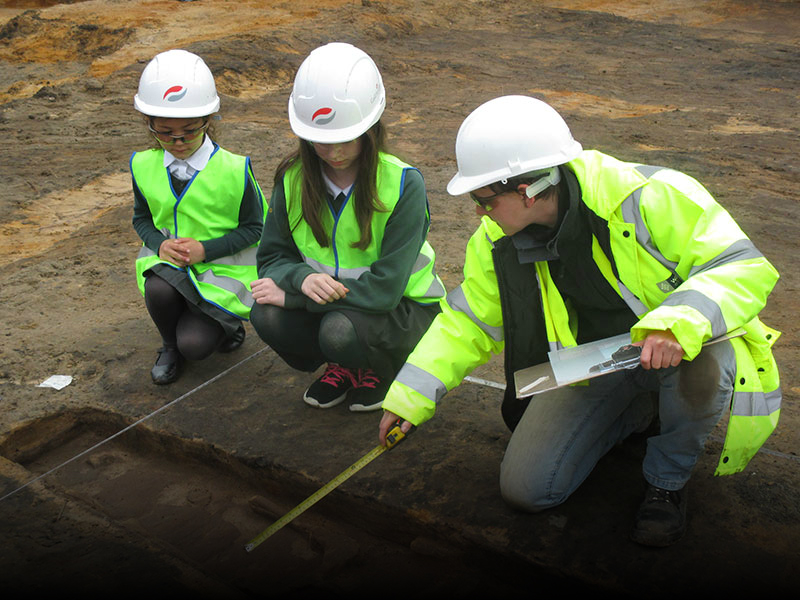
At a recent members’ business debate in the Scottish Parliament, the topic of heritage and environmental conservation charities’ support for outdoor learning was raised and discussed with a particular emphasis on the natural environment, but of course we all know that the natural environment has been shaped by people both past and present. Archaeology Scotland has over twenty years’ experience offering archaeology and place-based learning and our Heritage Hero project (which ran from 2012 to 2015 with funding from Heritage Lottery Fund, Paul Hamlyn Foundation and the LEADER programme) established a successful framework for delivering outdoor archaeological learning. With over 900 pupils from South Lanarkshire and Scottish Borders participating in the project, it aimed to support the transition process from Primary 7 to Secondary 1 and instil an interest in using archaeological approaches to exploring and recording local sites including historic graveyards and a former WWI Prisoner of War Camp.
Richard Lochhead MSP said during the Parliamentary debate that “Outdoor education is the future of education in Scotland. We have to give it a central role in increasing attainment and promoting health and wellbeing—mental and physical—as other members have said” and he cited recent research by Dr Beth Christie from the Outdoor & Environmental Education Section of Moray House School of Education about the “need to develop an empathy and ethic of care towards the environment”[1].
Scotland’s rich cultural heritage offers boundless opportunities for outdoor learning. Providing young people with opportunities to engage directly our historic environment helps with the development of critical thinking skills through exploring evidence of past cultures and making links to how we live today. These place-based learning experiences allow learners to look at familiar spaces and places in new ways, encouraging young minds to explore landscapes and empathise with people in the past. Archaeology has the additional benefit of promoting cross-curricular learning – the mix of skills required in the investigation of archaeological remains helps make links between different subject areas (social sciences, literacy, sciences, mathematics, technologies and expressive arts). This is in addition to the health and wellbeing aspects of working outdoors. It also encourages a sense of stewardship, helping safeguard Scotland’s heritage for future generations and hopefully doing something positive towards developing empathy and ethic of care.
We have created the Heritage Hero Awards which are available to young people throughout Scotland at no cost to them. All young people achieving a Heritage Hero Award have to actively engage with heritage and most groups choose to look at historic sites and buildings in their locality. This has ranged from exploring a local high street to investigating a nearby hillfort. Young people have been involved in activities including excavating their local graveyard in Dunfermline; mapping the industrial heritage of their local canals in Inverness, Falkirk, Edinburgh and Glasgow; researching the changing functions of buildings in their local area through photography in Inverclyde; and planning and delivering activities at a castle carnival in Ardrossan. The Awards have been used by heritage organisations, primary and secondary schools, community groups and youth groups. Some groups are now using the Awards alongside other important outdoor learning focused awards, including the John Muir Awards and Duke of Edinburgh Awards. Projects have been completed in 12 of Scotland’s local authorities with 965 people currently recipients of a Heritage Hero Award and applications continuing to come in from across the country.
As part of Scotland’s Archaeology Strategy, we are planning on working with the Outdoor Woodland Learning network to encourage greater use of archaeology and heritage by educators and developing programmes of work to support young people learning through visiting sites in the care of NTS, HES and others such as the Historic Houses Association. We have also been talking to Learning Away about their “Brilliant Residentials” campaign and would support a call for schools to allocate pupil equity funds to residential experiences and visits to historical sites and building in Scotland. This attainment funding is allocated to head teachers and they can decide how to spend it.
As Beth Christie’s research says, “ultimately behaviour change stems from a connection to a place; in other words young people will make the effort to love and care for something that they are positively connected to.”
Eila Macqueen, Director of Archaeology Scotland
May 2017
[1] Christie, B. (2012). The impact of outdoor learning experiences on attitudes to sustainability: a brief review of literature. Field Studies Council/University of Edinburgh. Field Studies Council Report 06/2012.
BACK
Get The Latest Historic Environment Events, Jobs, News And Publications In BEFS Bulletin.
BEFS NEWS
The Scottish local elections are taking place today and following BEFS support of hustings in Glasgow and Edinburgh it is evident that advocacy for the built environment will be needed. Hopefully the Advocacy Toolkit will prove a valuable resource and we will endeavour to share details of the key councillors in the coming weeks.
The Edinburgh International Book Festival is holding ReimagiNation in Cumbernauld from 19-21 May, a festival weekend bringing stories out of the shadows of the New Town’s infamous architecture. It looks like an interesting programme and will be visiting East Kilbride and Irvine later this year, and Glenrothes and Livingstone in 2018.
Historic Environment Scotland and Archaeology Scotland have announced the call for papers, speakers, displays and contributions to Scotland’s Community Heritage Conference 2017. Now in its sixth year, the Conference offers the opportunity for heritage volunteers and professionals to network, share experiences and create future working partnerships.
There are a number of interesting events and CPD opportunities coming up, which are featured in our events and training sections. There are also some great job opportunities, from Policy Officer at NTS to Traditional Skills Officer at Glasgow City Heritage Trust and Director at the Cockburn Association. Check out the vacancies section for information on how to apply.
In our first blog, BEFS newest Associate Member introduces himself and his company.
War Memorials Trust share with us their work and the recognition recently received for grant giving activities, in our second blog this week.
CONSULTATIONS
Call for Evidence on Homelessness (SP 03/05/17)
The Scottish Parliament’s Local Government and Communities Committee has today, Wednesday 3 May 2017, launched a call for written evidence on homelessness.
Reviewing the Edinburgh Design Guidance – your views (Edinburgh Planning 11/04/17)
The Edinburgh Design Guidance is being reviewed and we’d like your comments on the proposed changes. We are also holding two consultation workshops on the Design Guidance on Monday 15 May, in the City Chambers. If you would like to attend, please email us the following details to spatial.policy@edinburgh.gov.uk.
Consultation on the guidance will close on 2 June 2017.
CONSULTATION RESPONSES
Consultation on Raising Planning Fees. Analysis of consultation responses (SG 25/04/17)
An independent analysis of the consultation on raising planning fees prepared by Chris Thornton, Associate Director, Craigforth.
PUBLICATIONS
Infrastructure Investment Plan 2015 – Progress Report for 2016 (SG 26/04/17)
This annual report outlines key achievements over the course of 2016 and looks forward to developments in 2017 and beyond.
Scottish Vacant and Derelict Land Survey 2016 (SG 25/04/17)
The Scottish Vacant and Derelict Land Survey is a data collection undertaken to establish the extent and state of vacant and derelict land in Scotland.
SCOTTISH GOVERNMENT NEWS RELEASES
£8.35 million to support urban regeneration in the heart of Glasgow (SG 03/05/17)
New high quality office space and hundreds of jobs for the city centre. Housing Minister Kevin Stewart today announced investment of £8.35 million from its SPRUCE fund to support the refurbishment of vacant office space in central Glasgow.
Green home loans (SG 02/05/17)
Updated scheme cuts red tape for home-owners. Home-owners can now apply for an interest free loan of up to £32,500 to improve the energy efficiency and use of renewable technologies in their properties.
Personal Achievement in Planning (SG 04/17)
The Scottish Government is continuing the Personal Achievement in Planning Award this year. This Award is to recognise an individual planner, team, local authorities, consultants, community groups, developers, public agencies or voluntary organisation that have made an outstanding contribution to planning. All entries must be nominated by sending a completed Personal Achievement Nomination Form to saqp@gov.scot by the closing date, 19 May 2017.
Building for the future (SG 26/04/17)
£6.4 billion of infrastructure projects underway. Infrastructure projects worth almost £6.4 billion will be under construction throughout Scotland in 2017. Projects such as the Forth Valley College Falkirk Campus, NHS Orkney’s New Hospital and Healthcare Facilities and the A737 Dalry Bypass will all commence construction this year.
Decrease in derelict and urban vacant land 9SG 25/04/17)
A National Statistics Publication for Scotland. The total amount of derelict and urban vacant land in Scotland decreased by 253 hectares (two per cent) from the previous year, to 12,435 hectares in 2016.
NEWS RELEASES
2017 EU Prize for Cultural Heritage: Special Mentions (EN 01/05/17)
The Special Mentions of the European Union Prize for Cultural Heritage / Europa Nostra Awards 2017 were made public today by Europa Nostra and the European Commission. This year, the Awards’ Jury granted Special Mentions to 13 heritage achievements from 11 European countries taking part in the Creative Europe programme of the European Union.
Glasgow Traditional Building Skills Demonstration (STBF 28/04/17)
The Glasgow Traditional Building Forum organised a hugely successful traditional building skills demonstration on Buchanan Street, Glasgow on 24 & 25 April 2017.
Working update on diversity in Historic Environment Sector: HEF & Heritage 2020 (IHBC 26/04/17)
Members of England’s lead link heritage grouping, the Historic Environment Forum (HEF) and the working groups of the linked initiative Heritage 2020 recently came together to discuss diversity in the historic environment sector.
MyParkScotland History, Heritage & Archaeology crowdfund campaign (MPS 26/04/17)
2017 is the year of heritage, history and archaeology. To celebrate this, we have launched our Heritage and History campaign to promote the diversity of Scotland’s parks and greenspaces highlighting projects that are working to develop park and greenspace heritage.
Community ownership and local councils (SCVO 24/04/17)
In the final of our pre-local election blogs, Linsay Chalmers talks us through community land. 540,000 acres of land are now in community ownership in Scotland and 2017 could be the busiest ever year for community buyouts, with 187 applications currently in the pipeline for the Scottish Land Fund.
The local authority dilemma: engage in local climate action now, or wait? (RTPI 19/04/17)
Local climate action is not just about ‘climate change’ – it is about planning for the future of our places and communities. It is being ready for how the environment will change and engaging with this in a way that builds the liveable and healthy places that we want to live in, now and into the future. So why isn’t local climate action common place?
Tracking Scotland’s changing landscape (SNH 12/04/17)
A new way of tracking and reporting on Scotland’s ever-changing landscapes has been launched today (Wednesday) by Scottish Natural Heritage (SNH). Scotland’s Landscape Monitoring Programme (LMP) is accessible on SNH’s website allowing anyone to follow how our dynamic landscapes change over the years.
Designing mental health into cities: the next frontier for urban design (DC 12/04/17)
If city-makers are to address mental health through urban design, where should they start? Layla McCay, the Director of Centre for Urban Design and Mental health, explains the reasons that city-dwellers are at greater risk of mental health problems and shows how urban design can support better mental health.
Heritage Lottery Fund statement – funding for places of worship (HLF 04/17)
The Heritage Lottery Fund (HLF) is changing the way it funds places of worship. Time and resource-stretched congregations have been telling us that they want to access our funding more easily, so we are bringing in a more flexible and lighter-touch way of distributing much-needed funding support from the National Lottery.
MEMBERS NEWS
RTPI Scotland thinkpieces – Proposals for change (RTPI 02/05/17)
The Scottish Government consultation paper Places, People and Planning contains many ideas for making the planning system more influential and effective. Working groups of RTPI Scotland committee members have now come together to prepare a series of thinkpieces that advance some of these ideas into implementable changes that could make a major impact on how our planning system works.
Project of the Year: RICS Awards, Scotland (RICS 27/04/17)
We’re delighted to announce our Project of the Year, the £35 million refurbishment of Glasgow’s Kelvin Hall, and the other eight category winners for the RICS Awards, Scotland. Over 35 of Scotland’s most impressive and community beneficial property schemes battled it out for top honours at the prestigious 2017 RICS Awards, Scotland. BBC news reader Catriona Shearer hosted the sell-out ceremony, held at Edinburgh’s luxurious Sheraton Hotel, which attracted more than 200 local property professionals.
Should we have a statutory chief planning officer in local authorities? (RTPI 26/04/17)
We need to make sure that strategic decisions taken by local authorities and Community Planning Partnerships are not taken in isolation. The implications of new investment and new development need to be assessed and planned for. Given this, in a thinkpiece published today by RTPI Scotland proposes that the forthcoming Planning Bill establishes a statutory Chief Planning Officer (CPO) in each local authority.
IHBC welcomes BEFS’ success in new NPF heritage measures: Critical disrepair in pre-1919 dwellings (IHBC 22/04/17)
The IHBC has welcomed the announcement by Built Environment Forum Scotland (BEFS) that, following active engagement with the Scottish Government and across is members, a new National Performance Framework (NPF) measure for the historic environment has been adopted, the percentage of pre-1919 dwellings classified as having disrepair to critical elements.
Guidelines for Cultural Heritage Impact Assessment (IHBC 19/04/17)
The IHBC is teaming up with the Chartered Institute for Archaeologists (CIfA) and the Institute of Environmental Management and Assessment (IEMA) to produce a guidance document for cultural heritage impact assessment (GCHIA), and develop guidance as authoritative as the Guidelines for Landscape and Visual Impact Assessment (GLVIA) has been in its sphere.
Heritage Hustings (EWH 19/04/17)
Against the historic backdrop of St. Stephen’s Stockbridge, one of the largest audiences yet seen for a local government hustings in the city debated a range of issues yesterday evening with representatives of all five parties. Subjects raised included the impact of ‘brash’ new development, the consequences of unregulated Airbnb holiday lets, the proposed ‘tourist tax’ and the growth of student accommodation in the city centre.
PARLIAMENTARY QUESTIONS
Questions marked with a triangle (?) are initiated by the Scottish Government in order to facilitate the provision of information to the Parliament.Questions in which a member has indicated a declarable interest are marked with an “R”.
S5W-08883 Pauline McNeill: To ask the Scottish Government when it will publish the findings of its research into barriers to engagement and the role of community councils in planning. (SP 21/04/17)
S5O-00900 John Finnie: To ask the Scottish Government what value it places on locations in Scotland
holding UNESCO World Heritage Site status. (SP 20/04/17)
PARLIAMENTARY QUESTIONS & ANSWERS
Questions marked with a triangle (?) are initiated by the Government in order to facilitate the provision of information to the Parliament.
Question S5W-08477: Christine Grahame, Midlothian South, Tweeddale and Lauderdale, Scottish National Party, Date Lodged: 29/03/2017
To ask the Scottish Government what measures are in place to require an assessment of services, such as schools, public transport and medical facilities, to take place as a condition of planning consents for housing developments.
Answered by Kevin Stewart (19/04/2017)
Question S5W-08476: Christine Grahame, Midlothian South, Tweeddale and Lauderdale, Scottish National Party, Date Lodged: 29/03/2017
To ask the Scottish Government what measures are in place to permit the compulsory purchase of vacant commercial premises in town centres for the purpose of redeveloping them for social housing.
Answered by Kevin Stewart (18/04/2017)
Question S5W-08573: Anas Sarwar, Glasgow, Scottish Labour, Date Lodged: 03/04/2017
To ask the Scottish Government what action it is taking to tackle the issue of damp homes in the (a) private and (b) owner-occupied sector.
Answered by Kevin Stewart (18/04/2017)
Question S5W-08676: Maurice Golden, West Scotland, Scottish Conservative and Unionist Party, Date Lodged: 05/04/2017
To ask the Scottish Government what modelling it has undertaken of maximising solar energy capture in new housing developments to assess the potential (a) financial benefits to homeowners and (b) wider economic and societal benefits.
Answered by Kevin Stewart (18/04/2017)
Question S5W-08675: Maurice Golden, West Scotland, Scottish Conservative and Unionist Party, Date Lodged: 05/04/2017
To ask the Scottish Government what research it has carried out on the long-term value of resource efficient building in the housing sector.
Answered by Kevin Stewart (24/04/2017)
Question S5W-08674: Maurice Golden, West Scotland, Scottish Conservative and Unionist Party, Date Lodged: 05/04/2017
To ask the Scottish Government how many electric vehicle charging points have been included in new housing developments since its Scottish Planning Policy was published in 2014.
Answered by Kevin Stewart (18/04/2017)
DEBATES
UNESCO World Heritage Sites
John Finnie (Highlands and Islands) (Green):
To ask the Scottish Government what value it places on locations in Scotland holding UNESCO world heritage site status. (S5O-00900)
The Cabinet Secretary for Culture, Tourism and External Affairs (Fiona Hyslop):
The Scottish Government attaches great value to UNESCO world heritage site status. We are in the year of history, heritage and archaeology. On world heritage day, I took part in an event that celebrated the importance of one of our six world heritage sites—the Antonine wall, at which Picts and Romans were in evidence. There was even a great Roman bake-off. Using innovative and creative ways not just to preserve and conserve our heritage sites but to make them inviting places for people to visit is very important. Read the full transcript
MOTIONS
S5M-05185 Keith Brown: Defence Basing Reforms and the Impact on Scotland—That the Parliament expresses concern about the impact on Scotland of the military base closures announced by the Ministry of Defence as part of its Estate Optimisation Strategy; supports local community opposition to closures, and calls on the UK Government to engage fully with the Scottish Government, local authorities and local communities as a matter of urgency.
Supported by: Jamie Hepburn, Paul Wheelhouse (SP 20/04/17)
*S5M-05259 Gail Ross: RIAS Awards 2017—That the Parliament congratulates all the nominees for the Royal Incorporation of Architects in Scotland (RIAS) Awards 2017, which comprise of buildings and projects throughout the length and breadth of the country; notes in particular the inclusion of Fernaig Cottage in Wester Ross, which saw the restoration and adaptation of a former shepherd’s longhouse, the newly-completed Noss Primary School in Wick and the conversion of the disused Corrie Church on the shores of Loch Torridon; wishes all on the shortlist the best of luck in the finals, and recognises what it believes is the incredible innovation and design in current Scottish architecture.
Supported by: Jenny Gilruth*, Emma Harper*, Ross Thomson*, Tavish Scott*, Gillian Martin*, Ben Macpherson*, Sandra White*, Alexander Burnett*, Graeme Dey*, Bill Kidd*, Stuart McMillan*, Richard Lyle* (SP 21/04/17)
EVENTS
For the latest information about BEFS Members’ events see our events calendar.
Afternoon lecture by Margaret Stewart: Landscaping the Nation, Lord Mar’s Designs c1700-1730 to follow Scotland’s Garden & Landscape Heritage AGM
When: Saturday, 6 May: AGM 12pm; Lunch 1pm – 1.45pm; Lecture 2pm; Walk 3.30pm.
Where: Alloa Tower, Alloa Park, Alloa FK10 1PP.
Dr Margaret Stewart’s talk offers a unique opportunity to hear the story behind this visionary design from the leading authority on the subject. The lecture will be followed by a guided walk to discover what still remains of the eighteenth-century landscape. The number of places at the lecture is restricted, so you are advised to book online in advance.
STP Place Branding & Communications Workshop
When: May 16, 2017 at 1:30pm – 4pm.
Where: Architecture & Design Scotland, Edinburgh.
Hear from media experts and local case studies that will leave you feeling equipped and inspired to find your town’s USP, grab the headlines, or make a cutting-edge film. Get top tips from Morrison Media Strategies, Newsquest Media Group, Enterprise Screen, Explore Largs BID, and Scotland’s Towns Partnership. Network over refreshments with town stakeholders from diverse sectors, and discuss strategies for your town. Don’t miss out – book today!
Sacred Heritage: Archaeology, Identity and Medieval Beliefs – Rhind Lectures
When: May 19 @ 6:00 pm – May 21 @ 5:00 pm.
Where: Auditorium National Museum Scotland, Edinburgh.
Medieval churches and monasteries are key features of the British landscape, contributing to local identities and sense of place. Yet the relationship between heritage and medieval religion has received relatively little critical reflection. These lectures will place research on medieval beliefs within a wider framework of sacred heritage, reflecting on issues of value, authenticity and interpretation. The lectures develop chronologically from the 12th century to the use of archaeology today, with case studies focusing on Scottish monasticism and Glastonbury Abbey.
Sustainable Futures for Traditional Buildings
When: Thursday 25th May 2017 from 9.30am.
Where: The Haining, Selkirk.
In recent years a number of ‘at risk’ buildings have become the subject of high profile ‘Heritage Rescue’ operations resulting in their successful adaptation to a range of alternative uses. For each of these ‘Success Stories’ there are many other buildings which at present face an uncertain future. The Scottish Traditional Skills Training Centre in association with Selkirk Conservation Area Regeneration Scheme (CARS) has brought together 4 leading experts to look at the basic principles and critical factors which must be addressed when identifying potential sustainable futures for a range of traditional buildings. The cost of the event is £35 (Heavily subsidised by Selkirk CARS) and includes buffet lunch and tea/coffee.
Archaeological Research in Progress 2017
When: 27 May 2017.
Where: National Museums Scotland Auditorium, Edinburgh, EH1 1JF.
The Society is hosting the 2017 ARP conference, the national conference examining recent and ongoing archaeological projects across Scotland. Please book online or phone 0131 247 4133. Tickets £35 for Fellows, Archaeology Scotland members and students. £40 full price.
RIAS Spring Seminar – More Conservation Challenges
When: 31 May 2017 from 1pm – 5pm.
Where: The Scottish Storytelling Centre, Edinburgh.
The RIAS conservation spring seminar is now open for bookings. Chaired by RIAS Secretary, Neil Baxter, topics will include conservation work at the Capitol, Washington DC, and the Scottish architectural legacy in India. The technical components will include climate change adaptation for traditional buildings, interpreting thermal imaging and advice on working with lime for pointing and harling, including specification advice and guidance on the causes of failure, 3D laser scanning technique as used in the restoration of Glasgow School of Art.
Gordon Barr and Gary Painter: Glasgow’s Cinema Experiment
When: 7 June 2017, 7-9pm
Where: GCHT, 54 Bell Street, Glasgow
Scotland has some of the most architecturally diverse cinema buildings of anywhere in the world. This double-act led talk will cover the full range of Glasgow’s cinema history, from converted roller-skating rinks, via the earliest purpose built halls, the peculiarly Scottish ‘back-court’ theatres, to the finest thirties art deco super-cinemas, stopping off to highlight some of the most interesting depictions of Glasgow on screen, both as itself and pretending to be other cities along the way.
Sir Patrick Geddes Commemorative Lecture 2017 – Poverty, Places and Equality: A role for place based approaches?
When: Wednesday, 07 June 2017 at 5:45PM – 8:15PM.
Where: The Lighthouse, Mitchell Lane, Glasgow G1 3NU.
Naomi Eisenstadt – Independent Advisor to the Scottish Government on Poverty and Inequalit.y
After a long career in the NGO sector, in 1999 Naomi became the first Director of the Sure Start Unit. The Unit was responsible for delivering the government’s commitment to free nursery education places for all 3-4 year olds, the national childcare strategy, and reducing the gap in outcomes between children living in disadvantaged areas and the wider child population. Naomi spent 3 years as the Director of the Social Exclusion Task Force working across government to identify and promote policies to address the needs of traditionally excluded groups. Since retiring from the Civil Service, Naomi has chaired the Camden Equalities Commission, the Milton Keynes Child Poverty Commission, published a book and several articles relevant to child development and child poverty.
The City Talks: Conservation v Evolution? Do conservation areas hold back or encourage positive development?
When: 14 June 2017, 7-9pm
Where: GCHT, 54 Bell Street, Glasgow
We all agree that the protection and enhancement of Scotland’s conservation areas are important although some of us may be concerned that this statutory requirement of local authorities is not being met in many cases. However, as pressure increases to build in urban areas, might there by a case for a loosening of some of the restrictions that planning law places on new developments in and around conservation areas? Is heritage management compatible with innovative and bold modern architecture? Are we stifling creativity and radical design by holding onto long-cherished heritage principles? These are just some of the issues our panel of experts will be discussing.
IHBC Annual School: Transport Infrastructure – the backbone of civilisation
When: Thursday 22nd – Saturday 24th June 2017. Day School – Friday 23rd June 2017.
Where: Manchester.
The 2017 IHBC Annual School examines the rich legacy of transport infrastructure, exploring both its continuing role as a future driver of change and economic growth as well as its impact upon historic places. The Annual School includes three exciting days of lectures, networking and practical learning to share skills, knowledge and understanding; tours exploring all facets of historic and new infrastructure and its impact on the historic environment around Manchester and the North; NETWORKING EVENTS; EVENING RECEPTION & IHBC ANNUAL DINNER with opportunities to pause, take stock and stimulate debate in fascinating venues.
TRAINING
Resourcing Scotland’s Heritage is delivering a series of training courses and events across Scotland. Our training is best suited to registered charities and constituted community groups. Here are the upcoming dates:
• , Wed. 10th May, Edinburgh – Arts & Business Scotland
• , Wed. 17th May, Galashiels – Old Gala
• , Wed. 24th May, Glasgow – Betty’s Room
• , Wed. 31st May, Aberdeen – Aberdeen Science Centre
The Damp in Buildings Masterclass
When: 19 May 2017, 09.30 – 16.30.
Where: Charlestown Workshops, Fife
Cost: £190 + vat. If you are a BLF, IHBC, RIBA or RIAS member you are eligible for 20% discount on this seminar. Please just give us a call with your member number. We are pleased to welcome back Mike Parrett, one of the world’s leading building pathologists and co-author of the RICS’ bestselling book ‘Diagnosing Damp’, recognised as the primary reference work on dampness in buildings.
CPD: Traditional Shopfronts
When: Tuesday 30th May 2017 | 12-1pm.
Where: Glasgow City Heritage Trust, 54 Bell Street, Glasgow.
Shopfronts have a huge impact on the quality of our civic spaces and are a key component of a vibrant town centre. Dr Lindsay Lennie, historic shopfront expert, will be looking at the key elements forming a traditional shopfront, the materials and construction techniques as they relate to different periods in retail architecture. Lindsay is a chartered surveyor with a diploma in building conservation and a PhD in historic shopfronts.
VACANCIES
Policy Officer – Permanent / part-time (NTS)
This job exists to develop and communicate Trust policy in order to guide conservation and visitor management practice. In addition, the post-holder will contribute to the Trusts role as an advocate for the conservation of Scotlands heritage, and for access, learning and enjoyment of that heritage.
Closing date: Friday 12 May 2017.
Traditional Skills Officer (GCHT)
An exciting opportunity has become available to support the implementation of the Trust’s traditional skills and materials programme for the benefit of all people living in, working in and visiting Glasgow. Through events, training sessions, public engagement activities and partnerships you will deliver a programme of traditional skills training and educational activities targeting contractors, craftspeople, professionals, communities and homeowners to train and educate those responsible for the upkeep of Glasgow’s built heritage, encourage best practice, and showcase career opportunities in the heritage and construction sectors.
Deadline for applications: Friday 12th May 2017.
CARS Project Officer
Dunoon Conservation Area Regeneration Scheme (CARS) is a £1.8M heritage-led partnership project between Argyll and Bute Council, Historic Environment Scotland and LEADER. The postholder is required to project manage and fully deliver Dunoon CARS, and to do this over a 5-year period whilst ensuring that the project is delivered on time and within budget. The project focusses on Dunoon’s principal shopping street, Argyll Street and includes funding towards shopfront repairs as well as the comprehensive restoration of 4 tenements. It is anticipated that the postholder will be experienced with working on historic environment projects.
Closes: Friday, 12th May 2017.
Fundraising Vacancy – Part time (Archaeology Scotland)
We are looking for someone to help with both Trusts Fundraising and Events Co-ordination. This is part-time post (15 hours), fixed term until June 2019. If you have the relevant experience and bags of enthusiasm please apply with a covering letter and CV to e.macqueen@archaeologyscotland.org.uk.
Closing date 12 May 2017.
Director Post (Cockburn Association)
The Cockburn Association is now looking for a Director who has the leadership skills and capability to monitor and implement its strategy. The ideal candidate will be highly motivated and enthusiastic about the Cockburn Association activities and campaigns. He/She will have the capacity to lead and deliver the key activities of the Association, working with allies, strengthening the membership base, and broadening the constituency of ‘those who love Edinburgh’ through awareness and education. In doing so he/she will take account of the advice in the 2015 Strategy that the Association should focus on doing less in more depth, concentrate on activities which have the potential to make a difference and ensure that the scope of our work is realistic in terms of our time and financial resources. For more information on the role, please contact Joe Taylor on 0131 557 8686 (email admin@cockburnassociation.org.uk) or for a confidential discussion please contact the Vice-Chair of the Association, Andrew MacLeod at 0131 667 5663.
Closing date: 26th May 2017.
Director of Development and Partnership (HES)
This is a new senior post, reporting directly to the Chief Executive, with responsibility for driving forward a range of strategic developments vital to the future work of HES and the wider sector. Please note that this post will also attract a £1,500 on call allowance and 5% Directors allowance. You will identify and explore the big issues and questions for Scotland’s historic environment, both now and in the future. You will lead HES engagement with partners and stakeholders, take forward new areas of work and coordinate work strands across the organisation. You will provide leadership and foresight both for HES and the historic environment sector including, as lead Director responsible for the delivery of Our Place in Time, the historic environment strategy for Scotland. You will bring knowledge of the sector, strong policy and partnership skills, fresh thinking and a strong customer focus to HES.
Closing Date: 26 May 2017 at midday.
BACK
War Memorials Trust Share With Us Their Work And The Recognition Recently Received For Grant Giving Activities

Kirkintilloch War Memorial
The protection and conservation of war memorials is the focus for charity War Memorials Trust which was formed in 1997. There are estimated to be over 100,000 war memorials in the UK. Many of these are treasured but sadly others are neglected and vandalised or left to suffer the effects of ageing and weathering. To help combat this the Trust provide free advice and information to anyone as well as administering grant schemes for the repair and conservation of war memorials. The charity has also developed a youth focused Learning Programme to educate young people in schools and youth groups about their war memorial heritage.
In Scotland the Trust administers the Centenary Memorials Restoration Fund (CMRF) on behalf of Historic Environment Scotland and the Scottish Government. £1 million is available, up until March 2018, to help communities undertake repair and conservation works to war memorials. Underpinning the grant scheme is best conservation practice; ensuring that any works supported are appropriate to the memorial, in-line with methods that will minimise any potential damage and offer the greatest chance of supporting long-term preservation.
Four years into the scheme, the CMRF has awarded 99 grants totalling £783,000. So whilst funding remains we are encouraging people to get their applications in quickly to secure a share. The scale of grants varies considerably. The Fintry Kirk stained glass window in Stirling was awarded a grant of £430. Due to exposure to weathering there was a build-up of dirt on the memorial stained glass window. A small number of stained glass panes were cracked or damaged. In addition, the exterior protective glazing has been damaged and the joints in the surrounding stone mullions had cracked. To address these issues work was undertaken to clean and repair the stained glass window. Like-for-like replacements of areas of the protective glazing was undertaken while the joints in the stone mullions were re-pointed with a lime based mortar.
At the other end of the scale Kirkintilloch war memorial in East Dunbartonshire was awarded a grant of £57,240. The inappropriate cementitious mortar pointing had severely deteriorated and was causing a number of conservation issues for the masonry including water ingress, plant growth and areas of gypsum deposits gathered on the marble cladding. The pointing that did remain was stained and unsightly. Some of the masonry was damaged, including severe cracks, and some previous repairs had failed. The cast iron gates showed signs of corrosion. The marble cladding had gathered superficial surface grime while the bronze plaques were weathered and dull in appearance. To address these issues a thorough appraisal of the condition of the memorial was undertaken and a programme of works drawn up. Repair and, where necessary, replacement was undertaken to the marble, the failed mortar was carefully raked out across the memorial and then re-pointed using a lime mortar. Vegetation was removed and the stone cleaned. Repairs were undertaken to the stone copes and leadwork while the bronze elements and iron work were cleaned and treated.
Grant giving has been central to War Memorials Trust’s efforts since the charity began, therefore in the 20th anniversary of the foundation of the charity, it was wonderful to receive recognition for this work. On 23rd February 2017 the Trust was awarded the Directory of Social Change Great Giving Funders Award, voted for by the public. The award recognised funders which demonstrate a clear understanding of their beneficiaries and the funding environment and are committed to improving grant making by giving clear guidance and support. That description outlines exactly what we aim to do!
BACK
Historic Environment Scotland and Archaeology Scotland announce a call for contributions to Scotland’s Community Heritage Conference 2017.

Now in its sixth year, Scotland’s Community Heritage Conference is a unique annual event within the UK that offers the opportunity for heritage volunteers and professionals to network, share experiences and create future working partnerships.
To celebrate Scotland’s Year of History, Heritage and Archaeology, this year’s conference will be a two-day event, with two key aims:
- To showcase the exemplar work of community-led heritage in Scotland, the UK and beyond – both of individual projects and of wider initiatives
- To learn from community-based best practice outside Scotland
We are keen to hear from you about your involvement with community heritage, and this year are inviting contributions from both community volunteers and professionals. The emphasis, as always, will be on providing a forum for networking and the exchange of news and ideas. To get an idea of previous conferences, why not take a look at some of our previous presentations on YouTube.
For more information, please contact the team at chcscot@gmail.com or submit an abstract by Tuesday 30th May 2017.
BACK
BEFS newest Associate Member introduces himself and his company.

 I’m David McAllister, managing Director of Craigerne Consulting Limited, based in Peebles in the Scottish Borders. I have set up this new business following a period of sixteen successful years in various roles with the National Trust for Scotland. I’m a highly experienced professional with a total of over 30 years in the Heritage sector focussed on Conservation and Operational management and skilled in the planning and delivery of successful, award winning heritage projects. I am now taking opportunities to bring my expertise to a wider and more diversified Client base.
I have a deep passion for our entire heritage and have well developed understanding of all the complexities, opportunities and constraints that are always the fundamental elements of Heritage, Conservation and Cultural projects. Also, with over 7 years as a member of the NTS Senior Management Team I have the experience of managing an extensive portfolio of highly significant heritage assets in a climate of considerable change.
I believe his combination of experience makes me a considerable asset for the planning and execution of successful projects in the Heritage, Conservation and Cultural Sectors.
See more about the services I offer on my website: www.craigerne-consulting.com
Current Activity
 I’m currently working on a Visitor Improvement Plan for the Bo’ness Motor Museum. This is focusing on the wonderfully unique and at times quirky collection of 20th century cars and associated memorabilia the museum has collected over the years, many associated with film and television – so all very much recent cultural heritage here! The James Bond collection is particularly noteworthy as is the Harry Potter Ford Anglia. The work involves setting out short, medium and longer-term actions for the team to implement that will boost visitor numbers and improve visitor experience.
We are also exploring a new website and expanding on social media content to promote collections, activities and engage with new audiences.
Hospitalfield Arts, Arbroath
 As a Trustee and Chair of the Development Committee at Hospitalfield for the ambitious Future Plan it is an exciting time with our Stage 2 HLF application in for approval hopefully later in the year. It is an ongoing pleasure to be involved in such a worthwhile and vibrant project!
Project Funding approval from Creative Scotland is expected soon and we are one of the key capital projects included in the Tay Cities Deal proposals currently under consideration.
Phase 1 of the project includes a new residential block by Stirling Prize winners Caruso St John, the restoration of the old Glasshouse and Fernery, bringing these back into public use. The latest addition to the scheme is the exciting proposal for the garden by Nigel Dunnet, which we are delighted with and we believe, will bring new audiences to Hospitalfield for the first time. Hospitalfield is dedicated to contemporary art and ideas a place to work, study, learn, visit and enjoy.
See more at: http://hospitalfield.org.uk/about/future-plan/
Two Cities
I have been fortunate to visit two World Heritage Cities in recent weeks, Bologna and Hamburg. This is the reason I was unable to attend the Financing the Historic Environment conference in Glasgow, which I’m sad to have missed as it looks to have been a great success with insightful presentations and discussions. Hopefully next year I will be better organised.
Here are some impressions from Bologna, a truly inspiring city that don’t need more words to describe. Make a point of visiting if you have not been before, ther is wonderful artwork everywhere you look!
 Hamburg is also well worth the visit, particularly to see the outstanding conservation/transformation underway in the Halfencity district, but for the purposes of this blog I wanted to focus on just one building. The Elbphilharmonie by Herzog & De Meuron -arguably a building that is redefining a city.
Not without controversy (the cost overrun puts the Scottish Parliament in the shade and is still a very hot topic in the city). This is an astonishing, awe inspiring building all the more remarkable in that it is an adaptation and extension (and what an extension) of an original brick warehouse in the heart of the old docks.
Hamburg now has an unmistakable new landmark on the city skyline.
The guidebook talks of its silhouette as a …’symbol of Germany as a nation of culture. A symphony of beauty, an ode to the future’ I don’t disagree.
Finally a plug for a couple of upcoming events focused on Grandison & Son Decorative Plasterers– one of the last remaining plastering workshops in Scotland, and how their wonderful collection of moulds and casts will be at risk once the current proprietor retires in around 10 years’ time. Over the past few months a small group of us have been working on ways of securing the future of this unique business and plasterwork museum based in Peebles and with the grateful assistance of Live Borders are happy to announce two upcoming events planned to increase awareness of the collection, which we hope one day will be recognised as a collection of national significance in its own right.